📅 Published: December 31, 2025
🔄 Last Updated: March 20, 2026
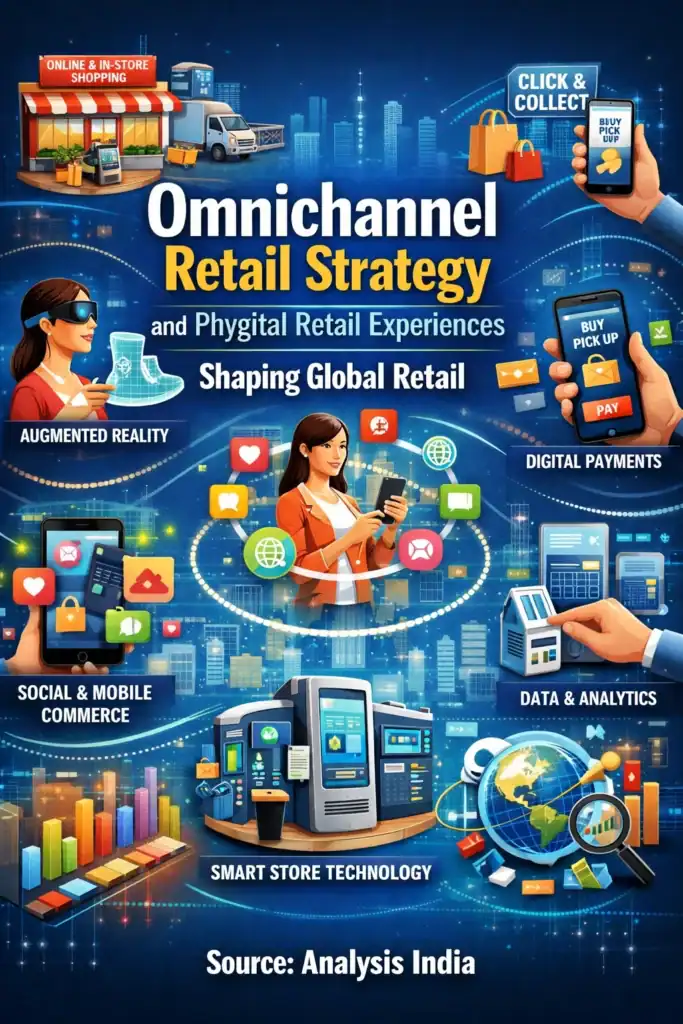
The omnichannel retail strategy and phygital retail experiences are transforming global retail as customers expect smooth journeys across digital and physical environments. Consumers shop on many channels and they want each channel to recognise their needs without effort. This shift happened as digital penetration increased and as physical stores returned to relevance after global lockdowns. The rise of phygital retail experiences shows that customers enjoy digital speed but still value personal interaction in physical stores. Retailers across markets are now building unified systems where technology bridges channels and creates a sense of one brand presence from start to finish. The omnichannel retail strategy now guides growth because customers reward brands that provide consistent service in every touchpoint.
Understanding Omnichannel Retail Strategy in Global Retail
The omnichannel retail strategy links online and offline channels so customers experience a single brand journey. Historically retail operated in separate silos. Ecommerce grew on one side and stores continued on the other. Customers noticed friction because actions done online did not follow them into stores. The omnichannel retail strategy removes that gap by connecting inventory pricing loyalty and service across every channel.
Brands that follow an omnichannel retail strategy allow customers to start shopping on a mobile device then continue the journey in a store without repeating information. Customers can explore products online and then collect items from store counters after purchase. They can also return items bought online to physical stores without difficulty. The omnichannel retail strategy makes each interaction feel like a continuation rather than a restart.
Consumer studies show that unified journeys influence brand selection and loyalty. Research published in industry sources such as Harvard Business Review notes that customers who engage with brands across many connected channels show stronger engagement and higher retention because they feel recognised in every touchpoint. This observation confirms the importance of the omnichannel retail strategy for long term customer value. source Harvard Business Review
Phygital Retail Experiences and the Rise of Hybrid Shopping
Phygital retail experiences combine digital discovery with physical exploration. The term phygital reflects the desire for both touch and speed. Customers love browsing products online but still want to see and feel items in stores before deciding. The omnichannel retail strategy and phygital retail experiences together support this blended behaviour where digital tools improve store visits and stores enhance digital based decisions.
Retailers across fashion beauty electronics and grocery now integrate features like digital product discovery virtual try on and store navigation into physical environments. Phygital retail experiences show customers a digital view of products before they reach stores and then guide them during the physical evaluation. This reduces confusion and speeds up decision making. In electronic retail customers may scan a product code to access online reviews before purchase. In beauty retail shoppers test shades using augmented reality through mobile apps and then complete purchase in store for immediate pickup. These actions show how phygital retail experiences change the core of product discovery.
Brands such as Zara and Uniqlo support phygital retail experiences through mobile apps that link digital browsing with store based pickup or product testing. Customers explore collections online then check store availability and reserve items before arrival. This improves time use and reduces friction. Sephora uses virtual try on tools online and in store screens to help customers visualise makeup shades while still inviting them to see textures and packaging in person. These applications strengthen phygital retail experiences and prove that customers value both digital guidance and physical feel.
The omnichannel retail strategy depends on phygital retail experiences because physical stores still play a central role. Reports from McKinsey show that post pandemic customers returned to stores but expected digital elements to remain available. Customers prefer physical stores for confidence yet expect digital speed. Phygital retail experiences satisfy this expectation by aligning store visits with online efficiency. source McKinsey
Why Omnichannel Retail Strategy Works for Global Brands
The omnichannel retail strategy works because customer behaviour changed permanently. Shoppers explore products through many sources before making decisions. They use search engines ecommerce listings social platforms and store visits while moving toward purchase. The omnichannel retail strategy ensures that information flows smoothly across this path and customers do not need to repeat steps.
Global retailers such as Walmart continue to invest in omnichannel retail strategy by integrating online ordering and curbside pickup with store operations. Customers browse products online and select collection at nearby stores which speeds fulfillment and reduces delivery wait. This builds trust because customers feel that the brand respects time and convenience. Walmart also enhances phygital retail experiences by allowing customers to access digital receipts and store-based service through mobile devices.
Amazon blends digital leadership with physical engagement through Amazon Fresh and Amazon Go formats. Customers discover products online then use physical stores for pickup and immediate purchase. Amazon Go uses automated checkout supported by sensors and AI. While Amazon leads in digital innovation its expansion into stores shows that the omnichannel retail strategy cannot ignore physical touchpoints.
The omnichannel retail strategy also guides sports and apparel retail. Nike fuses mobile loyalty with store-based experiences. Users of the Nike app save product preferences online and receive personalised recommendations when entering physical stores. The brand introduced features where customers scan products in store to see digital details such as availability sizes and style guidance. Phygital retail experiences help Nike merge community events product trials and digital touchpoints into one journey.
Research from Deloitte indicates that brands with strong omnichannel retail strategy implementation often report higher customer retention because customers recognise value in consistent service. The research highlights that retention strengthens when channels support each other rather than compete. source Deloitte
Customer Journey Evolution Through Omnichannel Retail Strategy
The omnichannel retail strategy changes how customers move through the journey from need recognition to post purchase engagement. Customers start by searching online for ideas and continue by confirming product quality in stores. They make final purchase decisions through the channel that feels most convenient. When the omnichannel retail strategy is strong the customer journey transitions without interruption.
Customers enjoy browsing for ideas on mobile devices but complete purchase in stores for confidence. They may also check product availability near them after initial digital discovery. Retailers benefit when they understand that journeys no longer follow linear paths. Instead, journeys take place across many touchpoints that overlap and repeat. The omnichannel retail strategy makes this natural and expected.
Phygital retail experiences deepen two-way interaction. Customers may watch video tutorials about a product then see it physically to test weight and size. They can also receive personalised suggestions when they enter a store because the app tracks favourite items saved earlier. This continuity makes journeys feel effortless and encourages repeat engagement.
Reports shared by Google show that customers who use both digital and physical channels develop higher intent to purchase and return because they achieve clarity during discovery. The omnichannel retail strategy supports this behaviour by aligning channels and letting customers switch as needed.
Role of Technology in Enabling Omnichannel Retail Strategy
Technology acts as the structure of the omnichannel retail strategy. Retailers integrate inventory systems ecommerce sites payment platforms and loyalty programs into unified records. Without integration the omnichannel retail strategy loses strength because channels cannot communicate.
Artificial intelligence supports this integration by analysing behaviour across multiple touchpoints. Retailers learn what customers prefer and then show relevant offers. For example, customers who browse shoes online may receive in store recommendations when visiting a location. AI guides product placement and stock planning so that popular items remain available across channels at the right time.
Digital payments support phygital retail experiences because customers want smooth checkout. Retailers allow customers to pay on mobile devices in advance and collect goods from stores without waiting. This system allows faster service and avoids congestion. It also enables returns or exchanges without paperwork because customer data is already linked to purchase history.
Augmented reality plays a growing role in phygital retail experiences. Ikea uses AR tools to allow customers to visualise furniture in homes before reaching stores. Customers confirm size and colour virtually then test material quality physically. This increases confidence and reduces returns. The omnichannel retail strategy becomes stronger when AR reduces uncertainty.
Unified customer profiles maintain one memory across channels. When customers share preferences once they should not repeat the same information again. Brands that manage unified profiles feel consistent. This consistency forms the essence of the omnichannel retail strategy because customers interact with one brand identity rather than separate departments.
Physical Stores Reinvented by Phygital Retail Experiences
Stores remain important in global retail but their role changes with phygital retail experiences. Physical stores now serve as experience centres fulfilment hubs and community spaces. Customers enter stores to confirm product fit test quality and interact socially. Brands extend digital features inside stores so the store becomes a stage for brand storytelling and discovery.
Apple uses phygital retail experiences through its Genius Bar service where digital appointment booking and in store service merge into seamless journeys. Customers watch product demonstrations save choices in apps and return later for purchase with support. Apple strengthens omnichannel retail strategy by aligning digital loyalty with physical consultation.
Starbucks integrates app-based ordering with store pickup so customers order drinks digitally and collect them in person. This approach reduces waiting and supports convenience. Starbucks uses the mobile app to personalise suggestions and rewards. The process unites digital discovery with physical fulfilment showing phygital retail experiences in daily consumption.
Reports from Accenture suggest that ignoring physical stores limits engagement because customers often need physical validation before purchase. The omnichannel retail strategy respects physical presence as a trust building space. Phygital retail experiences then expand its value by linking discovery and service.
Impact of Omnichannel Retail Strategy on Customer Loyalty
Customer loyalty grows when service feels consistent. The omnichannel retail strategy supports consistency across channels so customers do not feel lost when they switch devices. Personalisation strengthens loyalty because brands remember choices and adapt suggestions. Customers reward brands that show understanding.
Phygital retail experiences also build emotional loyalty. Customers enjoy digital speed but trust physical interaction. They may explore online and return for fitting and styling advice. Staff trained with digital tools guide customers with clarity which enhances trust. Loyalty grows when customers feel seen instead of processed.
Brands such as Target combine digital communication and physical pickup. Target introduced Drive Up services where customers receive orders without leaving vehicles. The service expands the omnichannel retail strategy by linking digital checkout and store-based fulfilment. Customers appreciate this because time matters. Target reports continued strong engagement with this model due to convenience and confidence in the experience.
Customer loyalty also increases through membership programs that work across channels. Customers collect rewards digitally and redeem in stores or online. The omnichannel retail strategy keeps records aligned so customers always see current points and eligible offers. Loyalty becomes effortless when brands do not ask customers to repeat steps.
Challenges in Implementing Omnichannel Retail Strategy at Scale
The omnichannel retail strategy requires strong coordination. Brands face challenges when older systems cannot connect. Legacy software often restricts data flow. Retailers then need transformation to unify data. Without unification store teams and ecommerce teams may work with different records which creates friction.
Inventory visibility is essential. The omnichannel retail strategy fails when online listings show stock that is unavailable in stores. Customers then feel disappointed and lose trust. Retailers solve this through connected systems that reflect stock changes in real time.
Phygital retail experiences also require training. Staff need digital awareness while retaining personal service. Customers expect natural integration and notice when staff struggle with digital tools. Retailers invest in skill building so staff assist customers with confidence.
Cybersecurity and data privacy are serious considerations. The omnichannel retail strategy requires data movement across systems. Retailers must follow safe practices to avoid breaches. Responsible data handling is essential for trust and compliance.
Future of Omnichannel Retail Strategy and Phygital Retail Experiences
The future of the omnichannel retail strategy involves deeper integration between digital and physical spaces. Brands will extend digital planning into stores and bring store level personalisation into digital browsing. Phygital retail experiences will grow as stores adopt interactive screens virtual testing and guided navigation.
Customer journeys will become predictive. Retailers will anticipate needs and prepare suggestions in advance. The omnichannel retail strategy will merge with artificial intelligence to guide discovery without overwhelming customers. Voice based search and conversational commerce will become normal entry points.
Sustainability will shape the omnichannel retail strategy. Customers want responsible sourcing and reduced waste. Retailers will plan deliveries and store inventories based on accurate demand forecasts supported by AI. Phygital retail experiences will guide customers toward durable products and help brands reduce returns.
Community engagement will return as an important factor. Stores will host workshops and live events while apps carry community discussions. The omnichannel retail strategy will connect physical communities with digital content and create social bonds that deepen loyalty.
Omnichannel Retail Strategy and Phygital Retail Experiences Will Define Modern Retail
The omnichannel retail strategy and phygital retail experiences now define how global retail operates. Customers expect every channel to support their needs without effort. Digital journeys and physical interactions work together instead of competing. Brands that combine both build lasting relevance. The focus keyword omnichannel retail strategy represents the movement toward connected journeys where customers feel known and supported. Phygital retail experiences enhance this movement by blending digital guidance with physical validation. As retailers continue this path, they build trust loyalty and long-term value. The future of retail belongs to brands that view every channel as one combined experience rather than separate systems.
Conclusion
The omnichannel retail strategy and phygital retail experiences strengthen modern retail by guiding customers through journeys that feel connected and effortless. Brands that align digital discovery with physical interaction create confidence and comfort which leads to repeat engagement. As customers move between ecommerce applications social platforms and physical stores, they expect the brand to recognize their needs and preferences without delay. The omnichannel retail strategy supports this expectation through unified data systems while phygital retail experiences bring digital support into stores and carry store-based understanding back into digital paths. Retailers who adopt this approach build trust because customers feel guided rather than pushed. As technology advances and customer behaviour evolves the omnichannel retail strategy will remain central to retail planning. Phygital retail experiences will grow further as customers continue to value physical presence supported by digital intelligence. Together they shape the future of global retail by aligning relevance consistency and human centered experience across every customer touchpoint.