📅 Published: January 20, 2026
🔄 Last Updated: March 20, 2026
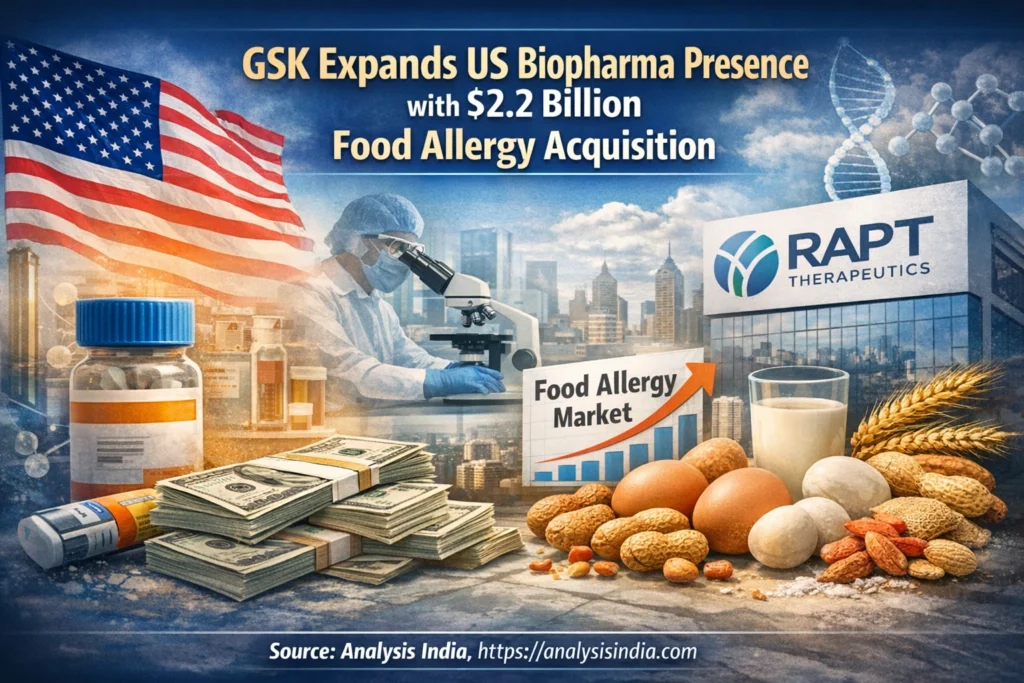
Analysis India: The GSK US biopharma acquisition of RAPT Therapeutics is more than just a major corporate deal. This GSK US biopharma acquisition reflects a clear strategy by GSK to strengthen its long term position in the United States biopharma market. By completing this GSK US biopharma acquisition, the company is securing a clinical stage asset focused on immunology and long acting biologics. These are key growth areas with strong demand across premium healthcare markets. The United States, United Kingdom, Canada, and Australia continue to show consistent interest in advanced allergy and immunology therapies. At the same time, large pharmaceutical companies are reshaping their pipelines as patent pressures increase across several mature product portfolios.
Deal Overview and What GSK Acquired
In this GSK US biopharma acquisition, GSK agreed to buy RAPT Therapeutics for about 2.2 billion USD. The offer price was reported at 58 USD per share. Through this GSK US biopharma acquisition, GSK gains access to ozureprubart, the lead drug candidate developed by RAPT. GSK will hold global commercial rights to the asset, except for mainland China, Macau, Taiwan, and Hong Kong. This GSK US biopharma acquisition highlights how large pharmaceutical companies continue to prioritize Western healthcare markets when planning future product launches.
RAPT Therapeutics operates as a clinical stage biotech company with a strong focus on immunology. The GSK US biopharma acquisition gives GSK early control over a promising food allergy therapy while allowing the company to shape its development and future commercialization strategy.
Why Food Allergy Is Becoming a High Priority Area
Food allergy treatment is moving beyond basic symptom management toward long term preventive care. Many patients require ongoing medical support due to the risk of severe allergic reactions. This creates steady demand for therapies that can reduce exposure risks and improve daily quality of life.
Ozureprubart is designed as an antibody based therapy that targets immune pathways responsible for allergic responses. One of its key features is the potential for less frequent dosing. Compared with existing treatments that often require regular administration, a long acting option may offer better convenience for patients and healthcare providers. This approach fits well with the goals of the GSK US biopharma acquisition and supports GSK ongoing focus on respiratory and immunology innovation.
United States Food Allergy Market Outlook
The United States food allergy market represents one of the largest and fastest growing segments within allergy and immunology care. Industry estimates suggest that the US food allergy treatment market generated around 2.5 billion USD in recent years. Forecasts indicate that the market could reach close to 4 billion USD by the end of the decade, supported by steady growth in patient awareness, diagnosis rates, and demand for advanced therapies.
Millions of Americans live with food allergies that require medical monitoring and preventive care. Emergency visits, specialist consultations, and long term treatment options all contribute to sustained healthcare spending. This makes food allergy a commercially attractive area for pharmaceutical companies that can offer safe, effective, and convenient therapies.
The strong growth potential of the United States food allergy market provides solid commercial logic behind the GSK US biopharma acquisition. By securing a promising clinical asset early through this GSK US biopharma acquisition, GSK positions itself to benefit from long term market expansion.
Strategic Importance for GSK Pipeline
GSK has openly discussed the need to strengthen its future product pipeline due to upcoming patent expirations. This has driven the company to focus on immunology and long acting biologics as key growth areas. The GSK US biopharma acquisition allows GSK to gain early influence over development timelines, trial design, and commercial planning.
This GSK US biopharma acquisition is also the first major deal under CEO Luke Miels. It signals a willingness to invest in innovation and to pay for assets that align with long term strategic goals. For smaller US biotech companies, the GSK US biopharma acquisition shows that high quality immunology programs can still attract premium valuations.
Competitive Impact on US Biopharma Innovation
The United States remains the global center for clinical stage biotech development. When a major company like GSK makes a focused move through a GSK US biopharma acquisition, it reshapes competitive dynamics.
First, investor attention shifts toward similar immunology assets. Second, competing pharmaceutical companies may look for partnerships or acquisitions to strengthen their own pipelines. Third, talent demand increases in biologics and immune science platforms.
The GSK US biopharma acquisition acts as a signal to the wider market that food allergy innovation remains a valuable and competitive space, even during periods of cautious biotech investment.
Fit with GSK Respiratory and Immunology Strategy
Since separating its consumer health business, GSK has focused more heavily on building a strong biopharma identity. The company aims to develop medicines that can scale globally and serve specialist healthcare markets.
A food allergy therapy fits well within this strategy. It complements GSK existing strengths in respiratory care and expands its presence in immune mediated disease areas. The GSK US biopharma acquisition follows a clear pattern of investment rather than a one off decision.
United States Market Relevance
The United States is the most important commercial market for food allergy therapies. High diagnosis rates, strong specialist networks, and advanced healthcare infrastructure create favorable conditions for innovative treatments.
Therapies that offer improved convenience and long term protection are especially attractive to US healthcare providers. A long acting food allergy therapy could support better patient adherence and reduce treatment burden. This aligns well with the objectives of the GSK US biopharma acquisition.
For GSK, the GSK US biopharma acquisition supports both clinical innovation and future revenue growth in a high value healthcare market.
Industry Outlook After the Acquisition
The next stage of the GSK US biopharma acquisition will focus on clinical trial progress and regulatory development. Since the asset is still in mid stage trials, timelines and data outcomes will play a critical role in determining future commercial potential.
The deal structure shows that GSK is willing to invest before late stage certainty to shape a new treatment category early. If trial results support the benefits of long acting dosing and sustained immune response, ozureprubart could become an important part of GSK immunology portfolio.
Across the wider industry, the GSK US biopharma acquisition may encourage more activity in clinical stage mergers and acquisitions. Pharmaceutical companies are increasingly interested in therapies that match real world patient needs and can scale across premium healthcare systems.
Long Term Market Impact
The GSK US biopharma acquisition strengthens the company position in a market with steady growth potential. United States food allergy treatment demand is expected to expand due to rising awareness, improved diagnosis, and the need for safer long term therapies.
Emerging biologics and immunotherapies with better convenience and effectiveness are likely to gain greater market share as they move through clinical development. Patient adoption will depend on regulatory approval, pricing, and insurance coverage.
For investors, the GSK US biopharma acquisition supports a positive long term view of GSK immunology strategy. For patients, it offers the possibility of improved treatment options in the future.
Conclusion
The GSK US biopharma acquisition of RAPT Therapeutics represents a focused investment in United States biotech innovation. By securing a promising food allergy therapy, this GSK US biopharma acquisition strengthens GSK immunology pipeline and aligns with growing demand in a high value healthcare market.
The deal reflects confidence in long acting biologics, signals leadership direction under Luke Miels, and positions GSK for future growth as the United States food allergy market continues to expand. For global audiences across the United States, United Kingdom, Canada, and Australia, the GSK US biopharma acquisition highlights how pharmaceutical strategy, clinical innovation, and market opportunity are increasingly connected.
Frequently Asked Questions
What is the GSK US biopharma acquisition about
The GSK US biopharma acquisition refers to GSK buying RAPT Therapeutics for about 2.2 billion USD. The deal focuses on gaining access to a food allergy therapy in clinical development that targets immune system pathways.
Why did GSK acquire RAPT Therapeutics
GSK acquired RAPT Therapeutics to strengthen its immunology pipeline. The company wants to expand its presence in long acting biologics and food allergy treatments, especially in the United States market.
What is ozureprubart and why is it important
Ozureprubart is a clinical stage drug candidate developed by RAPT Therapeutics. It is designed to treat food allergies by targeting immune responses. Its long acting design may allow less frequent dosing, which can improve patient convenience.
How does this acquisition impact the United States food allergy market
The acquisition brings new investment into the United States food allergy market. It supports the development of advanced therapies that could improve long term allergy management and expand treatment options for patients.
What is the size of the United States food allergy market
The United States food allergy treatment market is estimated to be worth around 2.5 billion USD. It is expected to grow steadily and may reach close to 4 billion USD by the end of the decade.
Why is the US market important for GSK
The United States is the largest commercial market for food allergy therapies. It has strong healthcare infrastructure, high diagnosis rates, and demand for innovative treatments, making it a priority market for GSK.
How does this deal affect GSK long term strategy
This deal supports GSK long term focus on immunology and biologics. It helps the company prepare for future growth as some existing medicines approach patent expiry.
Will this acquisition lead to new food allergy treatments
If clinical trials are successful, ozureprubart could become a new treatment option for food allergy patients. Regulatory approval will determine its future availability.
How does this acquisition impact the biopharma industry
The deal signals continued interest in clinical stage biotech acquisitions. It may encourage other pharmaceutical companies to invest in immunology and allergy related therapies.