Introduction
Healthcare innovation in 2026 is reshaping how diabetes is prevented, diagnosed, and treated worldwide. New therapies like oral GLP-1 pills are improving metabolic control, while AI Diabetes Tools are transforming care delivery. These innovations are making diabetes care more personalized, predictive, and proactive.
Diabetes affects an estimated 537 million adults worldwide, and this number is expected to exceed 600 million by 2030, according to the International Diabetes Federation. Advances in medical technology are critical to meeting this growing demand. Digital health tools, artificial intelligence, and innovative therapeutics are now central to strategies that can lower risk, reduce complications, and improve quality of life.
This article examines the most important medical innovations of 2026, with a focus on AI Diabetes Tools and related technologies. We provide the latest data, market forecasts, company developments, expert statements, and field-level trends shaping the future of diabetes care.
The Rise of AI Diabetes Tools in 2026
Artificial intelligence is no longer experimental in healthcare. In diabetes care, AI is used to analyze glucose trends, predict risk events, automate insulin dosing, and support clinical decision making. AI Diabetes Tools are being integrated into mobile apps, wearables, hospital systems, and telehealth platforms.
According to a 2025 report by Markets and Markets, the global AI in healthcare market is projected to grow from $14 billion in 2024 to $45 billion by 2030. A substantial share of this growth comes from AI applications in chronic disease management, especially diabetes.
AI solutions can identify patterns in large datasets that human clinicians cannot easily see. These capabilities are helping to reduce complications like hypoglycemia and cardiovascular risk.
Oral GLP 1 Pills Transform Diabetes Treatment
The introduction of oral GLP 1 pills is one of the most important medical innovations in 2026. For many years GLP 1 therapies were only available through injections. Many patients avoided these treatments because of needle fear and daily discomfort. Oral GLP 1 pills have changed this situation by offering an easy and convenient option. These pills help control blood sugar and also support weight management. Patients now find it easier to follow long term treatment plans.
Novo Nordisk is one of the leading companies in this segment. The company expanded global access to its oral semaglutide product. Lars Fruergaard Jorgensen, CEO of Novo Nordisk, stated “Oral GLP 1 therapies are improving patient comfort and treatment adherence across global markets”. This statement reflects the growing acceptance of pill based diabetes care. The company believes oral therapy will increase early treatment adoption. This can reduce long term complications in type 2 diabetes patients.
According to GlobalData, the global GLP 1 market is expected to reach 85 billion dollars by 2030. This growth is driven by rising diabetes cases and obesity trends. Pharmaceutical companies are investing heavily in research for better oral formulations. Pfizer is also working on new GLP 1 molecules that can be taken once daily. Pfizer research leadership stated “Simplified dosing will help improve treatment outcomes for patients worldwide”. This confirms that the future of diabetes care is moving toward easier treatment solutions.
AI Diabetes Tools Improve Glucose Monitoring
Glucose monitoring is the foundation of diabetes care. Traditional finger prick testing was painful and inconvenient for many patients. In 2026 continuous glucose monitoring devices have become more advanced with artificial intelligence support. AI Diabetes Tools now analyze glucose trends in real time. These tools provide early warnings for dangerous sugar levels. Patients receive guidance on food intake and activity adjustments.
Abbott has strengthened its FreeStyle Libre platform with AI features. The system now provides smart insights based on user behavior. Robert Ford, CEO of Abbott, said “AI powered glucose insights allow patients to take control of their health in a proactive way”. This shows how data driven tools can improve daily decision making. The company focuses on user friendly technology for long term diabetes management.
Dexcom has also introduced advanced AI analytics in its G7 device. The system predicts glucose trends several hours in advance. This helps patients prevent sudden sugar drops. Kevin Sayer, CEO of Dexcom, stated “Predictive AI technology is changing how people manage diabetes safely”. His statement supports the role of AI Diabetes Tools in reducing health risks.
According to Statista, the global continuous glucose monitoring market may reach 25 billion dollars by 2028. The growth is driven by rising diabetes awareness and smart device adoption. AI integration improves the value of these devices. Patients now rely on digital tools for daily health control.
AI Based Insulin Delivery Systems
Insulin delivery is becoming more intelligent with AI support. Smart insulin pumps adjust doses based on real time glucose data. This reduces the burden on patients who previously had to calculate doses manually. AI systems respond faster to changing glucose levels. This leads to better blood sugar stability.
Medtronic has launched the MiniMed 780G system with advanced AI algorithms. The device automatically adjusts insulin delivery throughout the day. Geoff Martha, CEO of Medtronic, said “Automated insulin systems are giving patients more confidence and freedom”. His statement proves the growing trust in AI based treatment solutions. Patients experience fewer emergency events.
According to Frost and Sullivan, AI driven insulin pumps may dominate the diabetes device market by 2029. The demand is rising due to improved accuracy and ease of use. Healthcare providers are also recommending smart pumps for better clinical outcomes. AI Diabetes Tools are now an essential part of insulin therapy.
AI in Hospital Diabetes Care
Hospitals are using AI Diabetes Tools to support clinical decisions. These systems analyze patient records and lab results. Doctors receive alerts for high risk conditions. This improves patient safety and treatment efficiency.
IBM Watson Health provides AI platforms for chronic disease management. Hospitals use these tools to identify patients who need urgent care. Dr Kaveh Safavi, Senior Executive at IBM, stated “AI enables doctors to focus on patient care while technology handles data analysis”. This highlights the role of AI in improving healthcare workflows.
Clinical teams now rely on AI for glucose control in intensive care units. Early detection of complications reduces hospital stay duration. AI tools also help in discharge planning. This ensures better long term diabetes management.
Remote Diabetes Care with AI
Telemedicine has expanded rapidly in recent years. AI Diabetes Tools support remote monitoring and consultations. Patients can share glucose data through mobile apps. Doctors can adjust treatment plans without physical visits.
Teladoc Health offers AI based diabetes care programs. Jason Gorevic, CEO of Teladoc, said “Digital care platforms make chronic disease management more accessible worldwide”. His statement confirms the importance of virtual healthcare.
Omada Health uses AI to provide personalized coaching. Patients receive lifestyle guidance based on data insights. This improves engagement and long term results. Remote care reduces pressure on healthcare systems.
According to Deloitte, remote chronic care services will grow strongly in Asia and Africa by 2027. AI technology will play a major role in this expansion.
Wearable Devices and AI Diabetes Tools
Wearable devices are now part of daily health monitoring. These devices track activity sleep and heart rate. AI connects this data with glucose information. Patients receive personalized health insights.
Apple is developing non invasive glucose monitoring features for its smartwatch. Tim Cook, CEO of Apple, stated “Health innovation is a core focus for our future products”. This supports Apple’s long term healthcare strategy.
Samsung Health integrates AI analytics into its wellness platform. Users receive lifestyle suggestions based on their health data. Wearables make diabetes care more convenient.
According to IDC, wearable medical devices adoption is growing globally. AI integration increases their clinical value.
AI Powered Nutrition Guidance
Diet plays a major role in diabetes control. AI tools analyze food intake and glucose response. Patients receive meal recommendations. This helps prevent sugar spikes.
Noom uses AI for diabetes coaching. Dr Christopher Ochner, Chief Medical Officer at Noom, said “Personalized nutrition improves long term metabolic health”. His statement supports data driven dietary planning.
MyFitnessPal also uses AI to track food impact. Users understand how meals affect glucose levels. This builds healthier habits.
Nutrition focused AI Diabetes Tools improve patient confidence. Better food choices lead to better outcomes.
Data Security and Ethical AI
AI Diabetes Tools use sensitive health data. Protecting this data is very important. Governments have introduced digital health policies. Companies are improving cybersecurity systems.
The World Health Organization updated its digital health guidelines in 2026. These rules promote ethical AI use. Healthcare providers must follow data protection standards.
Microsoft Health AI supports secure cloud platforms. Satya Nadella, CEO of Microsoft, said “Trust is essential in digital healthcare systems”. His statement highlights the importance of patient data safety.
Ethical AI ensures fair treatment for all patients. This builds confidence in digital healthcare tools.
Global Market Growth of AI Diabetes Tools
The global market for AI Diabetes Tools is expanding at a strong pace in 2026. Rising diabetes cases across developed and developing nations are increasing demand for smarter healthcare solutions. Patients now expect digital tools that can support daily monitoring and long term disease management. Healthcare systems are also investing in AI to improve efficiency and reduce treatment costs. Digital health platforms are becoming a core part of chronic care strategies.
According to Markets and Markets, the AI healthcare market is expected to reach 45 billion dollars by 2030. A large share of this growth is driven by AI Diabetes Tools. These tools help reduce hospital visits and improve patient outcomes. Governments are supporting digital healthcare programs to manage growing patient loads. This financial support encourages technology adoption in hospitals and clinics.
Private healthcare providers are also expanding their AI services. Insurance companies support digital monitoring because it lowers long term medical expenses. Patients benefit from better access to care and faster treatment decisions. The market growth confirms that AI Diabetes Tools are becoming essential in modern healthcare.
AI Diabetes Tools in Emerging Markets
Emerging markets play an important role in the global expansion of AI Diabetes Tools. Countries like India China Brazil and Indonesia face high diabetes growth rates. Many rural areas lack specialist doctors and advanced hospitals. AI powered mobile platforms help fill this gap. Patients can access diabetes care through smartphones.
The Indian Ministry of Health has promoted digital health solutions to improve primary care services. Officials stated “Technology based healthcare systems strengthen rural medical infrastructure”. This shows government commitment to digital healthcare. AI tools help detect diabetes early and support regular monitoring. This reduces complications in underserved communities.
Telemedicine platforms powered by AI improve access to doctors in remote areas. Local healthcare workers use digital tools for patient tracking. These systems reduce the pressure on overcrowded hospitals. Emerging markets will continue to drive global demand for AI Diabetes Tools.
AI for Diabetes Risk Prediction
Early detection is one of the most valuable benefits of AI Diabetes Tools. Artificial intelligence can analyze lifestyle data medical history and genetic patterns. These insights help identify diabetes risk before symptoms appear. Early action can prevent serious health complications. Preventive care reduces long term treatment costs.
Google Health AI has developed predictive models for chronic diseases. Dr Karen DeSalvo, Chief Health Officer at Google, said “AI allows us to detect health risks at an earlier stage than traditional methods”. This proves the preventive power of AI technology.
Public health agencies use AI tools for population level screening. High risk individuals receive targeted health guidance. Early intervention improves long term outcomes. AI Diabetes Tools are becoming key instruments for preventive healthcare.
Personalized Diabetes Care with AI
Every diabetes patient has different needs and treatment responses. AI Diabetes Tools analyze individual data to create customized care plans. These plans consider diet activity sleep and medication response. Doctors use AI insights to adjust therapies more accurately. Patients feel more confident in their treatment process.
Personalized care improves patient engagement. When treatment matches personal lifestyle patients follow plans more closely. AI systems also help doctors save time by automating routine analysis. This allows doctors to focus more on patient communication.
Customized healthcare improves long term disease control. AI Diabetes Tools support both medical and lifestyle management. Personalization is now a key trend in diabetes care.
Big Tech Investment in Healthcare AI
Major technology companies are investing heavily in healthcare innovation. Their expertise in data and cloud computing supports advanced AI solutions. These companies see long term growth potential in digital health services. Healthcare is becoming a strategic business area for the tech industry.
Amazon Health is developing digital care platforms for chronic diseases. Andy Jassy, CEO of Amazon, stated “Technology can make healthcare simpler and more accessible”. This reflects Amazon’s healthcare vision.
Microsoft Health AI supports secure medical data analysis. Satya Nadella, CEO of Microsoft, said “AI will transform how we deliver healthcare services”. His statement highlights the future role of AI.
Big Tech investments accelerate innovation. Healthcare systems gain access to powerful digital tools. AI Diabetes Tools benefit from advanced infrastructure.
Regulatory Support for AI Diabetes Tools
Regulatory support is playing a critical role in the safe expansion of AI Diabetes Tools across global healthcare systems. Governments understand that artificial intelligence can improve diabetes care, but they also recognize the need for strong safety standards. Clear regulations protect patient data, ensure clinical accuracy, and prevent misuse of digital health technologies. When rules are well defined, healthcare providers feel more confident adopting new tools. Patients also trust AI systems more when they know strict safety guidelines are in place.
The United States Food and Drug Administration has introduced a structured framework for approving AI based medical devices. This framework focuses on transparency, reliability, and patient safety. In Europe, the Health AI Act requires healthcare AI tools to meet ethical and performance standards. These regulations ensure that AI Diabetes Tools remain accurate and fair for all patient groups.
The World Health Organization has also issued global guidance on ethical AI use in healthcare. WHO officials stated “Ethical AI improves patient safety and strengthens healthcare systems worldwide”. This statement supports the idea that technology must serve human health responsibly. Regulatory support encourages innovation while maintaining public trust. AI Diabetes Tools continue to grow within a safe and well monitored environment.
Challenges in Expanding AI Diabetes Tools
Despite strong growth, AI Diabetes Tools still face several challenges in real world healthcare settings. Data quality remains a major issue because not all hospitals use standardized digital systems. Some regions lack the infrastructure needed for real time data sharing. Healthcare workers also need proper training to use AI platforms effectively. Without training, advanced tools may not reach their full potential.
Digital access is uneven across different countries and communities. Rural areas often have limited internet connectivity and fewer smart devices. This makes it harder for patients to benefit from AI powered diabetes care. Technology companies and governments are working together to improve digital infrastructure. Training programs are also being developed to help doctors and nurses adapt to AI systems.
Healthcare leaders remain optimistic about overcoming these challenges. Investment in digital health education is increasing. Infrastructure projects are expanding network access. These efforts will make AI Diabetes Tools more accessible over time. The healthcare industry continues to move forward with confidence.
Future Innovations Beyond 2026
Medical innovation will not stop in 2026. The next generation of AI Diabetes Tools will focus on early detection and predictive care. AI powered eye screening systems will help detect diabetic eye disease before vision is affected. Voice based digital assistants will remind patients to take medication and monitor glucose levels. Mental health support tools will also help patients manage stress related to chronic illness.
Wearable sensors will become more accurate and comfortable. These devices will track multiple health signals at once. AI systems will combine this data to provide complete health insights. Patients will receive real time guidance for daily care. Healthcare providers will gain better tools for long term monitoring.
The future of diabetes care will be more connected and proactive. AI Diabetes Tools will help prevent complications before they develop. Technology will support both physical and emotional health. Innovation will focus on patient comfort, safety, and simplicity.
Investment Opportunities in AI Diabetes Tools
Global investors see strong potential in digital healthcare solutions. Chronic disease management platforms offer stable long term demand. AI Diabetes Tools attract funding because they address a growing health problem. Venture capital firms support scalable healthcare technology models.
According to CB Insights, healthcare AI investment continues to rise each year. Startups focused on diabetes technology receive strong financial backing. Investors believe digital health will play a major role in future healthcare systems.
Funding supports research and product development. New tools reach patients faster. Innovation becomes more affordable. Financial support accelerates healthcare transformation.
Conclusion
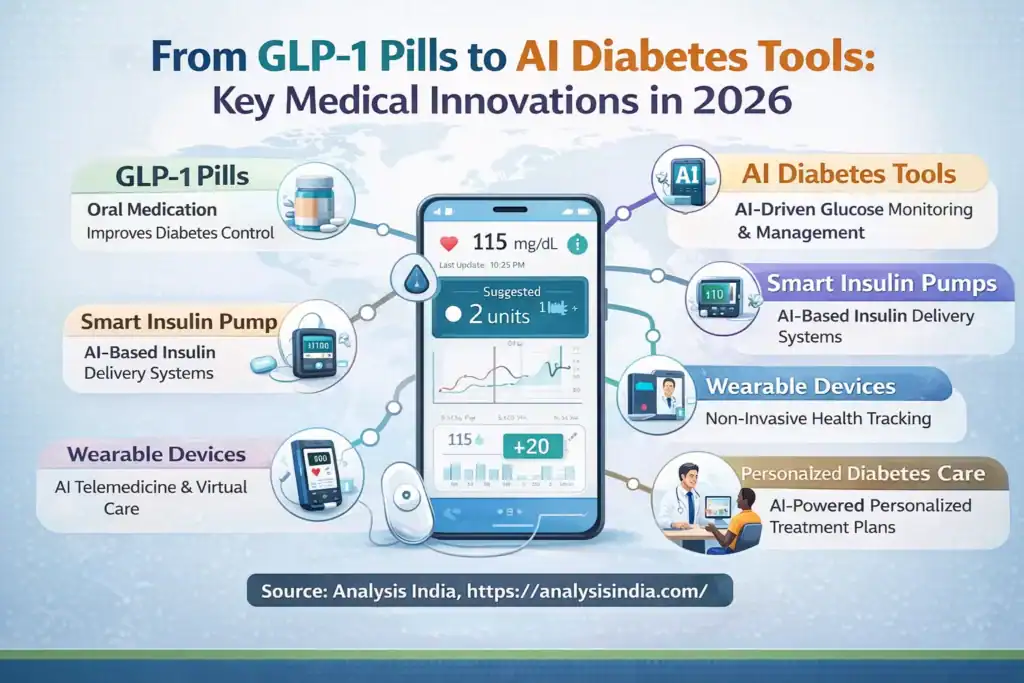
From GLP 1 pills to AI Diabetes Tools, medical innovation in 2026 is reshaping diabetes care across the world. Oral medications have made treatment more comfortable for patients. AI powered platforms have improved safety and accuracy. Smart devices now support daily glucose monitoring and lifestyle management.
Healthcare systems are adopting digital tools faster than ever before. Doctors gain better insights through artificial intelligence. Patients gain more control over their health decisions. Treatment plans are becoming more personalized and effective.
The future of diabetes care is clearly data driven and patient focused. Technology will continue to improve health outcomes. AI Diabetes Tools will remain a core pillar of healthcare innovation for many years ahead.