Analysis India: Apple Pay India is once again becoming a trending topic across global search platforms, technology news portals, and fintech discussions. With India positioned as one of the world’s fastest-evolving digital payment markets, the renewed interest in Apple Pay reflects larger shifts in consumer behavior, mobile ecosystems, and financial technology innovation. Over the past decade, India has transformed from a cash-dominant economy into a mobile-first digital payment powerhouse, making any global payment platform’s potential entry or expansion a subject of intense analysis.
As smartphones increasingly act as financial hubs, users are no longer limited to basic transactions. Payments, identity verification, subscriptions, and financial management are now integrated into daily digital routines. In this environment, Apple Pay’s potential role in India is being closely watched by banks, merchants, regulators, and technology analysts. The discussion is not driven by speculation alone but by India’s growing importance in shaping global digital finance trends.
Why Apple Pay India Is Trending Globally
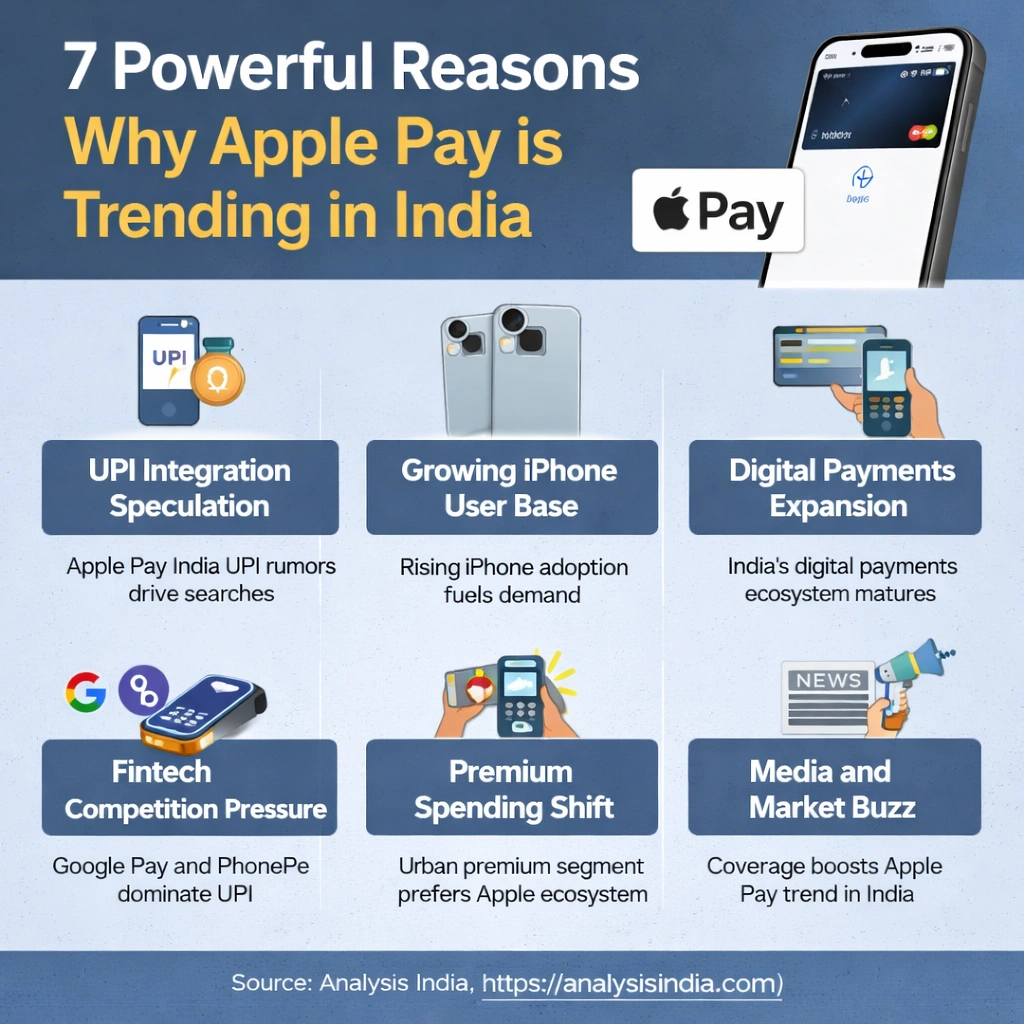
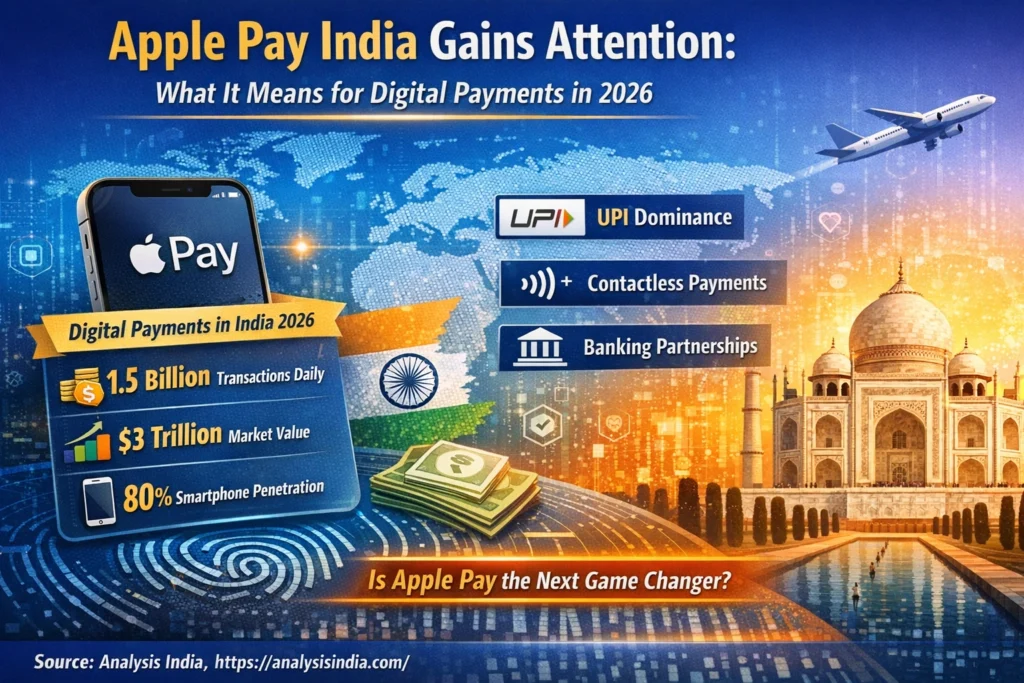
The rise of Apple Pay India in online discussions is driven by multiple interconnected factors rather than a single announcement. India’s mobile payment ecosystem continues to expand at scale, supported by increasing smartphone penetration, improved mobile connectivity, and growing consumer awareness of contactless payments. These structural shifts have made India a focal point for global payment companies seeking long-term growth.
Apple’s expanding presence in India also plays a key role. Over the past few years, Apple has strengthened its position through local manufacturing, retail expansion, and a wider product portfolio that now reaches beyond ultra-premium consumers. As Apple’s device user base grows across premium and aspirational segments, curiosity around Apple Pay’s role within India’s payment ecosystem has naturally increased.
Industry observers believe the timing aligns with a broader transformation in how consumers prefer seamless and secure payment experiences. Users increasingly expect payments to be invisible, fast, and deeply integrated into devices they already trust. This shift has pushed Apple Pay India into global fintech conversations, even without aggressive marketing or formal rollout announcements.
Apple Pay and India’s Digital Payment Ecosystem
India already operates one of the most advanced digital payment environments globally, powered by UPI, mobile wallets, and bank-led payment applications. UPI has become the backbone of daily digital transactions, enabling instant bank-to-bank transfers across multiple platforms. In this context, the conversation around Apple Pay India is less about disruption and more about integration and value addition.
Apple Pay’s global model has typically focused on acting as a secure interface rather than a standalone financial network. Its strength lies in hardware-level integration, biometric authentication, and encrypted transaction processing. If adapted effectively, Apple Pay could function as an additional user interface layer that works alongside existing Indian payment systems rather than competing directly with them.
This distinction is critical in India, where infrastructure-driven solutions often outperform closed ecosystems. Apple Pay’s success would likely depend on how well it aligns with India’s payment standards while preserving its core user experience principles.
Impact on Fintech and Banking Partners
For banks and fintech companies, Apple Pay India represents both opportunity and adaptation. Financial institutions constantly look for ways to reach digitally active consumers while maintaining regulatory compliance and operational efficiency. Apple Pay could offer banks access to a segment of users who value security, simplicity, and ecosystem-based services.
Banks may explore deeper partnerships to integrate card services, authentication layers, and payment workflows into Apple Pay’s interface. Fintech firms, on the other hand, may view Apple Pay as a complementary distribution channel rather than a competing product. This approach mirrors how UPI-based apps coexist while offering differentiated user experiences.
From a broader market perspective, discussions around Apple Pay India signal confidence in India’s long-term digital payment growth. Global technology companies rarely invest attention in markets without sustained transaction volumes and policy stability. Apple Pay’s relevance in these conversations reinforces India’s role as a priority market in global fintech strategy.
Consumer Expectations and Usage Trends
Indian consumers are becoming more discerning about how they choose payment platforms. Early adoption driven by novelty has given way to more practical considerations such as ease of use, reliability, security perception, and ecosystem compatibility. Users now expect payment tools to work seamlessly across online shopping, in-store purchases, subscriptions, and peer-to-peer transfers.
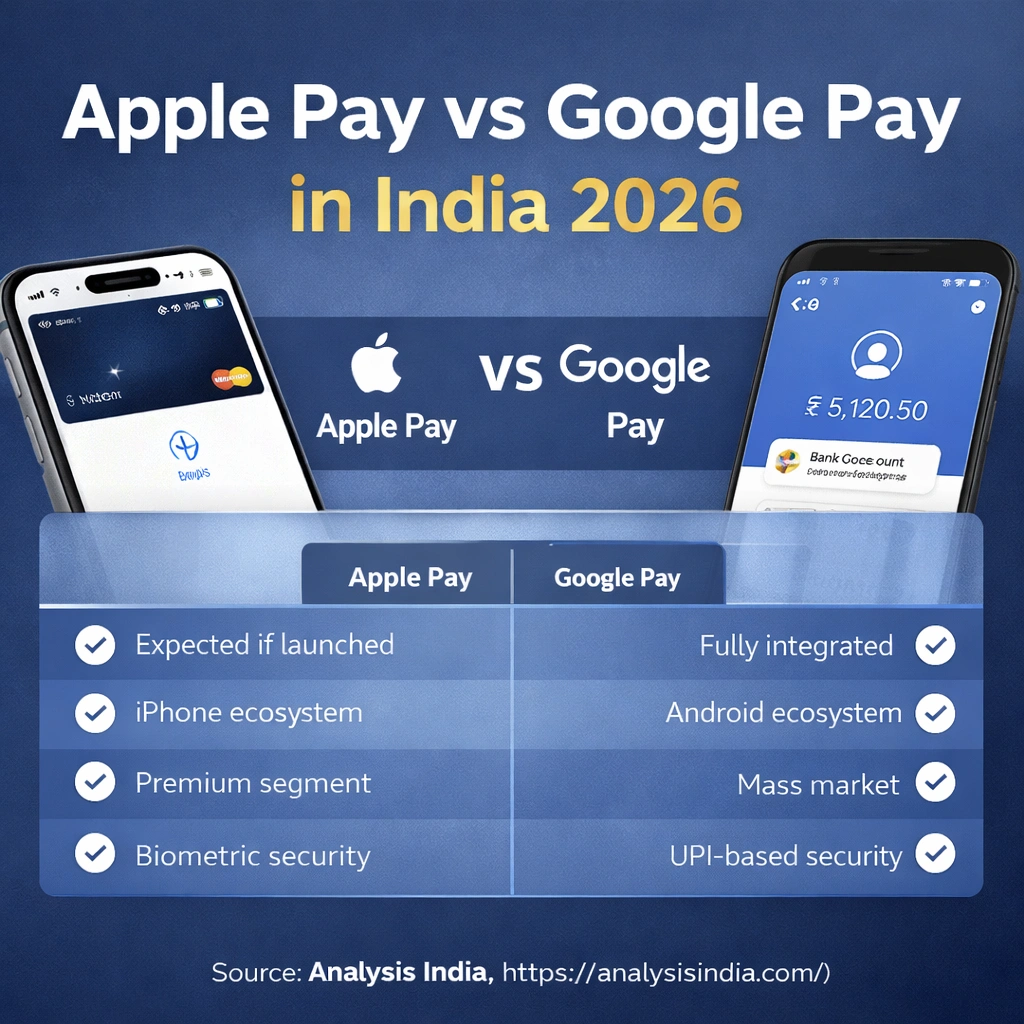
Apple Pay India aligns closely with these expectations for users already embedded in the Apple ecosystem. Features such as biometric authentication, device-level encryption, and minimal user input appeal to consumers who prioritize frictionless experiences. While this user segment may be smaller compared to mass-market Android users, it represents a high-value audience with strong digital engagement.
As contactless payments continue to gain acceptance in urban retail, hospitality, and transportation sectors, demand for integrated payment solutions is expected to grow. Apple Pay’s design philosophy fits well within this trend, particularly as physical and digital commerce boundaries continue to blur.
Challenges Apple Pay May Face in India
Despite the positive momentum, Apple Pay India faces several structural and operational challenges. Regulatory alignment remains one of the most important considerations. India’s payment ecosystem is governed by clear standards around data localization, transaction routing, and interoperability. Any global platform operating in this space must adapt to these requirements without compromising its core architecture.
Local payment standards also present a challenge. UPI’s dominance has created strong user habits and merchant acceptance that are difficult to bypass. Apple Pay would need to demonstrate compatibility and convenience rather than attempting to change established workflows.
Competition from well-entrenched domestic and international platforms further complicates the landscape. Indian users already have access to multiple payment apps that offer wide acceptance and familiarity. Success for Apple Pay would depend on localization, strategic partnerships, and sustained engagement rather than rapid or aggressive expansion.
Role of Security and Privacy in Apple Pay India Discussions
One recurring theme in discussions around Apple Pay India is security and privacy. As digital payments scale, concerns around data protection and fraud prevention have become more prominent. Apple’s global reputation for emphasizing user privacy plays a role in shaping perception, particularly among premium users and enterprise customers.
Apple Pay’s approach to storing payment credentials securely on devices and using biometric verification aligns with global best practices. In India, where digital literacy levels vary widely, clear communication around security benefits would be essential to build trust without creating complexity.
This focus on security could position Apple Pay as a complementary option for users seeking additional layers of protection rather than a replacement for existing payment habits.
What Apple Pay India Means for the Future
The growing interest in Apple Pay India highlights a broader shift in global fintech evolution. India is no longer just a fast-growing market but a reference point for how large-scale digital payment systems operate efficiently. Global technology companies entering India must adapt to local innovation rather than introduce isolated solutions.
Apple Pay’s potential trajectory in India reflects this reality. Instead of disrupting from the outside, success would likely come from integration, partnership, and gradual expansion aligned with regulatory and consumer expectations.
For bloggers, analysts, and industry observers, Apple Pay India offers a compelling narrative that connects technology, finance, policy, and consumer behavior. It illustrates how global platforms must rethink traditional market entry strategies when engaging with digitally mature economies.
Final Thoughts
Apple Pay India trending in 2026 is not just about a payment service or a single company. It reflects India’s growing influence in the global digital economy and the continuous evolution of mobile-first financial solutions. As digital payments become more embedded in daily life, platforms that prioritize security, usability, and ecosystem compatibility will remain relevant.
Whether through strategic partnerships, gradual integration, or ecosystem alignment, Apple Pay’s presence in India will continue to be discussed across fintech and technology circles. The conversation itself underscores India’s position as a market that shapes global digital payment strategies rather than simply adopting them.
Frequently Asked Questions
Why is Apple Pay India trending in global fintech discussions?
Apple Pay India is trending because India has become one of the most influential digital payment markets globally. Growth in smartphone usage, contactless payments, and mobile-first financial behavior has renewed interest in how global platforms like Apple Pay could fit into India’s ecosystem.
Is Apple Pay officially launched in India?
Apple Pay’s role in India is still being discussed in terms of potential integration rather than a full standalone launch. Industry attention is focused on how Apple Pay could align with India’s existing payment infrastructure.
Why does India matter so much for digital payment companies?
India processes a massive volume of digital transactions daily and operates one of the most advanced payment infrastructures. For global fintech and technology companies, India acts as a reference market for scale, regulation, and mobile-first adoption.
How is Apple Pay different from UPI-based payment apps?
UPI is a national payment system that enables bank-to-bank transfers. Apple Pay works as a secure device-level interface. In India, Apple Pay is viewed as a complementary layer that could work alongside UPI rather than replace it.
Can Apple Pay work with India’s digital payment infrastructure?
Industry discussions suggest that Apple Pay’s success in India would depend on integration with existing systems. Compatibility with local standards and regulatory requirements would be essential for long-term relevance.
Why are Apple device users interested in Apple Pay India?
Apple Pay offers biometric authentication, device-level encryption, and minimal user interaction. These features appeal to users who prefer seamless and secure payment experiences within the Apple ecosystem.
How important is security in Apple Pay India discussions?
Security and privacy are central themes in Apple Pay India conversations. As digital payments scale, users and regulators increasingly focus on data protection, authentication methods, and fraud prevention.
Will Apple Pay compete with Google Pay and PhonePe in India?
Apple Pay is not positioned as a mass-market competitor to UPI apps. Instead, it is viewed as an additional option for Apple users, operating within India’s broader multi-platform payment environment.
What challenges could limit Apple Pay’s growth in India?
Regulatory compliance, data localization rules, strong UPI adoption, and established user habits are key challenges. Apple Pay would need localization and partnerships to gain traction.
How are banks viewing Apple Pay India?
Banks see Apple Pay as a potential channel to reach digitally active and premium users. Discussions focus on partnerships, authentication integration, and maintaining regulatory compliance.
What does Apple Pay India signal about the future of digital payments?
It signals a shift toward layered payment systems where infrastructure, apps, and devices work together. India’s ecosystem encourages collaboration rather than replacement models.
Why is Apple Pay India relevant beyond payments?
Apple Pay India represents broader trends in mobile ecosystems, consumer trust, and platform integration. It reflects how payments are becoming part of everyday digital identity and device usage.