Analysis India: Apple Pay vs Google Pay in India 2026 is becoming one of the most discussed fintech comparisons as speculation around Apple Pay India entry continues to grow. While Google Pay already dominates India’s UPI ecosystem, Apple Pay’s potential integration into India’s digital payments infrastructure has triggered strong market curiosity. For a comprehensive Apple Pay India digital payments outlook for 2026, read our in-depth market analysis. Understanding the differences between Apple Pay vs Google Pay in India 2026 requires evaluating ecosystem integration, regulatory compatibility, security architecture, user base positioning, and competitive dynamics.
India’s digital payments market is among the fastest growing globally. As explored in our detailed Apple Pay India digital payments analysis, the entry of a global payment system into a mature UPI-driven economy could reshape premium segment competition. This article provides a structured and data-driven comparison of Apple Pay vs Google Pay in India 2026.
UPI Compatibility and Infrastructure Integration
The most critical factor in the Apple Pay vs Google Pay in India 2026 debate is UPI compatibility. Google Pay operates fully within the UPI ecosystem governed by the National Payments Corporation of India. It has established deep integration with Indian banks and QR-based retail networks.
If Apple Pay India launches, UPI alignment would be essential. Without UPI support, Apple Pay adoption would remain limited to card-based or NFC transactions. Regulatory alignment under the Reserve Bank of India digital payment framework would also shape integration timelines.
UPI dominance makes infrastructure compatibility the foundation of any Apple Pay vs Google Pay comparison in India 2026.
Ecosystem Integration and Device Advantage
Apple Pay vs Google Pay in India 2026 also differs in ecosystem strategy. Google Pay operates across Android devices, which dominate India’s smartphone market. Its cross-device flexibility ensures mass-market penetration.
Apple Pay, in contrast, functions within the Apple ecosystem. If introduced in India, it would initially target iPhone users. However, ecosystem-level integration with Face ID authentication, device tokenization, and seamless Apple services could strengthen loyalty among premium consumers.
As discussed in our article on AI in banking customer experience trends in 2026, ecosystem-based personalization is becoming central to fintech competitiveness. This dynamic adds depth to the Apple Pay vs Google Pay in India 2026 comparison.
Market Share and User Base Strength
Google Pay India has established a significant share of UPI transactions. Its early adoption strategy, merchant onboarding, and cashback-driven growth positioned it strongly in the retail digital payments segment.
Apple Pay vs Google Pay in India 2026 becomes a premium vs mass market comparison. Apple Pay may not initially compete for transaction volume dominance but instead target high-value urban users.
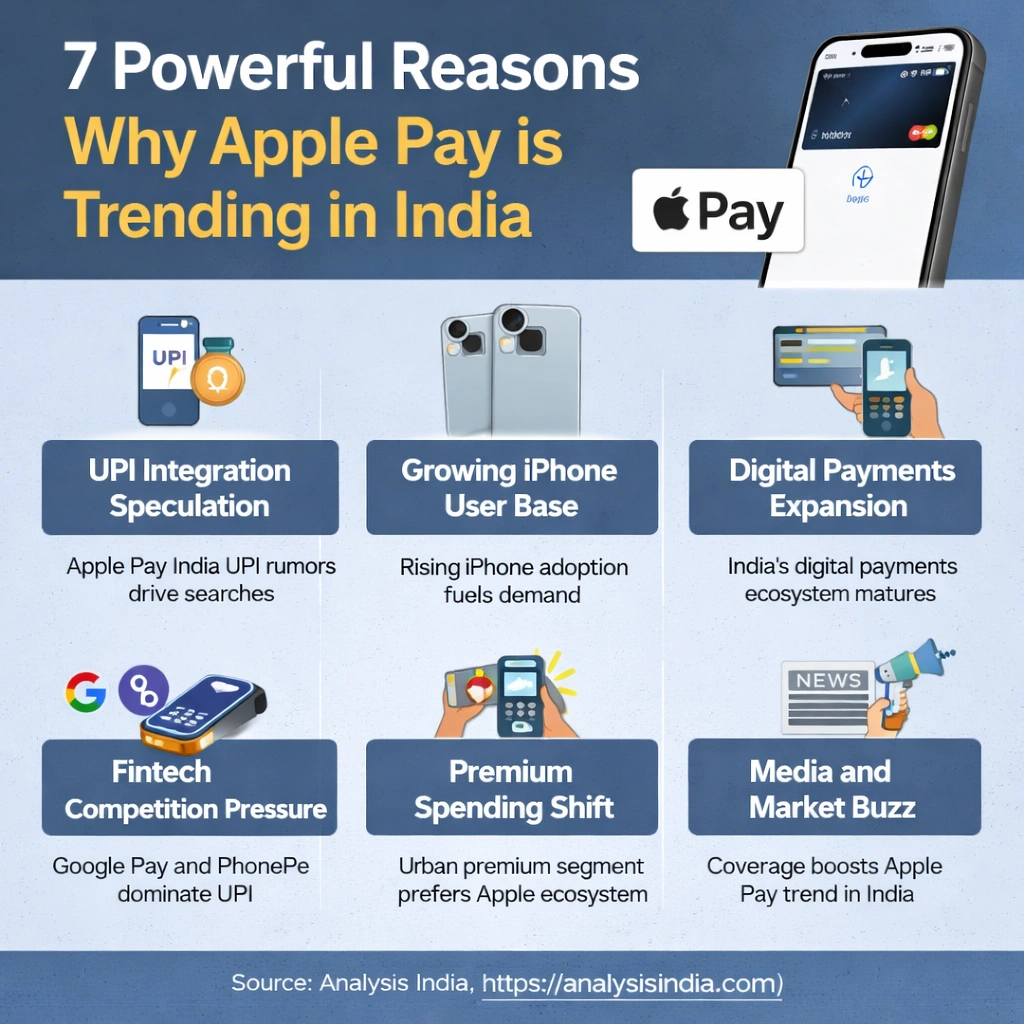
India’s smartphone segmentation plays a decisive role in shaping how Apple Pay vs Google Pay in India 2026 unfolds over time. Recent developments explain why Apple Pay is trending in India across fintech discussions
Security Architecture and Privacy Positioning
Security architecture is another defining factor in Apple Pay vs Google Pay in India 2026. Apple Pay globally emphasizes tokenization and biometric authentication as core features. Its privacy-focused branding differentiates it in international markets.
Google Pay also implements multi-layered authentication and fraud detection within India’s UPI infrastructure. Compliance with RBI digital transaction standards ensures both platforms maintain regulatory security alignment.
The comparison ultimately depends on consumer perception of ecosystem-level privacy and transaction security.
Revenue Model and Strategic Objectives
Google Pay operates as a strategic ecosystem expansion tool within Google’s broader services strategy. It enhances user engagement and strengthens Android ecosystem stickiness.
Apple Pay globally contributes to services revenue diversification. If Apple Pay India launches, it would align with Apple’s long-term ecosystem monetization model rather than short-term transaction volume growth.
This strategic distinction further clarifies Apple Pay vs Google Pay in India 2026 as a competition between ecosystem depth and mass accessibility.
Competitive Impact on Digital Payments India 2026
If Apple Pay integrates with UPI, it could intensify premium competition without immediately disrupting mass transaction volumes. Google Pay would retain strong rural and semi-urban penetration due to Android device dominance.
The broader digital payments India 2026 ecosystem would likely benefit from increased innovation pressure. Merchant adoption of NFC, enhanced authentication frameworks, and AI-driven fraud monitoring could accelerate.
As analyzed in our comprehensive Apple Pay India digital payments outlook, ecosystem competition often strengthens technological advancement.
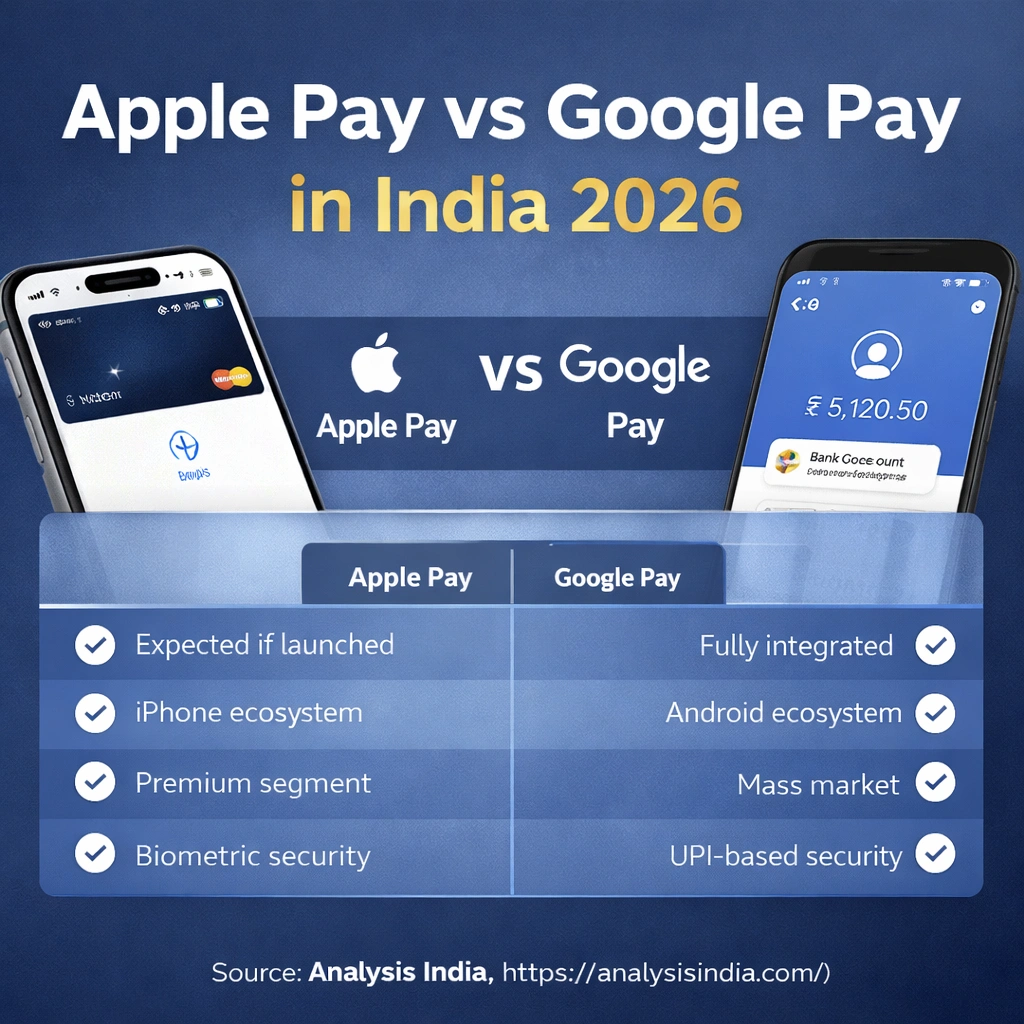
Apple Pay vs Google Pay in India 2026: Strategic Comparison Table
| Parameter | Apple Pay India 2026 | Google Pay India 2026 |
|---|---|---|
| UPI Integration | Expected if launched | Fully integrated |
| Device Reach | iPhone ecosystem | Android ecosystem |
| Market Positioning | Premium segment | Mass market |
| Security Framework | Tokenization + Biometrics | UPI + Multi-layer security |
| Strategic Goal | Services revenue expansion | Ecosystem engagement |
Regulatory and Infrastructure Authority References
For deeper understanding of India’s digital payment governance:
- Reserve Bank of India digital payment framework
- National Payments Corporation of India UPI infrastructure
These regulatory bodies define operational compliance for both platforms.
Conclusion: Who Leads in Apple Pay vs Google Pay in India 2026?
The Apple Pay vs Google Pay in India 2026 comparison highlights a strategic contrast rather than a direct transaction volume battle. Google Pay maintains strong dominance within India’s UPI ecosystem. Apple Pay, if introduced with regulatory and UPI alignment, could capture premium urban users seeking integrated ecosystem experiences.
The long-term outcome of Apple Pay vs Google Pay in India 2026 will depend on regulatory integration, device penetration, merchant adoption, and evolving consumer behavior.
India’s digital payments landscape remains dynamic, and ecosystem-driven competition is likely to intensify through 2026.
Frequently Asked Question
Is Apple Pay available in India in 2026?
Apple Pay availability depends on regulatory alignment and UPI integration approvals.
Which is better in India 2026, Apple Pay or Google Pay?
Google Pay currently leads in UPI volume. Apple Pay may differentiate in premium ecosystem integration if launched.
Will Apple Pay support UPI in India?
UPI compatibility would be essential for large-scale adoption if Apple Pay enters the Indian market.
Is Apple Pay safer than Google Pay?
Both platforms follow secure authentication frameworks aligned with regulatory guidelines.