Introduction to the Cancer Screening Market
The cancer screening market has become one of the most critical pillars of modern healthcare systems as the global focus continues to shift toward prevention, early detection, and cost-effective disease management. Cancer remains a leading cause of death worldwide, and its growing incidence has intensified the need for reliable and accessible screening solutions. Early detection significantly improves survival rates, reduces treatment complexity, and lowers long-term healthcare costs, making screening programs an essential component of public health strategies.
Over the past decade, the cancer screening market has undergone a profound transformation. Traditionally, cancer detection relied heavily on symptom-based diagnosis, often identifying the disease at advanced stages. However, increasing awareness about preventive healthcare, combined with technological advancements, has led to the widespread adoption of routine screening practices. Governments and healthcare organizations are now prioritizing early detection through structured screening programs, particularly for high-risk populations.
The expansion of the cancer screening market is also closely linked to demographic and lifestyle changes. Aging populations, urbanization, sedentary lifestyles, and environmental factors are contributing to a higher prevalence of cancer globally. These trends are driving demand for advanced diagnostic tools capable of detecting cancer at its earliest stages. As a result, screening technologies are evolving rapidly, incorporating innovations such as molecular diagnostics, artificial intelligence, and non-invasive testing methods.
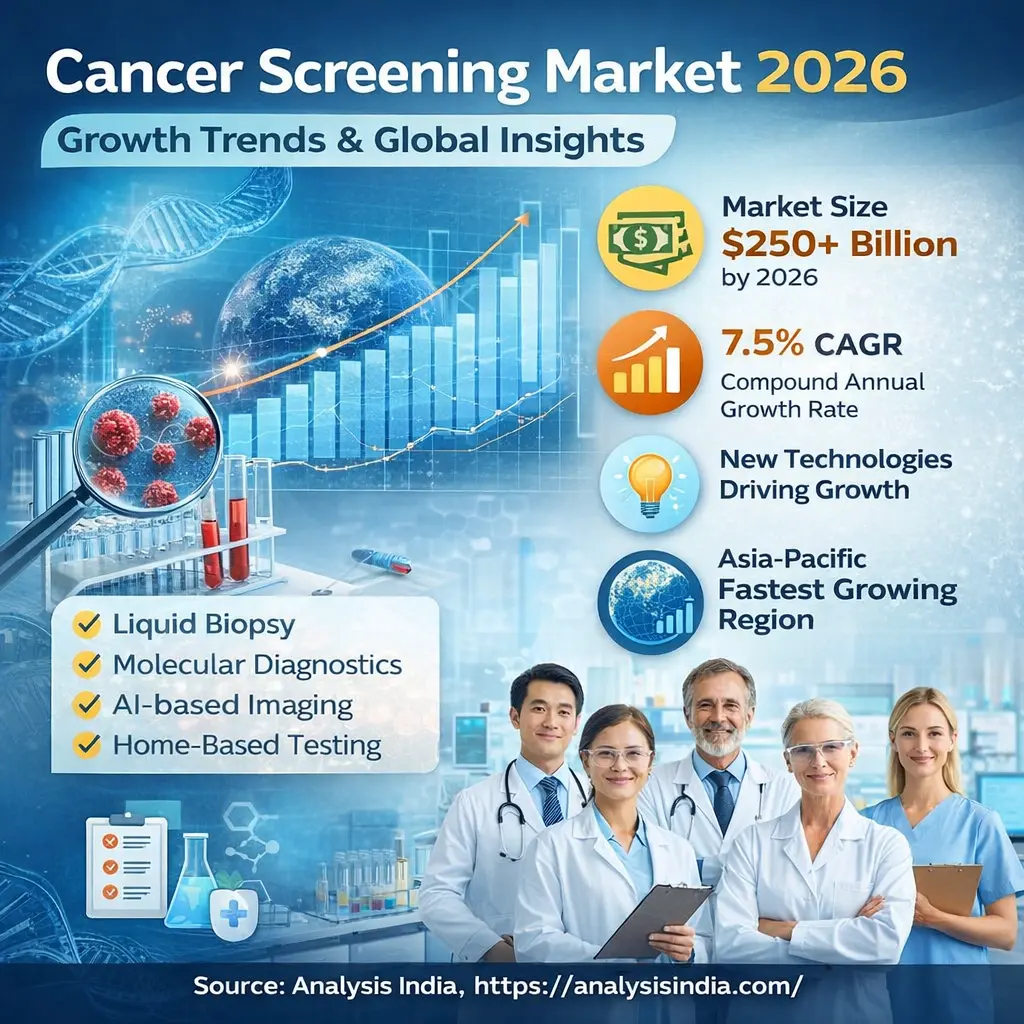
Another significant factor shaping the cancer screening market is the increasing emphasis on patient-centric care. Modern screening approaches are designed to be less invasive, more accurate, and more accessible. Technologies like liquid biopsy and home-based testing kits are making it easier for individuals to participate in screening programs without significant discomfort or inconvenience. This shift toward convenience and accessibility is expected to further accelerate market growth in the coming years.
Cancer Screening Market Overview
The cancer screening market encompasses a wide array of diagnostic techniques and tools aimed at identifying cancer in asymptomatic individuals. These techniques include imaging methods such as CT scans, MRI, and mammography, as well as laboratory-based tests and advanced molecular diagnostics. Each method plays a unique role in detecting different types of cancer, and their combined use enhances diagnostic accuracy.
One of the primary drivers of growth is the increasing awareness of the importance of early detection. Patients are becoming more proactive in managing their health, leading to higher participation in screening programs. Public health campaigns, educational initiatives, and community outreach programs are playing a crucial role in raising awareness and encouraging routine screening.
Healthcare infrastructure development is another key factor influencing the expansion of the cancer screening market. Emerging economies are investing heavily in diagnostic facilities, training healthcare professionals, and improving access to screening services. These investments are creating new opportunities for market growth, particularly in regions with previously limited access to healthcare.
Technological advancements are also transforming the cancer screening market. The integration of artificial intelligence and machine learning into diagnostic tools is improving accuracy and efficiency. AI-powered imaging systems can analyze medical images with high precision, reducing the risk of false positives and false negatives. Similarly, molecular diagnostics and genomic sequencing are enabling more personalized screening approaches, allowing healthcare providers to tailor screening strategies based on individual risk factors.
Despite these advancements, challenges such as high costs and limited accessibility in certain regions continue to hinder market growth. However, ongoing innovation and government support are expected to address these issues, ensuring sustained expansion of the cancer screening market.
Global Market Snapshot
| Category | Insight |
|---|---|
| Growth Trend | Increasing adoption of preventive healthcare |
| Key Technology | Molecular diagnostics and AI-based imaging |
| Leading Region | North America |
| Fastest Growing Region | Asia-Pacific |
| Key End Users | Hospitals and diagnostic laboratories |
Regional Analysis of the Cancer Screening Market
Regional dynamics play a crucial role in shaping the growth and development of the cancer screening market. Differences in healthcare infrastructure, economic conditions, and awareness levels influence the adoption of screening technologies across various regions.
China Cancer Screening Market
The China Cancer Screening Market is witnessing rapid growth due to strong government initiatives and increasing healthcare investments. The Chinese government has implemented several nationwide screening programs aimed at early detection of cancers such as gastric, liver, and colorectal cancers. These programs are significantly increasing awareness and encouraging participation in screening activities.
China’s large population and rising middle class are also contributing to market growth. As disposable incomes increase, more individuals are seeking preventive healthcare services, including cancer screening. Additionally, advancements in healthcare infrastructure and the adoption of modern diagnostic technologies are further supporting the expansion of the cancer screening market in China.
United States Cancer Screening Market
The United States Cancer Screening Market is one of the most advanced globally, characterized by high adoption rates and widespread availability of screening technologies. The presence of leading diagnostic companies, coupled with strong healthcare infrastructure, supports the growth of the market.
Government initiatives and insurance coverage play a significant role in increasing access to screening services. Public health campaigns and awareness programs are encouraging individuals to undergo regular screening, particularly for high-risk cancers such as breast, lung, and colorectal cancers.
Japan Cancer Screening Market
The Japan Cancer Screening Market is known for its strong focus on preventive healthcare and early detection. The country has well-established screening programs and high participation rates, particularly for gastric and colorectal cancers.
Advanced diagnostic technologies are widely adopted in Japan, enabling accurate and efficient detection of cancer. Government policies and healthcare initiatives continue to support the growth of the cancer screening market in the region.
South East Asia Cancer Screening Market
The South East Asia Cancer Screening Market is emerging as a high-growth region due to improving healthcare infrastructure and increasing awareness. Countries in this region are gradually adopting organized screening programs, creating new opportunities for market expansion.
However, challenges such as limited access to healthcare and affordability issues still need to be addressed. Ongoing investments in healthcare infrastructure and public health initiatives are expected to drive growth in the coming years.
Cancer Screening Market by Technology
Liquid Biopsy and Non-Invasive Screening
Liquid biopsy represents a significant advancement in the field of early cancer detection. This technology allows for the analysis of circulating tumor DNA in blood samples, providing a non-invasive alternative to traditional biopsy methods. The convenience and accuracy of liquid biopsy are driving its adoption across various healthcare settings.
The growing demand for minimally invasive procedures is a key factor contributing to the expansion of this segment. Patients are increasingly предпочerring screening methods that are less painful and require minimal recovery time. Additionally, liquid biopsy enables continuous monitoring of cancer progression, making it a valuable tool for personalized medicine.
Technology Comparison Table
| Technology | Advantage | Limitation |
|---|---|---|
| Imaging | Widely available | Limited early detection |
| Liquid Biopsy | Non-invasive | High cost |
| Molecular Diagnostics | High accuracy | Requires advanced labs |
Cancer Type Segmentation in the Cancer Screening Market
The cancer screening market is extensively segmented based on cancer type, as each form of cancer requires a distinct diagnostic approach, screening frequency, and target population. This segmentation plays a crucial role in shaping screening strategies, healthcare policies, and technological innovation. The growing complexity of cancer biology and the increasing demand for early detection are driving the development of specialized screening methods tailored to specific cancer types.
Different cancers exhibit unique progression patterns, risk factors, and detection challenges. As a result, the cancer screening market is not a uniform ecosystem but rather a highly diversified structure where each segment evolves independently based on epidemiology, technological advancements, and healthcare priorities. Screening programs are increasingly designed with precision, focusing on high-risk populations and leveraging advanced diagnostic tools to improve accuracy and efficiency.
The segmentation of the cancer screening market into gastric, lung, colorectal, and liver cancer screening reflects both global disease burden and regional prevalence patterns. For instance, gastric cancer screening is more prominent in Asia, while colorectal and lung cancer screening programs are widely implemented in North America and Europe. This regional variation underscores the importance of localized strategies within the broader global market.
Gastric Cancer Screening Market
The gastric cancer screening market holds significant importance, particularly in regions where the incidence of stomach cancer remains high. Countries in Asia, including China and Japan, have established comprehensive screening programs due to the high prevalence of gastric cancer. Early detection is critical, as symptoms often appear only in advanced stages, making treatment more complex and less effective.
Screening methods for gastric cancer primarily include endoscopy, imaging techniques, and biomarker testing. Endoscopy remains the gold standard due to its ability to provide direct visualization of the stomach lining and detect early-stage abnormalities. However, advancements in non-invasive diagnostic tools are gradually transforming this segment of the cancer screening market.
The growth of the gastric cancer screening segment is driven by increasing awareness, government initiatives, and improvements in healthcare infrastructure. In many countries, national screening programs are being implemented to encourage early detection among high-risk populations. These programs are often supported by public health campaigns aimed at educating individuals about risk factors such as diet, smoking, and Helicobacter pylori infection.
Gastric Cancer Screening Methods Comparison
| Method | Advantage | Limitation |
|---|---|---|
| Endoscopy | High accuracy | Invasive |
| Biomarker Testing | Non-invasive | Lower sensitivity |
| Imaging | Widely available | Limited early detection |
Recommended Population for Early Screening of Gastric Cancer
The identification of high-risk groups is essential for improving the effectiveness of screening programs. The recommended population for early screening of gastric cancer includes individuals with a family history of the disease, those with chronic infections such as Helicobacter pylori, and individuals with dietary and lifestyle risk factors.
Targeted screening strategies are becoming increasingly important in the cancer screening market, as they allow healthcare providers to focus resources on populations with the highest risk. This approach not only improves detection rates but also enhances cost-effectiveness. Advances in genetic testing and risk assessment tools are further enabling the identification of individuals who would benefit most from early screening.
In addition to clinical risk factors, socioeconomic factors also influence screening participation. Efforts to improve accessibility and affordability are critical for ensuring that high-risk populations can benefit from early detection programs.
Lung Cancer Screening Market
The lung cancer screening market is one of the most dynamic segments within the broader oncology diagnostics landscape. Lung cancer remains one of the leading causes of cancer-related deaths worldwide, primarily due to late-stage diagnosis. As a result, early detection through screening has become a major focus for healthcare systems globally.
Low-dose computed tomography (LDCT) is the most widely used screening method for lung cancer. It has proven to be highly effective in detecting early-stage tumors, significantly improving survival rates. The adoption of LDCT has increased substantially in recent years, particularly in developed countries where screening programs are well established.
The growth of the lung cancer screening segment is closely linked to the prevalence of smoking and exposure to environmental pollutants. Public health initiatives aimed at reducing smoking rates and promoting early detection are playing a key role in driving market growth. Additionally, advancements in imaging technologies and artificial intelligence are enhancing the accuracy and efficiency of lung cancer screening.
Lung Cancer Screening Trends
| Factor | Impact |
|---|---|
| Smoking Prevalence | High screening demand |
| AI Integration | Improved detection accuracy |
| Government Programs | Increased adoption |
| Awareness Campaigns | Higher participation |
Recommended Population for Early Screening of Lung Cancer
The recommended population for early screening of lung cancer primarily includes individuals with a history of heavy smoking, as well as those exposed to occupational or environmental carcinogens. Age is also a significant factor, with screening typically recommended for individuals above a certain age threshold.
Risk-based screening approaches are becoming increasingly important in the cancer screening market, as they allow for more efficient allocation of resources. By focusing on high-risk individuals, healthcare providers can improve detection rates while minimizing unnecessary procedures.
In recent years, advancements in predictive analytics and risk modeling have enhanced the ability to identify individuals who would benefit most from screening. These tools are enabling more personalized screening strategies, which are expected to play a significant role in the future of the cancer screening market.
Lung Cancer Molecular Screening Market
The lung cancer molecular screening market represents a rapidly evolving segment driven by advancements in genetic testing and personalized medicine. Molecular screening involves the analysis of genetic mutations and biomarkers associated with lung cancer, enabling more precise diagnosis and targeted treatment.
This segment is gaining traction as healthcare providers increasingly adopt precision medicine approaches. Molecular screening not only aids in early detection but also provides valuable insights into tumor characteristics, helping clinicians select the most effective treatment options.
The integration of molecular diagnostics with traditional screening methods is enhancing the overall effectiveness of lung cancer detection. As technology continues to advance, the cancer screening market is expected to see increased adoption of molecular screening solutions
Colorectal Cancer Screening Market
The colorectal cancer screening market is one of the most well-established segments, supported by strong evidence demonstrating the benefits of early detection. Screening methods such as colonoscopy, fecal immunochemical tests (FIT), and stool DNA tests are widely used to detect colorectal cancer at early stages.
Colonoscopy remains the gold standard due to its ability to detect and remove precancerous polyps. However, non-invasive screening methods are gaining popularity due to their convenience and lower cost. These methods are particularly effective in increasing participation rates among individuals who may be reluctant to undergo invasive procedures.
The growth of the colorectal cancer screening segment is driven by increasing awareness, government initiatives, and advancements in diagnostic technologies. Screening programs are widely implemented in many countries, contributing to a decline in mortality rates associated with colorectal cancer.
Colorectal Cancer Molecular Screening Market
The colorectal cancer molecular screening market is gaining importance as genetic and biomarker-based testing becomes more widely adopted. Molecular screening enables the detection of specific genetic mutations associated with colorectal cancer, providing valuable insights for early diagnosis and treatment planning.
This segment is benefiting from advancements in genomic technologies and increasing investment in research and development. As personalized medicine continues to evolve, molecular screening is expected to play a central role in the cancer screening market.
Liver Cancer Screening Market
The liver cancer screening market is expanding due to the rising prevalence of liver diseases, particularly those associated with hepatitis infections. Early detection is critical for improving survival rates, as liver cancer often progresses rapidly.
Screening methods include imaging techniques such as ultrasound and biomarker tests such as alpha-fetoprotein (AFP) analysis. These methods are widely used in clinical practice and are supported by ongoing research aimed at improving accuracy and efficiency.
The growth of the liver cancer screening segment is driven by increasing awareness, government initiatives, and advancements in diagnostic technologies. Efforts to improve access to screening services are particularly important in regions with high prevalence rates.
Liver Cancer Molecular Screening Market
The liver cancer molecular screening market is evolving rapidly, driven by advancements in genomic technologies and biomarker research. Molecular screening enables the detection of genetic mutations and other biomarkers associated with liver cancer, providing valuable insights for early diagnosis and treatment.
This segment is expected to witness significant growth as healthcare providers increasingly adopt precision medicine approaches. The integration of molecular diagnostics with traditional screening methods is enhancing the overall effectiveness of liver cancer detection.
Technology Trends and Innovation
Technological innovation is a key driver shaping the future of the cancer screening market. Artificial intelligence is playing an increasingly important role in improving diagnostic accuracy and efficiency. AI-powered imaging systems can analyze large volumes of data quickly and accurately, enabling early detection of abnormalities.
The integration of digital health technologies is also transforming the cancer screening market. Telemedicine and remote monitoring solutions are making screening more accessible, particularly in underserved regions. Additionally, the development of home-based screening kits is increasing convenience and encouraging participation in screening programs.
Another important trend is the growing adoption of personalized medicine. Advances in genomic sequencing and molecular diagnostics are enabling more targeted screening approaches, allowing healthcare providers to tailor screening strategies based on individual risk profiles.
Competitive Landscape and Company Profiles
The cancer screening market is highly competitive, with several global players focusing on innovation and strategic expansion. Companies are investing heavily in research and development to introduce advanced screening technologies and expand their market presence.
Key Companies Table
| Company | Strength | Strategy |
|---|---|---|
| Illumina | Genomics | Innovation |
| Roche | Diagnostics | Expansion |
| Thermo Fisher | Lab solutions | R&D |
| Exact Sciences | Non-invasive tests | Product expansion |
| Guardant Health | Liquid biopsy | Precision medicine |
Detailed Company Insights
Leading companies are focusing on technological innovation, strategic partnerships, and geographic expansion. Their efforts are driving advancements in screening technologies and shaping the competitive landscape.
Market Dynamics of the Cancer Screening Market
The cancer screening market is shaped by a complex interplay of macroeconomic factors, healthcare policies, technological advancements, and demographic trends. Understanding these dynamics is essential for identifying growth opportunities, assessing competitive positioning, and forecasting long-term market evolution. The market is not driven by a single factor but rather by a combination of structural shifts in global healthcare systems and changing patient behavior.
One of the defining characteristics of the cancer screening market is its strong alignment with preventive healthcare strategies. Governments and healthcare organizations are increasingly focusing on early detection as a means to reduce treatment costs and improve survival outcomes. This shift is influencing investment decisions, policy frameworks, and innovation priorities across the healthcare ecosystem. At the same time, the integration of advanced technologies is accelerating the transition from traditional diagnostic methods to more sophisticated and personalized screening approaches.
The cancer screening market is also influenced by disparities in healthcare access and infrastructure across regions. While developed economies benefit from well-established screening programs and advanced diagnostic technologies, emerging markets are still in the process of building capacity. This creates both challenges and opportunities, as companies and policymakers work to expand access while maintaining quality and affordability.
Market Drivers
The growth of the cancer screening market is primarily driven by a combination of epidemiological, technological, and policy-related factors. One of the most significant drivers is the increasing global burden of cancer. Rising incidence rates, fueled by aging populations, lifestyle changes, and environmental factors, are creating a strong demand for early detection solutions. As more individuals become aware of the importance of screening, participation rates are increasing, further supporting market expansion.
Another key driver is the growing emphasis on preventive healthcare. Healthcare systems around the world are shifting from reactive treatment models to proactive prevention strategies. This transition is encouraging the adoption of routine screening programs, particularly for high-risk populations. Governments are playing a crucial role in this process by implementing national screening initiatives and providing funding for early detection programs.
Technological advancements are also a major driver of growth. Innovations in molecular diagnostics, artificial intelligence, and imaging technologies are significantly improving the accuracy and efficiency of screening methods. These advancements are making it possible to detect cancer at earlier stages, often before symptoms appear. The integration of digital health solutions is further enhancing accessibility, enabling remote screening and telemedicine services.
In addition, increasing healthcare expenditure is contributing to the expansion of the cancer screening market. Both public and private sectors are investing heavily in diagnostic infrastructure, research and development, and awareness campaigns. These investments are creating a favorable environment for market growth, particularly in emerging economies where healthcare systems are rapidly evolving.
Key Market Drivers Table
| Driver | Impact on Market |
|---|---|
| Rising cancer prevalence | Increased demand for screening |
| Preventive healthcare focus | Higher screening participation |
| Technological advancements | Improved accuracy and efficiency |
| Government initiatives | Expanded access and funding |
| Healthcare investments | Infrastructure development |
Market Restraints
Despite its strong growth potential, the cancer screening market faces several challenges that may hinder its expansion. One of the most significant restraints is the high cost associated with advanced screening technologies. Techniques such as molecular diagnostics and liquid biopsy require sophisticated equipment and specialized expertise, making them expensive and less accessible in low-income regions.
Limited awareness and education also pose challenges, particularly in rural and underserved areas. Many individuals are not aware of the benefits of early detection or may have misconceptions about screening procedures. This lack of awareness can lead to low participation rates, reducing the effectiveness of screening programs.
Healthcare infrastructure disparities further impact the market. In many developing regions, access to diagnostic facilities and trained healthcare professionals is limited. This creates barriers to the implementation of large-scale screening programs and slows the adoption of advanced technologies.
Regulatory complexities and reimbursement issues also affect market growth. The approval process for new diagnostic technologies can be time-consuming, delaying their introduction into the market. Additionally, inconsistent reimbursement policies may discourage healthcare providers from adopting certain screening methods.
Market Opportunities
The cancer screening market presents significant opportunities for growth, particularly in emerging economies and underserved regions. As healthcare infrastructure improves and awareness increases, these markets are expected to become key contributors to global expansion. Companies that can develop cost-effective and scalable solutions are likely to gain a competitive advantage in these regions.
Personalized medicine represents another major opportunity. Advances in genomic sequencing and molecular diagnostics are enabling more targeted screening approaches, allowing healthcare providers to tailor screening strategies based on individual risk profiles. This shift toward precision healthcare is expected to drive demand for advanced diagnostic tools.
The development of non-invasive and home-based screening solutions is also creating new opportunities. These technologies are making screening more convenient and accessible, encouraging higher participation rates. As consumer preferences shift toward convenience and self-care, the demand for such solutions is expected to grow.
Digital health and artificial intelligence are further expanding the scope of the cancer screening market. AI-powered tools can analyze large volumes of data to identify patterns and predict risk, enabling more proactive and efficient screening strategies. The integration of these technologies into healthcare systems is expected to enhance diagnostic accuracy and improve patient outcomes.
Market Challenges
In addition to restraints, the cancer screening market faces ongoing challenges related to implementation and scalability. Ensuring equitable access to screening services remains a major concern, particularly in regions with limited resources. Addressing these disparities requires coordinated efforts from governments, healthcare providers, and industry stakeholders.
Another challenge is maintaining accuracy and reliability across different screening methods. False positives and false negatives can have significant implications for patients, leading to unnecessary anxiety or delayed treatment. Continuous improvement in diagnostic technologies and quality control measures is essential for addressing these issues.
Data privacy and security are also becoming increasingly important as digital health solutions are integrated into screening programs. Protecting patient data while enabling efficient data sharing is a critical challenge that must be addressed to ensure trust and compliance.
Future Outlook of the Cancer Screening Market
The future of the cancer screening market is characterized by rapid innovation, increasing accessibility, and a growing emphasis on personalized healthcare. As technology continues to evolve, screening methods are expected to become more accurate, less invasive, and more widely available. This transformation is likely to reshape the healthcare landscape and improve outcomes for patients worldwide.
One of the most significant trends shaping the future is the integration of artificial intelligence into diagnostic processes. AI has the potential to revolutionize screening by enabling faster and more accurate analysis of medical data. From imaging to molecular diagnostics, AI-powered tools are expected to enhance every aspect of the screening process.
Another important trend is the expansion of home-based screening solutions. These solutions are making it possible for individuals to conduct certain tests from the comfort of their homes, reducing the need for hospital visits. This shift is particularly important in the context of increasing healthcare demand and limited resources.
The adoption of personalized screening approaches is also expected to increase. By leveraging genetic and molecular data, healthcare providers can develop tailored screening strategies that address individual risk factors. This approach not only improves detection rates but also enhances the efficiency of screening programs.
Future Trends Table
| Trend | Impact |
|---|---|
| AI integration | Improved diagnostic accuracy |
| Home-based screening | Increased accessibility |
| Personalized medicine | Targeted screening |
| Digital health | Enhanced data management |
| Emerging markets | New growth opportunities |
Strategic Recommendations for Stakeholders
For stakeholders operating in the cancer screening market, strategic planning is essential for capitalizing on growth opportunities. Companies should focus on innovation, particularly in the development of cost-effective and non-invasive screening technologies. Investing in research and development can help organizations stay ahead of technological advancements and maintain a competitive edge.
Collaboration is another key strategy. Partnerships between diagnostic companies, healthcare providers, and research institutions can facilitate knowledge sharing and accelerate innovation. These collaborations are particularly important for expanding access to screening services in underserved regions.
Market expansion strategies should also prioritize emerging economies. By tailoring solutions to local needs and addressing affordability challenges, companies can tap into new growth opportunities. Additionally, increasing awareness through educational campaigns can help drive adoption and improve participation rates.
Conclusion
The cancer screening market is undergoing a transformative phase, driven by technological innovation, increasing awareness, and evolving healthcare priorities. Early detection has become a cornerstone of modern healthcare, and screening programs are playing a critical role in reducing the global burden of cancer.
As the market continues to evolve, the integration of advanced technologies such as artificial intelligence, molecular diagnostics, and digital health solutions is expected to drive further growth. These innovations are not only improving diagnostic accuracy but also making screening more accessible and patient-friendly.
Despite challenges related to cost, accessibility, and infrastructure, the overall outlook remains highly positive. Continued investment in healthcare infrastructure, research and development, and awareness initiatives will be essential for sustaining growth and ensuring equitable access to screening services.
In conclusion, the cancer screening market is poised for significant expansion in the coming years. With strong support from governments, healthcare organizations, and industry players, the market is set to play a pivotal role in improving global health outcomes and advancing the future of preventive medicine.
Frequently Asked Questions (FAQ)
What is the cancer screening market?
The cancer screening market includes diagnostic tests and technologies used to detect cancer at an early stage before symptoms appear. It covers imaging, laboratory tests, and molecular diagnostics.
Why is cancer screening important?
Cancer screening helps detect cancer early, which improves treatment success and survival rates. Early detection also reduces treatment costs and complications.
Which cancers are commonly screened?
Commonly screened cancers include lung cancer, colorectal cancer, gastric cancer, liver cancer, and breast cancer. Screening programs often focus on high-risk populations.
What are the latest trends in the cancer screening market?
Key trends include liquid biopsy, molecular diagnostics, AI-based imaging, and home-based screening solutions. These technologies improve accuracy and accessibility.
Who should go for cancer screening?
Individuals with risk factors such as age, family history, smoking, or chronic conditions should consider regular screening. Doctors may recommend screening based on personal risk.
What is liquid biopsy in cancer screening?
Liquid biopsy is a non-invasive test that detects cancer-related biomarkers in blood. It is increasingly used for early detection and monitoring.
Which region leads the cancer screening market?
North America leads due to advanced healthcare systems, while Asia-Pacific is the fastest-growing region due to increasing awareness and healthcare investments.
What is the future of the cancer screening market?
The future includes AI-driven diagnostics, personalized screening, and wider adoption of non-invasive testing methods, making screening more accessible globally.