
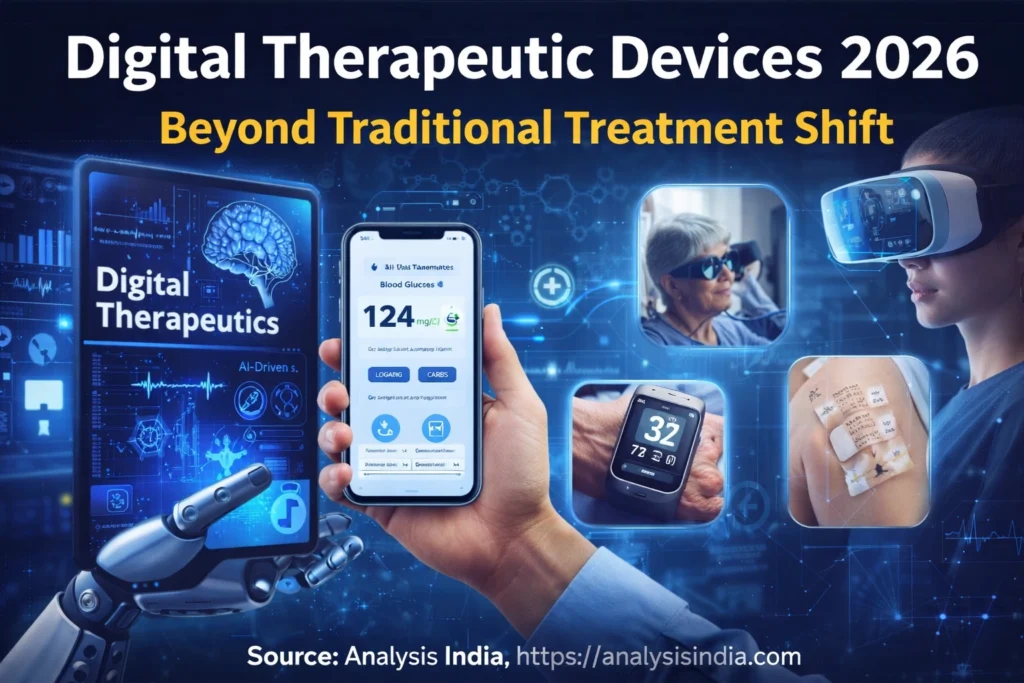
Analysis India: Digital Therapeutic Devices are emerging as a major force in healthcare in 2026 as treatment models move beyond traditional medication and clinic based therapy. Digital Therapeutic Devices include app connected platforms and smart software tools designed to support mental health care, diabetes management, and rehabilitation therapy.
These systems use behavioural science, real time data, and personalised feedback to guide patients through structured treatment programs. Hospitals, clinics, and home care providers are increasingly using Digital Therapeutic Devices to extend care outside physical healthcare facilities. Stronger mobile connectivity, cloud platforms, and wearable device integration have made these solutions easier to deploy at scale. Together, these developments are reshaping how patients receive long term therapy and chronic disease support.
Modern healthcare systems face rising demand for continuous care that cannot be delivered through hospital visits alone. Traditional treatment often relies on periodic consultations and medication, which may not provide enough daily support for chronic conditions. Digital Therapeutic Devices now offer guided therapy programs through mobile apps, connected sensors, and remote monitoring tools. These systems help patients follow treatment plans more consistently by providing reminders, feedback, and progress tracking. Clinicians can monitor patient outcomes remotely and adjust therapy plans when needed. As healthcare shifts toward preventive and personalised care, Digital Therapeutic Devices are becoming essential components of modern treatment strategies.
Rising Demand for Digital Therapeutic Devices
Healthcare systems are under pressure to manage chronic diseases, mental health conditions, and post injury rehabilitation more efficiently. Many patients require long term therapy that cannot be supported by in person care alone. Digital Therapeutic Devices provide structured programs for behaviour change, symptom tracking, and therapy adherence. These tools help patients manage conditions such as anxiety, depression, diabetes, and physical injuries from their homes. This reduces the burden on hospitals and clinics while maintaining continuity of care.
Mental health care is one of the strongest drivers of digital therapeutics adoption. Rising stress levels, lifestyle disorders, and limited access to therapists have increased demand for scalable digital solutions. App based therapy platforms offer cognitive behavioural therapy, mindfulness exercises, and mood tracking tools. Diabetes management platforms support glucose monitoring, diet planning, and medication reminders. Rehabilitation apps guide patients through physiotherapy exercises with real time feedback. These combined use cases make Digital Therapeutic Devices valuable across multiple areas of care.
Market data confirms this strong demand. According to Grand View Research, the global digital therapeutics market reached USD 6.9 billion in 2024 and continues to grow as healthcare providers adopt software based treatment solutions. The research firm notes that mental health and chronic disease management are the fastest growing segments. This expansion reflects rising confidence in Digital Therapeutic Devices as long term treatment tools rather than temporary digital aids.
Digital Therapeutics Market Snapshot
| Segment | Year | Market Value | Source |
|---|---|---|---|
| Digital Therapeutics | 2024 | USD 6.9 Billion | Grand View Research |
Global Investment and Market Expansion
Investment in Digital Therapeutic Devices is increasing as healthcare systems focus on scalable, cost effective care models. Health technology companies are expanding research into app based therapy platforms, AI driven coaching systems, and connected treatment tools. Governments are also supporting digital health innovation to improve access to care, especially for mental health and chronic diseases. These investments help healthcare providers extend treatment beyond traditional clinical settings. Digital therapeutics are now part of national digital health strategies in many regions. This shows growing institutional support for software based treatment solutions.
North America leads adoption due to strong digital health infrastructure and regulatory support for digital therapies. Europe follows with large scale mental health and chronic disease digital care programs. Asia Pacific is expanding rapidly as smartphone usage, telehealth services, and healthcare digitisation increase. Digital Therapeutic Devices are now used in hospitals, clinics, corporate wellness programs, and home care environments. This global expansion highlights the growing role of digital therapies in mainstream healthcare.
According to MarketsandMarkets, the global digital therapeutics market is expected to grow strongly by 2028 due to rising demand for non drug based treatment solutions. The research firm links this growth to increasing mental health awareness, chronic disease prevalence, and digital health investments. Healthcare systems view Digital Therapeutic Devices as long term solutions for managing patient care efficiently. This confirms the expanding market opportunity for digital therapy platforms.
Digital Therapeutics Market Forecast
| Segment | Year | Market Trend | Source |
|---|---|---|---|
| Digital Therapeutics | 2028 | Strong growth | MarketsandMarkets |
What Defines Digital Therapeutic Devices
Digital Therapeutic Devices include software driven tools designed to prevent, manage, or treat medical conditions through evidence based therapy programs. These devices deliver structured treatment plans through mobile apps, web platforms, and connected systems. They support mental health therapy, diabetes management, and physical rehabilitation programs. Digital therapeutics use behavioural science, clinical guidelines, and real time data to personalise care. This improves patient engagement and treatment adherence.
Mental health devices provide cognitive behavioural therapy modules, stress management tools, and mood tracking features. Diabetes platforms support glucose monitoring, nutrition coaching, and lifestyle planning. Rehabilitation tools guide patients through physiotherapy exercises using motion tracking and feedback systems. Many Digital Therapeutic Devices integrate with wearable devices to collect continuous health data. Manufacturers focus on clinical validation, data security, and regulatory compliance to ensure safety and effectiveness.
Mental Health Digital Therapeutics
Mental health is one of the fastest growing areas for Digital Therapeutic Devices. App based therapy platforms offer guided programs for anxiety, depression, and stress management. These tools use cognitive behavioural therapy principles to help users develop healthier coping strategies. Patients can track mood, sleep patterns, and emotional triggers through digital dashboards. Therapists can monitor patient progress remotely and adjust treatment plans when needed. This improves long term engagement and treatment consistency.
AI systems personalise therapy content based on user behaviour and symptom patterns. Some platforms include virtual coaching, breathing exercises, and mindfulness sessions. Digital mental health tools also help address therapist shortages by providing scalable support. Companies such as Pear Therapeutics and Headspace Health offer digital mental health solutions used in clinical and consumer settings. These platforms expand access to therapy beyond traditional clinic visits, especially in remote or underserved areas.
Survey data highlights growing acceptance of digital mental health tools. A 2024 American Psychiatric Association survey reported that over 60 percent of patients were open to using digital therapy apps as part of their treatment. The same survey found that clinicians increasingly recommend app based therapy for mild to moderate mental health conditions. This shows rising trust in Digital Therapeutic Devices for mental health care.
Diabetes Management Through Digital Therapeutics
Digital Therapeutic Devices play an important role in modern diabetes care. App connected platforms support blood glucose tracking, medication reminders, and lifestyle coaching. Patients receive personalised feedback on diet, exercise, and medication adherence. Wearable integration allows continuous monitoring of glucose levels. Alerts notify users of abnormal readings that require attention.
Doctors can review patient data remotely and adjust treatment plans accordingly. Digital platforms also help patients understand how daily habits affect their condition. This improves self management and reduces complications. Omada Health and Livongo provide digital diabetes management programs used by healthcare providers and employers. These systems support long term behaviour change and better glycaemic control.
According to CDC data, diabetes affects more than 500 million people globally, and many require continuous support. Digital Therapeutic Devices offer scalable solutions for managing this growing health burden. This makes digital diabetes platforms a critical part of modern care strategies.
Rehabilitation and Physical Therapy Applications
Rehabilitation therapy is another key use case for Digital Therapeutic Devices. App based physiotherapy programs guide patients through recovery exercises using video instructions and motion tracking. Sensors track movement accuracy and provide real time feedback. Patients can complete therapy sessions at home with digital guidance. This reduces the need for frequent clinic visits.
Therapists can monitor patient progress remotely and adjust exercise programs when needed. Digital rehab tools improve adherence to therapy schedules. Patients feel more motivated when progress is visible through dashboards. Companies such as Sword Health and Kaia Health offer digital rehabilitation platforms for musculoskeletal recovery. These tools support faster recovery and improved patient outcomes.
Workflow Automation in Therapeutic Care
Digital Therapeutic Devices reduce manual monitoring and documentation for healthcare staff. Patient progress data is recorded automatically through connected platforms. Clinicians can review reports digitally instead of relying on paper records. This saves time and improves care coordination.
Treatment plans can be updated efficiently based on real time data. Patients receive continuous support without frequent clinic visits. Healthcare teams can manage larger patient populations with fewer resources. According to Healthcare IT News, digital therapy platforms improve care efficiency and patient engagement across multiple treatment areas.
Use Cases
Pear Therapeutics developed FDA cleared digital therapeutics for substance use disorder and insomnia. Hospitals use these tools to support behavioural therapy programs. Omada Health provides digital programs for diabetes and weight management used by employers and healthcare systems. Sword Health offers digital physiotherapy with remote therapist guidance. These real world examples show how Digital Therapeutic Devices support treatment beyond traditional methods.
Benefits for Healthcare Systems
Digital Therapeutic Devices improve access to care and patient engagement. They support long term therapy without increasing hospital visits. Remote monitoring improves treatment adherence. Healthcare systems reduce costs by shifting care to digital platforms.
Patients receive personalised support at home. Clinicians gain better data insights. The World Health Organization supports digital health tools that strengthen healthcare delivery. Digital Therapeutic Devices align with this goal.
Market Growth Driven by Digital Health Adoption
The growth of Digital Therapeutic Devices is driven by rising smartphone usage and telehealth adoption. Cloud platforms support therapy data integration across healthcare systems. Employers and insurers are investing in digital care models to improve population health.
Grand View Research and MarketsandMarkets report strong growth in digital therapeutics due to demand for non drug treatment options. This confirms long term market momentum.
Market Forecast
| Segment | Year | Market Value | Source |
|---|---|---|---|
| Digital Therapeutics | 2024 | USD 6.9B | Grand View Research |
| Digital Therapeutics | 2028 | Growth phase | MarketsandMarkets |
Adoption Is Rising but Challenges Remain
Challenges include data privacy concerns, clinical validation requirements, and patient engagement barriers. Regulatory approval processes vary by region. Some patients need digital literacy support to use therapy apps effectively.
However, adoption continues to rise. Healthcare systems are integrating digital therapies into care pathways. Digital Therapeutic Devices are viewed as long term solutions for modern treatment models.
Future Outlook for Digital Therapeutic Devices
Digital Therapeutic Devices will continue evolving with AI driven personalisation. Wearable integration will expand. Regulatory frameworks will mature. Access will improve in developing regions.
Digital therapies will become part of standard treatment plans for chronic diseases and mental health care.
Conclusion
Digital Therapeutic Devices are transforming healthcare in 2026 by extending treatment beyond traditional settings. App connected tools for mental health, diabetes, and rehabilitation improve patient engagement and outcomes. Market and survey data show strong global growth. Healthcare systems benefit from scalable digital care. As technology advances, Digital Therapeutic Devices will become essential in modern treatment models.