Introduction to the Global Medical Device Market
The Global Medical Device Market forms the backbone of contemporary healthcare delivery by supporting disease diagnosis, treatment procedures, and long-term patient monitoring across clinical environments. Medical devices range from diagnostic imaging systems and surgical instruments to monitoring equipment and advanced digital technologies that assist healthcare professionals in delivering accurate and timely care. As healthcare demand continues to expand worldwide, medical devices have become essential tools for improving clinical efficiency and patient management.
The growing importance of the global medical device market is closely associated with healthcare infrastructure expansion, increasing focus on early diagnosis, and rising demand for technology-driven care solutions. Hospitals, diagnostic imaging centers, specialty clinics, and ambulatory facilities rely heavily on medical devices to support daily clinical workflows. At the same time, technological progress, including digital integration and intelligent systems, is reshaping how devices are designed, deployed, and utilized in healthcare settings.
Global Medical Device Market Overview and Industry Landscape
The global medical device market represents a complex and highly specialized industry that supports nearly every stage of patient care. Medical devices enable healthcare providers to diagnose medical conditions, perform therapeutic interventions, and monitor patient health with greater precision and consistency. Over time, the industry has evolved alongside medical science, clinical practices, and healthcare delivery models, resulting in a broad portfolio of devices serving diverse clinical needs.
Hospitals account for a substantial share of medical device utilization due to their comprehensive diagnostic and treatment capabilities. Diagnostic imaging centers and specialty clinics also play a significant role, particularly in the adoption of advanced imaging and precision-focused equipment.
Public healthcare systems influence large-scale procurement and standardization, while private healthcare providers often contribute to early adoption of new technologies and specialized devices. This dual demand structure shapes product development priorities and market competition.
Regulatory oversight remains a defining factor in the medical device industry. Devices must comply with stringent safety, performance, and quality requirements before they can be introduced into clinical practice.
These regulatory frameworks vary by region and directly impact product development timelines, manufacturing processes, and market entry strategies. As a result, reliability, clinical validation, and post-market support are critical elements of competitiveness within the global medical device market.
The industry landscape is also influenced by increasing digital integration. Medical devices are no longer limited to standalone hardware but are increasingly connected with software platforms, data management systems, and analytics tools.
This shift supports improved clinical decision-making, streamlined workflows, and enhanced interoperability across healthcare systems, reinforcing the strategic importance of medical devices in modern healthcare ecosystems.
Global Medical Device Market Size and Industry Scope
The global medical device market encompasses a wide scope of products, applications, and end-use environments, reflecting its essential role within healthcare systems worldwide. Market expansion is driven by the need for accurate diagnostics, efficient therapeutic solutions, and continuous patient monitoring across both acute and long-term care settings.
As healthcare providers seek to improve outcomes while optimizing resources, medical devices are increasingly viewed as critical enablers of operational and clinical performance.
Several structural factors support the expanding scope of the market.
Aging populations, rising prevalence of chronic conditions, and increased awareness of preventive healthcare contribute to sustained demand for diagnostic and monitoring devices. Imaging systems, in particular, play a central role in early disease detection and treatment planning, while therapeutic and life-support devices address complex clinical requirements across multiple specialties.
The industry involves a diverse network of stakeholders, including device manufacturers, healthcare providers, regulatory authorities, and technology partners. Collaboration among these participants has become increasingly important as medical devices incorporate advanced materials, software components, and data-driven functionalities. Innovation is influenced not only by clinical demand but also by regulatory pathways, healthcare policies, and infrastructure readiness in different regions.
From a strategic standpoint, the industry scope is shifting toward integrated solutions that combine hardware, software, and service models. This evolution is redefining competitive positioning within the global medical device market and encouraging long-term investments in connected technologies, digital platforms, and value-oriented healthcare solutions.
Global Medical Device Market Segmentation Analysis
The global medical device market is structured across multiple segmentation layers that reflect differences in product functionality, clinical application, and end-user requirements. Market segmentation helps explain how demand is distributed across diagnostic, therapeutic, and monitoring technologies, while also highlighting adoption patterns across healthcare facilities and medical specialties.
Each segment plays a distinct role within the broader Global Medical Device Market, contributing to its overall complexity and long-term growth potential.
Segmentation by Product Type
Medical devices are commonly categorized based on their primary role within clinical workflows. Diagnostic medical devices represent one of the most influential product segments, as they support disease detection, screening, and clinical evaluation across healthcare settings. This category includes imaging systems, in-vitro diagnostic tools, and patient monitoring equipment that enable timely and accurate medical decisions.
Imaging-based diagnostics form a core component of this segment, with technologies such as X-ray systems and mammography equipment widely used in hospitals and diagnostic centers. A more detailed analysis of imaging-specific demand patterns is covered in the Global X-ray Device Market and Global Mammography Market, which explore technology adoption, clinical use cases, and market dynamics in depth.
Therapeutic medical devices constitute another major product segment and are directly involved in treatment and intervention procedures. These devices include surgical instruments, cardiovascular systems, orthopedic implants, respiratory care equipment, and other therapeutic solutions designed to manage or correct medical conditions.
Demand within this segment is closely linked to surgical volumes, chronic disease prevalence, and advancements in minimally invasive treatment approaches. Therapeutic devices continue to evolve alongside improvements in materials, precision engineering, and procedural efficiency.
Monitoring and life-support devices represent a steadily expanding segment within the global medical device market. These products are used to track vital parameters, support critical care functions, and manage long-term patient conditions. Their adoption is increasing across intensive care units, emergency departments, and home healthcare environments, reflecting a broader shift toward continuous monitoring and patient-centered care models.
Segmentation by Application
Application-based segmentation illustrates how medical devices are utilized across different clinical specialties. Cardiology remains one of the most prominent application areas due to the widespread burden of cardiovascular conditions and the need for diagnostic imaging, interventional tools, and monitoring systems. Orthopedics relies heavily on implants, surgical devices, and rehabilitation equipment to support trauma care, joint replacement, and mobility restoration.
Oncology represents a growing application segment within the global medical device market, driven by increasing demand for accurate imaging, biopsy tools, and treatment support systems. Imaging technologies play a critical role in cancer detection and treatment planning, linking oncology applications closely with diagnostic device segments discussed in specialized market studies.
Neurology and neurosurgery also contribute to demand through specialized diagnostic and therapeutic devices designed to address complex neurological disorders. General surgery spans a wide range of procedures and continues to support consistent demand for versatile medical devices across hospitals and surgical centers.
Segmentation by End User
End-user segmentation highlights how purchasing behavior and technology adoption differ across healthcare environments. Hospitals remain the largest end users of medical devices due to their comprehensive diagnostic, surgical, and critical care capabilities. They require a broad portfolio of devices ranging from basic diagnostic tools to advanced imaging and therapeutic systems, making hospitals central to overall market demand.
Diagnostic imaging centers represent a specialized end-user segment focused primarily on high-performance diagnostic equipment. These facilities emphasize efficiency, accuracy, and patient throughput, which drives demand for advanced imaging systems and workflow-optimized devices. Specialty clinics adopt medical devices tailored to specific medical disciplines, often prioritizing precision and compact system design.
Ambulatory surgical centers are becoming increasingly important end users as they adopt efficient and space-optimized devices that support outpatient procedures and faster patient recovery. This shift reflects broader changes in healthcare delivery models and contributes to evolving demand patterns within the global medical device market.
Global Medical Device Market by Diagnostic Imaging Modality
Diagnostic imaging represents one of the most critical components of the Global Medical Device Market, as it supports early disease detection, clinical assessment, treatment planning, and follow-up care. Imaging technologies are widely adopted across hospitals, diagnostic imaging centers, and specialty clinics due to their ability to provide non-invasive and highly detailed insights into patient conditions.
Continuous improvements in image quality, workflow efficiency, and digital integration have strengthened the role of imaging devices within modern healthcare systems. The diagnostic imaging segment includes several key modalities, each serving distinct clinical purposes while collectively contributing to overall market demand.
Although these modalities are often integrated within the same healthcare facilities, their adoption patterns, technological evolution, and clinical applications vary significantly.
X-ray Imaging Systems
X-ray imaging systems remain among the most widely used diagnostic devices due to their versatility, accessibility, and broad clinical applications. These systems are routinely utilized in orthopedics, emergency care, chest imaging, and trauma assessment across hospitals and diagnostic centers. Advancements in digital radiography, dose optimization, and image processing have enhanced diagnostic accuracy while improving patient safety and operational efficiency. X-ray systems continue to serve as foundational diagnostic tools within both developed and emerging healthcare markets.
Mammography Systems
Mammography systems are specialized imaging devices primarily used for breast examination and screening programs. These systems play an important role in early detection and clinical evaluation, particularly within preventive healthcare initiatives. Technological developments such as digital mammography and advanced image enhancement have improved visualization and workflow consistency. Demand for mammography systems is closely linked to screening awareness, healthcare policies, and diagnostic infrastructure across regions.
Computed Tomography Systems
Computed tomography systems provide cross-sectional imaging that supports detailed visualization of internal structures. These systems are widely used in trauma care, oncology, cardiovascular assessment, and neurological imaging. Continuous innovation in detector technology, reconstruction algorithms, and system efficiency has expanded the clinical value of CT imaging. Although CT systems involve higher infrastructure and operational requirements, they remain essential diagnostic tools in advanced healthcare facilities.
Magnetic Resonance Imaging Systems
Magnetic resonance imaging systems are known for their ability to generate high-resolution images without ionizing radiation. These systems are extensively used in neurology, musculoskeletal imaging, and soft tissue assessment. MRI adoption is influenced by infrastructure availability, technical expertise, and clinical demand for advanced imaging capabilities. Ongoing improvements in scan speed, image clarity, and patient comfort continue to shape the evolution of MRI systems within the diagnostic imaging segment.
Ultrasound Imaging Systems
Ultrasound imaging systems are valued for their portability, real-time imaging capability, and wide range of clinical applications. They are commonly used in obstetrics, cardiology, abdominal imaging, and point-of-care diagnostics. Compact and portable ultrasound systems are gaining popularity across outpatient settings and remote healthcare environments. Their flexibility and cost efficiency make ultrasound devices an important part of diagnostic imaging portfolios worldwide.
Role of Artificial Intelligence in Diagnostic Imaging
Artificial intelligence is increasingly integrated into diagnostic imaging workflows to enhance image interpretation, automate routine tasks, and support clinical decision-making. AI-enabled imaging solutions assist radiologists by improving detection accuracy, reducing interpretation time, and standardizing reporting. The growing adoption of AI across imaging modalities reflects broader digital transformation trends within the global medical device market and highlights the convergence of hardware and software technologies.
Strategic Importance of Imaging Modalities in the Global Medical Device Market
Diagnostic imaging modalities collectively represent a significant share of medical device utilization across healthcare systems. Their strategic importance extends beyond diagnosis to include disease management, treatment monitoring, and preventive care initiatives. As healthcare providers prioritize accuracy, efficiency, and patient-centered care, imaging technologies will continue to influence investment decisions and innovation strategies within the global medical device market.
This modality-based overview serves as a gateway to more detailed analyses of individual imaging markets, each of which explores technology trends, regional demand patterns, and long-term industry outlooks.
AI Enabled Medical Devices in the Global Medical Device Market
AI enabled medical devices are increasingly shaping the technological direction of the Global Medical Device Market by enhancing diagnostic accuracy, improving clinical efficiency, and supporting data-driven decision-making. Artificial intelligence integration allows medical devices to analyze large volumes of clinical data, identify patterns, and assist healthcare professionals in interpreting complex medical information. As healthcare systems focus on precision medicine and workflow optimization, AI-enabled devices are becoming an important component of modern clinical environments.
One of the most prominent areas of AI adoption is diagnostic imaging. AI algorithms are embedded into imaging systems to support image reconstruction, anomaly detection, and prioritization of critical findings. These capabilities help reduce interpretation variability and support faster clinical decisions, particularly in high-volume diagnostic settings. In imaging modalities such as radiography, AI tools are increasingly used to assist with image quality enhancement and automated detection, strengthening the clinical value of systems covered in the Global X-ray Device Market, where efficiency and diagnostic confidence remain key adoption drivers.
Mammography is another imaging area where AI integration is gaining attention. AI-supported image analysis tools are designed to highlight areas of interest and support radiologists during screening and diagnostic workflows. These capabilities align closely with the evolving needs of breast imaging programs and complement the technological advancements discussed in the Global Mammography Market, where accuracy, consistency, and workflow efficiency are central considerations. AI-enabled features are increasingly viewed as value-added components rather than standalone innovations.
Beyond imaging, AI enabled medical devices are also applied across monitoring, diagnostics, and therapeutic support systems. Intelligent monitoring devices use AI algorithms to analyze vital signs and detect early signs of clinical deterioration, supporting proactive patient management. In diagnostic workflows, AI assists with data interpretation across pathology, cardiology, and neurology applications. Therapeutic devices increasingly incorporate AI to support precision delivery, adaptive treatment planning, and outcome tracking.
The adoption of AI enabled medical devices is closely linked to digital infrastructure readiness and regulatory acceptance. Healthcare providers require systems that integrate seamlessly with existing platforms while maintaining data security and compliance standards. As a result, AI implementation within medical devices is often gradual and focused on augmenting clinical workflows rather than replacing clinical expertise. This approach supports broader acceptance and sustainable integration across healthcare systems.
From a market perspective, AI enabled medical devices represent a convergence of hardware innovation and software intelligence. Their role within the global medical device market continues to expand as manufacturers invest in algorithm development, clinical validation, and system interoperability. As imaging, diagnostics, and monitoring technologies evolve together, AI-enabled devices are expected to play a growing role in shaping future healthcare delivery models.
Regional Analysis of the Global Medical Device Market
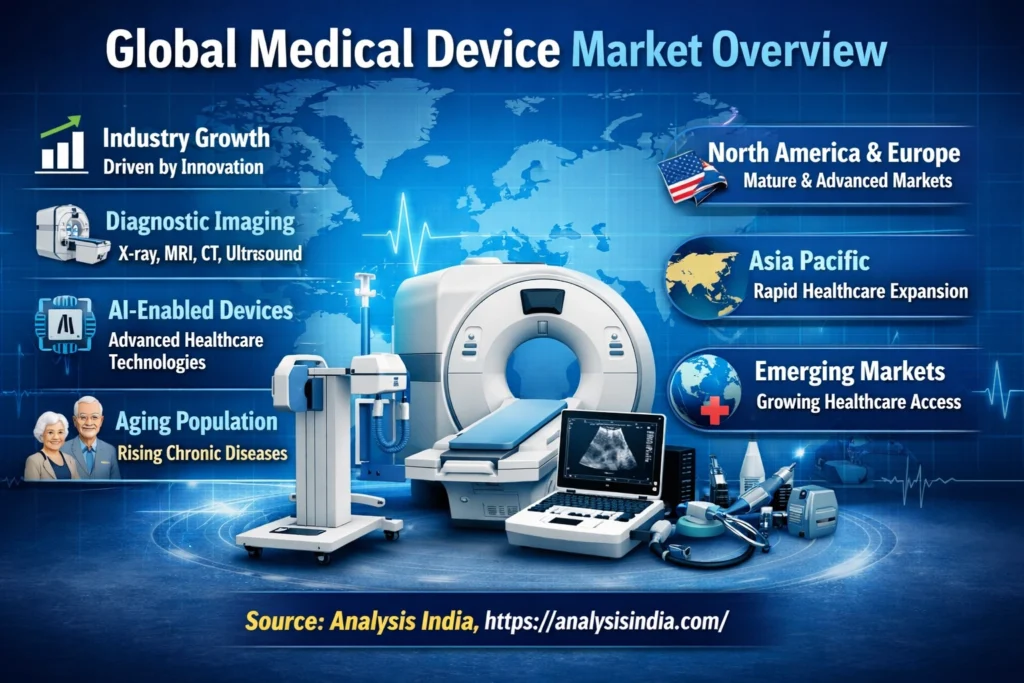
Regional dynamics play a defining role in shaping demand patterns, technology adoption, and investment priorities within the Global Medical Device Market. Differences in healthcare infrastructure, regulatory frameworks, reimbursement systems, and population demographics influence how medical devices are developed, procured, and utilized across regions. While mature markets emphasize innovation and advanced technologies, emerging regions focus on access expansion and capacity building, together creating a diverse global market landscape.
North America
North America represents one of the most established and technologically advanced regions in the global medical device market. The region benefits from well-developed healthcare infrastructure, high healthcare spending, and early adoption of advanced medical technologies. Hospitals and diagnostic imaging centers across the region consistently invest in sophisticated diagnostic, therapeutic, and monitoring devices to support clinical efficiency and patient outcomes.
Innovation plays a central role in North American market dynamics. The region is a major hub for research, product development, and early commercialization of new medical device technologies, including AI-enabled systems and digital imaging solutions. Regulatory oversight emphasizes safety, performance validation, and quality compliance, which influences product development cycles and market entry strategies. As a result, North America often sets technology benchmarks that later influence adoption trends in other regions.
Europe
Europe represents a mature and regulation-driven medical device market characterized by strong public healthcare systems and standardized procurement practices. The region places significant emphasis on quality assurance, clinical effectiveness, and compliance with regulatory standards. Medical device adoption is closely aligned with healthcare policy objectives, cost containment strategies, and long-term sustainability considerations.
Hospitals and public healthcare institutions dominate demand in many European countries, while private providers contribute to technology adoption in specialized care areas. Diagnostic imaging, surgical equipment, and monitoring devices remain key segments across the region. Although innovation is a priority, market penetration of new technologies often follows structured evaluation and approval processes, resulting in steady and methodical adoption patterns within the European medical device market.
Asia Pacific
Asia Pacific is one of the most dynamic regions within the global medical device market, driven by rapid healthcare infrastructure development, expanding patient populations, and increasing healthcare investments. Demand growth is supported by rising awareness of early diagnosis, improving access to medical services, and government initiatives aimed at strengthening healthcare systems. The region encompasses both highly developed healthcare markets and fast-growing emerging economies, creating varied adoption patterns.
China Medical Device Market
China plays a critical role in the Asia Pacific medical device landscape due to its large population base, expanding hospital network, and growing domestic manufacturing capabilities. Demand for diagnostic imaging systems, monitoring devices, and hospital equipment continues to rise as healthcare access improves across urban and regional areas. At the same time, policy initiatives supporting local production and technology advancement are reshaping the competitive environment.
A detailed assessment of regulatory trends, manufacturing developments, and demand drivers is explored in the China Medical Device Market, which provides deeper insight into this evolving regional hub.
India Medical Device Market
India represents a rapidly expanding medical device market driven by increasing healthcare investments, growth in diagnostic centers, and rising demand for cost-effective medical technologies. The market is characterized by strong demand for diagnostic imaging, patient monitoring, and basic therapeutic devices across both public and private healthcare sectors. Infrastructure development and expanding healthcare access in non-urban areas further support device adoption.
A comprehensive evaluation of market structure, demand trends, and growth outlook is covered in the India Medical Device Market, which highlights India’s strategic importance within the Asia Pacific region.
Rest of the World
The rest of the world region, including Latin America, the Middle East, and Africa, represents an emerging opportunity space within the global medical device market. Demand in these regions is primarily driven by healthcare infrastructure development, increasing investment in hospital facilities, and efforts to expand diagnostic and treatment capacity. Adoption tends to focus on essential diagnostic and monitoring devices, with gradual uptake of advanced technologies as infrastructure and expertise improve.
International partnerships, public health initiatives, and private sector investments play an important role in improving device availability across these regions. While market maturity varies widely, long-term potential is supported by demographic growth and increasing attention to healthcare system strengthening.
Strategic Regional Perspective
Regional variations highlight the importance of tailored market strategies within the global medical device market. Mature regions emphasize innovation, compliance, and advanced clinical capabilities, while emerging regions focus on accessibility, affordability, and capacity expansion. Understanding these regional differences is essential for evaluating market opportunities, technology adoption pathways, and long-term industry evolution.
Competitive Landscape of the Global Medical Device Market
The competitive landscape of the Global Medical Device Market is characterized by the presence of large multinational corporations alongside specialized regional and niche manufacturers. These companies operate across diagnostic imaging, therapeutic devices, patient monitoring, and digital health technologies, contributing to continuous innovation and technology diffusion within healthcare systems worldwide. Competition in the market is influenced by product breadth, regulatory compliance capability, global distribution networks, and long-term relationships with healthcare providers.
Leading medical device companies typically maintain diversified portfolios that span multiple clinical applications and care settings. Their strategies focus on research and development, technology integration, and expansion across high-growth regions. Many established players also invest heavily in digital capabilities, including artificial intelligence, data analytics, and connected device platforms, to strengthen their value proposition and support evolving clinical workflows.
Several global companies play a significant role in shaping industry standards and adoption trends. Organizations such as Medtronic, GE HealthCare, Siemens Healthineers, and Philips have established strong positions across imaging, diagnostics, and therapeutic segments. These companies leverage global manufacturing capabilities, broad service networks, and continuous product upgrades to maintain competitive positioning in mature and emerging markets.
In addition to multinational leaders, the global medical device market includes a wide range of regional manufacturers and emerging companies that focus on cost-effective solutions, localized production, and specific clinical needs. These players are particularly influential in emerging markets, where affordability, accessibility, and infrastructure compatibility are key purchasing considerations. Competitive dynamics in these regions are shaped by government healthcare initiatives, local regulatory frameworks, and increasing demand for diagnostic and monitoring devices.
Overall, competition within the global medical device market is evolving from product-centric rivalry toward solution-oriented differentiation. Companies increasingly compete on their ability to deliver integrated systems that combine hardware, software, clinical support, and long-term service value. A deeper examination of company strategies, revenue exposure, geographic strengths, and SWOT positioning is covered in the dedicated key players analysis of the Global Medical Device Market, which provides detailed insights into how leading manufacturers compete and adapt within this complex industry environment.
Key Trends Shaping the Global Medical Device Market
The Global Medical Device Market is undergoing a period of transformation driven by technological innovation, evolving healthcare delivery models, and changing clinical priorities. These trends are influencing how medical devices are designed, deployed, and integrated into healthcare systems worldwide. Rather than isolated developments, these trends collectively reflect a shift toward more connected, efficient, and patient-centered healthcare solutions.
Increasing Integration of Artificial Intelligence
Artificial intelligence is becoming an integral part of medical device functionality, particularly in diagnostic imaging, patient monitoring, and clinical decision support. AI-enabled features support faster data interpretation, workflow automation, and consistency in clinical assessments. Instead of replacing healthcare professionals, AI is primarily used to augment clinical expertise by reducing routine workloads and highlighting critical insights. This trend is accelerating the convergence of hardware and software within medical devices and is reshaping expectations around diagnostic accuracy and operational efficiency.
Growth of Portable and Point-of-Care Devices
Portable and point-of-care medical devices are gaining prominence as healthcare delivery extends beyond traditional hospital settings. Compact imaging systems, handheld diagnostic tools, and mobile monitoring devices support faster diagnosis and treatment in outpatient clinics, emergency settings, and remote care environments. This trend aligns with the growing emphasis on decentralized healthcare models and supports improved access to medical services in underserved and rural regions. Portability and ease of use are increasingly viewed as essential design attributes rather than optional features.
Expansion of Digital and Connected Medical Devices
Digital connectivity is transforming medical devices into components of broader healthcare ecosystems. Connected devices enable real-time data sharing, remote monitoring, and integration with electronic health records and clinical platforms. This connectivity supports coordinated care, continuous patient monitoring, and improved clinical visibility across departments and facilities. As interoperability standards evolve, connected medical devices are expected to play a larger role in supporting data-driven healthcare and value-based care initiatives.
Rising Focus on Preventive and Early Diagnosis
Preventive healthcare and early disease detection are becoming central priorities for healthcare systems worldwide. Medical devices that support screening, routine diagnostics, and early-stage assessment are increasingly emphasized across public and private healthcare sectors. Diagnostic imaging systems, monitoring devices, and screening tools are widely adopted to support timely intervention and reduce long-term treatment complexity. This trend reinforces the importance of diagnostic technologies within the global medical device market.
Shift Toward Integrated Solutions and Service Models
The medical device industry is gradually moving away from standalone equipment offerings toward integrated solutions that combine devices, software, analytics, and service support. Healthcare providers increasingly value comprehensive solutions that improve operational efficiency, reduce downtime, and support long-term performance management. This shift encourages manufacturers to focus on lifecycle value, system interoperability, and long-term partnerships rather than single-product sales.
Emphasis on Regulatory Compliance and Quality Assurance
Regulatory expectations continue to shape innovation and commercialization strategies within the global medical device market. Compliance with quality management systems, safety standards, and performance validation requirements remains a core priority for manufacturers. As devices incorporate more software and digital components, regulatory frameworks are also evolving to address data security, system reliability, and clinical transparency. This trend reinforces the importance of trust, validation, and accountability across the medical device ecosystem.
Long-Term Impact of Market Trends
Collectively, these trends highlight a market that is becoming more intelligent, connected, and outcome-focused. The global medical device market is increasingly aligned with broader healthcare goals such as efficiency improvement, access expansion, and patient-centered care delivery. Understanding these trends provides essential context for evaluating future opportunities, technology adoption pathways, and strategic direction across device categories and regional markets.
Regulatory and Compliance Landscape in the Global Medical Device Market
The regulatory and compliance environment plays a central role in shaping product development, commercialization, and adoption within the Global Medical Device Market. Medical devices directly impact patient safety and clinical outcomes, which is why regulatory authorities across regions enforce strict requirements related to quality, performance, and post-market surveillance. Compliance is not only a legal obligation but also a critical factor influencing trust, market access, and long-term competitiveness.
Medical device regulations are designed to ensure that products entering clinical use meet defined safety and effectiveness standards. Manufacturers are required to follow structured development processes, conduct clinical evaluations, and implement quality management systems throughout the product lifecycle.
These requirements influence device design, manufacturing practices, documentation, and risk management strategies. As devices become more technologically advanced and software-driven, regulatory frameworks continue to evolve to address new challenges related to data integrity, cybersecurity, and system interoperability.
Regulatory approaches vary significantly across regions, creating a complex global compliance landscape. In North America, oversight is led by agencies such as the U.S. Food and Drug Administration, which evaluates medical devices based on risk classification, clinical evidence, and manufacturing controls. Regulatory pathways emphasize premarket review, quality system compliance, and post-market monitoring to ensure ongoing device safety. These requirements influence development timelines and market entry strategies for both domestic and international manufacturers.
In Europe, the regulatory environment is shaped by comprehensive frameworks such as the European Union Medical Device Regulation, which places strong emphasis on clinical evidence, traceability, and transparency. Compliance under this framework requires manufacturers to demonstrate continuous conformity through documentation, clinical data, and ongoing surveillance activities. The European approach prioritizes patient safety and lifecycle oversight, affecting how devices are approved and maintained within the market.
Emerging markets across Asia Pacific, Latin America, and other regions are also strengthening regulatory oversight as healthcare systems mature. While regulatory structures differ in scope and implementation, there is a growing emphasis on harmonization with international standards and best practices. This trend supports improved product quality and patient safety while gradually aligning regional markets with global regulatory expectations.
For manufacturers operating in the global medical device market, regulatory compliance has become a strategic consideration rather than a procedural step. Early integration of regulatory planning into product development helps reduce approval delays, manage compliance risks, and support smoother market entry across regions. As innovation accelerates, particularly in areas such as AI-enabled devices and connected systems, regulatory frameworks will continue to influence how quickly and effectively new technologies reach clinical environments.
Global Medical Device Market Forecast and Industry Outlook
The Global Medical Device Market is expected to maintain a steady expansion trajectory over the coming years, supported by ongoing healthcare modernization, technology adoption, and increasing focus on diagnostic and treatment efficiency. Rather than being driven by a single factor, the market outlook reflects the combined influence of demographic shifts, infrastructure development, and innovation across device categories. These elements collectively shape long-term demand patterns and investment priorities within the industry.
Diagnostic medical devices are anticipated to remain central to future market development, particularly as healthcare systems emphasize early diagnosis and preventive care. Imaging technologies such as X-ray and mammography systems are expected to continue their role as foundational diagnostic tools across hospitals and diagnostic centers. Advancements in digital imaging, workflow integration, and image interpretation support sustained relevance for these modalities, reinforcing the importance of specialized segments such as the Global X-ray Device Market and the Global Mammography Market within the broader industry landscape.
Artificial intelligence is expected to influence the future direction of medical device innovation by enhancing device intelligence, interoperability, and clinical usability. AI-enabled features are likely to expand gradually across imaging, monitoring, and diagnostic platforms, supporting more efficient clinical workflows and improved decision support. The outlook for AI integration aligns closely with developments explored in the AI Enabled Medical Device Market, which highlights how software-driven capabilities are becoming embedded within traditional device platforms.
From a regional perspective, mature markets such as North America and Europe are expected to focus on technology upgrades, system replacement cycles, and integration of advanced features into existing healthcare infrastructure. These regions are likely to prioritize devices that support efficiency, data integration, and compliance with evolving regulatory standards. Meanwhile, emerging markets in Asia Pacific are expected to contribute significantly to overall market momentum through healthcare capacity expansion and increased access to diagnostic and therapeutic technologies.
Within Asia Pacific, countries such as China and India are expected to play an increasingly influential role in shaping global demand patterns. Expanding hospital networks, diagnostic center growth, and supportive healthcare initiatives contribute to sustained device adoption across these markets. The evolving market dynamics in these regions are examined in greater detail in the China Medical Device Market and the India Medical Device Market, which provide region-specific insights into infrastructure development and demand drivers.
Overall, the global medical device market outlook reflects a balance between innovation and stability. While technological advancement continues to reshape device capabilities, long-term growth is grounded in fundamental healthcare needs such as diagnosis, treatment, and patient monitoring. As healthcare systems adapt to changing clinical and operational demands, the medical device industry is expected to remain a core component of global healthcare delivery, with continued opportunities for manufacturers, providers, and technology partners.
Conclusion: Strategic Importance of the Global Medical Device Market
The Global Medical Device Market remains a foundational pillar of modern healthcare, supporting diagnosis, treatment, monitoring, and preventive care across diverse clinical environments. As healthcare systems continue to evolve, medical devices play an increasingly important role in improving clinical accuracy, operational efficiency, and patient management. From diagnostic imaging systems to AI-enabled technologies, the market reflects a steady shift toward more integrated and technology-driven healthcare solutions.
The industry’s structure highlights the importance of diagnostic devices, therapeutic systems, and monitoring equipment, each contributing to the broader healthcare ecosystem. Imaging modalities such as X-ray and mammography continue to serve as essential diagnostic tools, while artificial intelligence integration is enhancing device intelligence and clinical workflows. Regional dynamics further shape market behavior, with mature markets focusing on innovation and system upgrades, and emerging economies expanding access and infrastructure.
Looking ahead, the global medical device market is expected to progress through balanced growth driven by healthcare demand, regulatory evolution, and technological advancement. The convergence of hardware, software, and data-driven capabilities is redefining how medical devices are developed and utilized. As a result, the market will remain a critical area of focus for healthcare providers, manufacturers, and policymakers seeking sustainable and efficient healthcare delivery solutions.