
India X-ray Market Overview
The India X-ray Market represents a steadily expanding segment of the global diagnostic imaging industry. As India continues to modernize its healthcare infrastructure, X-ray imaging remains one of the most widely utilized diagnostic technologies across hospitals, trauma centers, diagnostic laboratories, and specialty clinics. Its clinical versatility, cost efficiency, and accessibility make it an essential component of the country’s medical imaging ecosystem.
Within the broader Global X-ray System Market, India functions as a high-growth emerging economy characterized by expanding hospital networks, rising patient volumes, and accelerating digital transformation. The India X-ray Market is also closely connected to the Global Medical Device Market, where imaging equipment forms a foundational revenue segment.
Growth in the India X-ray Market is being supported by healthcare infrastructure expansion in both metropolitan cities and Tier II and Tier III regions. Public sector hospital upgrades, private multi-specialty hospital investments, and diagnostic chain expansion are collectively strengthening long-term demand for digital radiography systems.
India X-ray Market Size and Revenue Forecast (2024–2031)
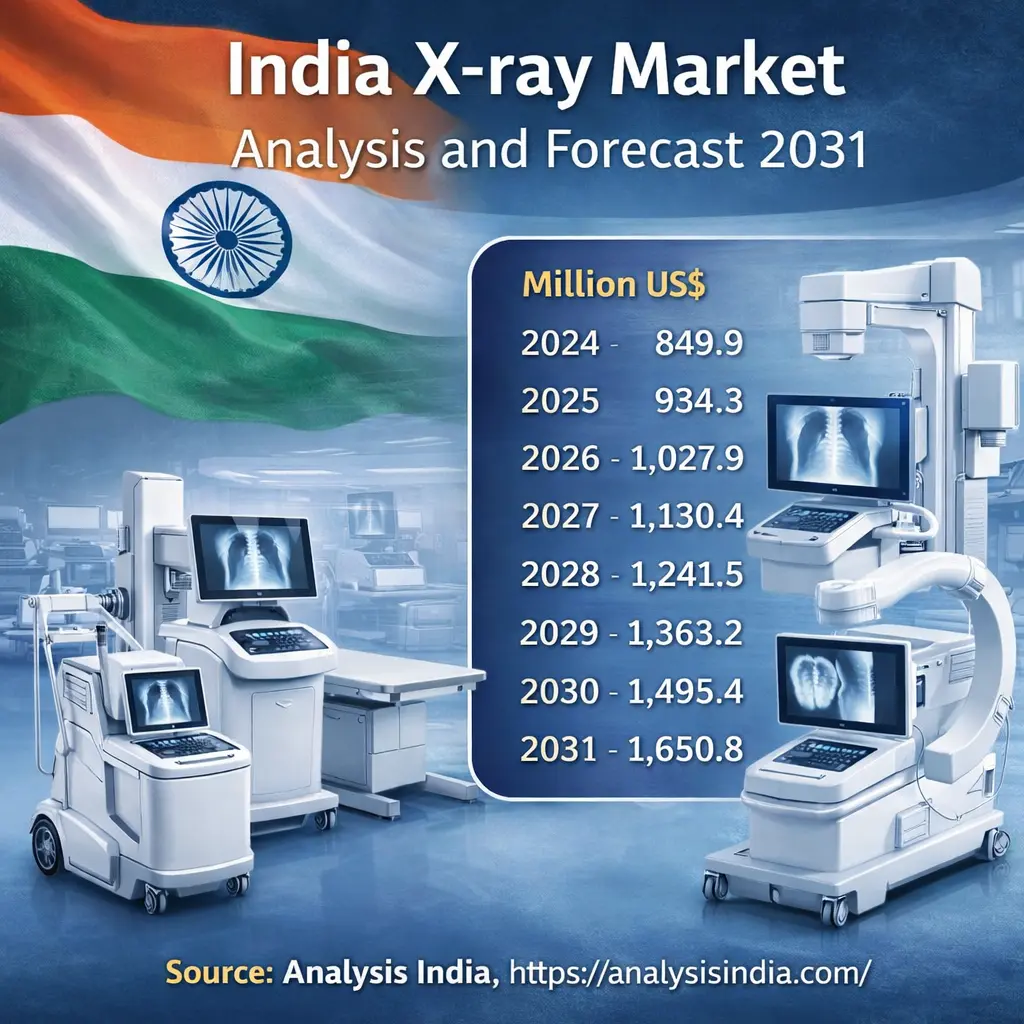
The India X-ray Market was valued at US$ 849.9 million in 2024 and is projected to demonstrate consistent annual expansion through 2031. Rising imaging demand, replacement of analog systems, and procurement of advanced digital radiography platforms are contributing to this upward trajectory.
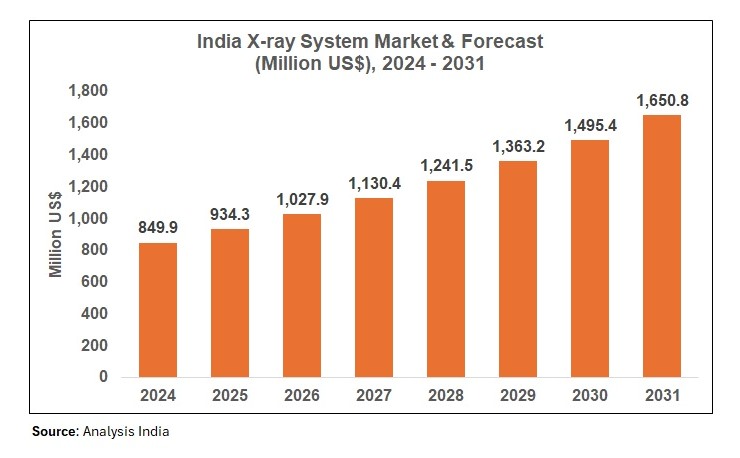
By 2031, the India X-ray Market is expected to reach US$ 1,650.8 million. This sustained growth reflects increasing hospital capacity, broader insurance penetration, and higher imaging procedure volumes across urban and semi-urban regions.
The market expansion also indicates gradual digital migration from conventional film-based radiography toward fully integrated digital radiography systems.
Healthcare Infrastructure Expansion Driving the India X-ray Market
India’s healthcare system has undergone significant transformation over the past decade. The construction of new hospitals, expansion of medical colleges, and modernization of district-level healthcare facilities are directly influencing diagnostic imaging demand.
Major metropolitan cities such as Mumbai, Delhi, Bengaluru, Hyderabad, and Chennai demonstrate strong adoption of advanced digital X-ray systems. Meanwhile, emerging urban clusters are increasingly upgrading imaging capabilities to meet rising patient demand.
The India X-ray Market benefits from expanding health insurance coverage, increased awareness of preventive diagnostics, and a growing middle-class population seeking improved healthcare services.
Digital Transformation in the India X-ray Market
Digital radiography adoption remains a central growth theme in the India X-ray Market. Hospitals are investing in flat-panel detector systems that offer improved image quality, faster processing times, and streamlined workflow integration.
Integration with Picture Archiving and Communication Systems (PACS) is becoming more common in tertiary care hospitals. This enhances image storage efficiency and reporting speed, improving overall radiology department productivity.
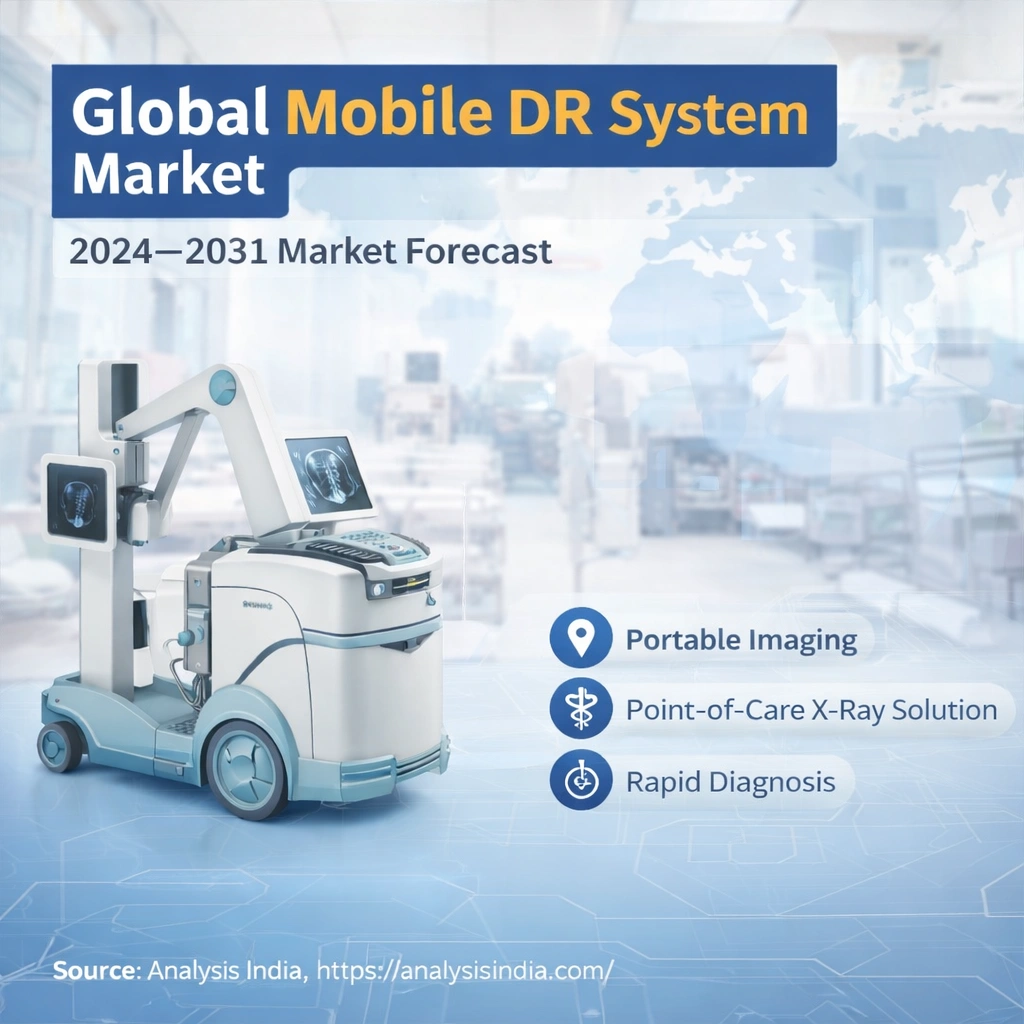
Mobile digital radiography systems are also gaining popularity, particularly in emergency departments and smaller hospitals where flexible imaging solutions are required.
The gradual introduction of artificial intelligence-assisted imaging tools further supports the modernization of the India X-ray Market, especially within large urban hospital networks.
Procurement Trends and Investment Patterns
Procurement activity in the India X-ray Market is influenced by both public and private sector investment cycles. Government hospitals often follow structured budgeting frameworks for equipment upgrades, while private hospital chains implement phased replacement strategies to maintain technological competitiveness.
International medical device manufacturers operate through established distributor networks in India, offering financing solutions and long-term service agreements. Total cost of ownership, including maintenance, installation, training, and detector replacement, plays a critical role in purchasing decisions.
As healthcare capital expenditure increases, procurement activity is expected to remain stable throughout the forecast period.
Competitive Landscape of the India X-ray Market
The India X-ray Market includes a combination of multinational corporations and regional medical equipment manufacturers. Global imaging leaders such as GE HealthCare, Siemens Healthineers, Canon Medical Systems, and Philips maintain strong distribution networks and service capabilities across India.
Domestic manufacturers contribute to market competition by offering cost-sensitive solutions suitable for mid-sized hospitals and diagnostic centers. Competitive differentiation is influenced by detector technology quality, pricing flexibility, service response time, and product reliability.
Manufacturers increasingly compete not only on hardware but also on integrated imaging ecosystems that include software platforms, remote diagnostics, and workflow automation tools.
Regulatory Framework Supporting the India X-ray Market
The India X-ray Market operates under regulatory oversight from the Central Drugs Standard Control Organization. Medical device compliance, radiation safety standards, and equipment certification requirements shape market entry and installation procedures.
Regulatory transparency enhances procurement confidence and supports structured growth within the market. As regulatory frameworks evolve, device classification and safety compliance continue to align with international quality standards.
India X-ray Market in the Asia Pacific Context
Within Asia Pacific, the India X-ray Market is emerging as a high-growth regional segment. While smaller in total revenue compared to the China X-ray Market, India demonstrates strong long-term expansion potential driven by demographic growth and infrastructure development.
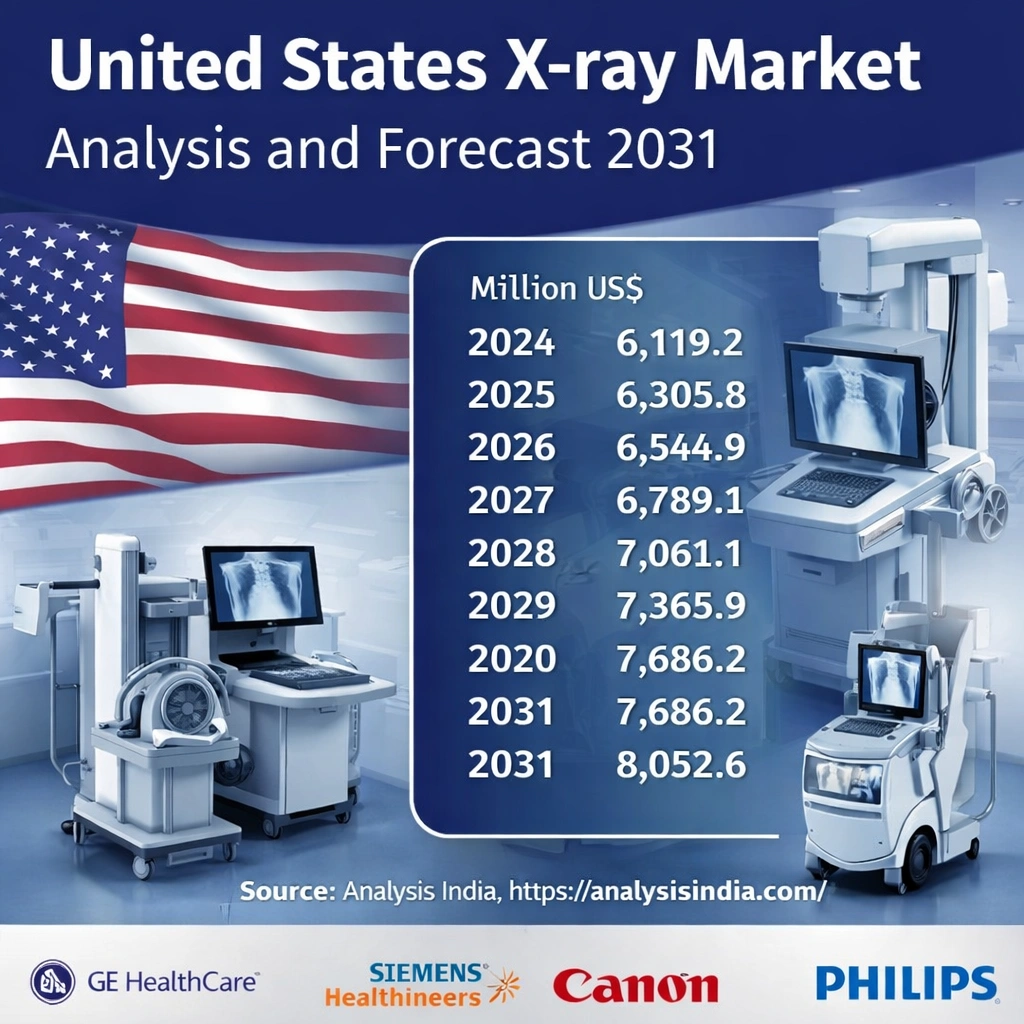
Compared to the United States X-ray Market, India remains an emerging economy; however, its growth rate reflects accelerating healthcare modernization and expanding access to diagnostic imaging.
As rural healthcare penetration improves and digital adoption spreads across regional hospitals, India’s contribution to the Global X-ray System Market is expected to strengthen steadily.
Long-Term Outlook of the India X-ray Market
The long-term outlook for the India X-ray Market remains positive through 2031. Continued digital migration, hospital capacity expansion, and increased diagnostic awareness form the foundation of sustained revenue growth.
The projected increase from US$ 849.9 million in 2024 to US$ 1,650.8 million by 2031 reflects structural demand rather than short-term fluctuations. Imaging modernization initiatives and replacement cycles will continue to influence procurement activity across both public and private healthcare sectors.
As India continues to expand its healthcare infrastructure, the India X-ray Market is positioned to play an essential role in supporting accessible and efficient diagnostic imaging nationwide.
Frequently Asked Questions
What is the projected size of the India X-ray Market by 2031?
The India X-ray Market is projected to reach US$ 1,650.8 million by 2031, supported by digital radiography adoption and healthcare infrastructure expansion.
What factors drive growth in the India X-ray Market?
Growth is supported by hospital construction, replacement of analog systems, rising diagnostic awareness, and increasing healthcare investment across urban and semi-urban regions.
How does India compare to other major X-ray markets?
India represents a growing Asia Pacific imaging market, expanding alongside China and other emerging economies, while remaining smaller than mature markets such as the United States.