Introduction
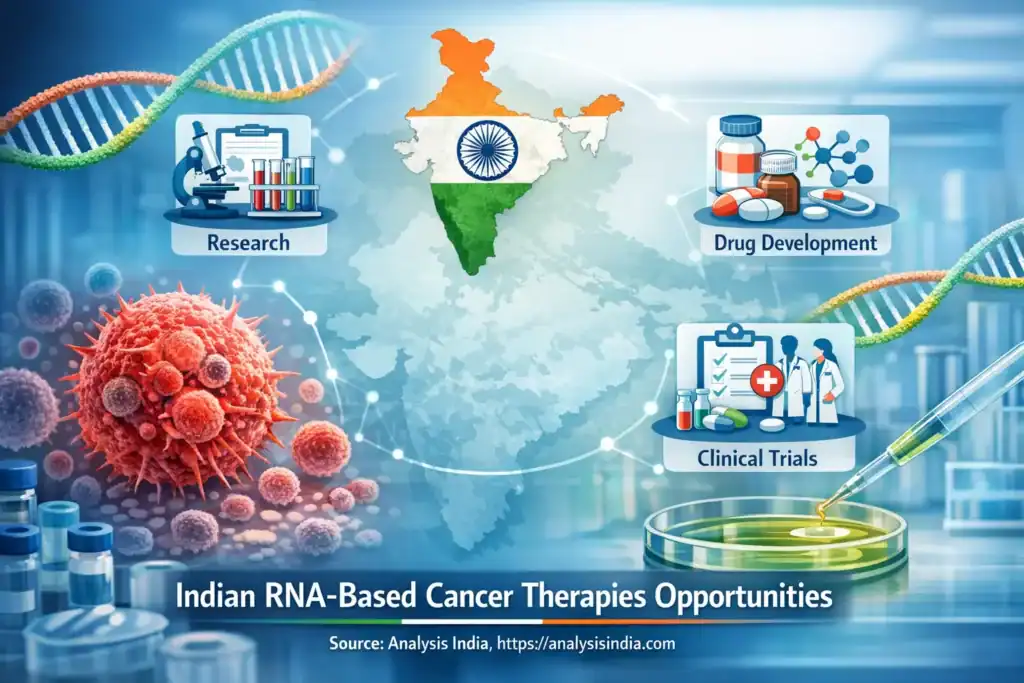
Cancer care is changing rapidly across the world. The move from general treatments to targeted and personalized solutions has created space for new therapy models. RNA based cancer therapies are now emerging as an important part of this shift. These treatments use genetic information to influence how cancer develops and responds to therapy. RNA based cancer therapies include messenger RNA vaccines, RNA interference methods, and oligonucleotide based approaches. They work differently from traditional chemotherapy or protein based medicines. By acting on specific biological pathways, RNA based cancer therapies aim to deliver more precise treatment with the potential for better outcomes and fewer side effects.
For Indian pharma companies, this shift is not just scientific. It is strategic. India has strong drug manufacturing, growing biotech research, and a rising healthcare market. But to benefit from RNA oncology, companies need to understand market dynamics, regulatory realities and competitive moves. This article explores the India market size and forecast, growth drivers, technological underpinnings, precision medicine linkages, industry challenges and the latest moves by top companies that show India’s trajectory in this field.
India RNA Based Therapeutics Market Size and Forecast
According to the TechSci Research, The broader India RNA therapeutics market was valued at about USD 48.9 million in 2024. It is expected to grow to around USD 70.45 million by 2030, expanding at a compound annual growth rate of 6.23 percent over this period. This growth reflects rising biotech innovation, the influence of mRNA vaccine success and increased focus on chronic and genetic diseases.
While this figure covers RNA therapeutics in general, oncology represents a fast expanding segment within global RNA therapy demand. Globally, the RNA-based cancer therapeutics market was already valued at hundreds of millions and is forecast to grow sharply through the next decade, driven by innovations in oncology and precision medicine.
In parallel, the India oncology market is growing rapidly. Technavio estimate the Indian oncology therapeutics market to expand by more than USD 2 billion by 2029, reflecting double digit growth in cancer treatment demand.
These numbers highlight a strategic opportunity for Indian pharma. The demand for next generation cancer treatments including RNA platforms is rising, and India can position itself in the value chain by combining local capabilities with global innovation.
Why RNA Based Cancer Therapies Matter for Oncology
Cancer remains one of the leading causes of death globally and in India. Traditional cancer treatments such as surgery, chemotherapy and radiation save lives but have limitations. They often affect healthy cells, cause significant side effects and sometimes fail against advanced or resistant tumors.
RNA based therapies change this paradigm:
- Targeted action. RNA therapies are designed to affect specific genetic or signaling pathways that drive tumor growth.
- Rapid design. RNA sequences can be engineered quickly once targets are identified. This agility helped bring mRNA vaccines to market in record time.
- Precision medicine alignment. Combining tumor profiling with RNA therapy design enables treatments tailored to individual patients and tumor biology.
These attributes make RNA based approaches especially attractive for cancers that do not respond well to conventional drugs. This relevance will likely grow as diagnostic and genomic profiling becomes more routine in India.
Key Types of RNA Based Cancer Therapies
Messenger RNA (mRNA) Oncology Vaccines
mRNA cancer vaccines are different from mRNA vaccines for infectious disease. They are designed to prompt the immune system to recognize cancer specific antigens. Instead of targeting a virus, they teach the immune system to attack tumor cells. This personalized vaccine approach is one of the most exciting areas of RNA oncology.
Indian pharma can leverage its strength in vaccine manufacturing to enter this space. Vaccine platforms developed for COVID-19 can be adapted for oncology workload, though regulatory and clinical complexities differ.
RNA Interference (RNAi)
RNAi uses small interfering RNA molecules to block the expression of genes that promote cancer cell survival or proliferation. This mechanism offers deep precision because it suppresses specific disease driving genes. The global RNAi therapeutics market demonstrates robust growth and is anticipated to expand in oncology and other areas.
Antisense Oligonucleotides (ASO)
Antisense oligonucleotides bind to target RNA to block or alter its function. In oncology, ASOs can disrupt cancer related gene products or signaling pathways. These agents require advanced synthesis and delivery technologies. Indian CRDMO companies are beginning to build such capabilities.
Precision Medicine and RNA Oncology
Precision medicine refers to treatment strategies tailored to an individual patient’s biological characteristics. In cancer care this often means genomic profiling of tumors. Profiling identifies mutations or gene expression patterns. RNA based cancer therapies can then be designed to match those profiles.
Diagnostics and Tumor Profiling
Cancer precision medicine relies on next generation sequencing and other advanced diagnostics. According to Grand View Research, the Indian oncology NGS market was valued at around USD 23.2 million in 2022 and is projected to grow strongly as genomic testing becomes more accessible.
Partnerships between pharma companies, diagnostic labs and hospitals are crucial. Without reliable profiling, RNA therapies cannot be personalized effectively.
Digital and Data Workflows
Personalized treatments generate data. This data must flow between clinics, labs and manufacturing units. Companies that can manage these digital workflows stand to gain a competitive advantage. Applying digital health tools in oncology also supports real world evidence generation and outcomes tracking.
Strategic Entry Paths for Indian Pharma
Indian pharmaceutical companies do not need to launch a fully developed RNA based cancer therapy immediately to enter this space. A phased and strategic approach can reduce risk while building long term capability. The RNA oncology ecosystem includes research platforms, manufacturing infrastructure, delivery technologies, diagnostics integration, and clinical development. Indian companies can choose entry points that align with their existing strengths.
Building RNA Manufacturing Infrastructure
RNA based cancer therapies require specialized production facilities. These include high purity RNA synthesis units, lipid nanoparticle formulation systems, and advanced quality testing laboratories. These systems are different from traditional small molecule drug manufacturing.
India already has large scale vaccine and biologics manufacturing capabilities. Many of these facilities can be upgraded or expanded to support RNA production. Companies that invest in RNA manufacturing now can become preferred partners for global biotech firms seeking scalable production in Asia.
This strategy also supports long term independence. Once the manufacturing platform is in place, companies can develop their own oncology RNA products instead of relying only on licensing.
Partnering with Global RNA Innovators
Many RNA oncology programs are still in early clinical stages. Global biotech companies often need regional partners for manufacturing, clinical trials, and regulatory navigation.
Indian pharma companies can enter the RNA oncology market through co development, licensing, or contract manufacturing partnerships. This allows them to gain experience with RNA technologies without bearing the full cost of discovery research.
Such collaborations also transfer technical knowledge. Over time, Indian companies can move from service roles to innovation driven roles in RNA cancer therapies.
Developing RNA Delivery Technologies
One of the biggest challenges in RNA cancer therapy is delivery. RNA molecules are fragile and can degrade easily in the body. They also need to reach the correct tissue and cell type.
Companies that develop strong delivery systems such as lipid nanoparticles or tumor targeted carriers gain a major advantage. India has deep expertise in pharmaceutical formulation and chemical engineering. These skills can be redirected toward RNA delivery innovation.
A strong delivery platform can support multiple products across oncology and other therapeutic areas.
Using Existing Oncology Business Networks
Many Indian pharma companies already sell cancer medicines including chemotherapy drugs and biosimilars. These companies have relationships with oncologists, hospitals, and cancer centers.
RNA based cancer therapies can be added to these existing commercial networks over time. This reduces the cost and complexity of market entry. Companies can also use their oncology sales teams to educate physicians about new RNA based treatment options.
This strategy helps integrate RNA therapies into real world cancer care faster.
Leveraging Contract Research and Manufacturing Strength
India has a strong CRDMO ecosystem. Several companies already provide biologics development, clinical trial support, and analytical services to global pharma firms.
By adding RNA synthesis and oligonucleotide services, Indian CRDMOs can become key players in the RNA oncology value chain. This supports both domestic innovation and export revenue.
Over time, service providers can evolve into product developers.
RNA Based Cancer Therapies – Challenges Ahead for Indian Pharma
Despite the opportunity, several structural and operational challenges must be addressed.
High Development and Production Costs
RNA based cancer therapies require advanced raw materials, complex manufacturing, and strict quality control. Personalized therapies increase costs further because each treatment may be customized.
In the Indian market, affordability is critical. Companies must focus on cost efficient manufacturing models and scalable processes to ensure commercial viability.
Regulatory Readiness for RNA Oncology
RNA based cancer therapies are novel products. Regulatory pathways for personalized and genetic therapies are still evolving.
Indian regulators gained experience during the COVID mRNA vaccine rollout. However oncology products have different safety, efficacy, and manufacturing considerations.
Early engagement with regulators and alignment with global standards will be essential.
Talent and Infrastructure Gaps
RNA based cancer therapies technologies require specialized skills in molecular biology, bioinformatics, analytical chemistry, and formulation science.
India has a strong scientific workforce, but RNA focused expertise is still limited. Companies need to invest in training, international collaboration, and advanced research infrastructure.
Long Development Timelines
Cancer drug development takes many years. RNA oncology programs may take a decade to reach commercial scale.
Companies must adopt a long term investment mindset rather than expecting quick financial returns.
Integration with Healthcare Systems
RNA based cancer therapies will only succeed if they fit smoothly into clinical workflows. Unlike traditional medicines, many RNA therapies require personalized diagnostics, sample logistics, and coordinated treatment planning.
Diagnostics and Tumor Profiling Integration
Precision oncology depends on genomic testing. Tumor samples must be sequenced to identify relevant genetic targets. India’s oncology NGS market is growing as hospitals adopt molecular diagnostics. Pharma companies must partner with diagnostic labs to ensure accurate and timely profiling for RNA based cancer therapies selection.
Hospital Workflow Adaptation
Personalized RNA therapies require:
- Patient sample collection
- Genetic analysis
- Therapy design
- Manufacturing scheduling
- Treatment administration
These steps must be coordinated across hospitals, labs, and manufacturing units. Leading cancer centers will likely adopt these workflows first, followed by wider expansion.
Digital Data Management
RNA based cancer therapies generate large volumes of clinical and genomic data. Secure digital systems are needed to manage patient information, treatment protocols, and outcomes tracking.
Companies that invest in digital oncology platforms will improve treatment efficiency and regulatory compliance.
Physician Education and Adoption
Oncologists must understand how RNA therapies work and how they differ from conventional drugs.
Medical education programs and clinical trial exposure will be essential for building confidence in RNA based cancer therapies.
Top 10 Indian Companies and Their Strategic Moves in RNA Based Cancer Therapies
India’s pharma and biotech sector is not yet leading with full RNA based cancer drugs, but several companies are making moves that position them well for the future. These developments show how Indian firms are building relevant capabilities in RNA platforms, biologics, delivery systems, partnerships, diagnostics integration and advanced manufacturing — all of which are foundational for RNA oncology.
Serum Institute of India: Investing in Personalized Oncology Manufacturing
What they are doing:
Serum Institute of India (SII), the world’s largest vaccine maker by volume, announced a collaboration with technology partners to develop manufacturing models for personalized cancer care, including advanced biologics.
Why it matters:
Personalized cancer therapies require flexible manufacturing that can handle small batch jobs tailored to individuals. SII’s move indicates an early bet on advanced biologics infrastructure that can, in future, support personalized RNA cancer vaccines. This is important because vaccines and oncology therapeutics increasingly overlap in RNA technologies.
Emcure Pharmaceuticals: Securing RNA Platform Licensing
What they are doing:
Emcure reached a long term licensing and collaboration agreement with HDT Bio, related to self-amplifying RNA vaccine technology. This followed the resolution of a previous legal dispute.
Why it matters:
While this is currently focused on vaccine technology, self-amplifying RNA platforms offer lower dose requirements and potentially improved expression — qualities that are attractive in oncology as well. Through this deal Emcure gains access to advanced RNA platform know-how which can lay a technical foundation for future cancer-related RNA programs.
Gennova Biopharmaceuticals: Building a Domestic mRNA Platform
What they are doing:
Gennova has developed India’s first indigenous mRNA technology platform, supported by government initiatives. Their initial work is in infectious disease vaccines.
Why it matters:
An in-house mRNA platform is a key building block for RNA cancer therapies, especially cancer vaccines. Once validated for vaccines, this platform can pivot into oncology programs. India’s broader policy support for indigenous platforms further improves the environment for advanced therapeutic development.
Biological E: Receiving mRNA Technology Transfer Support
What they are doing:
Biological E was chosen as a recipient of mRNA technology transfer initiatives connected with WHO’s mRNA technology transfer hub. The company stated it is actively investing in mRNA technologies at scale.
Why it matters:
Access to globally validated platform know-how and technology increases India’s capability to produce complex RNA formulations. For cancer therapies, where safety and precision matter just as much as in vaccines, this technology transfer provides a technical edge.
Cipla: Entering Oligonucleotide Synthesis and Related Spaces
What they are doing:
Cipla has expressed interest in the oligonucleotide space, focusing on development, manufacturing, and regulatory strategy for these advanced molecules. Oligonucleotides, including antisense and RNAi, are essential for RNA based therapeutics.
Why it matters:
Oligonucleotides are the building blocks of several RNA based cancer therapy modalities such as siRNA and antisense approaches. Cipla’s strategic interest indicates recognition of this emerging segment, and builds competency that will be useful for future oncology programs.
Syngene International: Expanding Biologics Manufacturing Footprint
What they are doing:
Syngene expanded its global biologics services by acquiring a biologics manufacturing facility in the United States, adding capacity for development and manufacture of complex biologics.
Why it matters:
While not directly an RNA company yet, Syngene’s expanded biologics capabilities strengthen the Indian contract development and manufacturing ecosystem for complex molecules. RNA based cancer therapies often require combination approaches or support from biologics such as checkpoint inhibitors or immune modulators. Syngene can play a role in manufacturing these supporting biologics at scale.
Aragen Life Sciences: Oligonucleotide and RNA Synthesis Services
What they are doing:
Aragen offers nucleic acid synthesis and oligonucleotide services, including RNA oligonucleotides and conjugates used in drug discovery and preclinical development.
Why it matters:
Service providers like Aragen help the ecosystem by supplying complex molecules that drug developers need to test and develop RNA based cancer therapies. This is especially important for small companies and academic groups that need reliable synthetic support.
Dr Reddy’s Laboratories and Aurigene: Biologics Development for Oncology
What they are doing:
Dr Reddy’s operates Aurigene as a CRDMO for biologics, including monoclonal antibodies and complex oncology molecules. This includes process development and clinical scale manufacturing.
Why it matters:
Although not RNA based yet, strong biologics capacity complements RNA oncology programs. Many RNA based cancer therapies are developed in combination with other biologics. Dr Reddy’s has built a network spanning discovery support to clinical manufacturing.
Biocon Biologics: Oncology Portfolio and RNAi Experience
What they are doing:
Biocon Biologics continues to grow its global oncology biosimilars portfolio. The company also has historical experience in RNAi collaborations from earlier partnerships.
Why it matters:
Biocon’s oncology network and commercial presence create an immediate channel to engage oncologists and institutions. Its prior involvement with RNAi gives it relevant background as RNA based cancer therapies mature. Biocon’s scale makes it a strong candidate for future RNA based oncology initiatives.
Glenmark Pharmaceuticals: Innovation Deals in Oncology
What they are doing:
Glenmark’s innovation arm signed global licensing agreements for oncology drug candidates in clinical development with international partners.
Why it matters:
Although these are not RNA based cancer therapies programs, Glenmark’s ability to scout, license and co-develop advanced oncology assets demonstrates strategic maturity. This expertise can be adapted to RNA modalities as these technologies progress from research to clinical phases.
RNA Based Cancer Therapies – Future Outlook
RNA based cancer therapies are at a tipping point globally. The Indian market is building foundations through platform development, partnerships and manufacturing expansion. Precision oncology is growing in tandem with genomic diagnostics, paving the way for personalized RNA programs. The forecasted growth in RNA based cancer therapeutics and the expanding oncology landscape in India create a strategic inflection point. Indian pharma companies that invest now may be well positioned for the next generation of cancer care solutions.