Introduction
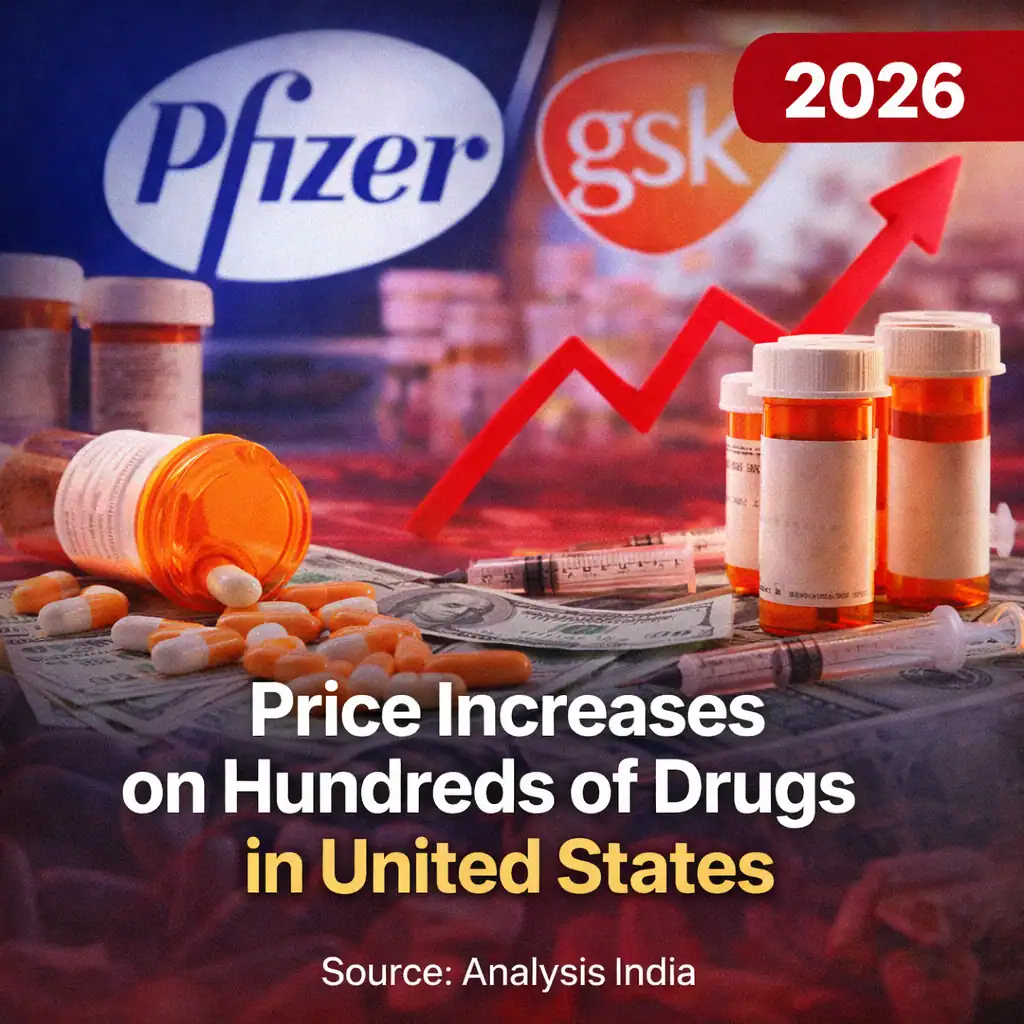
Price increases on hundreds of drugs in United States have emerged as one of the most important healthcare developments in 2026. As the new year begins pharmaceutical companies are once again adjusting prices across a wide range of prescription medicines. These changes are happening despite continued political pressure to improve affordability and reduce the financial burden on patients.
For millions of Americans prescription drugs are not optional purchases. They are essential for managing chronic diseases preventing complications and maintaining quality of life. As prices rise patients insurers and healthcare providers must absorb the impact in different ways. This makes drug pricing not only a commercial issue but also a public health concern.
This article examines why price increases on hundreds of drugs in United States are continuing in 2026. It also explains which drugs are affected how companies justify these increases and what the long term consequences may be for the healthcare system.
Why Price Increases on Hundreds of Drugs in United States Matter in 2026
Drug pricing plays a central role in shaping the US healthcare system. Prescription drug costs influence insurance premiums employer sponsored health plans government spending and patient access to care. When prices increase the effects extend well beyond pharmacy counters.
Unlike many developed economies the United States allows drug manufacturers to set list prices with limited direct regulation. This pricing freedom has supported innovation and global leadership in pharmaceutical research. However it has also resulted in higher medicine costs compared with international markets.
In 2026 price increases on hundreds of drugs in United States highlight the structural nature of the issue. These are not isolated adjustments affecting a small number of products. Instead they represent a broad based trend across therapeutic categories including vaccines oncology diabetes and cardiovascular care.
Price Increases on Hundreds of Drugs in United States 2026 – Show Persistent Upward Pressure
Price increases on hundreds of drugs in United States in 2026 show that annual price increases remain embedded in industry practice. Most pharmaceutical companies review prices at the start of the year. Adjustments are often framed as responses to inflation rising operational costs and investment needs.
While Medicare negotiation programs now apply to selected high cost drugs their scope remains limited. As a result the majority of branded medicines continue to follow traditional pricing cycles.
Price increases on hundreds of drugs in United States therefore reflect a system that continues to rely on list price growth as a core revenue management tool.
Pharmaceutical Price Increases 2026 Reflect Industry Economics
Price increases on hundreds of drugs in United States 2026 are driven by a combination of economic and operational factors. Drug manufacturing has become more technologically complex. Supply chains face ongoing disruption risks. Regulatory compliance requires continuous investment.
Research and development costs also shape pricing behavior. Developing a new medicine involves long timelines high uncertainty and substantial capital. Companies often rely on incremental price adjustments across a product lifecycle to support these investments.
In this context price increases on hundreds of drugs in United States are viewed by manufacturers as necessary for sustaining innovation and long term business stability.
Drug Price Hikes United States Continue Despite Policy Pressure
Drug price hikes in United States continue even as policymakers emphasize affordability. Government efforts focus on negotiation transparency and cost reduction. Medicare now has authority to negotiate prices for certain medicines although implementation is gradual.
Additional initiatives such as discounted purchasing platforms aim to give consumers alternative access routes. While these programs are expanding they do not yet replace traditional pricing structures.
As a result policy pressure has slowed but not stopped price increases across the market. This highlights the complexity of reforming pharmaceutical pricing in the United States.
Impact of Price Increases on Patients and Healthcare Costs
For patients price increases on hundreds of drugs in United States often lead to higher out of pocket expenses. Individuals without comprehensive insurance coverage face the greatest financial strain. Even insured patients may experience higher copayments deductibles and coverage restrictions.
Rising drug prices also affect medication adherence. When costs increase some patients delay refills reduce dosage or discontinue treatment altogether. Over time this can lead to worse health outcomes and higher overall healthcare spending.
Chronic disease patients are particularly vulnerable. Conditions such as diabetes cancer and autoimmune disorders require long term medication use which magnifies the impact of repeated annual price increases.
50 Commonly Used Branded Drugs Price Increases in 2026
The table below presents an expanded overview of 50 commonly used branded drugs experiencing price increases in 2026. Prices are approximate list prices and may vary by payer pharmacy and location.
| Drug Name | Company Name | Current Price 2025 USD | Increased Price 2026 USD | Price Change Percentage |
|---|---|---|---|---|
| Comirnaty | Pfizer | 120 | 138 | 15 percent |
| Ibrance | Pfizer | 14500 | 15080 | 4 percent |
| Prevnar 20 | Pfizer | 287 | 298 | 4 percent |
| Eliquis | Bristol Myers Squibb | 590 | 614 | 4 percent |
| Opdivo | Bristol Myers Squibb | 14200 | 14770 | 4 percent |
| Keytruda | Merck | 11200 | 11650 | 4 percent |
| Januvia | Merck | 560 | 582 | 4 percent |
| Gardasil 9 | Merck | 240 | 250 | 4 percent |
| Humira | AbbVie | 6840 | 7110 | 4 percent |
| Skyrizi | AbbVie | 18100 | 18820 | 4 percent |
| Rinvoq | AbbVie | 6120 | 6365 | 4 percent |
| Shingrix | GSK | 180 | 188 | 4 percent |
| Arexvy | GSK | 200 | 208 | 4 percent |
| Biktarvy | Gilead | 3750 | 3900 | 4 percent |
| Truvada | Gilead | 1950 | 2030 | 4 percent |
| Lantus | Sanofi | 300 | 312 | 4 percent |
| Toujeo | Sanofi | 560 | 582 | 4 percent |
| Dupixent | Sanofi Regeneron | 3200 | 3330 | 4 percent |
| Ozempic | Novo Nordisk | 935 | 972 | 4 percent |
| Wegovy | Novo Nordisk | 1349 | 1403 | 4 percent |
| Rybelsus | Novo Nordisk | 935 | 972 | 4 percent |
| Jardiance | Boehringer Ingelheim | 560 | 582 | 4 percent |
| Farxiga | AstraZeneca | 556 | 578 | 4 percent |
| Symbicort | AstraZeneca | 360 | 374 | 4 percent |
| Tagrisso | AstraZeneca | 17200 | 17890 | 4 percent |
| Xarelto | Bayer | 550 | 572 | 4 percent |
| Eylea | Regeneron | 1850 | 1924 | 4 percent |
| Enbrel | Amgen | 7650 | 7960 | 4 percent |
| Prolia | Amgen | 1450 | 1508 | 4 percent |
| Otezla | Amgen | 5050 | 5250 | 4 percent |
| Tecfidera | Biogen | 8900 | 9260 | 4 percent |
| Spinraza | Biogen | 125000 | 130000 | 4 percent |
| Actemra | Roche | 1100 | 1144 | 4 percent |
| Rituxan | Roche | 9800 | 10190 | 4 percent |
| Herceptin | Roche | 4500 | 4680 | 4 percent |
| Cosentyx | Novartis | 6100 | 6340 | 4 percent |
| Entresto | Novartis | 620 | 645 | 4 percent |
| Gleevec | Novartis | 8500 | 8840 | 4 percent |
| Stelara | Janssen | 25500 | 26520 | 4 percent |
| Remicade | Janssen | 1300 | 1350 | 4 percent |
| Zytiga | Janssen | 9800 | 10190 | 4 percent |
| Imbruvica | Janssen | 14700 | 15300 | 4 percent |
| Harvoni | Gilead | 94500 | 98300 | 4 percent |
| Kalydeco | Vertex | 311000 | 323000 | 4 percent |
| Trikafta | Vertex | 322000 | 335000 | 4 percent |
| Orkambi | Vertex | 273000 | 284000 | 4 percent |
Why These Price Increases Raise Long Term Concerns
Even moderate percentage increases translate into significant financial impact when applied to high cost medicines. Over time repeated annual adjustments compound costs for patients insurers and public healthcare programs.
Price increases on hundreds of drugs in United States therefore raise questions about long term sustainability. While innovation remains essential affordability pressures are intensifying.
What to Expect Going Forward
Looking ahead price increases on hundreds of drugs in United States are likely to remain under scrutiny. Medicare negotiations may expand. Alternative pricing models may grow. Political focus on affordability is unlikely to fade.
Pharmaceutical companies will continue refining pricing strategies. How effectively they balance innovation revenue and public trust will shape the future of US healthcare.
Price Increases on Hundreds of Drugs in United States 2026 – Conclusion
Price increases on hundreds of drugs in United States reflect deep structural forces within the healthcare system. Rising costs regulatory complexity and market design all contribute to this ongoing trend.
For patients providers insurers and investors understanding US drug pricing trends 2026 is essential. Drug pricing is not only a business issue. It is one of the most pressing healthcare challenges facing the nation today.