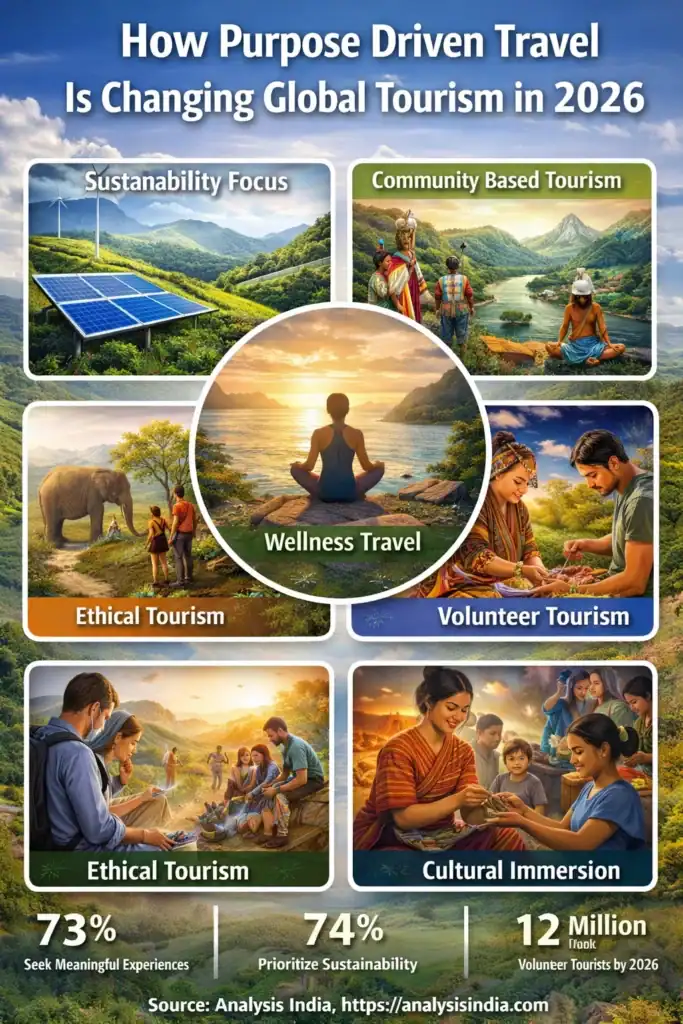
Analysis India: Purpose driven travel is reshaping global tourism as travelers increasingly seek meaningful experiences that align with their personal values. Instead of focusing only on leisure and luxury, modern travelers now prefer trips that support sustainability, cultural preservation, wellness, and community development. This shift is driven by growing environmental awareness, social responsibility, and demand for authentic travel experiences. Travel companies are responding by offering programs that emphasize ethical tourism, local engagement, and positive social impact. Purpose driven travel is now influencing how destinations, hotels, airlines, and tour operators design their services. According to research by Booking.com more than seventy percent of travelers want their travel spending to benefit local communities. The World Tourism Organization also confirms that responsible tourism is one of the fastest growing segments in the global travel industry.
In this article we explore how purpose driven travel is changing global tourism with market data, real business examples, company strategies, leadership statements and future outlook.
Global Purpose Driven Travel Demand Overview
| Metric | Value |
|---|---|
| Travelers seeking meaningful experiences | 73 percent |
| Travelers prioritizing sustainability | 74 percent |
| Growth rate of responsible tourism | 15 percent |
| Travelers supporting local communities | 68 percent |
Source: World Tourism Organization, Booking Global Travel Survey
Sustainability Focus Drives Travel Decisions
Sustainability has become a major driver of purpose driven travel. Travelers now prefer destinations, hotels, and travel services that minimize environmental impact. Many tourists actively choose eco friendly accommodations, low emission transport, and nature conservation experiences. This shift reflects growing concern about climate change and responsible consumption. Travel companies are adapting by introducing green certifications and sustainability programs. Platforms such as Booking.com highlight eco certified hotels and sustainable travel options. According to PwC more than seventy percent of travelers consider sustainability when booking trips. Sustainable tourism helps preserve natural resources while creating long term value for destinations.
Sustainable Tourism Market Growth
| Year | Market Size USD Billion |
|---|---|
| 2023 | 190 |
| 2024 | 220 |
| 2025 | 260 |
| 2026 | 310 |
Source: PwC Sustainable Tourism Outlook
Eco Travel Decision Drivers
| Factor | Consideration Rate |
|---|---|
| Carbon footprint | 76 percent |
| Eco hotels | 72 percent |
| Green transport | 68 percent |
| Waste reduction | 63 percent |
Source: Booking Sustainability Report
Community Based Tourism Strengthens Local Economies
Community based tourism allows travelers to engage directly with local people and cultures. This model supports local businesses, preserves traditions, and distributes tourism revenue more fairly. Travelers participate in homestays, village tours, craft workshops, and cultural programs. Companies such as Intrepid Travel and G Adventures focus on community engagement as part of their travel offerings. “Travel should create positive impact for destinations and for travelers,” said James Thornton, CEO of Intrepid Travel. Community based tourism builds trust between visitors and host communities while supporting economic development.
Community Tourism Market Growth
| Year | Market Size USD Billion |
|---|---|
| 2022 | 410 |
| 2023 | 470 |
| 2024 | 545 |
| 2025 | 625 |
| 2026 | 720 |
Source: World Economic Forum Tourism Report
Traveler Motivation Survey
| Travel Motivation | Preference Rate |
|---|---|
| Community tourism | 61 percent |
| Cultural immersion | 69 percent |
| Sustainable travel | 74 percent |
| Wellness tourism | 66 percent |
Source: Booking Global Travel Survey
Cultural Immersion Travel Gains Popularity
Cultural immersion travel focuses on authentic local experiences rather than standard sightseeing. Travelers want to learn about local traditions, food, languages, and heritage. Cultural tours include cooking classes, heritage walks, music events, and historical storytelling. This trend is growing as tourists seek deeper emotional connections with destinations. Platforms like Airbnb Experiences offer guided cultural activities hosted by locals. Cultural immersion strengthens destination identity and promotes cultural preservation.
Cultural Travel Demand
| Experience Type | Interest Rate |
|---|---|
| Heritage tours | 67 percent |
| Local food experiences | 71 percent |
| Cultural workshops | 68 percent |
| Traditional festivals | 64 percent |
Source: Expedia Travel Insights
Wellness Travel Supports Purpose Driven Tourism
Wellness travel is an important part of purpose driven tourism. Travelers seek mental and physical wellbeing through yoga retreats, spa resorts, nature therapy, and mindfulness journeys. Wellness travel promotes healthy lifestyles while supporting local wellness communities. Companies such as Six Senses and Canyon Ranch offer holistic wellness programs. “Guests now want meaningful wellness journeys that go beyond relaxation,” said Neil Jacobs, CEO of Six Senses. Wellness tourism contributes to long term health and sustainable tourism growth.
Wellness Tourism Market Size
| Year | Market Value USD Billion |
|---|---|
| 2022 | 920 |
| 2023 | 1020 |
| 2024 | 1130 |
| 2025 | 1240 |
| 2026 | 1320 |
Source: Global Wellness Institute
Wellness Travel Preferences
| Service | Preference Rate |
|---|---|
| Yoga retreats | 67 percent |
| Spa resorts | 72 percent |
| Nature therapy | 69 percent |
| Digital detox | 61 percent |
Source: Wellness Tourism Survey
Ethical Travel Influences Booking Behavior
Ethical travel focuses on human rights, fair wages, and animal welfare. Travelers now avoid exploitative tourism activities and prefer responsible operators. Ethical travel includes fair trade tourism, wildlife protection, and inclusive travel services. Travel companies promote transparency and ethical policies to attract conscious travelers. This trend encourages better business practices across the tourism sector.
Ethical Travel Awareness
| Ethical Concern | Awareness Rate |
|---|---|
| Animal welfare | 69 percent |
| Fair wages | 65 percent |
| Cultural respect | 71 percent |
| Environmental protection | 74 percent |
Source: Global Travel Ethics Survey
Volunteer Tourism Builds Social Impact
Volunteer tourism allows travelers to contribute to social causes such as education, conservation, and community development. These programs offer hands on experiences that benefit host communities. Organizations partner with local groups to ensure ethical volunteering. Volunteer tourism strengthens emotional connections and promotes responsible travel behavior.
Volunteer Tourism Growth
| Year | Participants in Millions |
|---|---|
| 2022 | 6.5 |
| 2023 | 7.8 |
| 2024 | 9.1 |
| 2025 | 10.4 |
| 2026 | 12.0 |
Source: Global Volunteer Travel Report
Sustainable Accommodation Demand Increases
Travelers now prefer eco friendly hotels that use renewable energy, water conservation, and waste reduction practices. Many hotels have adopted green building standards and sustainability certifications. Accor Hotels has committed to carbon neutrality goals across its global operations. Sustainable accommodation reduces environmental impact while improving brand trust.
Green Hotel Adoption
| Feature | Adoption Rate |
|---|---|
| Energy efficiency | 71 percent |
| Water conservation | 68 percent |
| Waste reduction | 66 percent |
| Local sourcing | 63 percent |
Source: Hospitality Sustainability Report
Purpose Driven Travel Marketing Grows
Travel brands now promote their social and environmental impact through marketing campaigns. Purpose driven storytelling highlights community support, sustainability efforts, and cultural preservation. According to HubSpot purpose based marketing campaigns receive higher engagement than traditional promotions. This approach builds emotional trust with travelers.
Purpose Marketing Performance
| Metric | Improvement Rate |
|---|---|
| Brand engagement | 37 percent |
| Customer trust | 34 percent |
| Booking intent | 29 percent |
Source: HubSpot Marketing Insights
Business Impact of Purpose Driven Travel
Purpose driven travel strengthens customer loyalty and brand reputation. Travelers who feel emotionally connected to a destination are more likely to return and recommend it. Tourism companies that invest in responsible practices see long term business benefits. Purpose driven travel also supports destination resilience and sustainable growth.
Business Performance Impact
| Metric | Growth Rate |
|---|---|
| Customer loyalty | 33 percent |
| Brand trust | 35 percent |
| Repeat bookings | 31 percent |
| Revenue stability | 28 percent |
Source: Travel Industry Business Report
Global Tourism Outlook for 2026
Global tourism continues to grow as travel demand recovers and travelers seek meaningful experiences. The World Travel and Tourism Council predicts that global tourism revenue could exceed ten trillion dollars by 2026. Purpose driven travel will play a key role in shaping future tourism strategies. Sustainability, community engagement, and wellness experiences will remain strong growth drivers.
Global Tourism Market Forecast
| Year | Market Size USD Trillion |
|---|---|
| 2023 | 8.4 |
| 2024 | 8.9 |
| 2025 | 9.5 |
| 2026 | 10.1 |
Source: World Travel and Tourism Council
Conclusion
Purpose driven travel is changing global tourism by shifting focus toward meaningful, responsible, and sustainable experiences. Travelers now prioritize environmental protection, community support, cultural preservation, and personal wellbeing. From wellness tourism and ethical travel to community based tourism and sustainable accommodation, purpose driven travel is shaping the future of tourism. Travel brands that invest in responsible practices and social impact will remain competitive in the evolving global travel market.
Frequently Asked Questions
What is purpose driven travel
Purpose driven travel focuses on meaningful travel experiences such as sustainability, cultural immersion, wellness, and community support.
How is purpose driven travel changing global tourism
Purpose driven travel is reshaping global tourism by promoting responsible travel, ethical practices, and local community engagement.
Why do travelers prefer purpose driven tourism
Travelers prefer purpose driven tourism because it offers meaningful experiences while supporting environmental and social causes.
What are examples of purpose driven travel
Examples include eco tourism, wellness retreats, volunteer tourism, and community based travel experiences.
Will purpose driven travel grow in the future
Yes, purpose driven travel is expected to grow as more travelers seek responsible and value driven tourism experiences.