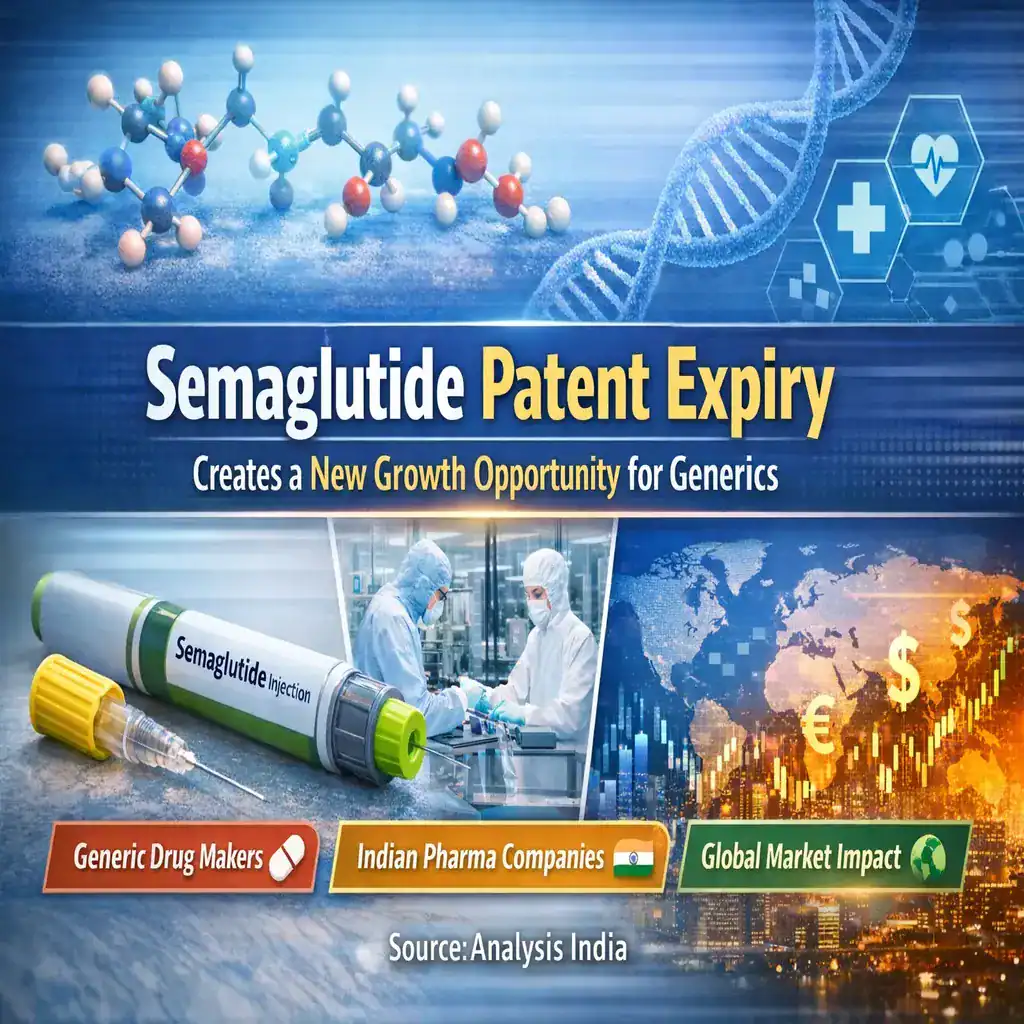
The semaglutide patent expiry is becoming one of the most discussed developments in the global pharmaceutical industry. It marks a structural shift in the diabetes and obesity treatment market. For years semaglutide based therapies have remained under strong patent protection which allowed premium pricing and limited competition. As patent protection gradually weakens the market is preparing for generic entry. This transition is expected to reshape pricing access and competitive dynamics across both developed and emerging markets.
Semaglutide is not an ordinary small molecule drug. It is a peptide based therapy with complex manufacturing requirements. This complexity creates a high barrier to entry. At the same time it creates an attractive opportunity for companies with strong technical and regulatory capabilities. Indian pharmaceutical firms are particularly well positioned in this phase due to their experience in complex generics peptides and injectables.
Semaglutide Patent Expiry Unlocks Generics Opportunity in Diabetes and Obesity Care
Semaglutide is widely used for type two diabetes and chronic weight management. It belongs to the GLP one receptor agonist class which improves glycemic control and supports appetite regulation. The success of this therapy has changed clinical practice in metabolic disorders.
The global commercial success of semaglutide is closely associated with Novo Nordisk which developed and commercialized the molecule. Its branded products have achieved strong uptake across North America Europe and selected emerging markets. Demand continues to rise as obesity and diabetes prevalence increases worldwide.
The semaglutide patent expiry is important because it opens access to this therapy for a wider patient population. High prices have restricted usage in many markets. Generic entry is expected to support broader adoption especially in cost sensitive healthcare systems.
Semaglutide Patent Expiry Unlocks Generics Opportunity – Global Perspective
From a global perspective the semaglutide patent expiry represents a revenue inflection point for innovators and a growth opportunity for generic manufacturers. Developed markets are expected to experience gradual pricing pressure. Emerging markets may see faster uptake due to lower entry barriers and stronger demand elasticity.
Large multinational generic companies are actively evaluating development timelines. Many are assessing whether to pursue regulated market filings or prioritize faster access markets. The complexity of the molecule means that not all generics players will participate. Only companies with peptide synthesis sterile injectables and regulatory depth will succeed.
Global healthcare systems are also preparing for this shift. Payers and insurers view semaglutide generics as a way to manage long term chronic care costs. This makes formulary inclusion an important commercial driver.
Semaglutide Patent Expiry Unlocks Generics Opportunity and India’s Strategic Position
India plays a critical role in the global generics ecosystem. The country has decades of experience in cost efficient pharmaceutical manufacturing. In recent years Indian companies have moved beyond simple generics into complex molecules biosimilars and peptides.
The semaglutide patent expiry aligns well with this evolution. Indian firms already possess large scale API capabilities and expanding peptide synthesis infrastructure. Many also operate US FDA and EMA approved manufacturing facilities which is essential for global expansion.
India also benefits from strong domestic demand for diabetes therapies. Rising lifestyle disease prevalence creates an internal market that supports early scale up and learning.
Semaglutide Patent Expiry Unlocks Generics Opportunity for Indian Pharma Leaders
Several Indian pharmaceutical companies are well positioned to benefit from this transition due to their technical expertise and global presence.
Dr Reddy’s Laboratories
Dr Reddy’s Laboratories has a strong track record in complex generics and regulated markets. The company has invested steadily in peptides injectables and biosimilar capabilities. Its regulatory experience in the United States and Europe gives it a competitive advantage in launching semaglutide generics in high value markets.
Sun Pharmaceutical Industries
Sun Pharmaceutical Industries is another major beneficiary candidate. Sun Pharma has deep development resources and a broad global commercial footprint. The company’s ability to fund long development cycles supports participation in complex peptide programs.
Cipla
Cipla has historically focused on chronic therapies and global access. Cipla’s presence in emerging markets positions it well to introduce semaglutide generics where affordability drives demand.
Lupin
Lupin has experience in injectables and complex generics particularly in the US market. Lupin’s manufacturing scale and regulatory compliance provide a strong foundation for semaglutide related development.
Biocon
Biocon stands out due to its biologics and peptide focus. Through Biocon Biologics the company has demonstrated capability in complex biologic manufacturing and global regulatory filings. This expertise is highly relevant for semaglutide.
Semaglutide Patent Expiry Unlocks Generics Opportunity for Global Generic Majors
Beyond India several global companies are expected to benefit from semaglutide patent expiry.
Large generics groups such as Sandoz Teva and Viatris have the regulatory and commercial infrastructure to support launches in the US and Europe. These companies often combine internal manufacturing with contract partners for complex molecules.
Contract development and manufacturing organizations also play a key role. Companies such as Lonza and Catalent are expected to see increased demand for peptide synthesis sterile fill finish and device integration services.
Semaglutide Patent Expiry Unlocks Generics Opportunity and Regulatory Complexity
Regulation is a defining factor in semaglutide generic development. Unlike standard oral tablets peptide injectables require extensive analytical and clinical comparability. Regulators focus on pharmacokinetics safety and immunogenicity.
In the United States companies may need to pursue hybrid approval pathways depending on formulation and delivery system. In Europe similar scrutiny applies under EMA guidelines. These requirements increase development cost but also limit competition which benefits early movers.
In emerging markets regulatory pathways are often more flexible. This allows faster launches and early revenue generation. Many Indian companies are expected to follow a phased market entry strategy.
Semaglutide Patent Expiry Unlocks Generics Opportunity and Manufacturing Challenges
Manufacturing semaglutide generics involves several technical hurdles. Peptide synthesis requires precision and consistency. Sterile injectables demand high quality control standards. Device compatibility adds another layer of complexity.
Companies must also ensure stability and cold chain integrity. Any failure in quality can delay approvals or lead to recalls. As a result strong quality systems and experience in regulated manufacturing are essential.
Semaglutide Patent Expiry Unlocks Generics Opportunity and Pricing Impact
Pricing will be one of the most visible effects of generic entry. Branded semaglutide therapies currently command premium prices. Generics are expected to introduce gradual price moderation rather than immediate sharp declines.
In developed markets payers will use generics to negotiate better terms. In emerging markets lower prices will expand patient access. Over time competition is likely to increase volume even if per unit pricing declines.
Semaglutide Patent Expiry Unlocks Generics Opportunity and Strategic Responses
Innovator companies are expected to respond through lifecycle management. New formulations improved delivery systems and next generation GLP one therapies are already in development. This strategy helps protect revenue while generics address broader access needs.
Generic manufacturers will focus on partnerships device licensing and selective market launches. Not all players will pursue every market. Strategic focus will be key.
Semaglutide Patent Expiry Unlocks Generics Opportunity and Investment Outlook
From an investment perspective semaglutide generics represent a medium to long term opportunity. Development timelines are long and capital intensive. Returns depend on execution quality regulatory success and market access.
For Indian companies this opportunity supports a shift toward higher value complex products. For global generics it reinforces the importance of technical depth and partnerships.
Semaglutide Patent Expiry Unlocks Generics Opportunity Final Outlook
The semaglutide patent expiry is more than a routine patent cliff event. It represents a transformation in diabetes and obesity care. It creates a pathway for broader patient access and more sustainable healthcare spending.
India stands at the center of this transition due to its manufacturing strength and growing innovation capabilities. Global players with scale and regulatory expertise will also benefit. The winners will be companies that combine science quality and strategy.
This opportunity will unfold over several years. Its impact will be felt across patients payers manufacturers and healthcare systems worldwide.
Frequently Asked Questions
What is the semaglutide patent expiry and why does it matter?
Semaglutide patent expiry refers to the date when exclusive intellectual property protection ends for semaglutide drugs. After expiry, generic drug makers can enter the market, which typically leads to lower prices and broader access for patients.
How will semaglutide patent expiry affect generic competition?
When semaglutide patents expire, generic manufacturers can produce their versions without paying licensing fees. This increases competition, reduces prices, and creates opportunities for new entrants to gain market share.
What opportunities do generics have after semaglutide patent expiry?
Generic drug manufacturers can capture market share by offering lower-cost alternatives. They can also explore partnerships with pharmacies or healthcare providers to expand distribution, and invest in marketing to differentiate their products.
Will semaglutide prices decrease after patent expiration?
Yes prices generally decrease after patent expiry due to the entry of generics. Increased competition drives down costs, making semaglutide more affordable for healthcare systems and patients.
How does semaglutide patent expiry impact patients?
Patent expiry can improve patient access to medication by reducing cost barriers. More affordable generics can lead to higher adherence, better treatment outcomes, and decreased overall healthcare spending.
What challenges do generic manufacturers face after semaglutide patent expiry?
Generic manufacturers may face regulatory reviews, bioequivalence testing requirements, and market entry competition. They must also maintain quality standards and navigate pricing pressures in competitive markets.
When is the semaglutide patent expected to expire in major markets?
Patent expiry dates vary by country. In the United States and Europe, some core semaglutide patents are expected to expire in the mid-to-late 2020s, opening the market for generics soon after official expiry.
Can biosimilars enter the market after semaglutide patent expiry?
Yes biosimilars designed to match semaglutide’s biologic profile can enter the market once patent protections end. They must meet regulatory approval to demonstrate safety and effectiveness.
How should investors view the semaglutide patent expiry?
Investors may see patent expiry as a pivotal shift. While original brand holders may face revenue declines, generic makers and biosimilar developers can gain new opportunities. Long-term market growth may come from increased adoption due to lower pricing.
Will healthcare providers change prescribing behavior after patent expiry?
Healthcare providers may prescribe more generics after patent expiry to reduce patient costs. However prescribing decisions will still consider clinical effectiveness, supply availability, and individual patient needs.