South East Asia Cancer Screening Market Overview
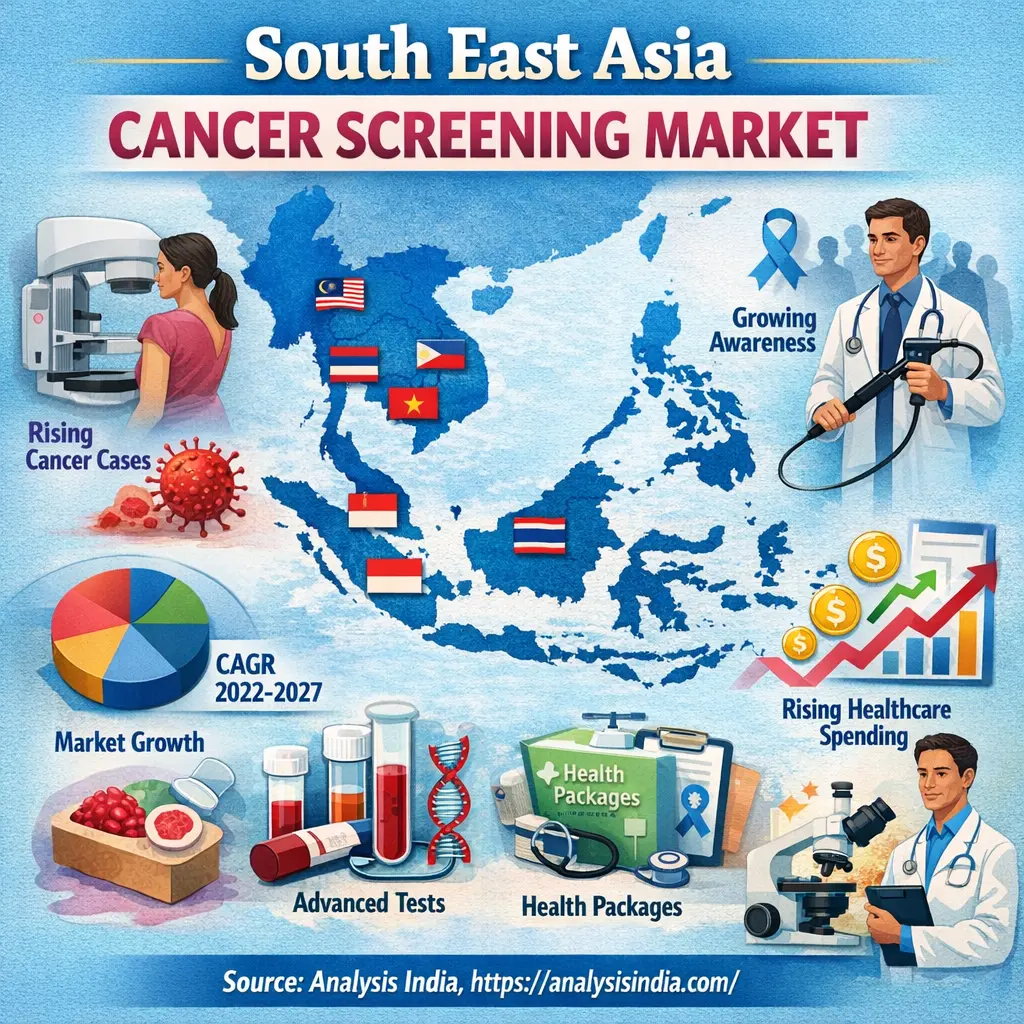
The South East Asia cancer screening market is experiencing consistent growth due to increasing cancer incidence, rising awareness regarding early detection, and expanding healthcare infrastructure across emerging economies. Countries such as Singapore, Thailand, Indonesia, Malaysia, Vietnam, and the Philippines are witnessing a gradual shift toward preventive healthcare, which is driving demand for cancer screening services.
South East Asia cancer screening Market Size Forecast (Billion US$)
According to industry estimates, the South East Asia cancer screening market size was valued at USD 2.1 billion in 2024 and is projected to reach USD 5.6 billion by 2033, reflecting strong long-term growth potential.
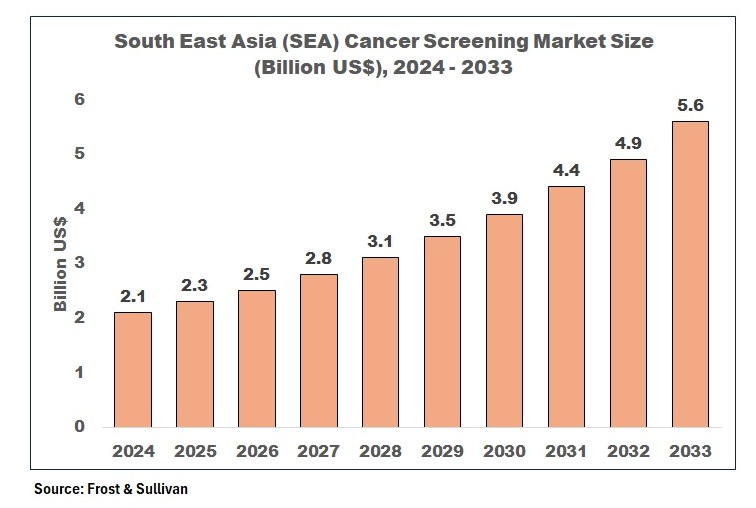
This steady growth trajectory highlights the increasing adoption of screening programs and diagnostic technologies across the region.
For global context, refer to the pillar article on Cancer Screening Market Growth Trends Insights.
Market Dynamics of South East Asia Cancer Screening Market
Rising Cancer Burden in South East Asia
The growth of the South East Asia cancer screening market is strongly supported by regional cancer incidence data. Reports from GLOBOCAN highlight the increasing number of cancer cases across ASEAN countries, reinforcing the need for effective screening programs. The rising incidence of cancer is a major driver for the South East Asia cancer screening market. Rapid urbanization, lifestyle changes, tobacco consumption, and aging populations are contributing to increased cancer cases across the region.
Cancer types such as breast cancer, cervical cancer, colorectal cancer, and lung cancer are becoming more prevalent, requiring early detection strategies.
Additionally, the broader cancer diagnostics market in Southeast Asia reached USD 7.2 billion in 2024 and is projected to reach USD 14.5 billion by 2033, highlighting strong demand for diagnostic and screening technologies.
Increasing Awareness for Early Cancer Detection
Public awareness campaigns and healthcare initiatives are improving understanding of early cancer detection. Governments and NGOs are actively promoting screening programs to reduce mortality rates.
Early detection significantly improves treatment outcomes and reduces healthcare costs, making screening programs essential in developing economies.
Government Initiatives and National Screening Programs
Governments across South East Asia are introducing policies to promote cancer screening. National screening programs are being implemented for breast, cervical, and colorectal cancers.
Countries such as Singapore and Thailand have established structured screening frameworks, while Indonesia and Vietnam are expanding access through public health initiatives.
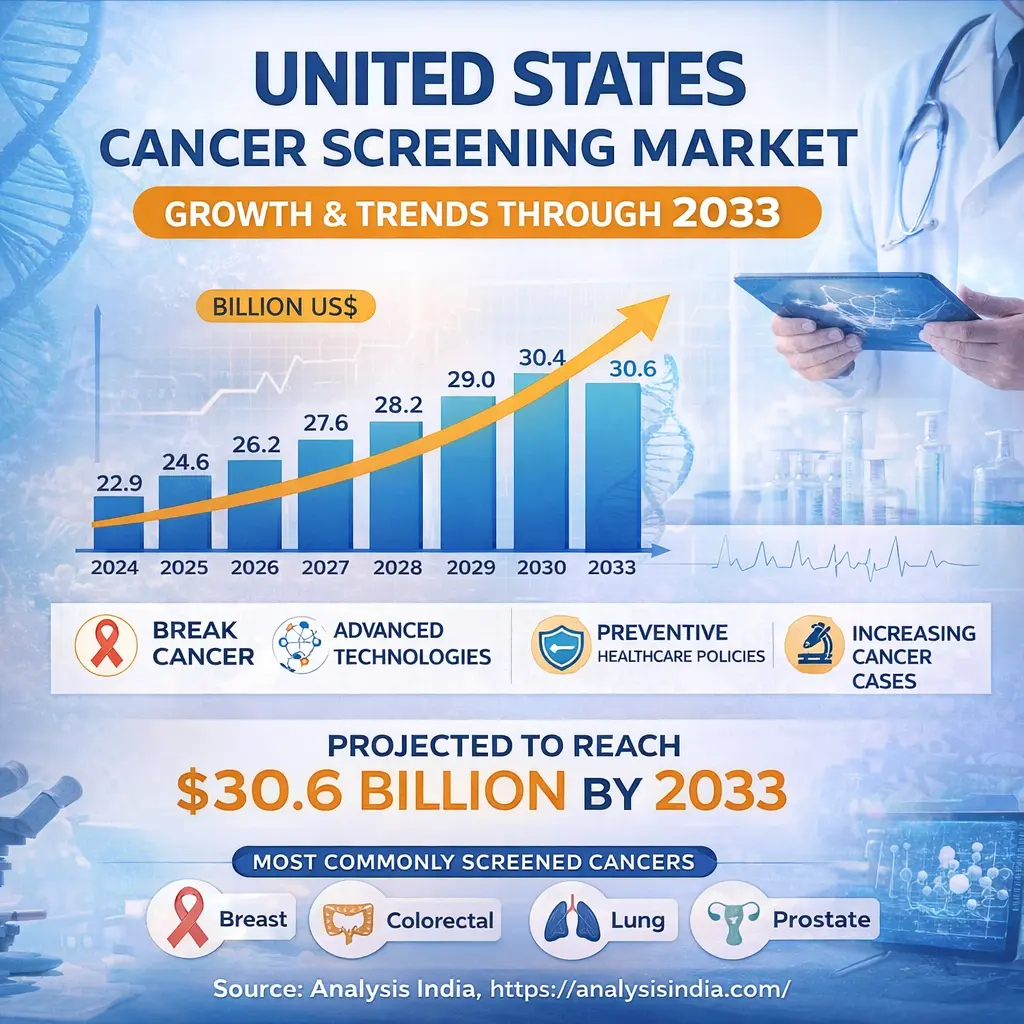
For comparison, explore how structured programs influence adoption in the United States Cancer Screening Market.
Technology Trends in South East Asia Cancer Screening Market
The South East Asia cancer screening market is undergoing a significant technological transformation driven by rapid adoption of advanced diagnostic tools, artificial intelligence integration, and digital healthcare infrastructure. Across ASEAN countries, the shift from conventional screening methods to precision-based diagnostics is reshaping the market landscape. Technologies such as molecular diagnostics, next-generation sequencing, liquid biopsy, and AI-powered imaging are increasingly being deployed to enhance early detection accuracy and reduce diagnostic errors. These advancements are particularly important in a region where late-stage cancer diagnosis remains a major concern.
Artificial intelligence is emerging as a critical enabler in cancer screening programs across South East Asia. Countries such as Singapore, Malaysia, Thailand, Indonesia, and Vietnam are actively integrating AI into screening workflows to improve detection efficiency and reduce healthcare costs. AI algorithms are being used for breast cancer imaging, lung cancer detection, and cervical cancer screening, helping clinicians identify abnormalities at earlier stages. Research indicates that AI-supported screening systems are improving diagnostic precision and enabling better patient management across the ASEAN region.
In Singapore, AI adoption is particularly advanced, with healthcare institutions leveraging machine learning models for mammography and radiology-based screening programs. Malaysia is also expanding its use of AI-driven diagnostics, supported by collaborations between government agencies and private healthcare providers. Thailand and Vietnam are gradually adopting AI technologies, particularly in urban healthcare centers, while Indonesia is exploring scalable AI-based screening solutions to address its large population base.
Another major technological trend is the growing adoption of liquid biopsy and non-invasive screening techniques. These technologies allow early detection of cancer through blood samples, reducing the need for invasive procedures. This is particularly beneficial in developing countries within South East Asia, where access to advanced surgical diagnostics may be limited. The integration of digital health platforms is further supporting screening programs by enabling remote monitoring, patient tracking, and centralized data management.
Additionally, the expansion of telemedicine and mobile health technologies is playing a crucial role in bridging the urban-rural healthcare gap. Countries such as Indonesia and the Philippines are deploying mobile screening units and telehealth platforms to reach underserved populations. These initiatives are improving accessibility and encouraging higher participation in screening programs.
Market Challenges in South East Asia Cancer Screening Market
Despite strong growth potential, the South East Asia cancer screening market faces several structural and systemic challenges that hinder its full-scale expansion. One of the most critical challenges is the disparity in healthcare infrastructure across countries and regions. While countries like Singapore and Malaysia have advanced healthcare systems, others such as Laos, Myanmar, and parts of Indonesia continue to face limitations in diagnostic infrastructure and trained healthcare professionals.
Access to cancer screening services remains uneven, particularly in rural and remote areas. In many Southeast Asian countries, healthcare facilities are concentrated in urban centers, leaving large portions of the population without access to early detection services. This disparity significantly impacts screening rates and leads to late-stage cancer diagnoses, which are more difficult and costly to treat.
Another major challenge is low screening participation rates, even in countries with established programs. For instance, in Singapore, despite the availability of national screening programs, less than half of the eligible population undergoes timely cancer screening according to recommended guidelines. This highlights the need for stronger awareness campaigns and behavioral interventions to improve participation.
Affordability is also a significant barrier in the region. In low- and middle-income countries such as Indonesia, Vietnam, and the Philippines, out-of-pocket healthcare expenses remain high. This limits access to advanced screening technologies and discourages routine screening among lower-income populations.
Cultural and social factors further contribute to low screening uptake. In some countries, stigma associated with cancer and lack of awareness about early detection prevent individuals from participating in screening programs. Studies show that in Indonesia, cervical cancer screening rates have ranged between only 5.5% and 33.3%, indicating a significant gap in awareness and accessibility.
Country-Level Market Insights and Data Analysis
The South East Asia cancer screening market exhibits significant variation across countries due to differences in healthcare infrastructure, economic development, and government policies.
Singapore Cancer Screening Market
Singapore represents the most advanced market in the region, with high healthcare spending and well-established screening programs. The country has one of the highest cancer incidence rates in ASEAN, with an age-standardized incidence rate exceeding 231 per 100,000 population. Despite this, screening uptake remains a challenge, indicating untapped potential for further market growth.
Malaysia Cancer Screening Market
Malaysia is witnessing steady growth in cancer screening adoption, supported by government initiatives and expanding private healthcare services. The country is focusing on increasing screening coverage through national programs and public-private partnerships.
Thailand Cancer Screening Market
Thailand has emerged as a strong market due to its universal healthcare system and active government involvement in cancer prevention programs. The country reported approximately 170,500 new cancer cases and over 114,000 cancer-related deaths, highlighting the urgent need for enhanced screening services. Thailand’s focus on preventive healthcare and medical tourism is further boosting demand for cancer screening.
Indonesia Cancer Screening Market
Indonesia, the largest country in Southeast Asia by population, presents significant growth opportunities. However, the market is constrained by limited infrastructure and low screening awareness. The government is working to expand access through community health programs and mobile screening initiatives.
Vietnam Cancer Screening Market
Vietnam is an emerging market with increasing investments in healthcare infrastructure and diagnostic technologies. The country is experiencing a rise in cancer incidence due to urbanization and lifestyle changes, which is driving demand for screening services.
Philippines Cancer Screening Market
The Philippines faces challenges related to high cancer mortality rates, with one of the highest age-standardized mortality rates in the region. Efforts are being made to improve screening access and awareness through government programs and international collaborations.
Across the ASEAN region, cancer incidence is rising significantly. In 2022 alone, Southeast Asia recorded over 1.14 million new cancer cases and more than 716,000 deaths, reflecting a substantial disease burden. This growing burden is a key factor driving the expansion of the cancer screening market.
Comparative Insights with Developed Asian Market
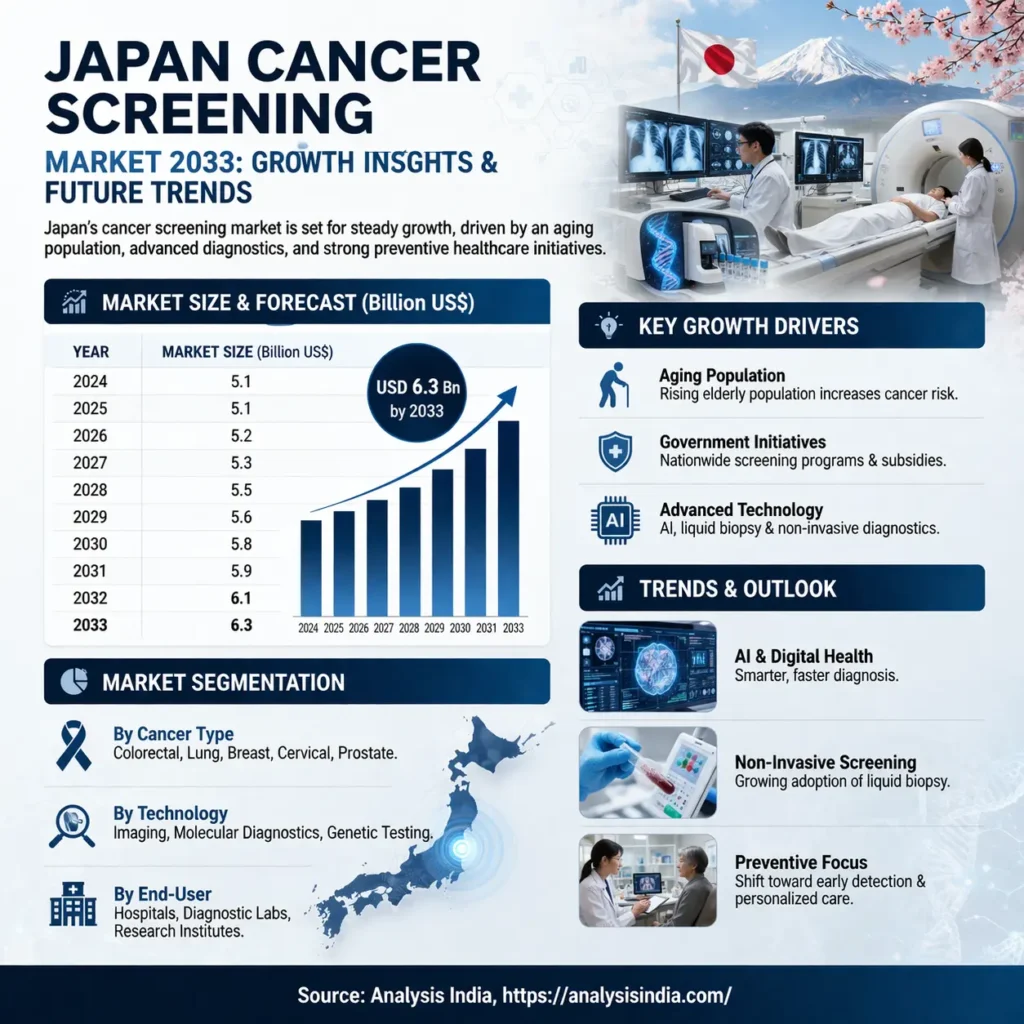
Compared to South East Asia, developed markets such as Japan have higher screening adoption rates and advanced healthcare systems.
Explore detailed insights in the Japan Cancer Screening Market.
Opportunities in South East Asia Cancer Screening Market
The South East Asia cancer screening market offers significant growth opportunities driven by demographic trends, healthcare investments, and technological advancements. One of the most promising opportunities lies in the expansion of screening programs in underserved regions. Governments and healthcare organizations are increasingly focusing on rural healthcare development, which is expected to improve screening access and participation rates.
The growing middle-class population in countries such as Indonesia, Vietnam, and the Philippines is also driving demand for preventive healthcare services. As disposable incomes increase, more individuals are opting for routine health check-ups and cancer screening services.
Medical tourism is another major growth driver in the region. Countries like Thailand and Singapore are attracting international patients seeking high-quality and cost-effective cancer screening services. This trend is boosting investments in advanced diagnostic technologies and expanding the overall market.
Public-private partnerships are playing a crucial role in market development. Collaborations between governments, healthcare providers, and technology companies are helping improve infrastructure, expand screening programs, and introduce innovative diagnostic solutions.
Furthermore, the increasing adoption of digital health technologies and AI-driven screening tools is expected to create new growth avenues. These technologies can significantly enhance screening efficiency and reduce costs, making cancer screening more accessible across the region.
Future Outlook of South East Asia Cancer Screening Market
The future of the South East Asia cancer screening market is highly promising, supported by strong growth fundamentals and increasing healthcare investments. The market is expected to grow steadily, reaching USD 5.6 billion by 2033, driven by rising cancer incidence and growing awareness of early detection.
Demographic trends such as aging populations and urbanization are expected to further increase cancer prevalence in the region. By 2050, Southeast Asia is projected to witness over 2 million new cancer cases annually, representing a significant increase from current levels.
Technological advancements will continue to play a key role in shaping the market. The adoption of AI, molecular diagnostics, and non-invasive screening techniques is expected to improve detection rates and reduce healthcare costs.
However, addressing challenges related to accessibility, affordability, and awareness will be critical for achieving sustainable market growth. Governments and healthcare providers must focus on expanding screening programs and improving infrastructure to ensure equitable access across the region.
Conclusion
The South East Asia cancer screening market is at a pivotal stage of growth, driven by increasing cancer burden, technological advancements, and expanding healthcare infrastructure. While countries like Singapore and Thailand lead in terms of innovation and screening adoption, emerging markets such as Indonesia and Vietnam offer significant growth potential.
The rising incidence of cancer, combined with growing awareness and government initiatives, is expected to drive strong demand for screening services in the coming years. However, challenges related to infrastructure gaps, affordability, and low awareness must be addressed to unlock the full potential of the market.
With continued investments, technological innovation, and policy support, the South East Asia cancer screening market is poised to play a crucial role in improving early detection rates and reducing cancer-related mortality across the region.
FAQs: South East Asia Cancer Screening Market
What is the South East Asia cancer screening market?
The South East Asia cancer screening market refers to services and technologies used to detect cancer early across countries like Singapore, Thailand, Indonesia, Malaysia, Vietnam, and the Philippines.
What is the market size of South East Asia cancer screening market?
The South East Asia cancer screening market size was around USD 2.1 billion in 2024 and is expected to reach USD 5.6 billion by 2033, showing steady growth.
What factors are driving the South East Asia cancer screening market?
Key drivers of the South East Asia cancer screening market include rising cancer cases, growing awareness, government screening programs, and adoption of advanced technologies.
Which countries lead the South East Asia cancer screening market?
Singapore, Thailand, and Malaysia lead the South East Asia cancer screening market, while Indonesia and Vietnam are emerging with strong growth potential.
What are the major challenges in the South East Asia cancer screening market?
Major challenges include limited access in rural areas, low awareness, and affordability issues in developing countries.
What technologies are used in the South East Asia cancer screening market?
The South East Asia cancer screening market uses technologies like imaging systems, molecular diagnostics, liquid biopsy, and AI-based screening tools.
What is the future of the South East Asia cancer screening market?
The South East Asia cancer screening market is expected to grow steadily due to increasing healthcare investments, technological advancements, and rising demand for early detection.