📅 Published: January 14, 2026
🔄 Last Updated: March 20, 2026
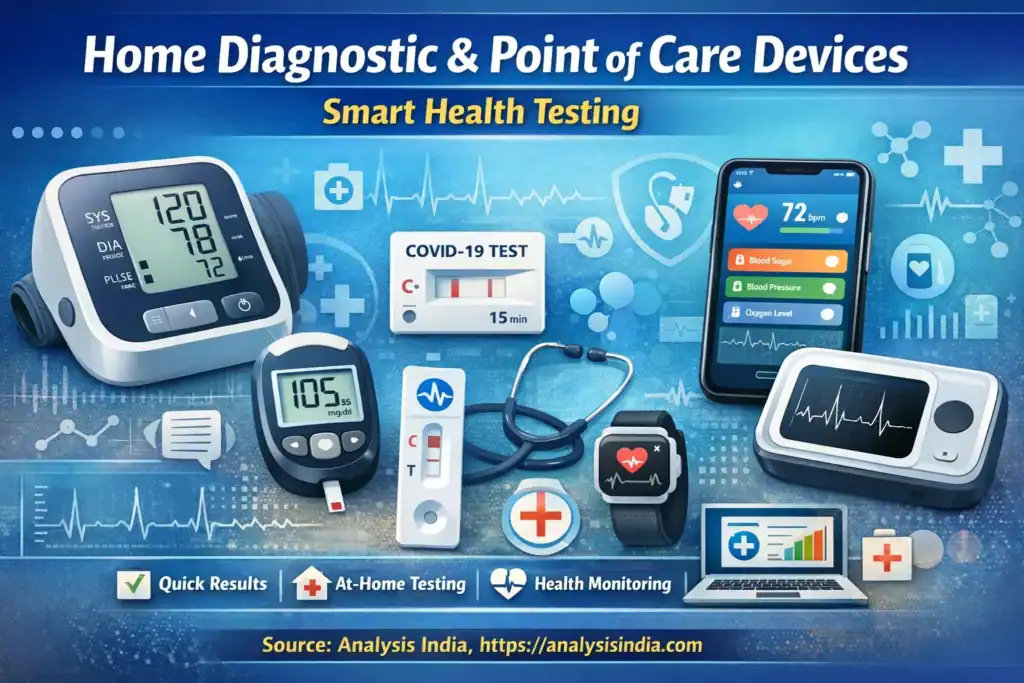
Analysis India: Home diagnostic and point of care devices are becoming a major pillar of modern healthcare in 2026 as testing continues to move closer to patients. Home diagnostic and point of care devices allow individuals to check important health indicators without visiting hospitals for routine tests. This shift is driven by rising demand for convenience, faster results, and better access to healthcare services. Many home diagnostic and point of care devices now connect with mobile applications that store results and share reports with doctors. Digital healthcare platforms make it easier for patients to manage long term conditions from home. As healthcare systems focus on decentralised care, home diagnostic and point of care devices are becoming essential tools for smart healthcare delivery.
Growing Demand for Home Diagnostic and Point of Care Devices
The demand for home diagnostic and point of care devices is increasing because healthcare systems are under pressure from rising patient volumes. Hospitals face capacity challenges due to ageing populations and higher chronic disease rates. Home diagnostic and point of care devices help reduce unnecessary clinic visits by enabling self testing at home. Patients prefer fast and simple testing options that fit into daily routines. Digital health awareness has also improved trust in medical technology. As a result, home diagnostic and point of care devices are gaining strong acceptance across both urban and rural healthcare markets.
Deloitte Insights reported that 43 percent of consumers in the United States used connected health tools in 2024, up from 34 percent in 2022. This growth shows that people are becoming more comfortable with digital health solutions. Connected monitoring devices and home testing tools are now part of everyday healthcare behaviour. This trend supports the wider adoption of home diagnostic and point of care devices. Convenience and accessibility remain the main drivers of this shift.
Global Market Expansion Signals Strong Investment
Global investment in home diagnostic and point of care devices continues to rise as healthcare moves toward decentralised testing models. Market research firms report steady growth in both point of care diagnostics and home testing segments. The expansion reflects increased use in clinics, pharmacies, and home settings. Ageing populations and chronic disease prevalence are also supporting demand. Medical device companies are focusing on portable and connected diagnostic solutions. These trends make home diagnostic and point of care devices a long term growth opportunity for the healthcare industry.
MarketsandMarkets estimates the global point of care diagnostics market at USD 15.05 billion in 2024 and projects it to reach USD 22.63 billion by 2029. Precedence Research values the global home diagnostics market at USD 6.91 billion in 2025 with a forecast of USD 11.54 billion by 2035. These figures highlight strong growth potential for home diagnostic and point of care devices over the next decade. The market is expanding across North America, Europe, and Asia Pacific. Emerging economies are also showing rising adoption due to better healthcare access.
Market Forecast for Home Diagnostic and Point of Care Devices
| Segment | Year | Market Value | Source |
|---|---|---|---|
| Point of Care Diagnostics | 2024 | USD 15.05 Billion | MarketsandMarkets |
| Point of Care Diagnostics | 2029 | USD 22.63 Billion | MarketsandMarkets |
| Home Diagnostics | 2025 | USD 6.91 Billion | Precedence Research |
| Home Diagnostics | 2035 | USD 11.54 Billion | Precedence Research |
What Counts as Home Diagnostic and Point of Care Devices
Home diagnostic and point of care devices include medical tools used for fast testing outside traditional hospital environments. Common examples include blood glucose meters, blood pressure monitors, pulse oximeters, and rapid infection test kits. Portable ECG devices are also part of this category. Many home diagnostic and point of care devices connect to smartphones for result tracking and storage. This allows users to share data with healthcare professionals when needed. Digital integration improves long term health monitoring and decision making.
Retail pharmacies and online platforms now sell a wide range of home diagnostic and point of care devices. These products are designed for easy use with clear instructions. Manufacturers focus on accuracy, reliability, and user safety. This makes home testing more accessible to the general public. As technology improves, these devices continue to become more user friendly.
Consumer Adoption of Home Diagnostic Devices
Consumer adoption of home diagnostic and point of care devices is increasing due to rising digital health awareness. Many people already use fitness trackers and health apps for daily monitoring. This makes it easier to accept medical testing devices at home. Surveys show that a large number of users now track health data digitally. Home diagnostic and point of care devices fit naturally into this behaviour. People value the ability to monitor health without visiting clinics.
Rock Health reported that 53 percent of consumers in the United States own at least one wearable or connected health device. The same report found that 54 percent of users track at least one health metric digitally. These habits support stronger adoption of home diagnostic and point of care devices. Digital health tools are becoming part of routine healthcare management. This shift improves patient engagement and health awareness.
Digital Health Adoption Snapshot
| Metric | Value | Region | Source |
|---|---|---|---|
| Use of connected health tools | 43 percent | United States | Deloitte Insights |
| Ownership of wearable devices | 53 percent | United States | Rock Health |
| Digital health tracking | 54 percent | United States | Rock Health |
Biosensors Powering Smart Home Diagnostics
Technology improvements are strengthening home diagnostic and point of care devices. Biosensors play a major role in improving accuracy and reliability. These sensors can detect small biological changes from blood, saliva, or skin contact. Better sensors allow devices to be smaller and easier to use. Wireless connectivity helps users send results to mobile apps instantly. This makes home diagnostic and point of care devices more efficient for daily monitoring.
Fortune Business Insights reported that the global biosensors market reached USD 27.4 billion in 2024. The market is expected to grow steadily as healthcare adopts more digital tools. Biosensor innovation supports faster detection and better accuracy. This directly improves the performance of home diagnostic and point of care devices. Continuous research in this area will further improve smart healthcare testing.
Chronic Disease Monitoring with Point of Care Devices
Chronic disease management is one of the strongest use cases for home diagnostic and point of care devices. Diabetes patients rely on blood glucose meters for daily tracking. Heart patients use portable ECG tools to monitor rhythm changes. People with high blood pressure check readings at home to manage health risks. These home diagnostic and point of care devices provide long term health data. Doctors can use this information to adjust treatment plans.
Remote monitoring helps reduce hospital visits while improving care quality. Patients become more aware of their health patterns. This encourages better lifestyle choices and treatment adherence. Home testing supports preventive healthcare strategies. As chronic diseases continue to rise globally, home diagnostic and point of care devices will remain essential.
Infectious Disease Testing at Home
Infectious disease testing remains an important use case for home diagnostic and point of care devices. Rapid test kits allow users to detect infections quickly. Early testing reduces the spread of illness in communities. Pharmacies and clinics also use point of care devices for faster diagnosis. Home diagnostic and point of care devices support quicker medical advice through digital platforms.
Future Market Insights estimates the global at home testing market at USD 7.79 billion in 2025 and projects it to reach USD 11.87 billion by 2035. This growth reflects continued demand for convenient infection screening. Digital reporting tools also support public health monitoring. Home based testing remains a key part of healthcare preparedness.
Business Strategy Beyond Pharma
Medical device companies are expanding their focus on home diagnostic and point of care devices. Many brands now offer complete digital health ecosystems. These include devices, mobile apps, and remote consultation services. Retail pharmacies sell home diagnostic tools to increase healthcare access. Health systems integrate device data into patient records for better care coordination.
This strategy improves long term patient engagement. Companies benefit from recurring service models rather than one time sales. Digital health partnerships also strengthen brand value. Home diagnostic and point of care devices are becoming a core part of healthcare business models beyond traditional pharma.
Future Outlook for Home Diagnostic Devices
The future of home diagnostic and point of care devices looks strong as technology continues to improve. More advanced sensors will enhance accuracy. AI powered analysis will support faster interpretation of results. Affordable pricing will expand access in developing regions. Digital health platforms will improve data sharing between patients and doctors.
Patients will gain more control over personal health monitoring. Healthcare systems will rely more on remote data for early detection. Home diagnostic and point of care devices will become standard tools in everyday healthcare. This shift supports preventive and personalised care models.
Conclusion
Home diagnostic and point of care devices are reshaping healthcare by enabling fast, convenient, and reliable testing at home. Market data shows steady global growth supported by strong investment. Consumer adoption is increasing due to digital health habits. Technology improvements are enhancing device performance. Chronic disease monitoring and infection testing remain key use cases. Healthcare companies are investing in connected diagnostic solutions. Home diagnostic and point of care devices will remain central to smart healthcare in 2026 and beyond.
Frequently Asked Questions
What are home diagnostic and point of care devices
Home diagnostic and point of care devices are medical tools that allow patients to perform basic health tests outside traditional hospital settings. These devices are designed for quick and convenient use at home, in pharmacies, or in small clinics. Common examples include blood glucose monitors, blood pressure devices, pulse oximeters, and rapid infection test kits. Many home diagnostic and point of care devices connect to digital platforms for result tracking. This helps improve long term health monitoring and care coordination.
Why are home diagnostic and point of care devices becoming popular
Home diagnostic and point of care devices are becoming popular because people want faster and more convenient healthcare services. These devices reduce the need for frequent hospital visits for routine tests. Patients can check important health indicators from home. Digital health awareness has also increased trust in connected medical tools. This shift supports better access to healthcare across different regions.
How do home diagnostic and point of care devices support smart healthcare
Home diagnostic and point of care devices support smart healthcare by providing real time health data. Many devices connect with mobile apps that store test results and share them with doctors. This allows healthcare providers to monitor patients remotely. Early detection of health changes improves treatment planning. Digital integration makes healthcare more efficient and responsive.
Are home diagnostic and point of care devices safe to use
Most home diagnostic and point of care devices are safe when used according to instructions. Reputed manufacturers follow regulatory standards for accuracy and quality. Devices approved by health authorities meet safety requirements. Clear user guidelines help prevent errors. Patients should always consult healthcare professionals for medical decisions.
Which health conditions can be monitored using home diagnostic devices
Home diagnostic and point of care devices can monitor diabetes, blood pressure, heart rhythm, and oxygen levels. They are also used for infection screening and general wellness checks. Chronic disease patients benefit from regular home monitoring. These tools help track health trends over time. This supports better disease management and preventive care.
Do home diagnostic and point of care devices work with digital health platforms
Yes, many home diagnostic and point of care devices work with digital health platforms. They connect to mobile apps or cloud systems to store and analyse test results. Patients can track their health history easily. Doctors can review shared reports remotely. This improves healthcare coordination and monitoring efficiency.
Can home diagnostic devices replace hospital testing
Home diagnostic and point of care devices cannot fully replace hospital testing. They are mainly used for routine monitoring and early screening. Complex tests still require laboratory analysis and medical supervision. Home testing supports faster decisions. Both systems work together to improve healthcare outcomes.
What is the future of home diagnostic and point of care devices
The future of home diagnostic and point of care devices looks strong. Technology improvements will increase accuracy and ease of use. AI powered analysis will support faster result interpretation. Affordable devices will expand access in developing regions. These tools will play a key role in preventive and personalised healthcare.