
📅 Published: January 25, 2026
🔄 Last Updated: March 20, 2026
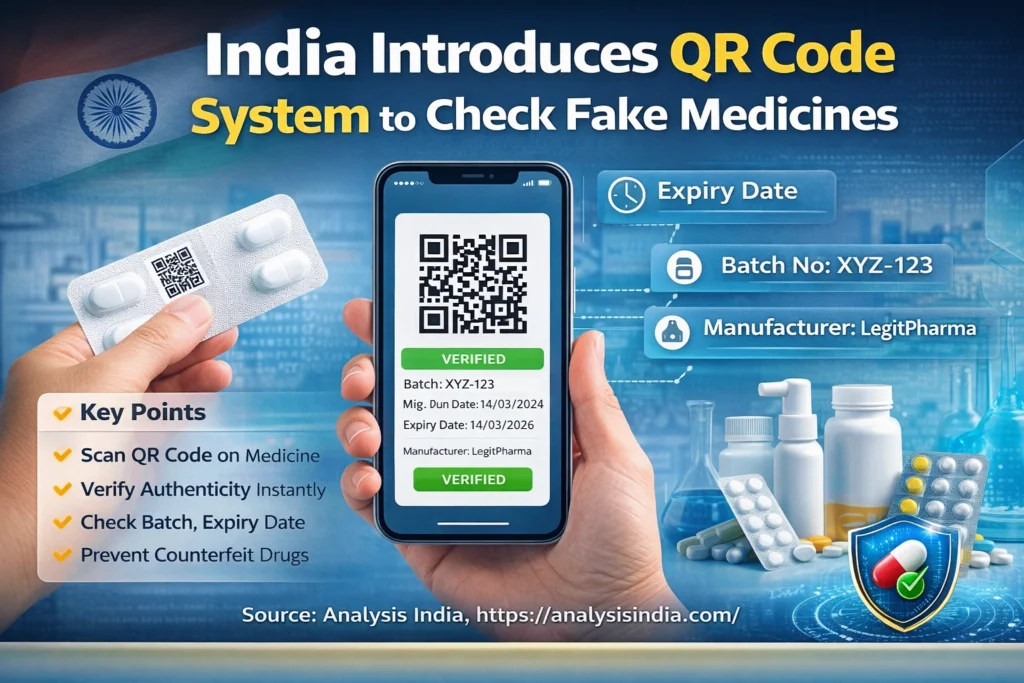
Analysis India: Fake medicine check using QR code in India has become an important development as the country strengthens its digital health and drug safety systems. India has one of the largest pharmaceutical supply chains globally. Medicines move through manufacturers distributors wholesalers pharmacies and finally reach patients. This long chain increases the risk of counterfeit medicines entering the market.
To address this challenge India has introduced a QR code based verification system. The aim is to improve transparency and allow consumers to verify medicine authenticity easily before use. This approach supports patient safety while aligning with India’s broader digital governance goals.
As smartphone usage expands across healthcare activities the fake medicine check using QR code in India fits naturally into everyday routines. Regulators healthcare professionals and industry stakeholders are closely monitoring how this system can improve trust and safety across the medicine ecosystem.
Why India Introduced QR Code Based Fake Medicine Checks
The fake medicine check using QR code in India is driven by the need for better visibility within the pharmaceutical supply chain. Traditional verification methods rely heavily on inspections documentation and enforcement actions. These processes can be time intensive and reactive.
QR codes provide a digital verification layer that allows instant access to product information. Consumers and pharmacists can verify medicines without complex procedures. This makes authentication faster and more accessible.
India’s expanding digital infrastructure and widespread smartphone adoption make QR code verification practical in both urban and semi urban areas. Regulators view this system as a supportive mechanism that strengthens existing controls rather than replacing them.
How the QR Code System Works in Medicine Verification
The QR code system is designed to provide essential product details at the point of purchase. Each medicine pack carries a unique QR code linked to verified manufacturing data.
When scanned using a smartphone the QR code can show batch information manufacturing date expiry date and distribution details. This helps users confirm whether the medicine matches official records.
The fake medicine check using QR code in India focuses on simplicity. Both pharmacists and consumers can participate in verification without technical complexity or specialised equipment.
Medicines and Company Examples That Show Details After QR Scan
When India first introduced the fake medicine check using QR code in India the rollout covered a limited number of high volume medicines. These products were selected based on usage scale and public health importance.
Currently only selected medicines provide complete verification details after scanning. As implementation expands more products are expected to join the system.
Select Medicines with Active QR Verification
| S No | Medicine Brand | Dosage Form |
|---|---|---|
| 1 | Aciloc 150 mg | Tablet |
| 2 | Aciloc 300 mg | Tablet |
| 3 | Actemra 400 mg | Injection |
| 4 | Actrapid Human 40 IU | Injection |
| 5 | Aerocort | Inhaler |
| 6 | Allegra 120 mg | Tablet |
| 7 | Allegra 180 mg | Tablet |
| 8 | Calpol 500 mg | Tablet |
| 9 | Calpol 650 mg | Tablet |
| 10 | Dolo 650 mg | Tablet |
These medicines are part of the first 300 products mandated by the Drugs Controller General of India to carry QR codes with verifiable data on their packaging.
What Users Can See After Scanning the QR Code
When a medicine covered under the system is scanned the QR code may display the following information
- Brand name and generic name
- Manufacturer name
- Batch number
- Manufacturing date
- Expiry date
- Regulatory or licence related details
These details help confirm whether the medicine is part of the approved supply chain and whether the packaging data matches official records.
It is important to note that not all medicines currently support this feature. The fake medicine check using QR code in India is being rolled out in phases with gradual expansion planned.
Role of QR Codes in India’s Pharmaceutical Supply Chain
India’s pharmaceutical supply chain includes multiple participants. QR code verification adds a digital checkpoint across this journey.
Manufacturers can monitor product movement. Distributors can verify shipments. Pharmacies can validate stock before sale. Patients can confirm authenticity before consumption.
This layered approach strengthens trust across the ecosystem while remaining compatible with existing regulatory systems.
Impact on Patients and Consumers
For patients the fake medicine check using QR code in India provides reassurance at a critical stage. Medicine quality directly affects health outcomes and even small doubts can create concern.
QR verification allows patients to make informed decisions. It also encourages awareness about medicine safety and responsible purchasing habits.
As scanning becomes routine consumer confidence in genuine medicines is expected to improve.
Impact on Pharmacists and Retailers
Pharmacies play a key role in preventing counterfeit medicines from reaching patients. The QR code system supports pharmacists by enabling quick verification during stock handling and dispensing.
Retailers can identify irregular products early and reduce operational risks. Over time QR based checks may also assist with compliance documentation.
The fake medicine check using QR code in India aligns with the professional responsibility of pharmacies to ensure safe medicine distribution.
Industry and Manufacturer Perspective
From a manufacturer standpoint QR codes help protect brand reputation. Counterfeit medicines not only pose health risks but also damage trust in genuine products.
Manufacturers can use QR verification data to monitor distribution patterns and identify anomalies. This supports quality assurance and supply chain oversight.
Industry participation depends on clear standards and regulatory guidance to ensure consistent implementation.
Survey Based Insights on QR Code Adoption
Industry observations and pilot studies suggest growing interest in QR based medicine verification.
| Area | General Trend |
|---|---|
| Smartphone access | Widely available |
| Pharmacy readiness | Increasing |
| Consumer awareness | Gradually improving |
| Manufacturer pilots | Expanding |
| Regulatory focus | Strengthening |
These trends support the long term potential of the fake medicine check using QR code in India when combined with awareness programs.
Challenges in QR Code Medicine Verification
Despite its benefits the QR code system faces challenges. Code duplication is a risk if security standards are weak. Reliable backend systems are essential.
Internet availability in remote regions may affect real time verification. User education is also critical to avoid misunderstanding scan results.
Addressing these challenges requires collaboration between regulators technology providers and healthcare stakeholders.
Regulatory and Policy Considerations
Effective implementation requires clear standards for QR code generation data security and verification protocols.
Data privacy must be protected while ensuring transparency. Support for smaller manufacturers and pharmacies will be necessary to encourage adoption.
The fake medicine check using QR code in India works best when integrated into a broader regulatory framework.
What This Means for India’s Digital Healthcare Future
QR based medicine verification reflects India’s growing focus on digital health governance. It shows how technology can support public safety without disrupting existing systems.
In the future QR verification may integrate with electronic prescriptions and digital health records. This approach supports scalable and adaptable healthcare innovation.
Final Thoughts
The fake medicine check using QR code in India is a practical step toward safer medicine access and improved transparency. While it cannot eliminate counterfeit medicines entirely it provides an accessible verification layer for patients pharmacists and regulators.
Long term success will depend on awareness standardisation and collaboration across the healthcare ecosystem. As adoption grows QR verification is likely to become a routine part of medicine safety in India.
Frequently Asked Questions
What is fake medicine check using QR code in India?
Fake medicine check using QR code in India is a digital verification method that allows users to scan a QR code printed on medicine packaging to confirm authenticity. The scan can show official product details such as batch information and expiry date.
Why did India introduce QR codes on medicines?
India introduced QR codes to improve transparency in the pharmaceutical supply chain. The system helps reduce the risk of counterfeit medicines and supports safer access for patients without replacing existing regulatory controls.
Are all medicines in India covered under QR code verification?
No. Currently only selected high-volume medicines are covered. The fake medicine check using QR code in India is being implemented in phases and more products are expected to be added gradually.
What details can be seen after scanning a medicine QR code?
After scanning a QR code users may see the brand name manufacturer batch number manufacturing date expiry date and regulatory information. These details help confirm whether the medicine matches official records.
Can consumers scan medicine QR codes using any smartphone?
Yes. Most modern smartphones can scan QR codes using the camera or a standard QR scanner app. No special equipment is required for fake medicine check using QR code in India.
How reliable is QR code verification for detecting fake medicines?
QR code verification adds an important safety layer but it does not guarantee complete protection. It works best when combined with proper regulation awareness and secure backend systems.
What should a consumer do if QR scan details do not match the packaging?
If the scanned details appear incorrect or missing consumers should avoid using the medicine and consult the pharmacist. Reporting the issue to health authorities is also recommended.
How does QR code verification help pharmacists and retailers?
QR codes help pharmacists verify stock before sale and identify irregular products early. This supports safer dispensing practices and helps maintain trust with customers.
What challenges does QR based medicine verification face in India?
Challenges include limited internet access in some regions risk of code duplication and lack of awareness. Addressing these issues requires collaboration between regulators industry and technology providers.
What does fake medicine check using QR code in India mean for the future?
It reflects India’s shift toward digital healthcare governance. QR verification is expected to become more common as awareness grows and integration improves across the healthcare system.