📅 Published: March 22, 2026
🔄 Last Updated: March 22, 2026
Semaglutide Launched in India Marks a Structural Shift
Analysis India: The semaglutide launched in India in March 2026 represents a structural shift in the pharmaceutical industry rather than just a routine product launch. While semaglutide was already available earlier through premium branded products, its adoption remained limited due to high pricing and restricted accessibility. The entry of generic versions has transformed the therapy from a niche, high-cost treatment into a widely accessible option for diabetes and weight management.
India has one of the largest diabetes patient populations globally, and affordability has always been a key barrier in advanced therapies. With the semaglutide launched in India through generics, the accessibility gap has significantly reduced, allowing broader patient adoption. This transition is not only a pricing event but also a major shift in how innovative therapies scale in emerging markets.
This development is part of broader trends shaping the industry, as discussed in latest developments in pharmaceutical industry 2026.
Patent Expiry Enabled Semaglutide Launch in India
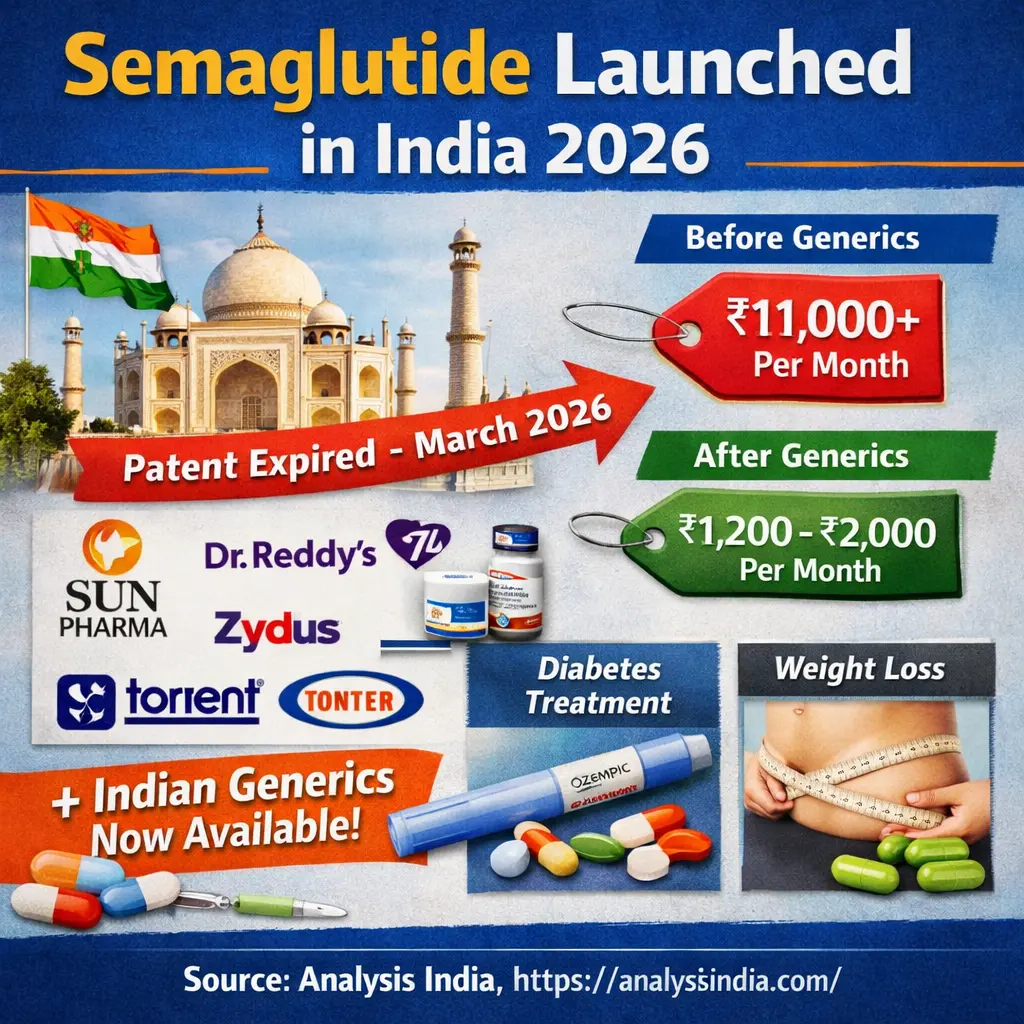
The primary trigger behind the semaglutide launched in India at scale was the patent expiry in March 2026. Before this, innovator companies had a monopoly over the drug, keeping prices high and limiting competition. Once the patent protection ended, Indian pharmaceutical companies rapidly entered the market with generic versions.
The patent expiry removed key barriers to entry and allowed multiple manufacturers to introduce competing products almost simultaneously. This rapid entry is a defining characteristic of the Indian pharmaceutical market, where companies are highly responsive to patent cliffs. As a result, the semaglutide launched in India quickly transitioned into a highly competitive segment with dozens of players.
A deeper understanding of this transition can be explored in semaglutide patent expiry generics opportunity.
Price Impact After Semaglutide Launched in India
One of the most important outcomes of the semaglutide launched in India is the real and measurable price reduction. Before the entry of generics, branded versions such as Ozempic and Wegovy were priced between approximately ₹8,800 and ₹16,000 per month, depending on dosage and availability. This pricing positioned semaglutide as a premium therapy accessible only to a limited segment of patients.
After the semaglutide launched in India through generic competition, the pricing landscape changed significantly. Entry-level generic versions entered the market at around ₹1,290 per month, while most brands are currently priced in the range of ₹1,500 to ₹5,000 per month. Some companies have also introduced weekly pricing models, further improving affordability for patients.
This represents a substantial price correction driven by competition and local manufacturing capabilities. The reduction in cost has expanded the total addressable market and increased the likelihood of long-term adoption across different income segments. External reports such as generic semaglutide launched in India prices plummet also confirm this pricing shift.
Semaglutide Price in India: Comparison Table
| Category | Product Type | Monthly Cost (Approx) |
|---|---|---|
| Before 2026 | Branded (Ozempic, Wegovy) | ₹8,800 – ₹16,000 |
| Early Generic Estimate | Initial projections | ₹3,500 – ₹4,000 |
| 2026 Actual Market Entry | Generic range | ₹1,500 – ₹5,000 |
| Lowest Price (Aggressive Entry) | Natco | ₹1,290 |
| Weekly Pricing Models | Some brands | ₹450 – ₹2,000/week |
Companies Driving Semaglutide Launch in India
The semaglutide launched in India has been driven by strong participation from leading domestic pharmaceutical companies. Major players such as Sun Pharma, Dr. Reddy’s Laboratories, Zydus Lifesciences, Torrent Pharmaceuticals, and Natco Pharma were among the early entrants in this segment. These companies leveraged their manufacturing strength and distribution networks to quickly scale their products across the country.
In addition to early leaders, several other companies including Lupin, Glenmark, Alkem, and Eris Lifesciences have either entered or are preparing to enter the market. The high level of competition is evident from the fact that more than 50 generic brands are expected to be available in India. This level of participation indicates the strong commercial potential of semaglutide in the Indian market.
Companies are not only competing on price but are also differentiating through product formats, delivery devices, and branding strategies. This suggests that the semaglutide launched in India is evolving beyond a standard generic market into a more complex, value-driven competitive landscape.
Market Opportunity After Semaglutide Launched in India
The semaglutide launched in India has unlocked a large market opportunity across multiple therapeutic segments. While the primary application remains type 2 diabetes management, there is increasing demand in weight loss and obesity treatment. This expansion reflects changing healthcare trends where lifestyle diseases are becoming more prominent.
The affordability achieved after the semaglutide launched in India is expected to drive higher prescription rates and increased awareness among patients and healthcare providers. As more patients gain access to this therapy, the overall market size is likely to expand significantly. This makes semaglutide one of the most promising growth segments in the Indian pharmaceutical industry.
The market is also expected to expand geographically, with increased penetration into tier-2 and tier-3 cities. This reflects a shift from urban-centric adoption to broader national reach, further strengthening the growth potential of semaglutide.
Impact on Indian Pharmaceutical Industry
The semaglutide launched in India has had a broader impact on the pharmaceutical industry beyond pricing and accessibility. One of the most visible changes is the emergence of intense price competition in a segment that was previously dominated by premium products. This has created a price-sensitive yet high-volume market environment.
Another important shift is the transition toward branded generics. Companies are increasingly focusing on differentiation through branding, patient support programs, and delivery systems rather than competing solely on price. This indicates a maturation of the Indian pharmaceutical market, where value-added services are becoming important.
The semaglutide launched in India has also strengthened India’s position as a global pharmaceutical manufacturing hub. The ability to rapidly produce and distribute complex therapies such as peptide-based drugs demonstrates the growing capabilities of Indian companies. This could also open opportunities for exports and international market expansion.
Patent and Competitive Strategy Insights
The semaglutide launched in India highlights important insights into patent strategy and market dynamics. The rapid transition from monopoly to intense competition demonstrates how patent expiry can reshape an entire therapeutic segment within a short period.
In India, patent regulations tend to favor accessibility and competition, limiting the effectiveness of long-term monopoly strategies. As a result, companies must focus on innovation, branding, and market execution rather than relying solely on patent protection. This dynamic is clearly visible in the semaglutide market, where competition intensified immediately after patent expiry.
Challenges After Semaglutide Launched in India
Despite the strong growth potential, the semaglutide launched in India also presents several challenges. The presence of multiple brands can create confusion among patients and healthcare providers. There are also concerns related to misuse, especially in the weight loss segment, where demand is growing rapidly.
Additionally, adoption depends not only on pricing but also on physician confidence and patient awareness. Proper prescription practices and clinical guidance will play a critical role in ensuring sustainable growth. These challenges indicate that the market will evolve based on both commercial and clinical factors.
Future Outlook of Semaglutide in India
Looking ahead, the semaglutide launched in India is expected to evolve into a highly competitive and rapidly growing market. More companies are likely to enter the segment, leading to further price optimization and increased availability. The market is also expected to shift from price-driven competition to brand and ecosystem-driven competition.
As awareness of obesity and lifestyle diseases continues to grow, semaglutide is likely to become a mainstream therapy in India. The expansion into smaller cities and integration with digital healthcare platforms will further support this growth.
Conclusion
The semaglutide launched in India in 2026 represents a major turning point driven by patent expiry, aggressive generic entry, and significant price reduction. The transition from high-cost branded products to affordable generics has expanded access and created a large growth opportunity in the pharmaceutical market.
With prices dropping from over ₹10,000 to nearly ₹1,300–₹5,000 and more than 50 companies entering the market, semaglutide is moving toward mass adoption. This development not only improves patient access but also reshapes competitive dynamics in the Indian pharmaceutical industry, making it one of the most important healthcare trends of 2026.
FAQs: Semaglutide Launched in India
1. When was semaglutide launched in India?
Semaglutide launched in India at scale in March 2026 after the patent expiry. Generic versions became widely available soon after.
2. Why is semaglutide cheaper in India now?
Semaglutide is cheaper because multiple Indian companies launched generic versions after patent expiry. This increased competition and reduced prices.
3. What is the price of semaglutide in India?
After semaglutide launched in India as generics, prices dropped significantly. Monthly cost can range from around ₹1,200 to ₹5,000 depending on the brand.
4. Which companies launched semaglutide in India?
Several Indian pharmaceutical companies launched semaglutide in India, including major domestic players after the patent expiry.
5. Is semaglutide available for weight loss in India?
Yes, semaglutide is available in India for both diabetes and weight management. Availability increased after generic versions were launched.
6. Is semaglutide widely available in India now?
Yes, after semaglutide launched in India through generics, it is now more widely available across pharmacies with a prescription.