📅 Published: March 30, 2026
🔄 Last Updated: March 30, 2026
United States Cancer Screening Market Overview
The United States Cancer Screening Market represents one of the most advanced and structured segments within the global oncology diagnostics ecosystem. Unlike emerging economies, the United States market is characterized by high screening penetration, strong reimbursement frameworks, and continuous technological innovation. According to analysis from AnalysisIndia.com, the market reflects a transition from conventional screening approaches toward precision-driven and minimally invasive diagnostic solutions.
The growth of the United States Cancer Screening Market is closely linked to the country’s preventive healthcare culture. Routine screenings for cancers such as breast, colorectal, and lung are deeply embedded in clinical guidelines issued by national health authorities. This structured ecosystem ensures consistent demand across hospitals, diagnostic laboratories, and outpatient care centers.
For a broader industry context, explore our analysis on: global cancer screening market growth trends and insights.
United States Cancer Screening Market Size and Forecast Analysis
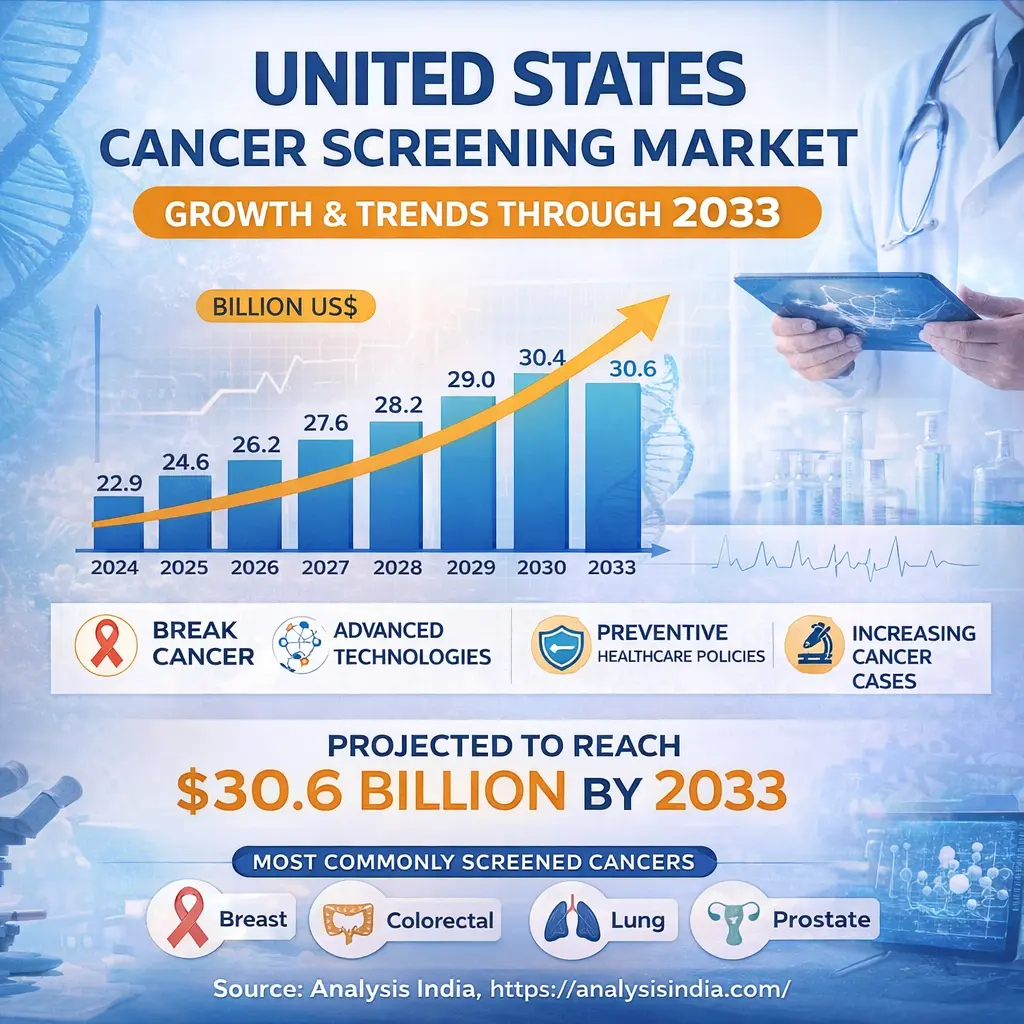
The United States Cancer Screening Market is projected to grow steadily from 2024 to 2033, supported by technological advancements and increasing screening awareness.
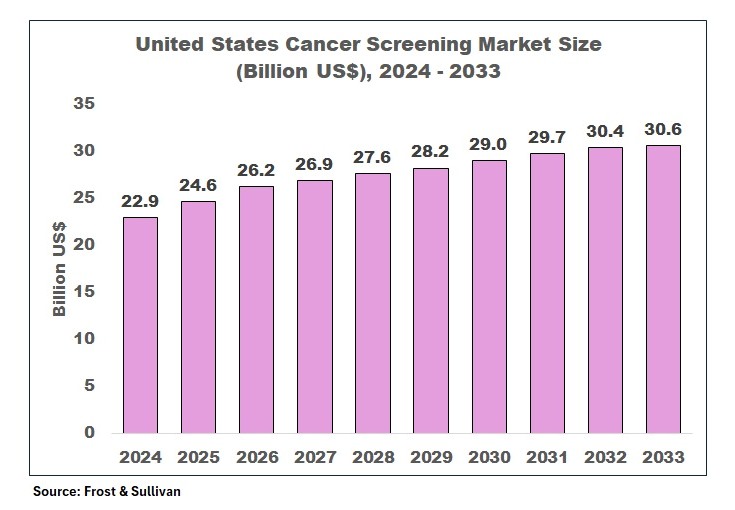
The data indicates a consistent upward trajectory, although the growth curve reflects market maturity. Unlike high-growth emerging markets, the United States Cancer Screening Market demonstrates stable expansion driven by replacement demand, technology upgrades, and incremental adoption of advanced diagnostics.
A key insight observed in AnalysisIndia.com research is that growth is increasingly shifting from volume expansion to value-based innovation. This means revenue growth is now more dependent on advanced technologies such as molecular diagnostics and AI-based screening rather than just increased patient volume.
Key Growth Drivers in the United States Cancer Screening Market
Increasing Burden of Cancer and Preventive Screening Adoption
The rising incidence of cancer continues to be a primary driver of the United States Cancer Screening Market. The country reports a high number of diagnosed cancer cases annually, which has led to a strong emphasis on early detection as a critical healthcare priority.
Screening programs are widely promoted across healthcare systems, and physicians actively recommend routine screening procedures. This proactive approach significantly supports sustained market demand.
Strong Reimbursement and Healthcare Infrastructure
One of the defining characteristics of the United States Cancer Screening Market is its robust reimbursement framework. Public and private insurance providers cover a wide range of screening tests, reducing financial barriers for patients.
Hospitals and diagnostic centers are equipped with advanced infrastructure, enabling large-scale screening operations. This creates a favorable environment for both established and emerging diagnostic technologies.
Technological Innovation and AI Integration
Technological advancement is a central growth pillar of the United States Cancer Screening Market. The integration of artificial intelligence in imaging and diagnostics is improving accuracy and efficiency in cancer detection.
AI-powered tools assist radiologists in identifying abnormalities at earlier stages, while machine learning algorithms enhance diagnostic precision. In addition, innovations such as liquid biopsy and genomic screening are reshaping the future of cancer detection.
Market Segmentation and Demand Patterns
The United States Cancer Screening Market is segmented based on cancer type and technology, with each segment demonstrating distinct growth dynamics.
Breast cancer screening remains one of the largest segments due to widespread awareness campaigns and established mammography programs. Colorectal cancer screening is also a major contributor, supported by national screening guidelines and increasing adoption of non-invasive tests.
Lung cancer screening is gaining momentum, particularly with the rising use of low-dose CT scans among high-risk populations. Meanwhile, prostate and cervical cancer screening continue to maintain steady demand.
From a technology perspective, imaging-based screening dominates the United States Cancer Screening Market, but molecular diagnostics is rapidly emerging as a high-growth segment. The shift toward precision medicine is driving demand for genetic testing and biomarker-based screening approaches.
Competitive Landscape and Industry Strategy
The United States Cancer Screening Market is highly competitive, with leading diagnostic companies focusing on innovation, strategic partnerships, and portfolio expansion. Companies are increasingly investing in research and development to introduce next-generation screening solutions.
A notable trend observed in AnalysisIndia.com insights is the growing collaboration between biotechnology firms and healthcare providers. These partnerships aim to accelerate the commercialization of advanced screening technologies and improve accessibility.
Market players are also prioritizing digital health integration, enabling remote diagnostics and data-driven decision-making. This trend is expected to enhance patient outcomes and streamline screening workflows.
Comparative Analysis with Emerging Markets
While the United States Market is mature, emerging markets such as China Cancer Screening Market are experiencing faster growth due to lower baseline screening rates and expanding healthcare access.
However, the United States maintains a significant advantage in terms of technological innovation and healthcare infrastructure. The market continues to lead in the adoption of advanced diagnostic tools and precision medicine approaches.
Challenges Impacting the United States Cancer Screening Market
Despite its strengths, the United States Cancer Screening Market faces several structural challenges. The high cost of advanced screening technologies can limit accessibility, particularly among underserved populations.
Healthcare disparities remain a concern, with rural areas experiencing lower screening rates compared to urban regions. Additionally, issues such as overdiagnosis and false positives can impact patient outcomes and healthcare efficiency.
Addressing these challenges will require policy interventions, technological innovation, and improved healthcare outreach programs.
Future Outlook and Emerging Trends
The future of the United States Cancer Screening Market is expected to be shaped by precision medicine, non-invasive diagnostics, and digital transformation.
Personalized screening strategies based on genetic risk profiles are gaining traction, enabling more targeted and effective detection methods. Liquid biopsy technologies are expected to revolutionize early cancer detection by offering minimally invasive alternatives.
Artificial intelligence will continue to play a transformative role, enhancing diagnostic accuracy and reducing human error. As these technologies evolve, they will redefine the landscape of the United States Cancer Screening Market.
What Makes the United States Cancer Screening Market Different
The United States Cancer Screening Market stands apart from global markets due to its early adoption of innovation and structured screening ecosystem. Unlike developing regions, the US market is driven not just by demand volume but by clinical precision and outcome-based healthcare models.
A key uniqueness identified in AnalysisIndia.com research is the shift toward risk-based screening protocols rather than age-based mass screening. Healthcare providers increasingly use patient history, genetic predisposition, and lifestyle data to recommend personalized screening schedules. This transition is redefining how screening programs are designed and implemented across the country.
Role of AI and Big Data in United States Cancer Screening Market
The integration of artificial intelligence is not just a trend but a structural transformation in the United States Cancer Screening Market. AI is now embedded in radiology workflows, helping clinicians detect abnormalities with higher consistency.
What makes the US market unique is the scale of data utilization. Large healthcare databases and electronic health records allow AI models to continuously improve. This creates a feedback loop where screening accuracy improves over time.
In addition, predictive analytics is being used to identify high-risk populations even before symptoms appear. This proactive approach is expected to significantly influence future screening strategies.
Shift from Hospital-Based to Home-Based Screening
One of the most interesting emerging trends in the United States Cancer Screening Market is the gradual shift toward home-based and self-administered screening tests.
Non-invasive kits for colorectal cancer and HPV testing are gaining adoption. Patients prefer these solutions due to convenience and privacy. This trend is particularly strong among younger and digitally engaged populations.
This shift is creating new growth opportunities for diagnostic companies and is expected to redefine patient engagement models in the coming years.
Investment and Funding Trends in United States Cancer Screening Market
The United States Cancer Screening Market is witnessing strong investment activity, particularly in startups focused on early detection technologies.
Venture capital firms and healthcare investors are actively funding companies working on:
- Liquid biopsy platforms
- Multi-cancer early detection tests
- AI-driven diagnostic tools
According to insights derived from AnalysisIndia.com, funding is increasingly directed toward technologies that can detect multiple cancers through a single test. This reflects a broader industry shift toward comprehensive screening solutions.
Regulatory Landscape and Its Impact on Market Growth
The United States Cancer Screening Market is strongly supported by data and guidelines from leading healthcare organizations. Clinical recommendations and screening protocols are largely influenced by institutions such as the
National Cancer Institute cancer research and screening guidelines, which provides comprehensive insights into cancer detection strategies and ongoing research.
In addition, screening recommendations in the United States are aligned with the USPSTF cancer screening recommendations, which define evidence-based screening protocols for breast, lung, and colorectal cancers. These guidelines play a crucial role in shaping demand within the United States Cancer Screening Market.
Regulation plays a critical role in shaping the United States Cancer Screening Market. The presence of strict approval processes ensures high-quality standards but can also slow down the commercialization of new technologies.
However, recent regulatory flexibility for breakthrough devices is accelerating innovation. Fast-track approvals for advanced diagnostics are enabling quicker market entry for novel screening solutions.
This balance between regulation and innovation is a defining characteristic of the US market.
Consumer Behavior and Screening Adoption Patterns
Another unique aspect of the United States Cancer Screening Market is evolving consumer behavior. Patients are becoming more proactive and informed about preventive healthcare.
Digital platforms, awareness campaigns, and physician recommendations are influencing screening decisions. There is also a noticeable increase in annual preventive health check-ups, which directly contributes to screening demand.
Interestingly, younger populations are showing higher interest in genetic and preventive screening, indicating a long-term positive impact on market growth.
Opportunity Analysis: Untapped Segments in United States Cancer Screening Market
Despite its maturity, the United States Cancer Screening Market still presents several untapped opportunities.
Rural and underserved populations remain under-screened due to accessibility challenges. Expanding mobile screening units and telehealth integration can address this gap.
Another key opportunity lies in multi-cancer early detection (MCED) tests, which are expected to become a major growth driver over the next decade.
Strategic Outlook from AnalysisIndia.com
From an analytical perspective, AnalysisIndia.com identifies that the future growth of the United States Cancer Screening Market will depend on three core pillars:
- Transition toward personalized and precision screening
- Expansion of non-invasive and home-based diagnostics
- Integration of AI and digital health ecosystems
These factors collectively indicate that while the market is mature, it is entering a new innovation-driven growth phase rather than stagnation.
Conclusion
The United States Cancer Screening Market is poised for steady growth through 2033, driven by technological innovation, strong healthcare infrastructure, and a well-established preventive care ecosystem. While the market is mature, ongoing advancements in diagnostics and personalized medicine continue to create new growth opportunities.
Insights from AnalysisIndia.com highlight that the market’s future will depend on the successful integration of advanced technologies and the ability to address accessibility challenges. As the focus shifts toward early detection and precision healthcare, the United States will remain a key leader in the global cancer screening industry.
Frequently Asked Questions (FAQs)
What is the United States Cancer Screening Market?
The United States cancer screening market refers to the industry focused on early detection of cancer through tests such as imaging, genetic screening, and diagnostic procedures.
What is driving the growth of the United States Cancer Screening Market?
Growth is driven by rising cancer cases, strong preventive healthcare policies, advanced technologies, and increasing awareness about early detection.
Which cancers are most commonly screened in the United States?
The most commonly screened cancers include breast, colorectal, lung, prostate, and cervical cancer.
How big is the United States Cancer Screening Market by 2033?
The United States cancer screening market is projected to reach around US$ 30.6 billion by 2033, showing steady growth over the forecast period.
What technologies are used in cancer screening?
Key technologies include imaging methods like MRI and CT scans, molecular diagnostics, genetic testing, and liquid biopsy.
Why is early cancer screening important?
Early screening helps detect cancer at an early stage, improves treatment outcomes, and increases survival rates.
How does the United States compare to other markets?
The United States cancer screening market is more advanced and mature compared to emerging markets, with higher adoption of innovative technologies.
What are the future trends in the United States Cancer Screening Market?
Future trends include AI-based diagnostics, personalized screening, and growth of non-invasive testing methods.