📅 Published: May 16, 2026
🔄 Last Updated: May 16, 2026
China Liver Cancer Screening Market Outlook
The China Liver Cancer Screening Market is witnessing strong growth due to the increasing burden of liver cancer cases across the country. China remains one of the leading countries affected by liver cancer because of chronic hepatitis infections, lifestyle changes, rising obesity rates, and increasing alcohol consumption. As healthcare infrastructure continues to modernize and awareness regarding early cancer diagnosis improves, the demand for liver cancer screening solutions is expanding rapidly across hospitals, diagnostic laboratories, and specialized cancer centers.
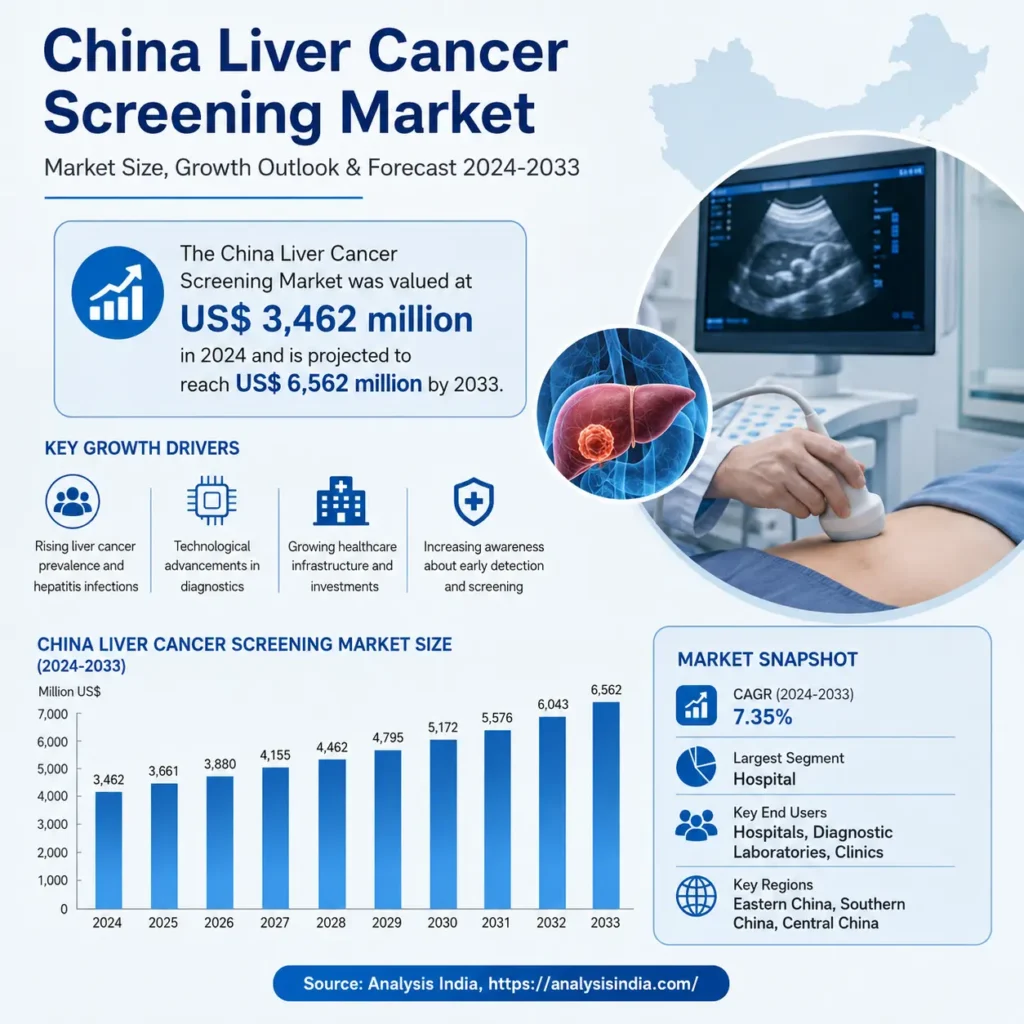
According to industry analysis, the China Liver Cancer Screening Market was valued at US$ 3,462 million in 2024 and is projected to reach US$ 6,562 million by 2033. The market is expected to experience sustained growth during the forecast period due to government-led cancer prevention programs, increasing healthcare investments, and rapid adoption of advanced imaging and biomarker-based screening technologies.
China has become one of the most significant healthcare markets globally. Rising healthcare expenditure and expanding access to diagnostic services in urban and semi-urban areas are creating favorable conditions for liver cancer screening companies. The growing elderly population and increasing prevalence of liver diseases are further accelerating market expansion.
For a broader understanding of the worldwide industry outlook, readers can also explore the Liver Cancer Screening Market analysis and the detailed overview of the Cancer Screening Market.
China Liver Cancer Screening Market Size Analysis
The market has shown steady annual growth due to increasing awareness regarding early-stage cancer diagnosis. The demand for regular liver screening is expanding among high-risk populations including patients suffering from hepatitis B, hepatitis C, liver cirrhosis, fatty liver disease, and diabetes.
China Liver Cancer Screening Market Revenue Forecast
| Year | Market Value (Million US$) |
|---|---|
| 2024 | 3,462 |
| 2025 | 3,661 |
| 2026 | 3,880 |
| 2027 | 4,155 |
| 2028 | 4,462 |
| 2029 | 4,795 |
| 2030 | 5,172 |
| 2031 | 5,576 |
| 2032 | 6,043 |
| 2033 | 6,562 |
Source: World Health Organization, Frost & Sullivan
The China Liver Cancer Screening Market is projected to register robust growth throughout the forecast timeline. Increasing investments in precision diagnostics and improved access to imaging technologies are supporting market expansion. Hospitals across major Chinese cities are integrating advanced AI-enabled imaging solutions to improve liver cancer detection accuracy.
The market is also benefiting from the rapid digital transformation of healthcare services. Telemedicine platforms and integrated diagnostic networks are helping healthcare providers expand cancer screening accessibility in remote provinces.
Rising Burden of Liver Cancer in China
China accounts for a significant percentage of global liver cancer cases. Hepatocellular carcinoma remains one of the most common cancer types diagnosed in the country. Chronic hepatitis B infection continues to be a major contributing factor for liver cancer prevalence.
The increasing disease burden is encouraging healthcare authorities to prioritize cancer screening initiatives. Early diagnosis significantly improves survival rates and treatment outcomes. As a result, healthcare organizations are increasingly focusing on preventive oncology programs.
Several Chinese provinces have launched regional cancer awareness campaigns to educate the public regarding the importance of routine screening. The growing focus on preventive healthcare is expected to create long-term growth opportunities for liver cancer screening service providers.
Growing Demand for Early Detection Technologies
Early detection is becoming a central strategy in China’s cancer management ecosystem. Liver cancer often progresses silently during its early stages, making routine screening essential for high-risk populations.
Advanced screening technologies including ultrasound imaging, MRI scans, CT scans, blood biomarker testing, AFP testing, and liquid biopsy technologies are witnessing growing adoption. Hospitals are increasingly integrating AI-assisted imaging systems to improve screening efficiency and reduce diagnostic errors.
Artificial intelligence is transforming diagnostic imaging across China. AI-powered algorithms are helping radiologists detect suspicious liver lesions at earlier stages. These innovations are improving diagnostic precision and enhancing patient outcomes.
The expansion of molecular diagnostics and genomic testing is also contributing to the evolution of the China Liver Cancer Screening Market. Precision medicine approaches are helping clinicians identify high-risk individuals more accurately.
Government Support Strengthening Market Growth
Government initiatives are playing a major role in expanding the China Liver Cancer Screening Market. China’s healthcare reforms continue to focus on improving cancer prevention, diagnosis, and treatment accessibility.
Public health authorities are encouraging routine screening among high-risk populations. Large-scale hepatitis control programs and vaccination campaigns are also indirectly supporting liver cancer prevention strategies.
The Chinese government is investing heavily in healthcare infrastructure modernization. New cancer hospitals, diagnostic laboratories, and regional medical centers are being established across various provinces. These developments are improving access to advanced screening technologies.
The Healthy China 2030 initiative is further supporting cancer prevention and early diagnosis efforts. Increased funding for oncology research and screening programs is expected to accelerate market expansion over the coming years.
China continues to strengthen its cancer prevention and diagnostic infrastructure through national healthcare reforms and advanced oncology research programs. According to the World Health Organization, liver cancer remains one of the leading causes of cancer-related deaths globally, with Asia accounting for a significant share of total cases. Research initiatives supported by the National Cancer Institute and clinical developments published by the American Cancer Society continue to highlight the importance of early liver cancer detection and routine screening among high-risk populations. In addition, healthcare data and diagnostic innovation insights from Frost & Sullivan indicate that AI-powered imaging and biomarker-based diagnostics are becoming essential components of modern cancer screening programs worldwide.
Impact of Hepatitis Infections on Market Expansion
Chronic hepatitis B and hepatitis C infections remain major risk factors for liver cancer in China. Despite vaccination programs, millions of individuals continue to live with chronic liver diseases.
Patients suffering from hepatitis-related liver complications require continuous monitoring and regular screening procedures. This ongoing demand for surveillance programs is driving the growth of liver cancer screening services.
Healthcare providers are increasingly adopting biomarker testing and imaging-based surveillance strategies for hepatitis patients. The integration of advanced diagnostics into chronic disease management programs is expected to strengthen market growth further.
Technological Advancements in Liver Cancer Screening
Technological innovation is reshaping the China Liver Cancer Screening Market. Diagnostic companies are introducing more accurate and less invasive screening methods to improve patient compliance and diagnostic outcomes.
AI-based imaging systems are gaining strong traction in major hospitals. These systems improve scan interpretation speed and reduce the workload of radiologists. Machine learning algorithms are helping identify early-stage tumors that may be difficult to detect manually.
Liquid biopsy technology is emerging as a promising innovation in liver cancer diagnostics. These blood-based tests enable non-invasive cancer detection and monitoring. Researchers in China are actively exploring new biomarker-based diagnostic approaches to enhance screening accuracy.
Portable ultrasound systems and cloud-connected imaging platforms are also improving healthcare accessibility in rural regions. These technologies are supporting nationwide cancer screening initiatives.
Hospital Segment Dominates the Market
Hospitals account for the largest share of the China Liver Cancer Screening Market due to the availability of advanced imaging systems and specialized oncology departments.
Large tertiary hospitals in cities such as Beijing, Shanghai, Guangzhou, and Shenzhen are witnessing growing patient volumes for liver disease monitoring and cancer diagnosis. These hospitals are investing heavily in AI-enabled diagnostic equipment.
Cancer specialty centers are also expanding their screening capabilities. The integration of multidisciplinary cancer care models is improving patient diagnosis and treatment planning.
Private hospitals and premium diagnostic centers are increasingly targeting affluent urban populations seeking preventive health checkups. This trend is expected to contribute to market growth during the forecast period.
Diagnostic Laboratories Witness Increasing Demand
Diagnostic laboratories are emerging as important contributors to the China Liver Cancer Screening Market. Growing demand for blood biomarker testing and molecular diagnostics is supporting segment expansion.
Independent diagnostic laboratory chains are expanding their service networks across China. These facilities offer faster testing turnaround times and advanced pathology services.
The increasing popularity of preventive health packages is also driving screening volumes in diagnostic laboratories. Many urban consumers are opting for annual health checkups that include liver cancer screening components.
Urbanization and Lifestyle Changes Fueling Market Growth
Rapid urbanization and changing lifestyles are contributing to the increasing incidence of liver-related diseases in China. Sedentary lifestyles, unhealthy dietary patterns, obesity, smoking, and alcohol consumption are elevating liver cancer risks.
Non-alcoholic fatty liver disease is becoming increasingly common among younger populations. This condition significantly increases the long-term risk of liver cancer development.
The growing prevalence of metabolic disorders is encouraging healthcare providers to recommend routine liver screening for at-risk individuals. This trend is expected to create additional growth opportunities for diagnostic companies.
Rising Healthcare Expenditure in China
China’s healthcare expenditure continues to rise significantly due to population growth, aging demographics, and increasing chronic disease prevalence.
Healthcare modernization initiatives are improving access to advanced diagnostic technologies. Hospitals are adopting digital imaging platforms, AI-assisted diagnostics, and cloud-based healthcare management systems.
The expansion of health insurance coverage is also supporting the adoption of preventive screening services. More patients now have access to advanced diagnostic procedures that were previously considered expensive.
Growing investments from both public and private sectors are strengthening the overall healthcare ecosystem in China.
Role of Artificial Intelligence in Screening Programs
Artificial intelligence is becoming a transformative force in liver cancer screening across China. AI systems can analyze medical images rapidly and detect abnormalities with high precision.
Several Chinese hospitals are collaborating with technology companies to develop AI-assisted diagnostic platforms. These systems improve workflow efficiency and reduce diagnostic delays.
AI-based screening technologies are particularly beneficial in regions facing shortages of experienced radiologists. Automated image interpretation tools help improve healthcare access in underserved areas.
The growing integration of AI into diagnostic imaging is expected to remain a major growth driver for the China Liver Cancer Screening Market.
Increasing Awareness Regarding Preventive Healthcare
Chinese consumers are becoming increasingly aware of preventive healthcare practices. Rising internet penetration and health education campaigns are encouraging individuals to undergo regular medical checkups.
Corporate wellness programs and insurance-supported preventive healthcare services are further supporting screening adoption. Employers are increasingly including cancer screening packages in employee healthcare benefits.
The expansion of digital healthcare platforms is also improving awareness regarding liver cancer symptoms, risk factors, and available diagnostic options.
Competitive Landscape of China Liver Cancer Screening Market
The competitive environment is characterized by the presence of global diagnostic companies, local healthcare providers, and technology-driven startups.
Leading companies are focusing on AI integration, biomarker discovery, molecular diagnostics, and imaging innovation. Strategic partnerships between hospitals and diagnostic technology providers are becoming increasingly common.
Research institutions and biotechnology companies are investing heavily in oncology diagnostics research. The growing emphasis on personalized medicine is expected to intensify competition within the market.
International companies are also expanding their presence in China through partnerships and localized manufacturing strategies.
Biomarker Testing Expanding Rapidly
Biomarker-based liver cancer screening is gaining substantial momentum in China. Alpha-fetoprotein testing continues to be widely used, while newer genomic and proteomic biomarkers are being introduced.
Researchers are exploring multi-biomarker approaches to improve diagnostic sensitivity and specificity. The development of advanced blood-based screening tests could significantly enhance early-stage cancer detection rates.
Biotechnology firms are actively collaborating with research universities to develop innovative cancer diagnostics tailored for Asian populations.
Regional Analysis of China Liver Cancer Screening Market
Eastern China remains the dominant regional market due to advanced healthcare infrastructure, high urbanization levels, and greater healthcare spending.
Major metropolitan areas including Shanghai, Beijing, and Guangzhou account for significant screening volumes. These cities have higher adoption rates of AI-powered imaging systems and advanced diagnostic technologies.
Central and western regions are also witnessing steady market growth due to government healthcare expansion initiatives. Investments in regional hospitals and telemedicine platforms are improving access to cancer diagnostics.
Rural healthcare modernization programs are expected to support long-term market expansion across less-developed provinces.
Challenges Affecting Market Growth
Despite strong growth prospects, the China Liver Cancer Screening Market faces several challenges.
High costs associated with advanced imaging technologies can limit accessibility in lower-income regions. Shortages of trained radiologists and oncology specialists also remain a concern in certain provinces.
Awareness regarding routine cancer screening remains relatively low in rural populations. Cultural perceptions and fear of cancer diagnosis sometimes discourage individuals from undergoing preventive tests.
Data privacy and regulatory compliance challenges related to AI-powered healthcare systems may also affect technology adoption rates.
However, continuous healthcare reforms and expanding government investments are expected to address many of these barriers gradually.
Future Outlook of China Liver Cancer Screening Market
The future outlook for the China Liver Cancer Screening Market remains highly positive. Rising cancer incidence rates, technological advancements, and increasing healthcare awareness are expected to support long-term market growth.
AI-driven diagnostics, liquid biopsy technologies, and precision medicine approaches will likely transform liver cancer screening practices over the next decade.
Government-backed preventive healthcare initiatives and expanding insurance coverage are expected to improve screening accessibility across both urban and rural regions.
Healthcare providers are likely to adopt integrated cancer management platforms combining imaging, molecular diagnostics, and patient monitoring solutions.
The market is expected to witness increasing collaboration between hospitals, biotechnology firms, and AI technology companies. These partnerships will support innovation and improve diagnostic efficiency.
Importance of Preventive Oncology in China
Preventive oncology is becoming an important component of China’s healthcare strategy. Early cancer detection reduces treatment costs and significantly improves survival outcomes.
Healthcare authorities are encouraging routine health checkups and screening participation among high-risk populations. Community healthcare centers are increasingly offering preventive diagnostic services.
Educational campaigns focusing on hepatitis management, healthy lifestyle habits, and cancer awareness are helping strengthen preventive healthcare adoption.
The growing emphasis on public health management is expected to create substantial opportunities for liver cancer screening providers.
Investment Opportunities in China Liver Cancer Screening Market
The China Liver Cancer Screening Market offers strong investment potential for healthcare companies, diagnostic manufacturers, and biotechnology firms.
Investors are increasingly targeting AI-powered imaging startups, molecular diagnostics companies, and precision medicine platforms. The integration of digital healthcare technologies into oncology diagnostics is attracting significant venture capital activity.
Foreign diagnostic companies are also exploring strategic partnerships with Chinese hospitals and research institutions to expand their market presence.
The increasing commercialization of liquid biopsy technologies and genomic screening solutions is expected to create new revenue streams within the market.
Conclusion
The China Liver Cancer Screening Market is positioned for significant expansion over the forecast period. Rising liver cancer prevalence, increasing healthcare expenditure, government initiatives, and technological innovation are collectively driving market growth.
The market is projected to grow from US$ 3,462 million in 2024 to US$ 6,562 million by 2033, reflecting strong long-term demand for advanced cancer diagnostics.
Artificial intelligence, molecular diagnostics, biomarker testing, and imaging advancements are transforming liver cancer detection across China. Hospitals, diagnostic laboratories, and specialty cancer centers are rapidly adopting innovative screening technologies to improve patient outcomes.
As awareness regarding preventive healthcare continues to rise, the China Liver Cancer Screening Market is expected to remain a critical segment within the broader oncology diagnostics industry.
For additional industry insights, readers can also explore the detailed United States Liver Cancer Screening Market analysis along with the comprehensive global Liver Cancer Screening Market study.
Frequently Asked Questions (FAQs) : China Liver Cancer Screening Market
What is the China Liver Cancer Screening Market size in 2024?
The China Liver Cancer Screening Market was valued at US$ 3,462 million in 2024. Rising liver cancer prevalence, increasing awareness about early diagnosis, and improving healthcare infrastructure are driving market growth across the country.
How big will the China Liver Cancer Screening Market be by 2033?
The China Liver Cancer Screening Market is projected to reach US$ 6,562 million by 2033. Growing adoption of AI-based diagnostics, biomarker testing, and government cancer prevention programs are expected to support long-term expansion.
What factors are driving the growth of the China Liver Cancer Screening Market?
Key growth drivers include increasing hepatitis infections, rising liver cancer incidence, expanding healthcare expenditure, growing preventive healthcare awareness, and technological advancements in imaging and molecular diagnostics.
Why is liver cancer screening important in China?
Liver cancer screening is important because China has one of the highest liver cancer burdens globally. Early detection improves treatment success rates, reduces mortality, and helps healthcare providers manage cancer more effectively.
Which technologies are commonly used in liver cancer screening in China?
Common technologies include ultrasound imaging, MRI scans, CT scans, alpha-fetoprotein blood testing, liquid biopsy solutions, and AI-powered diagnostic imaging systems that improve early-stage liver cancer detection.