📅 Published: May 13, 2026
🔄 Last Updated: May 13, 2026
United States Liver Cancer Screening Market
The United States Liver Cancer Screening Market is witnessing strong momentum as healthcare systems continue to prioritize early cancer diagnosis, precision medicine, and population-wide screening strategies. Liver cancer remains one of the fastest-growing cancer burdens in the United States due to increasing cases of obesity, fatty liver disease, viral hepatitis, alcohol-related liver disorders, and metabolic conditions. The growing need for timely diagnosis has significantly accelerated investments in screening technologies, biomarker development, imaging solutions, and AI-powered diagnostics.
Healthcare providers across the United States are focusing more on preventive oncology and early-stage disease management. This shift is encouraging hospitals, cancer centers, diagnostic laboratories, and specialty clinics to integrate advanced liver cancer screening solutions into routine healthcare services. Government agencies and public health organizations are also emphasizing awareness campaigns and screening accessibility among high-risk populations.
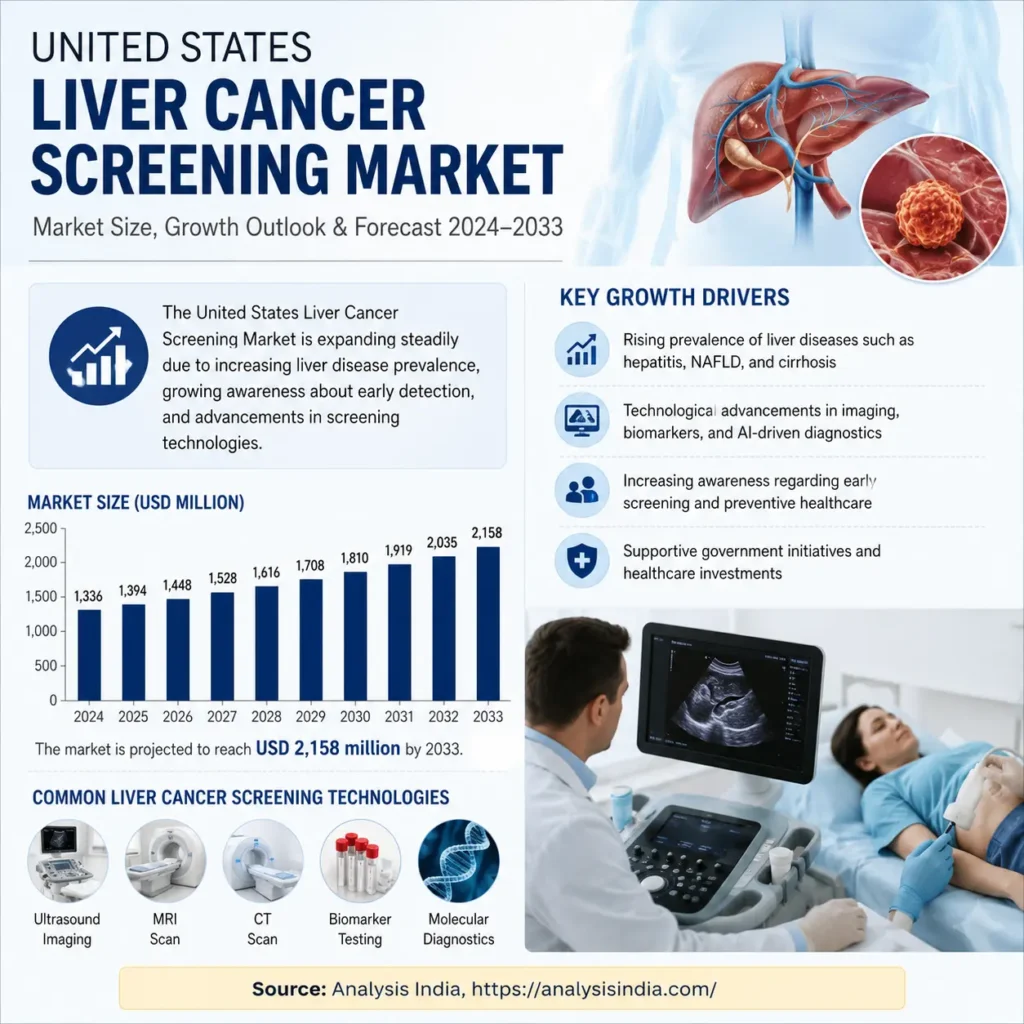
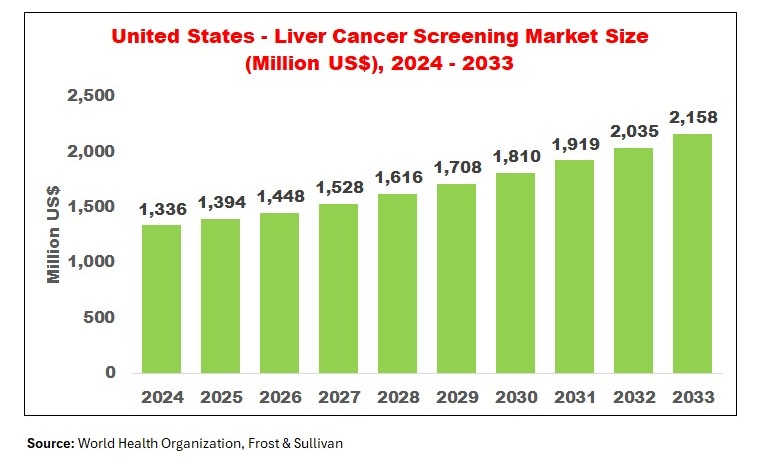
According to market estimates, the United States Liver Cancer Screening Market was valued at US$ 1,336 million in 2024 and is projected to reach approximately US$ 2,158 million by 2033. The market is expected to expand steadily due to rising screening adoption, growing awareness of hepatocellular carcinoma, and improvements in diagnostic imaging technologies.
The increasing clinical importance of liver cancer screening is transforming the competitive landscape of oncology diagnostics in the country. Companies are introducing innovative biomarker-based tests, liquid biopsy solutions, AI-integrated imaging software, and next-generation diagnostic platforms to improve sensitivity and reduce false-negative results. These developments are strengthening the long-term outlook of the United States Liver Cancer Screening Market.
Growing Burden of Liver Cancer in the United States
The rising incidence of liver cancer is one of the primary growth drivers for the United States Liver Cancer Screening Market. Hepatocellular carcinoma remains the most common form of liver cancer in the country, and healthcare experts are increasingly concerned about delayed diagnosis among high-risk individuals. The prevalence of chronic liver diseases has expanded rapidly during the last decade, creating significant demand for routine screening services.
Obesity and non-alcoholic fatty liver disease are contributing heavily to this rising burden. The United States continues to report increasing obesity rates among adults and younger populations. Obesity often leads to non-alcoholic steatohepatitis and cirrhosis, which are major risk factors for liver cancer development. As these conditions become more common, physicians are recommending earlier and more frequent liver screening procedures.
Chronic hepatitis B and hepatitis C infections also remain major contributors to liver cancer cases. Although antiviral therapies have improved treatment outcomes, many patients continue to require long-term monitoring and surveillance for cancer progression. This factor supports stable demand for ultrasound imaging, alpha-fetoprotein testing, MRI scans, CT imaging, and advanced molecular diagnostics.
Alcohol-related liver disease is another important factor supporting market expansion. Increasing alcohol consumption patterns in several states are contributing to cirrhosis and long-term liver complications. Hospitals and specialty clinics are responding by expanding screening programs focused on high-risk adults.
Growing awareness campaigns by cancer organizations and healthcare institutions are also improving screening adoption. Public education regarding symptoms, early diagnosis, and preventive healthcare is encouraging patients to seek regular screening services before disease progression reaches advanced stages.
Increasing Adoption of Early Detection Strategies in United States Liver Cancer Screening Market
Early detection plays a critical role in improving survival rates for liver cancer patients. The healthcare industry increasingly recognizes that early-stage diagnosis allows access to more effective treatment options including surgery, transplantation, targeted therapy, and localized interventions.
The United States Liver Cancer Screening Market is benefiting from a broader transition toward preventive oncology. Healthcare providers are integrating liver cancer surveillance into regular monitoring programs for individuals with cirrhosis, viral hepatitis, and metabolic liver diseases.
Screening guidelines from major medical associations are encouraging routine ultrasound examinations and biomarker testing for high-risk populations. These guidelines are strengthening physician confidence in structured surveillance programs and improving clinical adoption across healthcare networks.
Diagnostic laboratories are also investing heavily in advanced screening technologies to increase test accuracy and reduce diagnostic delays. AI-supported imaging analysis is helping radiologists detect small liver lesions with greater precision. These innovations are expected to transform clinical workflows during the forecast period.
Patients are becoming more proactive regarding preventive healthcare services. Growing awareness of cancer survival benefits associated with early diagnosis is encouraging more individuals to participate in regular screening schedules. This behavioral shift is creating sustained long-term growth opportunities for screening providers.
The increasing use of telehealth and digital healthcare platforms is also supporting market growth. Physicians can now monitor high-risk patients remotely and recommend timely diagnostic testing. Digital healthcare integration is improving patient engagement and supporting continuity of cancer surveillance programs.
The growing integration of molecular diagnostics and personalized screening strategies is also reshaping the future of oncology care in the country. Readers interested in broader industry insights can explore the detailed Liver Cancer Screening Market analysis for global market trends and future opportunities. Additional insights on evolving oncology diagnostics, screening technologies, and healthcare innovation are available in the comprehensive Cancer Screening Market , which examines emerging trends across the global cancer diagnostics industry.
Advanced Imaging Technologies Supporting Market Expansion
Imaging technologies remain a core component of the United States Liver Cancer Screening Market. Ultrasound continues to serve as the first-line screening modality due to affordability, accessibility, and clinical efficiency. However, technological innovation is rapidly improving diagnostic accuracy across imaging platforms.
Advanced ultrasound systems with contrast enhancement capabilities are helping clinicians identify small tumors at earlier stages. High-resolution imaging is improving lesion characterization and supporting more accurate treatment planning.
MRI and CT imaging technologies are also gaining importance in liver cancer diagnostics. Multiphasic MRI techniques provide detailed liver visualization and support differentiation between benign and malignant lesions. The adoption of MRI screening is increasing in tertiary hospitals and specialized cancer centers.
Artificial intelligence is creating new opportunities within imaging diagnostics. AI-powered software solutions can analyze radiology scans more efficiently and assist healthcare professionals in identifying suspicious abnormalities. Machine learning algorithms are improving sensitivity while reducing interpretation variability.
Portable imaging systems are also expanding access to liver cancer screening in rural and underserved regions. Mobile healthcare initiatives are increasingly using portable ultrasound solutions to improve community-level cancer surveillance.
Cloud-based imaging platforms are supporting collaboration between radiologists, oncologists, and hepatologists. These digital systems improve workflow efficiency and enable faster diagnostic decisions.
The integration of advanced imaging technologies is expected to remain a major competitive strategy among healthcare providers and diagnostic equipment manufacturers operating in the United States Liver Cancer Screening Market.
Biomarker Innovations and Liquid Biopsy Development
Biomarker research is reshaping the future of the United States Liver Cancer Screening Market. Traditional alpha-fetoprotein testing continues to play an important role in liver cancer surveillance, but researchers are increasingly focusing on multi-marker diagnostic approaches.
Healthcare companies are developing advanced blood-based screening tests designed to improve early-stage cancer detection. Liquid biopsy technologies are gaining strong attention because they offer minimally invasive diagnostic capabilities. These solutions analyze circulating tumor DNA, RNA fragments, proteins, and other biomarkers associated with liver cancer.
Liquid biopsy testing has the potential to transform cancer surveillance by reducing dependence on invasive procedures. The growing adoption of precision medicine is accelerating investments in genomic diagnostics and molecular profiling.
Research institutions and biotechnology companies are collaborating to identify highly sensitive biomarkers for hepatocellular carcinoma. These innovations are expected to improve diagnostic specificity and reduce false-positive results.
Artificial intelligence is also being integrated into biomarker analysis. AI-driven algorithms can identify complex biological patterns and support more accurate interpretation of molecular data.
Pharmaceutical companies are increasingly interested in biomarker-driven screening because earlier diagnosis supports better treatment outcomes. This relationship between diagnostics and therapeutics is strengthening industry-wide collaboration.
As biomarker technologies become more clinically validated, they are expected to expand commercial opportunities across hospitals, laboratories, research institutions, and specialized oncology centers.
Role of Government Programs and Healthcare Policies in United States Liver Cancer Screening Market
Government healthcare initiatives continue to support the growth of the United States Liver Cancer Screening Market. Public health agencies are emphasizing cancer prevention, chronic disease management, and early diagnostic intervention.
Federal and state-level healthcare programs are improving access to screening services for vulnerable populations. Screening coverage through insurance programs is encouraging more patients to undergo regular diagnostic testing.
Cancer awareness campaigns are helping educate patients about the importance of liver health and routine screening. Educational initiatives focused on hepatitis prevention, obesity management, and alcohol-related liver disease are indirectly contributing to screening demand.
Research funding from government organizations is also supporting innovation in oncology diagnostics. Academic institutions and healthcare companies are receiving financial support for biomarker development, imaging research, and AI-enabled healthcare solutions.
Regulatory agencies are playing an important role in accelerating approval pathways for innovative diagnostic technologies. Faster commercialization of advanced screening tools is helping healthcare providers access next-generation solutions more efficiently.
Healthcare reimbursement policies are also influencing market growth. Favorable reimbursement frameworks encourage hospitals and diagnostic centers to adopt advanced screening procedures.
The increasing focus on value-based healthcare models is expected to strengthen long-term investments in preventive cancer screening programs across the United States.
Rising Importance of AI in United States Liver Cancer Screening Market
Artificial intelligence is becoming one of the most transformative trends in the United States Liver Cancer Screening Market. AI technologies are improving clinical efficiency, diagnostic accuracy, and workflow automation across healthcare systems.
Machine learning algorithms are being used to analyze imaging scans, detect liver abnormalities, and support early-stage diagnosis. These technologies reduce interpretation variability and help radiologists identify subtle lesions that may otherwise remain undetected.
AI-powered analytics platforms are also assisting physicians in patient risk stratification. Healthcare providers can use predictive algorithms to identify individuals with elevated liver cancer risk and recommend timely surveillance.
The growing integration of AI with electronic health records is improving patient monitoring capabilities. Healthcare systems can track high-risk populations more effectively and optimize screening schedules.
Natural language processing technologies are supporting automated clinical documentation and reducing administrative burdens within healthcare facilities.
AI integration is particularly valuable in regions experiencing shortages of radiologists and oncology specialists. Automated screening support systems improve operational efficiency and expand healthcare accessibility.
Technology companies and healthcare organizations are forming strategic partnerships to accelerate AI adoption in oncology diagnostics. These collaborations are expected to support continued innovation throughout the forecast period.
Competitive Landscape of the United States Liver Cancer Screening Market
The competitive environment of the United States Liver Cancer Screening Market is becoming increasingly dynamic due to continuous technological innovation and growing demand for advanced diagnostics.
Major diagnostic companies are investing in research and development activities focused on imaging systems, biomarker platforms, molecular diagnostics, and AI-enabled healthcare solutions. Strategic acquisitions, collaborations, and product launches remain common growth strategies within the industry.
Hospitals and cancer centers are expanding partnerships with biotechnology firms and diagnostic laboratories to improve access to advanced screening technologies. These partnerships are strengthening integrated cancer care networks.
Leading healthcare technology companies are also emphasizing cloud-based diagnostic platforms and data-driven healthcare ecosystems. Digital integration is becoming a critical competitive advantage in the oncology diagnostics sector.
Several companies are focusing on liquid biopsy commercialization and genomic screening innovations. The rising importance of personalized medicine is encouraging industry participants to develop more targeted diagnostic solutions.
The market also includes specialized imaging manufacturers, laboratory service providers, healthcare software companies, and academic research institutions. This diverse competitive landscape supports continuous innovation and rapid technological advancement.
Smaller biotechnology startups are entering the market with highly specialized screening technologies and AI-powered platforms. Venture capital investments in cancer diagnostics are increasing steadily, supporting long-term industry expansion.
Regional Trends Across the United States Liver Cancer Screening Market
Regional healthcare disparities continue to influence the United States Liver Cancer Screening Market. Urban healthcare systems generally demonstrate higher adoption of advanced diagnostic technologies due to stronger infrastructure and greater specialist availability.
States with large populations and advanced healthcare networks are experiencing particularly strong screening demand. California, Texas, Florida, and New York remain major contributors to overall market revenue due to high patient volumes and extensive healthcare facilities.
The Southern United States is reporting increasing rates of obesity and metabolic disorders, creating significant growth opportunities for liver cancer surveillance services.
Rural healthcare accessibility remains a challenge in some regions. However, mobile screening programs, telehealth integration, and portable imaging systems are helping improve diagnostic outreach.
Academic medical centers across the country continue to lead clinical research initiatives focused on liver cancer screening innovation. These institutions play an important role in clinical validation and adoption of new technologies.
Community health programs are also improving awareness among underserved populations. Public-private partnerships are expanding access to screening services and supporting preventive healthcare initiatives.
Healthcare systems are increasingly emphasizing patient-centered care models that integrate screening, diagnosis, treatment planning, and long-term monitoring.
Impact of Precision Medicine on Screening Strategies
Precision medicine is significantly influencing the future direction of the United States Liver Cancer Screening Market. Healthcare providers are moving away from generalized diagnostic approaches and focusing more on individualized patient risk assessment.
Genomic testing and molecular profiling are enabling clinicians to identify patients with elevated susceptibility to liver cancer development. This allows more targeted screening strategies and optimized surveillance intervals.
Pharmaceutical companies are increasingly using molecular diagnostics to support targeted therapy development. Early identification of specific cancer subtypes improves treatment planning and patient outcomes.
Personalized screening strategies are particularly important for patients with chronic liver disease, hepatitis infections, and hereditary cancer risks.
The growing use of wearable healthcare technologies and digital monitoring platforms is also contributing to personalized healthcare management. Patients can track health indicators more efficiently and communicate with healthcare providers remotely.
Data-driven healthcare models are improving predictive analytics capabilities across oncology care systems. Healthcare providers can analyze patient histories, imaging data, and biomarker profiles to support more accurate risk assessment.
Precision medicine integration is expected to strengthen demand for advanced diagnostic tools and specialized screening services during the forecast period.
Challenges Facing the United States Liver Cancer Screening Market
Despite strong growth potential, the United States Liver Cancer Screening Market faces several operational and economic challenges.
One major challenge involves limited awareness among certain patient populations. Many individuals at high risk for liver cancer do not undergo regular screening due to lack of education, healthcare access barriers, or delayed medical consultation.
High diagnostic costs can also limit adoption of advanced imaging technologies and molecular testing solutions. While large healthcare institutions may have access to sophisticated equipment, smaller clinics often face financial constraints.
Workforce shortages within radiology and oncology specialties remain another industry challenge. Increasing demand for cancer screening services may place additional pressure on healthcare systems already facing staffing limitations.
False-positive and false-negative diagnostic outcomes continue to create clinical concerns. Improving diagnostic accuracy remains a major research priority for healthcare companies and academic institutions.
Regulatory approval processes for emerging technologies can also delay commercialization timelines. Companies developing innovative diagnostics must navigate extensive validation and compliance requirements.
Data privacy and cybersecurity concerns are becoming increasingly important as healthcare systems adopt AI-driven digital platforms and cloud-based diagnostic infrastructure.
Addressing these challenges will require coordinated efforts among healthcare providers, policymakers, diagnostic companies, and research organizations.
Future Outlook: United States Liver Cancer Screening Market
The future outlook for the United States Liver Cancer Screening Market remains highly positive due to growing healthcare awareness, expanding preventive oncology initiatives, and continuous technological advancement.
Artificial intelligence, liquid biopsy technologies, and molecular diagnostics are expected to redefine liver cancer screening during the next decade. These innovations will improve diagnostic sensitivity, reduce invasive procedures, and support earlier intervention.
Healthcare systems are likely to expand routine surveillance programs for high-risk populations. Broader insurance coverage and improved healthcare accessibility may further accelerate screening adoption.
Digital health integration will continue transforming patient engagement and clinical workflows. Telehealth platforms, cloud-based diagnostics, and remote patient monitoring systems are expected to become increasingly important.
Biotechnology companies are expected to introduce more advanced blood-based cancer screening solutions with enhanced predictive capabilities.
The increasing focus on precision oncology will support personalized screening strategies tailored to individual patient risk profiles.
Collaborations between academic institutions, healthcare providers, and technology companies will remain essential for driving innovation and accelerating commercialization of advanced diagnostic tools.
Overall, the United States Liver Cancer Screening Market is positioned for sustained long-term expansion as healthcare systems continue prioritizing early detection and preventive cancer care.
Connection with the Global Cancer Screening Industry
The growth of the United States Liver Cancer Screening Market is closely connected with broader developments in the global cancer diagnostics sector. The oncology screening industry is rapidly evolving due to technological progress, increasing healthcare spending, and rising cancer prevalence worldwide.
The United States remains one of the most influential healthcare markets globally because of its strong research infrastructure and early adoption of innovative medical technologies. Many diagnostic solutions launched in the country later expand into international markets.
Readers interested in broader oncology diagnostics trends can also explore the detailed analysis available in the Cancer Screening Market report published on Analysis India. This internal resource provides deeper insights into evolving screening technologies, market dynamics, and future industry opportunities.
The growing adoption of AI-driven diagnostics, precision medicine, and biomarker-based testing across multiple cancer categories is creating significant momentum for healthcare innovation.
The increasing integration of data analytics into healthcare decision-making is also supporting long-term growth across the cancer screening ecosystem.
Importance of Liver Disease Monitoring in Modern Healthcare
Liver disease monitoring has become a central focus within modern healthcare systems because liver-related complications continue to increase across multiple patient populations.
Patients with cirrhosis, hepatitis infections, fatty liver disease, and metabolic disorders require ongoing surveillance to reduce cancer-related risks. This clinical necessity is creating sustained demand for routine imaging and biomarker testing.
Healthcare providers are increasingly adopting multidisciplinary care models involving hepatologists, oncologists, radiologists, pathologists, and primary care physicians. These collaborative approaches improve continuity of care and strengthen patient outcomes.
Electronic health record integration is also supporting long-term patient monitoring by enabling healthcare providers to track diagnostic histories and surveillance intervals more efficiently.
Healthcare organizations are placing stronger emphasis on preventive medicine because early diagnosis often reduces treatment costs and improves survival rates.
The expansion of outpatient diagnostic centers is increasing accessibility to liver cancer screening services across urban and suburban communities.
Patient education initiatives are also improving public understanding regarding liver health, cancer risks, and the importance of regular medical evaluations.
Investment Trends and Industry Opportunities
Investment activity within the United States Liver Cancer Screening Market continues to increase as investors recognize the long-term commercial potential of oncology diagnostics.
Biotechnology startups focused on liquid biopsy, AI-driven imaging, and genomic diagnostics are attracting strong venture capital funding. Investors are particularly interested in technologies capable of improving early-stage cancer detection.
Large healthcare corporations are expanding strategic acquisitions to strengthen diagnostic portfolios and enhance technological capabilities.
Research collaborations between universities and private companies are accelerating innovation across molecular diagnostics and imaging technologies.
Pharmaceutical companies are also investing in companion diagnostics to support targeted cancer therapies and personalized treatment strategies.
Cloud computing providers and healthcare software companies are entering the oncology diagnostics space with advanced data management and AI analytics platforms.
International healthcare investors continue to view the United States as a highly attractive market due to strong healthcare spending and advanced medical infrastructure.
Long-term growth opportunities are expected to emerge from rural healthcare expansion, digital healthcare adoption, and increased public awareness regarding preventive cancer screening.
Healthcare Resources Supporting Awareness
Healthcare awareness and educational resources play an important role in supporting patient understanding regarding liver cancer risks and early diagnosis. Organizations such as the American Cancer Society and the National Cancer Institute provide educational information related to liver cancer symptoms, risk factors, and treatment approaches.
These external healthcare resources contribute to broader public understanding and encourage patients to seek timely medical consultation when necessary. Educational outreach initiatives are particularly valuable for high-risk populations requiring regular surveillance.
The World Health Organization also continues to emphasize the importance of early cancer diagnosis and preventive healthcare strategies. Global healthcare agencies are increasingly supporting collaborative efforts aimed at reducing cancer mortality rates through improved screening accessibility.
Educational partnerships between healthcare organizations, academic institutions, and patient advocacy groups are strengthening public awareness campaigns across the United States.
How This Market Relates to Broader Liver Cancer Research
The United States Liver Cancer Screening Market is closely linked with ongoing advancements in liver cancer treatment and research. Screening technologies are becoming increasingly integrated with therapeutic innovation.
Researchers are studying how earlier detection can improve eligibility for curative treatment options including liver transplantation, tumor ablation, and surgical resection.
Immunotherapy development is also influencing diagnostic strategies because treatment effectiveness often improves when cancer is detected at earlier stages.
Clinical trials evaluating biomarker technologies and AI-assisted imaging systems are expected to reshape future screening standards.
Academic medical institutions continue to conduct extensive research focused on molecular pathways associated with liver cancer progression. These studies may lead to the discovery of new diagnostic targets and personalized screening strategies.
The integration of genomics, artificial intelligence, and advanced imaging is expected to create a more comprehensive approach to liver cancer management during the coming decade.
Readers seeking additional market insights can also explore the detailed Liver Cancer Screening Market analysis available on Analysis India. This internal content provides a broader global perspective on technology trends, market segmentation, and future industry growth.
Conclusion: United States Liver Cancer Screening Market
The United States Liver Cancer Screening Market is entering a period of sustained expansion driven by rising cancer prevalence, technological innovation, growing awareness, and increasing healthcare investments.
The market is projected to grow from US$ 1,336 million in 2024 to approximately US$ 2,158 million by 2033, reflecting strong long-term demand for advanced screening technologies and preventive healthcare services.
Healthcare providers across the country are increasingly emphasizing early diagnosis and patient surveillance, particularly among high-risk populations affected by obesity, hepatitis infections, cirrhosis, and metabolic liver diseases.
Advanced imaging systems, biomarker innovations, liquid biopsy technologies, and artificial intelligence are transforming the diagnostic landscape and improving clinical efficiency.
Government healthcare initiatives, research funding, precision medicine adoption, and digital healthcare integration are expected to strengthen future market opportunities.
Despite challenges related to healthcare accessibility, diagnostic costs, and workforce limitations, the overall industry outlook remains highly positive.
The United States Liver Cancer Screening Market is expected to remain a critical segment within the broader oncology diagnostics industry as healthcare systems continue prioritizing preventive medicine and early cancer detection strategies.
Businesses, healthcare providers, investors, and research organizations operating in this sector are likely to benefit from continued innovation and expanding demand throughout the forecast period.
Frequently Asked Questions (FAQ): United States Liver Cancer Screening Market
What is the United States Liver Cancer Screening Market?
The United States Liver Cancer Screening Market refers to the healthcare industry focused on diagnostic tests, imaging technologies, biomarker analysis, and screening solutions used to detect liver cancer at an early stage. The market includes ultrasound systems, MRI scans, CT imaging, liquid biopsy technologies, and molecular diagnostics used by hospitals, laboratories, and cancer centers.
How big is the United States Liver Cancer Screening Market?
The United States Liver Cancer Screening Market was valued at approximately US$ 1,336 million in 2024 and is projected to reach nearly US$ 2,158 million by 2033. Rising liver disease prevalence, increasing cancer awareness, and growing adoption of early diagnosis technologies are supporting long-term market growth.
What factors are driving the growth of the United States Liver Cancer Screening Market?
Several factors are driving the growth of the United States Liver Cancer Screening Market including rising obesity rates, increasing hepatitis infections, growing cases of fatty liver disease, higher alcohol-related liver disorders, and expanding awareness regarding early cancer diagnosis. Technological advancements in imaging and biomarker testing are also accelerating market expansion.
Why is liver cancer screening important in the United States?
Liver cancer screening is important because early-stage liver cancer often shows limited symptoms. Early diagnosis improves survival rates and increases access to effective treatment options such as surgery, transplantation, and targeted therapy. Regular screening is especially important for high-risk patients with cirrhosis, hepatitis, and chronic liver disease.
Which technologies are commonly used in liver cancer screening?
Common technologies used in liver cancer screening include ultrasound imaging, MRI scans, CT scans, alpha-fetoprotein blood tests, liquid biopsy solutions, and molecular diagnostic platforms. Artificial intelligence-based imaging analysis is also becoming increasingly important in modern screening programs.
How is artificial intelligence influencing the United States Liver Cancer Screening Market?
Artificial intelligence is improving diagnostic accuracy by helping healthcare professionals detect liver abnormalities more efficiently. AI-powered imaging software can analyze scans faster, reduce interpretation errors, and support earlier cancer detection. AI is also being used for patient risk assessment and predictive healthcare analytics.
What role do biomarkers play in liver cancer screening?
Biomarkers help identify biological signals associated with liver cancer development. Blood-based biomarker tests and liquid biopsy technologies are gaining popularity because they offer minimally invasive screening options. These technologies improve early-stage detection and support precision medicine strategies.
Which patients are considered high risk for liver cancer?
Patients with cirrhosis, chronic hepatitis B or hepatitis C infections, non-alcoholic fatty liver disease, obesity, diabetes, and alcohol-related liver disease are generally considered high risk for liver cancer. These individuals are often advised to undergo regular screening and surveillance.
How does the United States Liver Cancer Screening Market connect with the broader cancer screening industry?
The United States Liver Cancer Screening Market is part of the larger oncology diagnostics sector focused on early cancer detection. Growing adoption of AI, precision medicine, and advanced imaging technologies is influencing both liver cancer screening and the broader Cancer Screening Market worldwide.
What is the future outlook for the United States Liver Cancer Screening Market?
The future outlook for the United States Liver Cancer Screening Market remains highly positive due to rising healthcare awareness, increasing investments in oncology diagnostics, and continuous innovation in imaging and molecular testing technologies. The market is expected to witness sustained growth through 2033 driven by preventive healthcare initiatives and precision medicine adoption.