📅 Published: October 29, 2026
🔄 Last Updated: October 29, 2026
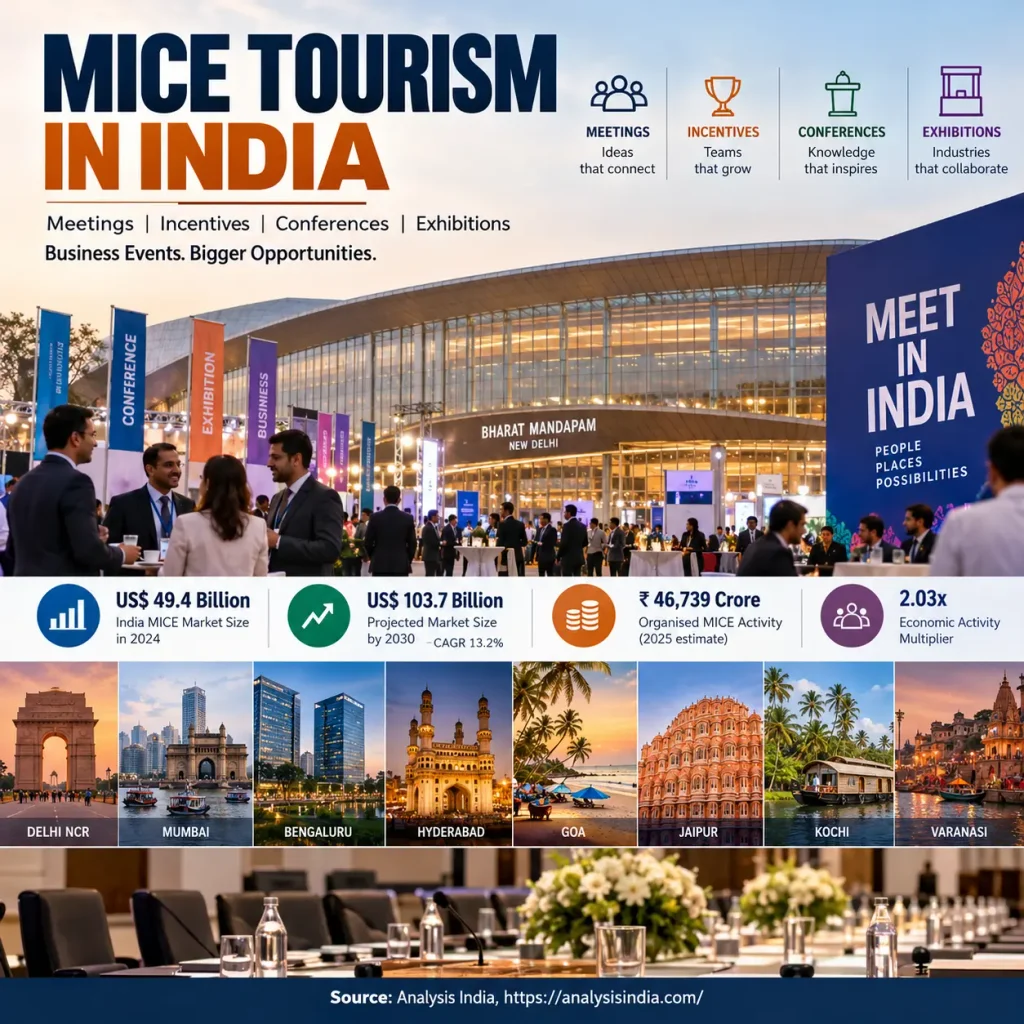
Analysis India MICE tourism in India is emerging as an important segment of the country’s business travel, hospitality and events economy. MICE stands for Meetings, Incentives, Conferences and Exhibitions. It includes corporate meetings, employee reward trips, professional conferences, trade exhibitions and large business events that bring people together for commercial or professional purposes. Unlike leisure tourism, this segment is driven mainly by business objectives, industry networking, knowledge exchange and corporate engagement. However, its economic impact extends beyond event venues because delegates also spend on hotels, restaurants, flights, local transport, shopping and destination experiences.
India is attracting greater attention from event organisers because of its large domestic corporate market, expanding airport network, growing hospitality industry and new convention infrastructure. Venues such as Bharat Mandapam in New Delhi, Yashobhoomi in Dwarka and Jio World Convention Centre in Mumbai have strengthened the country’s ability to host large meetings and exhibitions. At the same time, destinations such as Jaipur, Goa, Kochi, Varanasi and Khajuraho are creating opportunities for business events combined with cultural and leisure experiences.
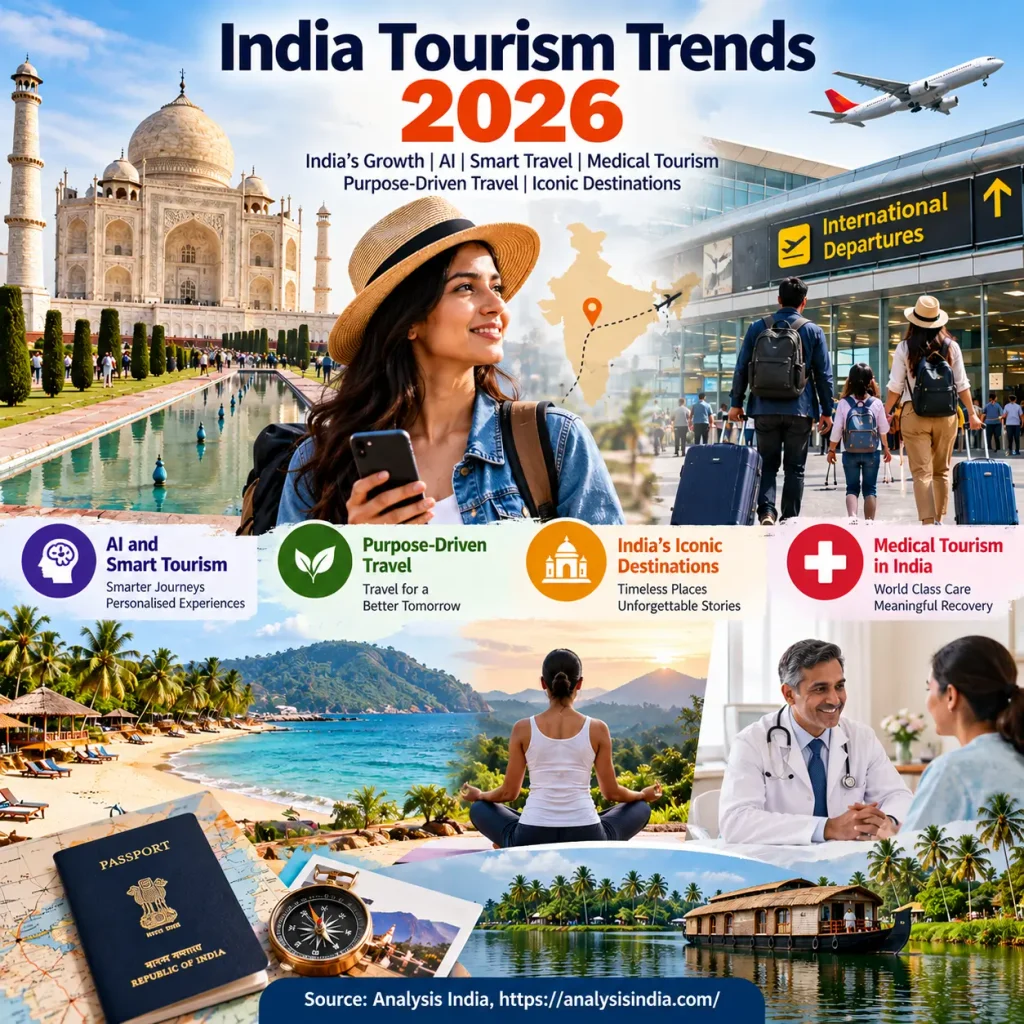
India’s tourism industry is diversifying beyond traditional leisure travel, with business events and specialised visitor experiences creating new opportunities. Read our detailed analysis of India tourism trends in 2026 to understand the wider developments shaping the country’s tourism economy.
The opportunity is substantial, but infrastructure alone will not make India a leading international events destination. The country also needs coordinated destination marketing, professional event services, simpler permissions, predictable costs and stronger international promotion. These factors will determine whether the growth of MICE tourism in India translates into higher international event bookings, increased visitor spending and sustainable business opportunities for Indian cities.
India MICE Tourism Market Size and Growth Forecast
Market-size estimates provide an important starting point for understanding the industry’s potential. According to Grand View Research, the India MICE market generated revenue of approximately US$49.4 billion in 2024. The research firm projects the market to reach approximately US$103.7 billion by 2030, representing a compound annual growth rate of around 13.2% over its stated forecast period.
This forecast indicates that the market could more than double between 2024 and 2030. However, it is important to understand the definition used by the research provider. Commercial market reports may include spending across event organisation, accommodation, venue rentals, food services, transport and related activities. Their estimates should not automatically be interpreted as government-measured tourism receipts or the direct revenue of convention centres.
India MICE Tourism Market Forecast
| Indicator | Market estimate |
|---|---|
| Market revenue in 2024 | US$49.4 billion |
| Forecast revenue in 2030 | US$103.7 billion |
| Reported forecast CAGR | Approximately 13.2% |
| Largest event type by revenue in 2024 | Meetings |
| Fastest-growing event type in the forecast | Incentives |
Source: Grand View Research, India MICE Market Outlook. Figures are the research firm’s estimates and projections, not audited government accounts.
The projected expansion of MICE tourism in India is supported by several demand drivers. Corporate India continues to require meetings, dealer conferences, sales events, product launches and employee engagement programmes. Professional associations need venues for conferences and knowledge-sharing events. Trade exhibitions provide companies with opportunities to find distributors, demonstrate products and develop business relationships. Government meetings and international conferences can also increase demand for accommodation, catering, security, logistics and local transport.
The incentives segment offers a different growth opportunity. Companies use incentive travel to recognise employee performance, reward business partners and strengthen sales networks. Indian destinations can compete for these programmes by combining quality accommodation and meeting facilities with heritage experiences, nature-based activities and regional cuisine. Grand View Research identifies incentives as the most lucrative event-type segment in its forecast analysis, although the commercial opportunity will differ by destination and event category.
For businesses evaluating MICE tourism in India, the most important question is not simply how large the market might become. It is which segments will capture the additional spending, which cities can accommodate the demand and whether service providers can deliver consistent quality at competitive prices.
The Latest India-Specific Industry Evidence
The market forecast should be read alongside evidence about the wider events economy. In August 2026, KPMG India published an analysis of the socioeconomic impact of the Indian events and experiences industry. The report estimated organised MICE activity at approximately ₹46,739 crore using 2025 estimates.
KPMG also reported that the MICE category had an economic activity multiplier of 2.03 times among the event categories assessed. This means that each rupee of direct event-related expenditure was associated with approximately ₹2.03 of total economic activity under the report’s analytical framework. The multiplier captures broader direct, indirect and induced effects rather than representing a profit margin or a guaranteed return on investment.
The report also highlighted operational challenges. Around 80% of surveyed organisers rated the overall process of obtaining event-related permissions as difficult. Meanwhile, 54.4% of visitors reported travelling from outside their city of residence to attend their most recent event. These findings illustrate why business events matter to hotels, restaurants, transport providers and destination businesses, while also showing the importance of regulatory efficiency.
Indian Events Industry: Selected 2025 Indicators
| Indicator | Reported result |
|---|---|
| Organised MICE activity | Approximately ₹46,739 crore |
| MICE economic activity multiplier | 2.03x |
| Organisers reporting difficulty obtaining permissions | 80% |
| Visitors travelling from outside their home city to an event | 54.4% |
| Organisers reporting revenue growth over the preceding two financial years | 94.6% |
Source: KPMG India, Socio-economic Impact of the Indian Events and Experiences Industry. Percentages reflect the report’s surveyed population and should not be treated as a census of every Indian event organiser or attendee.
The KPMG estimate and the Grand View Research forecast measure different aspects of the industry. One refers to organised MICE activity based on a 2025 estimate, while the other reports a broader market-revenue estimate for 2024 and a commercial forecast through 2030. The figures should therefore be presented separately rather than combined or used to calculate an artificial growth rate.
Government data also provides a useful historical benchmark. In a December 2024 parliamentary response, the Ministry of Tourism referred to a study conducted in 2019 that estimated the Indian MICE industry at ₹37,576 crore. The same study found that approximately 60% of the market was attributable to meetings, incentives and conferences, while 65% of events were business-to-business events.
The 2019 figure is a historical estimate and should not be presented as the industry’s current value. Nevertheless, it demonstrates that business events were already an established component of India’s tourism economy before the latest wave of convention infrastructure investment.
Government Strategy and Industry Leaders’ Views
Government policy is increasingly focused on strengthening India’s ability to attract national and international business events. The Ministry of Tourism has developed a National Strategy and Roadmap for the MICE Industry, with priorities including institutional support, ecosystem development, competitiveness, easier event permissions, destination marketing and skill development.
The government has also introduced the Meet in India sub-brand under the Incredible India campaign. Its purpose is to promote India as a destination for meetings, incentives, conferences and exhibitions. In February 2026, the Press Information Bureau reported that the ministry had circulated guidelines for establishing city-level MICE promotion bureaus to states and union territories. It also referred to a digital MICE catalogue covering infrastructure and facilities across more than 60 Indian cities that hosted G20 meetings during India’s presidency.
This approach is important because international organisers need more than a venue. They need reliable information about hotels, airport access, local suppliers, permissions, safety, transport and event services. A city-level bureau can potentially coordinate these requirements and reduce the time needed to evaluate and organise an event.
What India’s Industry Leaders Are Saying
At the Meet in India Conclave in Jaipur in May 2025, Union Minister for Tourism and Culture Gajendra Singh Shekhawat described the sector’s economic role. The government release reported his view that India’s MICE industry was positioned to become a major economic driver and generate high-quality jobs.
The same government release quoted NITI Aayog Vice Chairperson Suman Bery as saying, “The vision laid by Hon’ble PM during India’s G20 presidency has opened new pathways. It is now up to states to build on this momentum. From deregulation to concert tourism, India has the opportunity to become a global hub for events and experiences.”
The emphasis on deregulation is particularly relevant to the commercial side of the industry. Event organisers must coordinate multiple permissions, venue contracts, hotel room blocks, technical vendors and transport arrangements. Delays or uncertainty can increase costs and discourage organisers from selecting a destination. A coordinated city-level process could improve competitiveness if it delivers practical improvements rather than simply creating another administrative layer.
In a separate industry event reported by the Press Information Bureau in 2025, Suman Billa, Additional Secretary and Director General of the Ministry of Tourism, highlighted the role of professional city-level convention promotion bureaus. The report also quoted Sorraj Dhawan, President of the Indian Exhibition Industry Association, who described these bureaus as a potential single-window mechanism for organisers and local partners.
Dhawan stated that the industry association was working towards a roadmap to place India among the world’s top five exhibition markets. This is an industry ambition, not a confirmed ranking or guaranteed outcome. Its achievement will depend on the number and scale of events secured, international exhibitor participation, venue capacity, organiser confidence and the quality of delivery.
Leading MICE Destinations in India
The geography of MICE tourism in India is changing as established metropolitan centres compete with destinations that offer distinctive cultural experiences and developing infrastructure. The best location depends on the event’s size, audience, budget, accessibility and purpose. A major international exhibition requires different facilities from a corporate incentive trip or a specialist medical conference.
Delhi NCR
Delhi NCR is a major destination for international conferences, government meetings, corporate events and exhibitions. Bharat Mandapam and Yashobhoomi have expanded the region’s large-event infrastructure. The area also benefits from international air connectivity, established hotel networks and access to government institutions, corporate headquarters and professional services.
Delhi NCR is particularly suitable for large conferences and trade exhibitions that require substantial venue capacity and a broad supplier network. However, organisers still need to assess airport transfer times, traffic, hotel availability and event-period accommodation prices. Infrastructure capacity alone does not guarantee a smooth delegate experience.
Mumbai
Mumbai combines a major corporate and financial centre with established hospitality services and exhibition infrastructure. Jio World Convention Centre is an important venue for conferences, exhibitions and high-profile business events. The city is well suited to financial services, technology, consumer brands, healthcare, pharmaceuticals and international business networking.
Mumbai’s commercial ecosystem is a competitive advantage because delegates can combine conference attendance with meetings involving investors, distributors, suppliers and corporate partners. Venue costs and hotel prices can be relatively high, so organisers must balance the value of business access against the total event budget.
Bengaluru
Bengaluru offers strong potential for technology conferences, software industry meetings, startup events and innovation-led exhibitions. Its technology ecosystem creates demand for professional networking and specialist conferences. The city also attracts global companies and technology professionals, making it relevant to events focused on artificial intelligence, enterprise software, electronics and digital services.
Its opportunity is to convert industry depth into repeat international conferences. This requires suitable large venues, dependable airport access, sufficient hotel inventory and coordinated event services. Traffic and travel time between hotels, offices and event venues must also be considered during planning.
Hyderabad
Hyderabad has a strong position in information technology, pharmaceuticals, biotechnology and life sciences. These sectors create opportunities for scientific conferences, medical meetings, healthcare exhibitions and corporate events. The city offers a combination of business infrastructure, hospitality facilities and access to specialist industries.
For organisers planning healthcare or pharmaceutical conferences, Hyderabad’s industry presence can be as important as the venue itself. Delegates may value access to research institutions, industry executives, suppliers and technology companies. This makes the city particularly relevant to specialist business events.
Goa
Goa offers a different MICE proposition by combining business meetings with resort accommodation, beaches and leisure activities. It can be attractive for incentive travel, leadership retreats, corporate rewards and smaller conferences where destination experience is part of the programme.
The key consideration is the balance between event requirements and destination capacity. Large conferences need sufficient meeting space, room availability and transport arrangements. Organisers must also account for seasonal demand, weather conditions and the cost of moving delegates between accommodation and event locations.
Jaipur, Kochi and Varanasi
Jaipur, Kochi and Varanasi are among the destinations highlighted in India’s wider MICE development discussions. Their appeal comes from different combinations of cultural identity, tourism infrastructure, connectivity and regional business opportunities. Jaipur can combine meetings with heritage experiences. Kochi offers access to Kerala’s hospitality, maritime and business networks. Varanasi can support events that integrate cultural heritage with professional programmes, provided the venue and logistical requirements are appropriate.
These destinations should not be treated as interchangeable alternatives to major convention cities. Their suitability depends on venue size, flight schedules, hotel inventory, technical facilities and the nature of the event. Their long-term opportunity lies in building clear destination propositions rather than competing solely on lower costs.
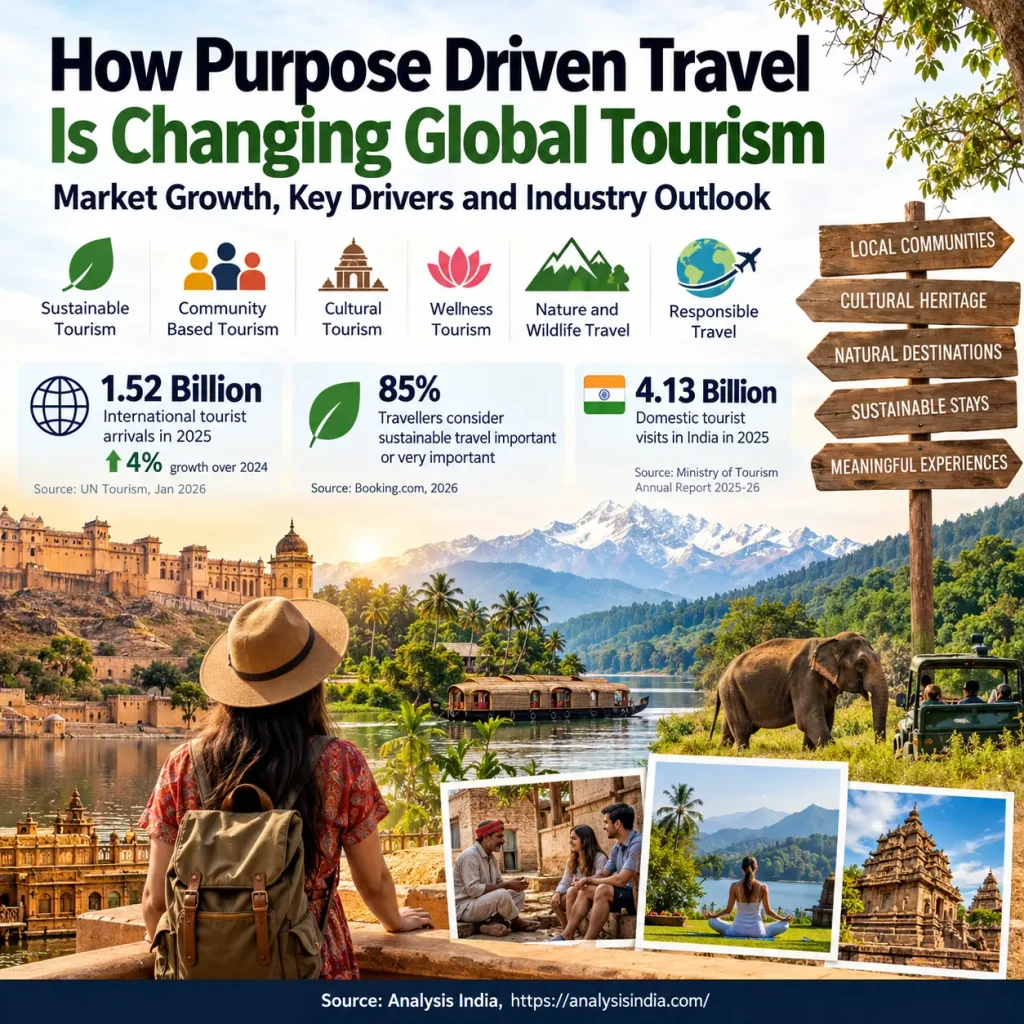
Corporate delegates often extend their business trips with local sightseeing and cultural experiences. Explore our guide to the most visited tourist places in India for additional context on destinations that can complement business-event itineraries.
Destination Comparison
| Destination | Strong MICE opportunities | Main consideration |
|---|---|---|
| Delhi NCR | Large conventions, government events, exhibitions | Congestion and event-period accommodation |
| Mumbai | Financial services, corporate conferences, exhibitions | Venue and hotel costs |
| Bengaluru | Technology, AI, startups, enterprise events | Traffic and venue access |
| Hyderabad | Pharmaceuticals, biotechnology, healthcare conferences | Event-specific venue and hotel capacity |
| Goa | Incentive travel, retreats, resort conferences | Seasonality and logistics |
| Jaipur | Corporate events, heritage-linked incentives | Capacity for larger technical events |
| Kochi | Business conferences, regional industry events | International connectivity and venue fit |
| Varanasi | Heritage-linked conferences and specialist meetings | Logistics, capacity and local coordination |
This comparison is a qualitative assessment of destination positioning, not a ranking based on audited event counts or market shares.
Why Convention Infrastructure Matters
Large convention centres can improve India’s ability to compete for international events because they offer purpose-built spaces, exhibition halls, conference rooms and supporting services. Bharat Mandapam, Yashobhoomi and Jio World Convention Centre have strengthened the country’s profile among event organisers. Their importance extends beyond the buildings themselves because major events can stimulate demand for hotels, restaurants, airlines, ground transport, event technology and local suppliers.
However, venue capacity must be matched with event demand. A destination may have a modern convention centre but still face constraints in hotel availability, direct international flights, event staffing, local transport or supplier quality. International organisers also assess technical reliability, accessibility, safety, service standards and the ability to manage large delegate flows.
MICE tourism in India will benefit most when convention investment is supported by a wider destination ecosystem. That includes trained event professionals, experienced production companies, destination management firms, professional conference organisers and reliable digital services. Local small and medium-sized businesses can participate through catering, transport, printing, interpretation, staffing, gifts and visitor experiences.
Business Opportunities Across the MICE Value Chain
The industry creates opportunities for several categories of businesses. Hotels and resorts can develop meeting packages, group accommodation and incentive programmes. Convention centres can generate revenue through venue rentals, exhibition space, technical services and catering. Event organisers can provide planning, production, delegate management, registration and sponsorship services.
Destination management companies can coordinate transfers, excursions, cultural programmes and local supplier arrangements. Technology providers can supply registration platforms, event applications, badge systems, audience engagement tools and analytics. Airlines and transport companies can benefit from concentrated travel demand around major events, while restaurants and local retailers can gain additional business from delegates.
Healthcare and pharmaceutical companies offer a particularly relevant source of specialist demand. Medical congresses, clinical research meetings, diagnostics conferences and medical device exhibitions require access to expert speakers, professional associations and technical suppliers. Cities with strong healthcare and life sciences clusters can use this demand to develop specialist event positioning.
For investors, the most useful approach is to evaluate the full value chain rather than focus only on convention-centre construction. Hotel room availability, event services, technical production and professional staffing can determine whether a destination can accommodate repeat business. The opportunity may therefore be strongest in locations where business demand is established but supporting infrastructure or specialised services remain underdeveloped.
Digital Technology and Sustainability in Business Events
Digital tools are changing how organisers plan, manage and evaluate events. Registration systems can simplify delegate onboarding, while event applications can distribute schedules, venue maps and session updates. Data analytics can help organisers understand attendance patterns, session popularity and sponsor engagement. Artificial intelligence can support customer-service responses, content recommendations, translation and event planning, provided that personal data and confidential business information are handled responsibly.
Technology does not eliminate the need for face-to-face meetings. Instead, it can make in-person events easier to organise and more measurable. Hybrid formats may extend the reach of selected sessions, while digital follow-up tools can help maintain professional relationships after an event. The appropriate technology depends on the event’s objectives, budget, audience and privacy requirements.
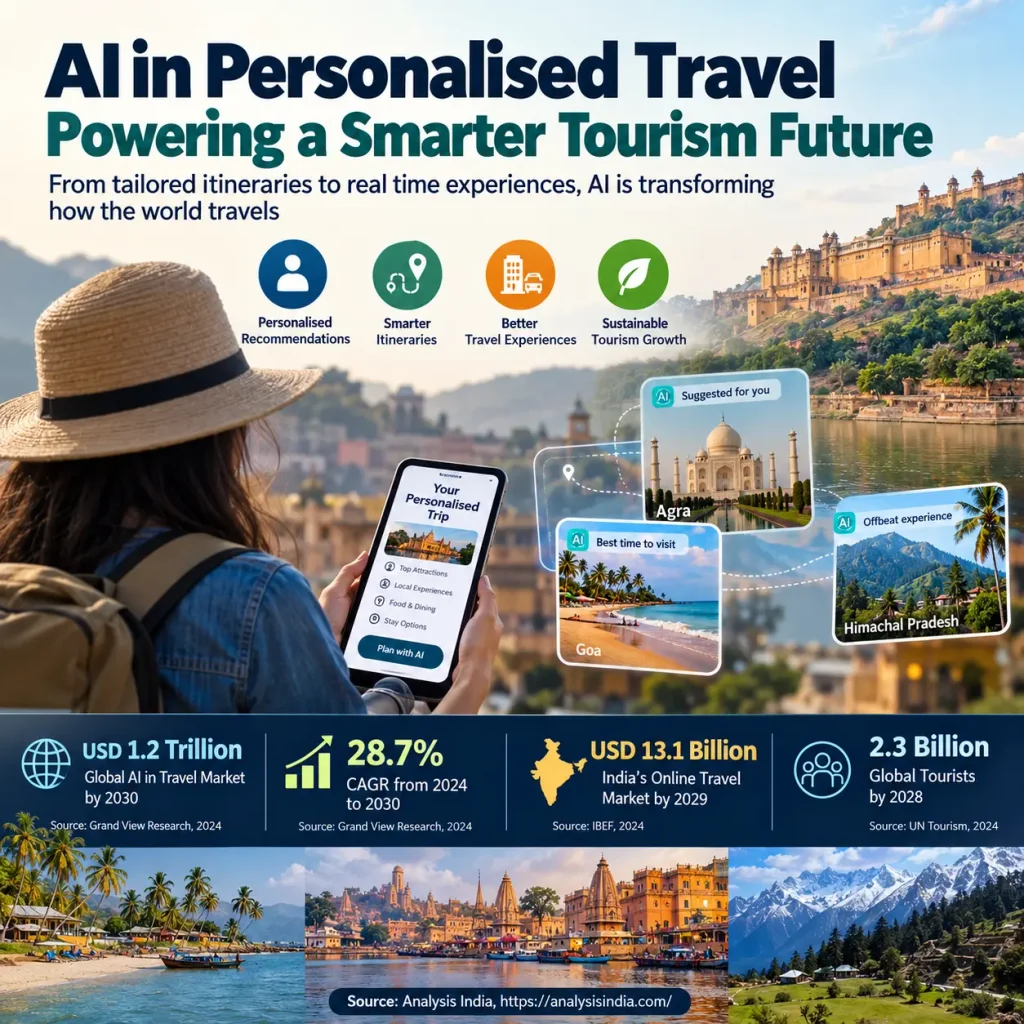
Digital platforms and artificial intelligence can improve visitor engagement, travel planning and event experiences. Our analysis of AI in personalised travel and smart tourism explains how these technologies are changing the broader travel industry.
Sustainability is another consideration for international organisers. Large events can generate waste, energy demand and transport emissions. Organisers can reduce these effects through reusable event materials, responsible food planning, waste separation, digital documentation and better transport coordination. Hotels and venues can also improve resource efficiency through energy management and water conservation.
For destinations seeking international business, sustainability should be supported by measurable operating practices rather than promotional claims alone. Transparent reporting on waste, energy, accessibility and local procurement can help organisers compare venues and demonstrate progress to sponsors and participants.
Challenges Facing MICE Tourism in India
Despite its growth potential, the industry faces practical challenges. Permission requirements can be fragmented across agencies and locations. Organisers may need to coordinate venue approvals, traffic management, security, temporary structures, licensing and other local requirements. Uncertainty around timelines can increase costs and make event planning more difficult.
Connectivity is another important factor. International delegates need convenient flight options and predictable transfers between airports, hotels and venues. Smaller destinations may offer attractive cultural experiences but have fewer direct flights or limited room capacity during major events. These constraints can affect an organiser’s decision even when the destination itself is appealing.
Service consistency also matters. International conferences depend on experienced technical teams, high-quality interpretation, reliable internet connectivity, professional catering and responsive local suppliers. A single major event can generate publicity, but repeat bookings depend on delivery quality and the organiser’s confidence that future events will meet expectations.
Competition from established international business-event destinations adds pressure. India must compete on the complete value proposition, including venue quality, accessibility, accommodation, total cost, destination experience and administrative efficiency. Lower prices alone are not sufficient if organisers face greater uncertainty or logistical complexity.
Outlook for MICE Tourism in India Through 2030
The outlook for MICE tourism in India is supported by the country’s corporate base, growing convention infrastructure, expanding hospitality sector and policy interest in international events. Grand View Research’s forecast of US$103.7 billion by 2030 provides one commercial estimate of the potential scale of the market. KPMG’s 2025 estimate of ₹46,739 crore in organised MICE activity provides a separate view of the sector’s contribution to the wider events economy.
The two figures should not be treated as directly comparable, but both indicate that business events represent a substantial economic opportunity. The next phase of growth will depend on the ability to convert infrastructure and corporate demand into a larger, more consistent pipeline of events. City-level convention bureaus, more coordinated permissions and professional destination marketing could help address some of the barriers identified by organisers.
Growth may also become more geographically distributed. Established hubs will continue to attract large conferences and exhibitions, while emerging destinations can specialise in smaller conferences, incentive travel and industry-specific events. Healthcare, technology, financial services and manufacturing are potential sources of specialist demand because their professional communities need regular opportunities to exchange knowledge and develop commercial relationships.
The most credible assessment is that India’s MICE industry has strong growth potential, but the pace and distribution of that growth will depend on execution. Market forecasts describe a possible trajectory, not a guaranteed result. Better data on event numbers, delegate origins, spending, room nights and international event wins would help policymakers and businesses assess progress more precisely.
Conclusion
MICE tourism in India is developing into a significant part of the country’s business travel and events economy. New convention venues, corporate demand and destination diversification create opportunities for hotels, event organisers, transport providers, technology companies and local businesses. Government initiatives, including the Meet in India campaign and proposed city-level promotion bureaus, could improve the country’s competitiveness if they make event planning simpler and more predictable.
The market outlook is positive, but infrastructure investment must be matched with professional services, international connectivity, skilled staff and consistent delivery. The destinations most likely to benefit will be those that understand their competitive strengths and build event propositions around specific industries and audiences. Reliable market data and transparent performance measurement will also be essential for evaluating progress.
For businesses and investors, the key opportunity is not simply to follow headline market forecasts. It is to identify the services, destinations and event categories where demand is growing and where India can deliver a dependable international-standard experience.
Frequently Asked Questions
What is MICE tourism in India?
MICE tourism in India refers to travel connected with meetings, incentive programmes, conferences and exhibitions. It includes corporate gatherings, professional congresses, trade shows and employee reward trips. The segment supports hotels, transport, event management, catering and destination services. Its value comes from both event spending and the wider economic activity generated by visiting delegates.
What is the size of India’s MICE market?
Grand View Research estimated the India MICE market at approximately US$49.4 billion in 2024 and projected it to reach US$103.7 billion by 2030. Separately, KPMG estimated organised MICE activity at approximately ₹46,739 crore using 2025 estimates. These figures use different methodologies and should not be interpreted as directly comparable measurements.
Which cities are important for MICE tourism in India?
Delhi NCR, Mumbai, Bengaluru and Hyderabad are important destinations for large conferences, corporate meetings and exhibitions. Goa is attractive for incentive travel and resort-based events. Jaipur, Kochi and Varanasi offer additional opportunities through their cultural appeal, tourism infrastructure and developing business-event capabilities. The best destination depends on venue capacity, connectivity, accommodation and event objectives.
What is the Indian government’s strategy for MICE tourism?
The Ministry of Tourism has developed a National Strategy and Roadmap for the MICE Industry. Its priorities include institutional support, ecosystem development, improved competitiveness, easier permissions, destination marketing and skills. The government has also promoted Meet in India under the Incredible India campaign and circulated guidelines for city-level MICE promotion bureaus.
How does MICE tourism benefit the Indian economy?
MICE tourism generates demand for accommodation, flights, local transport, catering, event production and professional services. It can support small businesses, create skilled employment and attract visitors to destinations outside traditional leisure-tourism circuits. KPMG’s 2026 analysis reported a 2.03 times economic activity multiplier for MICE among the event categories it assessed. This is a model-based estimate, not a guaranteed return for every event.
What are the main challenges facing MICE tourism in India?
Key challenges include fragmented permissions, uneven connectivity, hotel-capacity constraints in some destinations, inconsistent service standards and competition from established international event hubs. Improving coordination among government agencies, venues, hotels and event suppliers will be important for securing repeat business.
What is the future of MICE tourism in India by 2030?
The outlook is supported by convention infrastructure, corporate demand, specialist conferences and the development of emerging destinations. Grand View Research projects the market to reach approximately US$103.7 billion by 2030. Actual outcomes will depend on destination marketing, event quality, international connectivity, administrative efficiency and the ability to attract repeat international events.
Sources and Further Reading
- Grand View Research: India MICE Market Outlook, 2025–2030
- KPMG India: Socio-economic Impact of the Indian Events and Experiences Industry, 2026
- Ministry of Tourism: Initiatives for Promoting MICE Tourism
- Press Information Bureau: Meet in India Conclave, May 2025
- Press Information Bureau: City-Level Convention Promotion Bureaus
- Ministry of Tourism: National Strategy for MICE Industry 2022