📅 Published: October 28, 2026
🔄 Last Updated: October 28, 2026
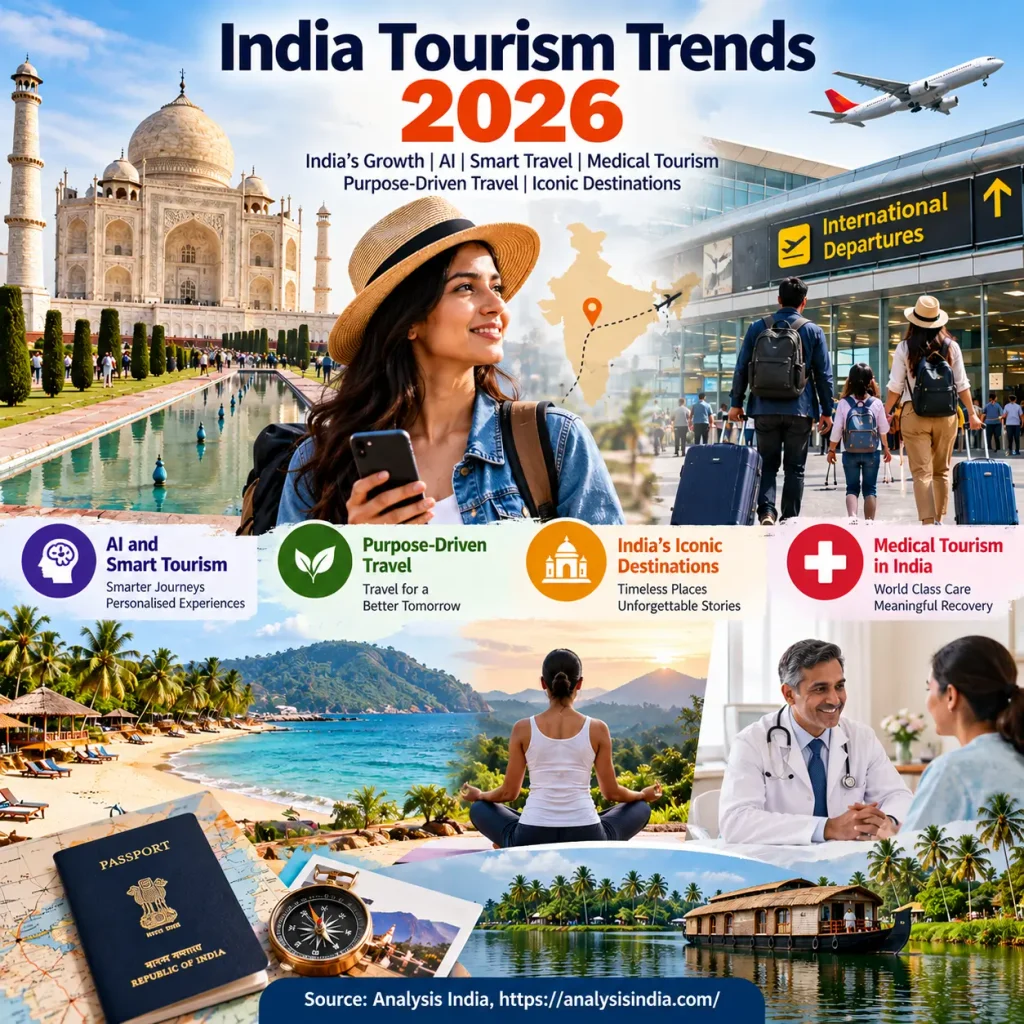
India Tourism Trends 2026 reflect a major transformation in the travel industry. Tourism is expanding beyond conventional holidays as travellers seek personalised experiences, cultural discovery, wellness, medical treatment and more convenient digital services. Artificial intelligence is changing how people research destinations and organise itineraries. At the same time, governments and tourism businesses are investing in transport connectivity, digital infrastructure and destination development.
India occupies an important position in this transformation. The country combines a large domestic travel market with historical monuments, religious destinations, wildlife, beaches, mountain tourism, traditional wellness systems and advanced medical services. Its expanding transport network and digital travel ecosystem create opportunities for hotels, airlines, tour operators, technology companies and local businesses.
According to UN Tourism, international tourist arrivals increased by 4 percent in 2025 to approximately 1.52 billion. The organisation reported that global travel demand remained strong despite inflation and geopolitical uncertainty. Its January 2026 outlook also indicated that international tourism could continue growing during 2026, although economic and political conditions remain important risks.
India’s opportunity extends beyond increasing visitor numbers. The next phase of growth will depend on attracting more international visitors, improving destination management, extending tourist stays and creating experiences that generate greater economic value for local communities. Global Tourism Trends 2026 therefore need to be assessed through market performance, traveller preferences, digital innovation and India’s ability to compete internationally.
Global Tourism Market Outlook in 2026
International tourism has entered a new phase of expansion following the severe disruption caused by the COVID-19 pandemic. Destinations have restored connectivity, airlines have expanded routes and travellers have resumed international holidays, business trips and cultural visits. Tourism businesses are also responding to changing expectations around convenience, flexibility and value.
UN Tourism estimated that international tourist arrivals reached approximately 1.52 billion in 2025. This represented an increase of around 60 million arrivals compared with 2024. The recovery was supported by strong demand in major source markets and the continued improvement of travel across Asia and the Pacific.
The wider economic contribution of tourism is substantial. The World Travel & Tourism Council reported that the sector contributed approximately US$11.6 trillion to the global economy in 2025. Its estimates also indicated that tourism supported around 366 million jobs worldwide. These figures include direct, indirect and induced economic effects, so they should not be confused with the narrower contribution of tourism-related industries in national accounts.
Global Tourism Performance Table
| Indicator | Latest reported value | Reporting period |
|---|---|---|
| International tourist arrivals | Approximately 1.52 billion | 2025 |
| Growth in international tourist arrivals | 4% | 2025 |
| Tourism contribution to global GDP | Approximately US$11.6 trillion | 2025 |
| Global tourism-supported employment | Approximately 366 million jobs | 2025 |
| Growth in international tourism receipts | Varies by reporting measure | Country and regional level |
Sources: UN Tourism, World Tourism Barometer, January 2026; World Travel & Tourism Council, Economic Impact Research.
The data demonstrates that tourism is a major economic activity rather than simply a consumer leisure market. It supports aviation, hospitality, transport, retail, entertainment, food services and a broad range of small businesses. Tourism also creates demand for digital booking systems, payment infrastructure, travel insurance and destination management technology.
However, international arrivals alone do not measure the full performance of the industry. Average spending, length of stay, seasonal demand, domestic tourism and the distribution of revenue across local communities are equally important. A destination can attract a large number of visitors without achieving proportionate growth in tourism receipts if travellers stay briefly or spend relatively little.
For this reason, Global Tourism Trends 2026 should be evaluated using a combination of visitor volumes, expenditure, employment, infrastructure capacity and the quality of the visitor experience.
India Tourism Trends 2026: Market Size, Growth and Economic Contribution
India’s tourism industry has a distinctive structure. Domestic tourism provides a large demand base, while international visitors contribute foreign exchange, hotel spending and demand for premium travel services. Religious tourism, cultural heritage, family travel and visits to friends and relatives support domestic movement. International demand is distributed across leisure, business, medical treatment, education, heritage and other travel purposes.
The Ministry of Tourism’s official data dashboard reported approximately 4,286.9 million domestic tourist visits in 2025. It also recorded 25.27 million foreign tourist visits during the year. These are visit counts rather than unique individual travellers, so a person visiting multiple destinations may contribute more than one visit.
The same dashboard recorded approximately 20.22 million international tourist arrivals in 2025. This total included 9.15 million foreign tourist arrivals and 11.07 million arrivals by non-resident Indians. These categories must be distinguished because foreign tourist arrivals do not include all international arrivals.
The dashboard also reported foreign exchange earnings from tourism of approximately ₹2.7 lakh crore, equivalent to about US$31.69 billion, for 2025. The reported year-on-year change was negative, illustrating that visitor numbers and foreign exchange earnings can move in different directions.
India Tourism Trends Statistics Table
| Tourism indicator | 2025 value | Interpretation |
|---|---|---|
| Domestic tourist visits | 4,286.9 million | Visits by domestic tourists |
| Foreign tourist visits | 25.27 million | Visits by foreign tourists to destinations |
| International tourist arrivals | 20.22 million | Includes foreign arrivals and NRI arrivals |
| Foreign tourist arrivals | 9.15 million | Foreign nationals arriving as tourists |
| Non-resident Indian arrivals | 11.07 million | International arrivals by NRIs |
| Tourism foreign exchange earnings | Approximately ₹2.7 lakh crore | Foreign exchange receipts reported by the Ministry |
Source: Ministry of Tourism, Government of India, India Tourism Data Dashboard. Figures are for 2025 as displayed on the official dashboard. Definitions differ across indicators.
The economic contribution is also significant. The Ministry’s tourism dashboard reports that tourism contributed approximately ₹15.73 lakh crore to India’s GDP in FY2023–24, equivalent to 5.22 percent of GDP under the methodology shown on the portal. It estimates that the sector supported approximately 84.63 million direct and indirect jobs during that period.
The World Travel & Tourism Council uses a different economic impact methodology. Its July 2026 research estimated that travel and tourism generated US$263.6 billion for India’s economy in 2025 and supported 46.2 million jobs. WTTC also reported that the sector accounted for 6.6 percent of India’s GDP in 2025.
These estimates should not be combined into a single series. The organisations use different methodologies, coverage and measurement frameworks. The Ministry’s estimates are appropriate for explaining the official Indian tourism accounts, while WTTC’s estimates are useful for international comparisons of the wider economic footprint of travel and tourism.
India Tourism Growth: What the Numbers Mean
India’s domestic tourism scale gives the country a strong foundation. Even when international travel faces economic pressure, domestic visitors support hotels, railways, airlines, road transport, restaurants and attractions. Religious circuits and regional travel also spread tourism demand beyond a limited number of major international gateways.
Nevertheless, domestic visit volumes should not be interpreted as equivalent to revenue or unique visitors. Repeated visits, short excursions and trips with different expenditure levels all contribute to the total. Better measurement of spending, visitor duration and regional distribution will help businesses and policymakers identify the most valuable growth opportunities.
India also has an opportunity to strengthen international demand. Improved visa facilitation, reliable transport connections, destination marketing, multilingual information and easier payment options can reduce friction for overseas visitors. The quality of local transport, cleanliness, safety, accessibility and customer service will influence whether travellers recommend destinations and return.
Key Industry Leaders’ Statements on India Tourism Trends
Industry commentary helps explain why tourism is attracting attention from governments and investors. The following statements are taken from published announcements and research releases. They are reproduced as quotations rather than presented as independent forecasts by Analysis India.
UN Tourism: International Demand Remains Strong
Shaikha Alnuwais, Secretary-General of UN Tourism, said in the organisation’s January 2026 tourism outlook:
“Demand for travel remained high throughout 2025, despite high inflation in tourism services and uncertainty from geopolitical tensions.”
Source: UN Tourism, International tourist arrivals up 4% in 2025 reflecting strong travel demand around the world, 20 January 2026.
This statement highlights the resilience of international travel. It also identifies two risks that tourism businesses cannot ignore. Higher prices can affect affordability, while geopolitical uncertainty can influence destination choice, airline capacity and traveller confidence.
WTTC: India Has an Opportunity to Attract More International Spending
Julia Simpson, President and CEO of the World Travel & Tourism Council, said in a June 2025 industry announcement:
“India’s Travel & Tourism sector is experiencing unprecedented growth, with international visitor numbers now at record highs after a period of strong domestic reliance.”
Source: WTTC, India’s International Visitor Spend Soars to Record Highs, 5 June 2025.
The comment reflects the importance of converting India’s domestic tourism strength into a stronger international market. A larger share of overseas visitor spending could benefit hotels, airlines, destination operators, local retailers and experience providers. Success will depend on making travel easier to plan and deliver, rather than relying only on India’s cultural and natural attractions.
Booking.com: Travel Is Becoming More Individual
James Waters, Chief Business Officer at Booking.com, said in the company’s 2026 travel predictions announcement:
“In 2026, travel is becoming a reflection of who people truly are, with journeys built around interests that perhaps in the past felt too niche or bold to explore.”
Source: Booking.com, The Era of YOU: Booking.com Predicts the Top Trends Defining Travel in 2026, 15 October 2025.
This perspective points to a move away from standardised holiday packages. Travellers increasingly seek trips that reflect their interests, whether those interests involve food, adventure, heritage, wellness, spirituality or specialist experiences. Businesses that understand these motivations can develop more relevant products and improve the likelihood of repeat bookings.
The Major Global Tourism Trends Shaping 2026
Tourism demand is becoming more diverse. Travellers are not simply choosing between domestic and international holidays. They are also selecting destinations based on personal interests, budgets, health objectives, cultural experiences and the ease of organising a trip.
Several developments stand out in 2026. Digital travel services are becoming more sophisticated, personalised recommendations are improving trip discovery, and travellers are showing interest in experiences that go beyond conventional sightseeing. Wellness and medical travel are also creating new opportunities for destinations with established healthcare and hospitality infrastructure.
These developments are interconnected, but each has a different commercial purpose. AI can improve trip planning, smart tourism can improve destination operations, purpose-driven travel can strengthen local participation, and medical tourism can attract visitors whose primary reason for travel is healthcare.
Personalised Travel Is Moving Beyond Standard Holiday Packages
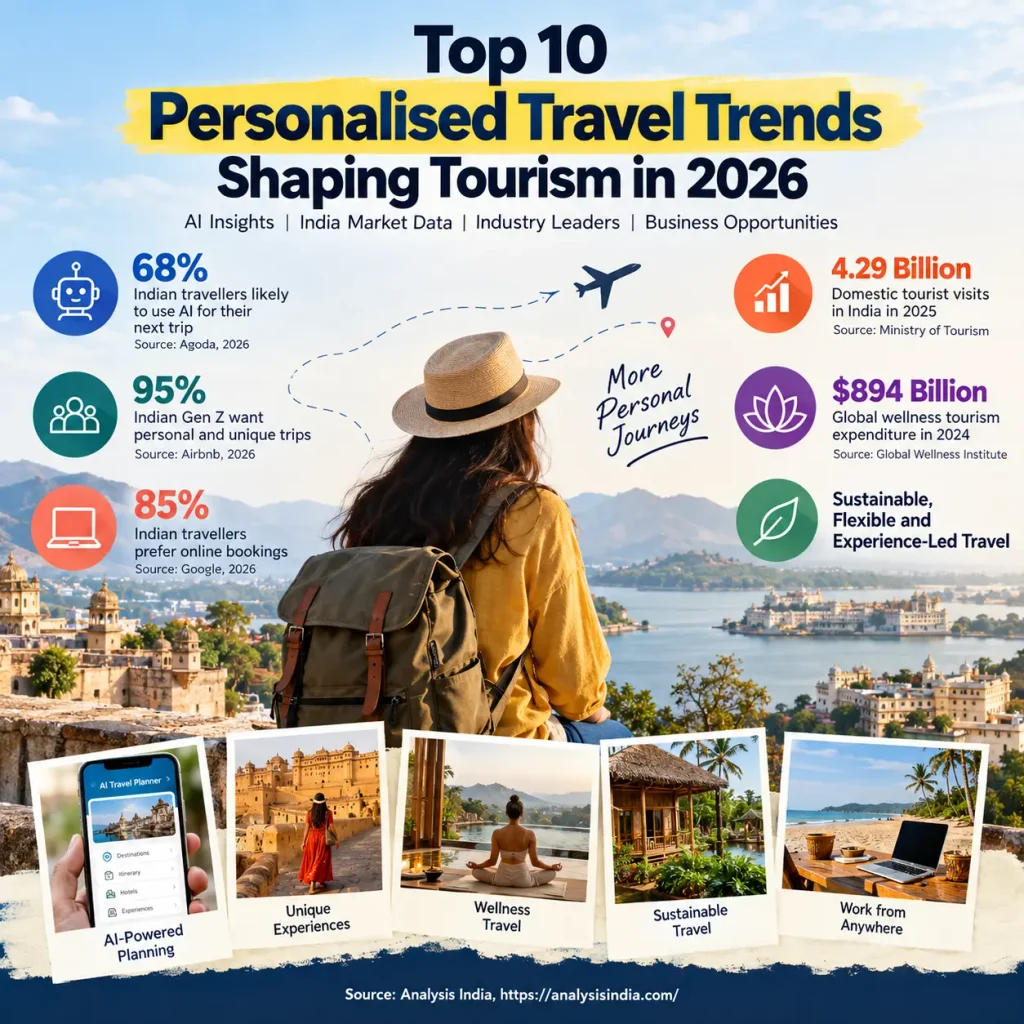
Personalised travel involves tailoring a journey to a traveller’s interests, budget, schedule and preferred activities. Instead of choosing a fixed itinerary, visitors can combine accommodation, transport, attractions and local experiences around their specific needs.
Technology is helping travel companies make this process easier. Booking platforms can recommend hotels and activities based on search behaviour, while customer service systems can help travellers compare options and manage changes. Personalisation can also help businesses identify suitable add-on services and communicate more relevant offers.
The opportunity is not limited to luxury travel. Families may need child-friendly accommodation and convenient transport. Older travellers may prioritise accessibility and a slower pace. Younger visitors may seek adventure, food experiences or independent exploration. Business travellers may need reliable connectivity and flexible schedules.
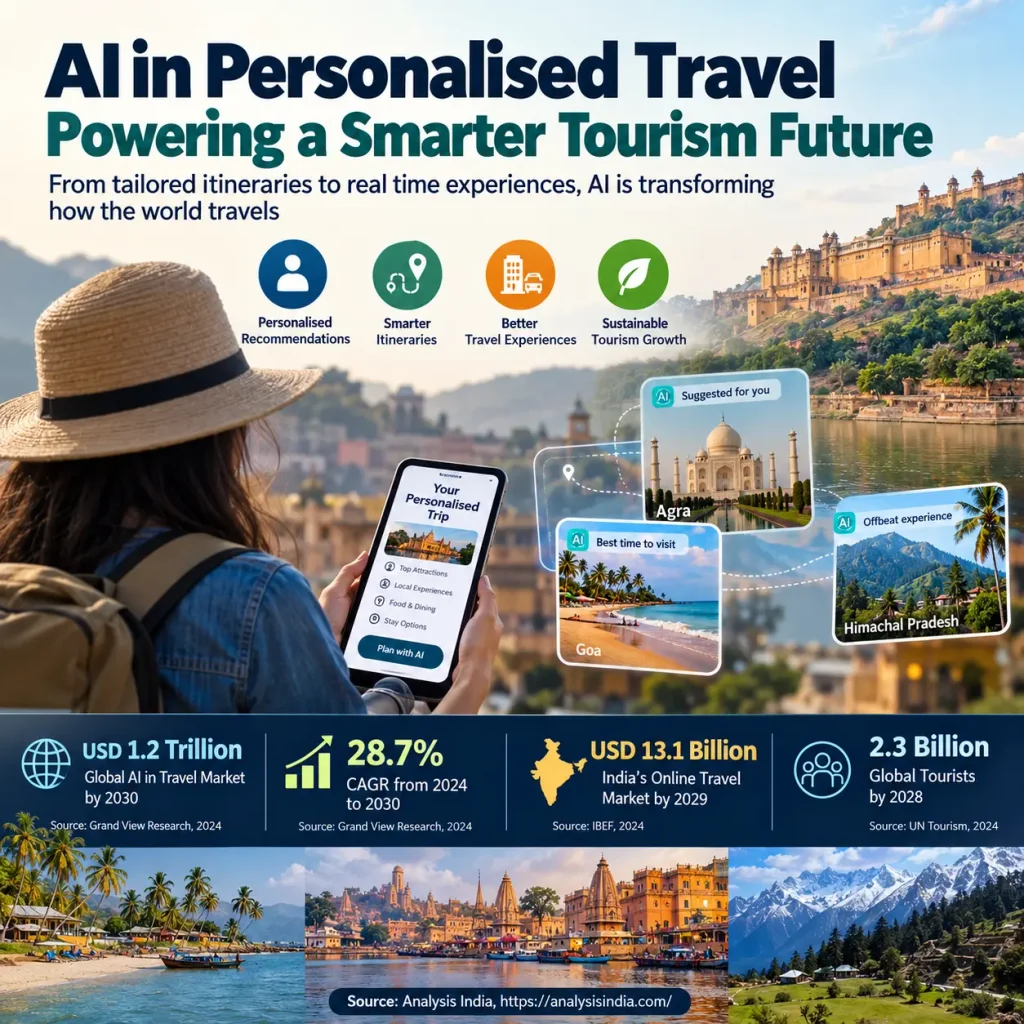
For a detailed examination of this development, read AI in personalised travel and the future of smart tourism. That article focuses on how artificial intelligence supports customised travel planning and digital visitor services.
A separate analysis of personalised travel trends can provide readers with a deeper understanding of changing traveller preferences. The role of this pillar is to connect those behavioural changes with wider market growth and destination competitiveness.
India Tourism Trends: Smart Tourism Is Changing Destination Management
Smart tourism combines digital information, connected infrastructure and data-led decision-making to improve the visitor experience. It can include digital ticketing, transport updates, mobile guides, multilingual information, online visitor services and systems that help destinations manage crowds.
For destinations, the benefits extend beyond convenience. Visitor information can help authorities identify peak periods, plan transport capacity and improve the distribution of tourists across attractions. Hotels and tour operators can use demand information to manage staffing and inventory. Visitors can receive updates that help them avoid unnecessary waiting or choose alternative activities.
India has opportunities to apply smart tourism across major cities, heritage destinations, pilgrimage centres, national parks and emerging regional attractions. Digital systems are most effective when they provide accurate information and work reliably for both domestic and international travellers.
Technology alone cannot solve every destination challenge. Poor last-mile connectivity, inadequate sanitation, congestion and inconsistent service quality require investment and operational improvements. Digital tools should support these improvements rather than replace them.
India Tourism Trends: Purpose-Driven Travel Is Expanding the Meaning of a Holiday
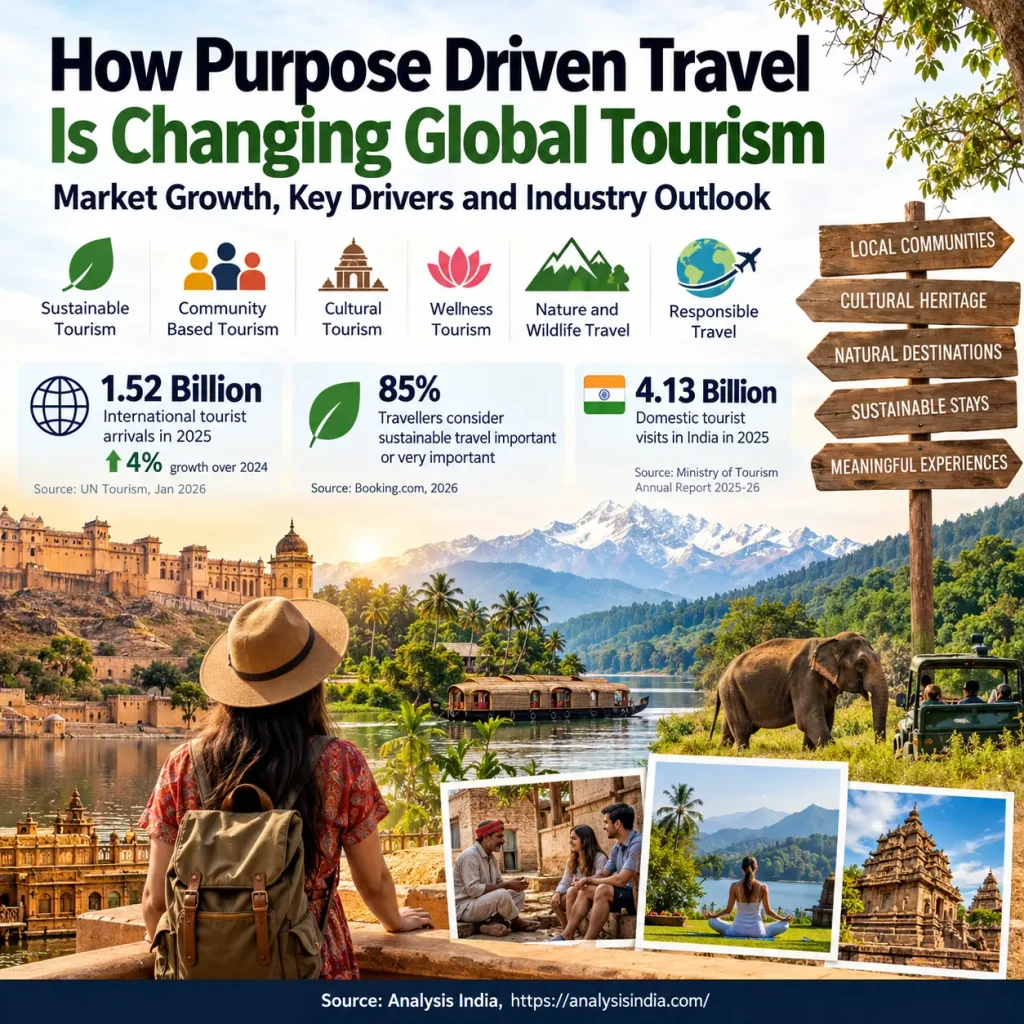
Purpose-driven travel refers to journeys shaped by a particular interest, personal objective or desire to engage meaningfully with a destination. It can include cultural immersion, nature experiences, volunteering, spiritual journeys, local food, wellness retreats and community-based tourism.
For destinations, this form of travel can create opportunities to distribute spending beyond large hotels and established attractions. Visitors may purchase local products, attend cultural activities, use regional guides or stay longer to explore nearby communities.
The commercial benefits depend on credible implementation. Community participation must be genuine, cultural traditions should be treated respectfully and environmental claims should be supported by actual practices. Tourism businesses should avoid describing a trip as sustainable simply because it includes a nature-based activity.
India has a broad range of experiences that fit this market. Visitors can explore regional cuisine, traditional crafts, pilgrimage routes, rural landscapes, yoga retreats, wildlife and historical neighbourhoods. Better destination information and transport connections can help these experiences become more accessible.
Read the dedicated analysis of purpose-driven travel and its impact on global tourism for a closer examination of responsible experiences, local communities and changing travel motivations.
India Tourism Trends: Experience-Led Tourism Is Increasing Destination Differentiation
Many destinations offer similar hotel categories and transport services. Distinctive experiences help them compete beyond price. Food trails, guided heritage walks, wildlife observation, adventure sports, cultural performances and local festivals can give visitors a clearer reason to choose one destination over another.
This development can also help regional businesses. A small operator may not have the resources to compete with a large hotel chain on advertising or distribution. However, a specialist experience can attract travellers who are specifically interested in the activity being offered.
Digital discovery is important in this market. Clear descriptions, reliable availability, transparent pricing and credible reviews make it easier for travellers to book activities before arrival. Local operators can benefit when their experiences are visible on digital platforms and official destination websites.
The challenge is to maintain quality as demand increases. Wildlife activities must respect conservation requirements, cultural tourism should avoid exploitation and adventure operators need appropriate safety practices. Destination growth is most valuable when the visitor experience remains credible and local communities share in the economic benefits.
India Tourism Trends: Wellness Tourism Is Connecting Travel With Preventive Health
Wellness tourism includes travel associated with relaxation, fitness, yoga, meditation, spa treatments and broader efforts to support physical and mental wellbeing. It differs from medical tourism because visitors may not require clinical diagnosis or hospital treatment.
India has a distinctive position in this segment because yoga, meditation and AYUSH traditions are associated with a wide range of established wellness experiences. Retreats and wellness resorts can combine these offerings with nature, regional cuisine and cultural activities.
Demand for wellness experiences also creates opportunities outside large cities. Suitable rural and nature-based destinations may attract visitors seeking quieter surroundings and longer stays. However, providers should describe their services accurately and avoid making unsupported medical claims.
Wellness tourism can complement other travel products. A visitor exploring heritage destinations may add a yoga retreat or spa stay to the itinerary. International visitors travelling for treatment may also seek suitable recuperation services, provided these are recommended by their treating healthcare professionals.
Medical Tourism in India: A Strategic Growth Opportunity
Medical tourism is one of India’s most important specialist tourism segments. It involves people travelling across national borders to receive medical treatment, diagnostic services, rehabilitation or other healthcare-related services. Medical value travel is a broader term that can include clinical treatment and associated wellness services.
India attracts international patients through a combination of specialist healthcare facilities, experienced medical professionals, a wide range of treatment options and costs that may be lower than those in some countries. The exact value proposition varies by procedure, provider, patient circumstances and the need for follow-up care.
The segment includes cardiac procedures, orthopaedics, oncology, organ transplantation, neurological care, fertility treatment, dental services and other specialist interventions. Patients may also need assistance with medical documentation, accommodation, transport, interpreters and arrangements for accompanying family members.
Government data provides a useful measure of this market. A May 2026 Government of India information release reported that 507,244 foreign nationals arrived in India for medical purposes during 2025. This represents a significant specialist segment within the wider inbound tourism market.
Bangladesh was the leading source country in the published 2025 figures, with 325,127 medical-purpose arrivals. Other reported source markets included Iraq, Uzbekistan, Somalia, Turkmenistan, Oman and Kenya.
Medical Tourism in India: Latest Available Data
| Indicator | Reported value | Period |
|---|---|---|
| Foreign tourist arrivals in India | 9.15 million | 2025 |
| Foreign nationals arriving for medical purposes | 507,244 | 2025 |
| Medical-purpose arrivals from Bangladesh | 325,127 | 2025 |
| Medical-purpose arrivals from Iraq | 30,989 | 2025 |
| Medical-purpose arrivals from Uzbekistan | 13,699 | 2025 |
| Medical-purpose arrivals from Somalia | 11,506 | 2025 |
Source: Government of India, Ministry of Tourism and related official releases on medical and wellness tourism, 2026. Medical-purpose arrivals are an immigration-based indicator and should not be treated as a direct measure of revenue or unique patients without additional methodological information.
India’s medical tourism opportunity depends on more than treatment prices. International patients need confidence in clinical quality, infection control, transparent estimates, continuity of care and access to follow-up services after returning home. Clear communication about treatment risks and recovery expectations is also essential.
Hospitals and facilitators can improve the patient journey by providing reliable information before travel. This may include appointment coordination, document requirements, interpreter availability, accommodation options and realistic treatment timelines. Such services should complement clinical decision-making rather than promise guaranteed outcomes.
Visa facilitation and improved connectivity can further support medical value travel. India’s medical visa arrangements and broader efforts to promote medical and wellness services create a framework for international patient access. However, visa eligibility, documentation and the rules applicable to patients and accompanying persons should always be checked through official channels.
For readers seeking practical information about treatment travel, link to the India medical tourism guide. For a broader discussion of the sector’s structure and opportunities, see India medical tourism market analysis.
The two supporting articles should retain their specialist focus. The guide can address practical travel considerations and patient preparation, while the market analysis can examine the industry, demand drivers and competitive position.
India’s Most Visited Tourist Destinations and Regional Opportunities
India’s tourism offering is distributed across many states and Union Territories. Historical monuments, religious sites, coastal destinations, mountain regions, wildlife reserves and major cities attract different visitor groups. The diversity allows India to serve both short domestic trips and longer international itineraries.
However, the term “most visited tourist places” requires care. Official statistics may report tourist visits to states, visits to individual monuments, visits to protected areas or arrivals at particular destinations. These measures are not interchangeable. A state-level total cannot establish the ranking of a specific monument, and the number of visits is not necessarily the number of unique people.
Government figures for foreign tourist visits in 2024 identified Maharashtra, West Bengal, Gujarat, Uttar Pradesh and Rajasthan among the five leading states. These figures illustrate the importance of major urban gateways, heritage attractions and established cultural destinations.
India Tourism Trends: Major Tourism Circuits and Their Commercial Potential
| Destination or circuit | Main visitor proposition | Potential tourism opportunities |
|---|---|---|
| Agra and the Taj Mahal | Heritage and architecture | Guided tours, hotels, transport and cultural experiences |
| Varanasi and nearby pilgrimage destinations | Spiritual and cultural travel | Local guides, accommodation, food and riverfront experiences |
| Jaipur and Rajasthan | Forts, palaces and cultural heritage | Heritage stays, craft experiences and regional circuits |
| Delhi | History, business and international connectivity | City tours, museums, hotels and conference travel |
| Mumbai | Business, entertainment and urban culture | Hospitality, food experiences and transport services |
| Kerala | Nature, backwaters and wellness | Responsible tourism, resorts and wellness retreats |
| Goa | Beaches, food and leisure | Accommodation, events and coastal experiences |
| Himalayan destinations | Nature and adventure | Guided trekking, local stays and seasonal activities |
This table is a thematic overview rather than a statistical ranking. Visitor volumes differ by location, reporting period and measurement method. The commercial opportunity in each destination also depends on seasonality, accessibility, infrastructure and the quality of local services.
Tourism development should extend beyond a small group of famous attractions. Emerging destinations may gain from better roads, regional airports, rail connectivity, digital information and carefully designed tourism circuits. These investments can create new income opportunities while helping established destinations manage congestion.
For a destination-focused article, direct readers to the most visited tourist places in India. That article should carry the detailed destination list and its supporting visitor statistics. This pillar should instead explain how destination diversity contributes to India’s wider tourism competitiveness.
India Tourism Trends: How AI and Digital Infrastructure Are Reshaping Travel Businesses
Artificial intelligence is becoming a practical tool across the travel value chain. It can help travellers discover destinations, compare options, receive customer support and manage itinerary changes. Travel businesses can use AI to analyse demand, support revenue management and reduce repetitive administrative work.
The greatest commercial value comes when technology solves a real customer problem. An itinerary assistant can help organise activities around available time. A hotel can use forecasting tools to plan staffing and inventory. A destination authority can publish timely crowd information and transport updates. These applications are more useful than adding AI features without a clear operational purpose.
Digital adoption also creates risks. Inaccurate recommendations, fabricated information, privacy concerns and unclear pricing can reduce customer confidence. Businesses should verify important travel details and maintain human support for complex requests. AI-generated information should not replace official advice on visas, safety, medical treatment or entry requirements.
For India, digital infrastructure can help connect travellers with a broader range of services. Multilingual platforms, digital payments, online booking and dependable mobile information can reduce planning friction. However, the quality of these services depends on accurate underlying data and coordination between providers.
Tourism Technology Priorities for India
| Technology area | Potential application | Business value |
|---|---|---|
| AI travel assistants | Itinerary planning and customer support | Faster planning and more relevant recommendations |
| Demand forecasting | Hotel occupancy and transport demand | Better resource allocation |
| Digital ticketing | Monuments, attractions and transport | Easier access and reduced queues |
| Smart destination systems | Crowd monitoring and visitor information | Improved visitor distribution |
| Multilingual digital services | Travel guidance and local information | Better access for international visitors |
| Personalised booking systems | Relevant hotels and experiences | Higher customer engagement |
| Digital feedback analysis | Reviews and service monitoring | Faster identification of service problems |
Technology is most effective when it supports a joined-up visitor journey. A traveller may discover a destination online, book transport through an app, use digital tickets at an attraction and rely on maps to find local services. Gaps between these stages can create frustration even when individual platforms work well.
Tourism businesses should therefore focus on reliable information, secure payments, transparent policies and customer support. These capabilities can improve trust while making it easier for smaller service providers to participate in digital tourism markets.
Sustainable Tourism and the Economics of Local Communities
Tourism growth can generate jobs and income, but it can also put pressure on local infrastructure and natural resources. Congestion, waste, water demand, habitat disruption and rising costs for residents can undermine a destination’s long-term appeal.
Sustainable tourism seeks to manage these pressures while preserving the economic and social benefits of travel. It involves practical decisions about transport, accommodation, resource use, conservation and community participation. It should not be reduced to promotional language or a single environmental label.
India’s destinations have different sustainability priorities. Mountain areas may need careful visitor management and waste systems. Coastal destinations may need protection of beaches and marine ecosystems. Heritage cities may need pedestrian access, crowd management and conservation funding. Wildlife destinations must balance visitor experiences with habitat protection.
Local businesses are important to this process. Community guides, regional food providers, craftspeople and locally owned accommodation can retain more tourism spending within the destination. Visitors can also benefit from more authentic experiences when local participation is meaningful.
Technology may support these efforts by helping authorities monitor visitor flows and provide information about transport alternatives. However, better planning requires accurate data, enforceable standards and coordination between public authorities and businesses.
India Tourism Trends: Key Challenges Facing the Tourism Industry in 2026
Despite the positive outlook, tourism remains exposed to several risks. Inflation can increase airfare, accommodation and food costs. Geopolitical tensions can disrupt routes or change perceptions of safety. Extreme weather can affect seasonal destinations, while congestion can reduce the quality of the visitor experience.
India faces additional challenges related to international marketing, destination infrastructure, service consistency and last-mile connectivity. Domestic tourism volumes demonstrate the scale of demand, but international competitiveness requires dependable travel services across the complete journey.
Another challenge is the gap between visitor numbers and visitor value. A destination may attract large crowds but generate limited spending per visitor. Short stays, congestion and inadequate transport links can restrict economic benefits. Strategies that encourage longer stays and connect travellers with local experiences may generate more value than simply increasing arrivals.
Digital systems also require investment and oversight. Poor data quality can produce incorrect recommendations. Cybersecurity weaknesses can expose customer information. Automated customer service can create frustration when travellers cannot resolve unusual problems. Tourism businesses need clear accountability for these risks.
Strategic Priorities for Tourism Businesses and Policymakers
The strongest strategies combine infrastructure investment with improvements in the visitor experience. Destinations need reliable transport, clean public spaces, accessible attractions and clear information. Businesses need trained staff, transparent pricing and consistent service standards.
International marketing should focus on specific source markets and visitor needs rather than relying entirely on broad campaigns. Medical tourism requires particular attention to clinical transparency and continuity of care. Cultural tourism requires respect for local communities. Nature tourism needs responsible visitor management.
India can also benefit from more consistent tourism measurement. Comparable data on spending, length of stay, seasonal demand and destination-level performance would help governments and businesses identify investment priorities. Reliable data would also make it easier to distinguish temporary visitor surges from sustainable growth.
Global Tourism Trends 2026: Outlook for India
The outlook for India remains promising because the country combines a large domestic market with diverse destinations and several specialist tourism segments. Medical value travel, wellness, heritage tourism, religious journeys and experience-led holidays offer different routes to growth. Digital platforms can help travellers discover these services and make travel planning easier.
International tourism performance will depend on the global economic environment and India’s ability to convert interest into completed trips. Visa access, transport connectivity, destination marketing and service quality will remain important. The country will also need to ensure that rising visitor numbers do not place excessive pressure on local communities or fragile environments.
For tourism businesses, the priority is to understand the specific needs of each visitor segment. A medical traveller has different requirements from a family on holiday. A heritage visitor may prioritise interpretation and local guides, while a wellness traveller may seek a quiet environment and longer stays. Clear segmentation can help providers design more relevant products.
For policymakers, the challenge is to measure success beyond headline arrivals. Tourism receipts, local employment, visitor satisfaction, regional distribution and environmental performance provide a fuller picture of progress. Investments should be evaluated against these outcomes rather than visitor growth alone.
Global Tourism Trends 2026 show that the industry’s future will be shaped by the combination of demand, technology and destination readiness. India’s long-term opportunity lies in turning its cultural, natural and healthcare advantages into reliable and high-quality visitor experiences. Stronger international access, better destination management and greater local participation can help the sector deliver more sustainable economic benefits.
India Tourism Trends: Conclusion
India Tourism Trends 2026 reveal a tourism market that is growing while changing in structure. International arrivals have increased, digital tools are influencing travel planning and visitors are seeking more individual experiences. Wellness, medical travel and purpose-driven tourism are creating additional opportunities for destinations that can provide reliable services and distinctive experiences.
India has considerable advantages, including a large domestic market, extensive cultural heritage and an established medical services ecosystem. Official statistics show substantial domestic visit volumes and a significant number of international arrivals. At the same time, differences in data definitions and economic measurement mean that each statistic must be interpreted carefully.
The next stage of growth will depend on the quality of infrastructure, the ease of planning a trip and the value visitors receive. AI and smart tourism can improve convenience, but they must be supported by accurate information and dependable service. Sustainable development will also require destinations to protect natural and cultural assets while ensuring local communities benefit from tourism activity.
For Analysis India, the central industry insight is that tourism competitiveness is no longer determined by attractions alone. It increasingly depends on the complete visitor journey, from digital discovery and booking to transport, accommodation, experiences and post-trip confidence.
India Tourism Trends: Frequently Asked Questions
What are the major India Tourism Trends 2026?
The major trends include AI-assisted travel planning, personalised itineraries, smart destination management, purpose-driven travel, wellness tourism, medical tourism and demand for distinctive local experiences. Infrastructure, affordability and sustainability also influence destination competitiveness.
How is the global tourism industry performing in 2026?
UN Tourism reported that international tourist arrivals increased by approximately 4 percent in 2025 to around 1.52 billion. Its 2026 outlook anticipated continued growth, although geopolitical uncertainty, inflation and economic conditions remain important risks.
What is the size of India’s tourism market?
India’s official tourism dashboard recorded approximately 4,286.9 million domestic tourist visits and 25.27 million foreign tourist visits in 2025. It also recorded 20.22 million international tourist arrivals, including foreign tourist arrivals and NRI arrivals. These measures represent different types of activity and should not be treated as interchangeable.
How much does tourism contribute to India’s economy?
The Ministry of Tourism’s dashboard reports a tourism contribution of approximately ₹15.73 lakh crore, or 5.22 percent of GDP, for FY2023–24. WTTC estimated that the wider travel and tourism sector generated US$263.6 billion in India in 2025. These figures use different methodologies and reporting periods.
Why is India important for medical tourism?
India attracts international patients for a range of medical procedures and healthcare services. The Government of India reported 507,244 foreign nationals arriving for medical purposes in 2025. Treatment options, clinical quality, costs, travel arrangements and continuity of care influence patient decisions.
How does AI support the tourism industry?
AI can assist with itinerary planning, customer support, demand forecasting, personalised recommendations and operational planning. Its effectiveness depends on reliable data, transparent use and human support for complex or sensitive decisions.
What is the difference between personalised travel and purpose-driven travel?
Personalised travel adapts a trip to an individual’s preferences, budget and schedule. Purpose-driven travel is organised around a particular interest or objective, such as culture, wellness, spirituality, nature or community participation. A trip can be both personalised and purpose-driven.
Which Indian states attract the most foreign tourist visits?
Government figures for 2024 identified Maharashtra, West Bengal, Gujarat, Uttar Pradesh and Rajasthan among the five leading states for foreign tourist visits. Rankings can vary by year and should be checked against the relevant official dataset.
What are the main challenges facing Indian tourism?
Key challenges include international connectivity, last-mile transport, destination infrastructure, service consistency, environmental pressure, congestion and the need to attract a greater share of international visitor spending. Reliable data and effective destination management are also important.
What is the outlook for the Indian tourism industry?
The outlook is supported by domestic demand, infrastructure investment and opportunities in heritage, wellness, medical and experience-led travel. Long-term performance will depend on improving visitor services, attracting international demand and ensuring that tourism growth benefits local economies.
India Tourism Trends: Sources and Further Reading
- Ministry of Tourism, Government of India, Tourism Data Dashboard
- Ministry of Tourism, Annual Report 2025–26
- UN Tourism, World Tourism Barometer, January 2026
- World Travel & Tourism Council, India’s Tourism Economic Impact
- Government of India, Medical and Wellness Tourism
- Booking.com, Travel Predictions for 2026
- Government of India, Foreign Tourist Arrivals