📅 Published: January 13, 2026
🔄 Last Updated: October 27, 2026
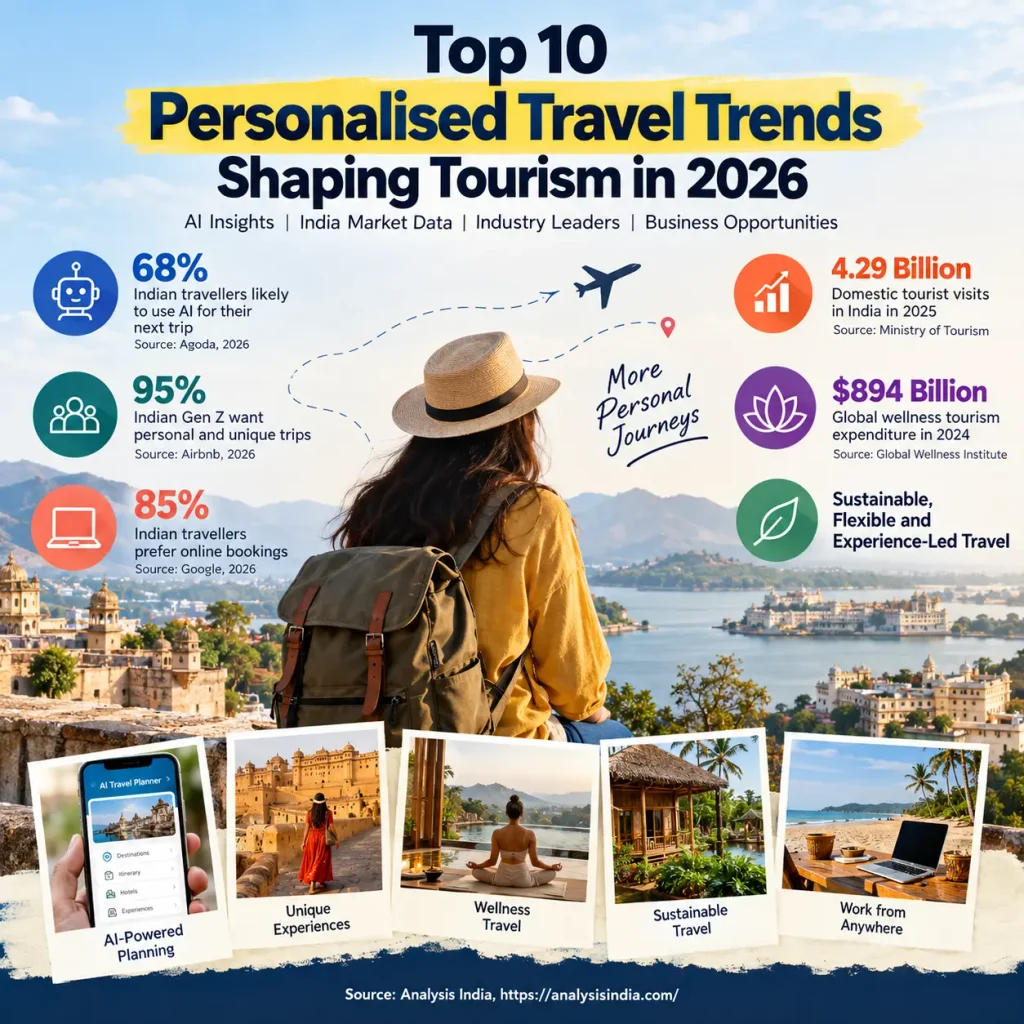
Analysis India: Personalised travel trends are changing how travellers discover destinations, compare accommodation, plan activities and spend money during their holidays. Travellers increasingly expect travel experiences that reflect their interests, budgets, preferred pace and personal values. Instead of selecting a standard holiday package, many people want greater control over where they stay, what they experience and how they spend their time. This shift is encouraging travel companies to rethink their products, digital services and marketing strategies.
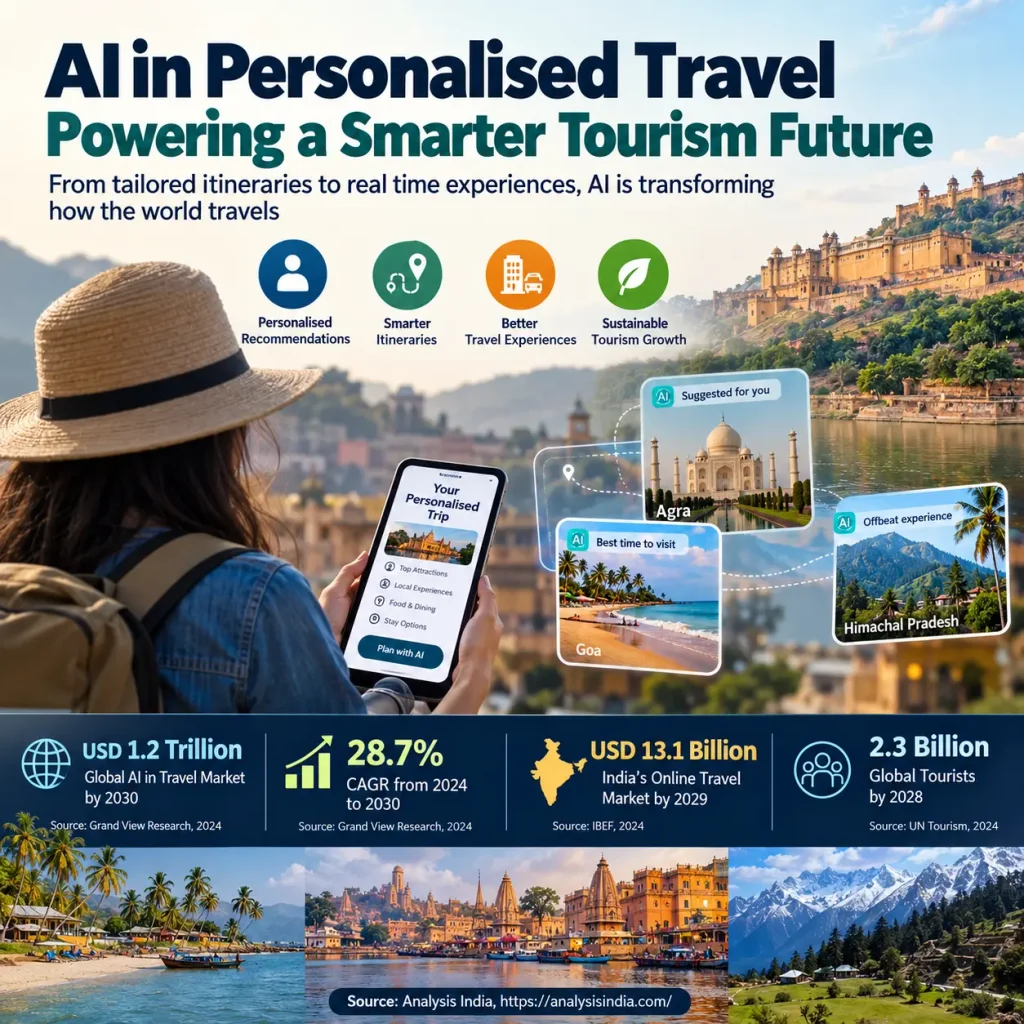
Artificial intelligence is accelerating this transformation. Travel platforms can use AI to recommend destinations, organise itineraries and suggest activities based on individual preferences. Hotels can improve guest services through better communication and more relevant offers, while local tour operators can develop experiences for specific customer groups. However, personalisation is not limited to technology. Short domestic breaks, wellness retreats, cultural journeys, family holidays and less crowded destinations also reflect changing expectations.
India is particularly important to this development because of its large domestic tourism market, expanding digital travel ecosystem and diverse destination offerings. According to the Ministry of Tourism’s India Tourism Statistics 2026 report, India recorded 428.55 crore domestic tourist visits in 2025, compared with 294.53 crore in 2024. The increase was 45.51 percent, although the 2025 figure includes visits associated with the Maha Kumbh Mela and should not be interpreted as an equivalent increase in unique travellers.
These developments create opportunities for hotels, online travel agencies, destination management organisations, airlines and experience providers. This article examines the ten most important personalised travel trends in 2026, supported by recent consumer research, official Indian tourism statistics and statements from industry leaders.
Personalised Travel Trends in 2026: Key Market Indicators
The growth of personalised travel is supported by two different developments. The first is the expansion of tourism activity across India. The second is the growing interest in travel experiences that match individual preferences. Government statistics measure tourism visits and arrivals, while company surveys help explain traveller attitudes and intentions. Both types of evidence are useful, but they should not be treated as interchangeable measures.
| Indicator | Latest reported figure | Source |
|---|---|---|
| Indian respondents likely to use AI for their next trip | 68% | Agoda, 2026 Travel Outlook |
| Indian respondents already using AI for travel planning | 33% | Agoda, 2026 Travel Outlook |
| Indian Gen Z respondents who want personal and unique trips | 95% | Airbnb and YouGov, 2026 |
| Indian Gen Z respondents who say travel reflects their identity | 87% | Airbnb and YouGov, 2026 |
| Domestic tourist visits in India during 2025 | 428.55 crore | Ministry of Tourism |
| Foreign tourist visits in India during 2025 | 2.53 crore | Ministry of Tourism |
| International tourist arrivals in India during 2025 | 202.2 lakh | Ministry of Tourism and UN Tourism data |
| India’s foreign exchange earnings from tourism in 2025 | US$31.7 billion | Ministry of Tourism and UN Tourism data |
Sources: Agoda’s 2026 Travel Outlook, Airbnb’s India Gen Z travel report and the Ministry of Tourism’s official data dashboard.
The figures demonstrate the scale of India’s tourism activity and the interest in customised travel experiences. However, the survey results represent particular respondent groups rather than the entire Indian population. Similarly, domestic tourist visits count visits, not unique individuals. These distinctions are important when evaluating the commercial potential of personalised travel.
1. AI-Powered Travel Planning Becomes More Personalised
Artificial intelligence is becoming a practical tool for travel planning. Travellers can describe their preferred destinations, budget, travel dates, accommodation requirements and interests to receive suggestions that reduce the time needed for research. AI tools can also organise multi-city itineraries, compare activities and suggest alternatives when prices increase or plans change.
The next stage of AI-powered travel planning involves connecting recommendations with practical information. A useful itinerary should consider travel time, transport connections, opening hours, weather conditions, accommodation availability and the traveller’s spending limit. For example, a family planning a four-day holiday in Kerala may prioritise child-friendly attractions and shorter journeys. A couple visiting the same destination may prefer local food experiences, cultural activities and quieter accommodation.
Agoda’s 2026 Travel Outlook provides a useful indicator of Indian consumer interest. The company reported that 68 percent of Indian respondents were likely to use AI for their next trip, compared with 33 percent who already used AI for travel planning. The survey also found interest in recommendations for local attractions and activities, personalised itineraries and destination suggestions.
“Indian travelers are showing a clear appetite for AI across every stage of trip planning, from discovering destinations to deciding what to eat and even budgeting.” — Gaurav Malik, Country Director, Indian Subcontinent and Indian Ocean Islands, Agoda.
Source: Agoda’s 2026 Travel Outlook report.
The statement reflects a wider opportunity for travel platforms. Customers increasingly expect recommendations to connect inspiration with practical decisions. However, AI-generated information can be incomplete or outdated. Travel companies should combine automated recommendations with accurate booking information, transparent prices and access to human assistance when required.
For travel businesses, the commercial opportunity lies in reducing the gap between destination discovery and completed bookings. AI can help travellers compare suitable options, but reliable information and dependable service remain essential for converting interest into revenue.
Explore how these technologies are transforming the tourism industry in our detailed analysis of AI in personalised travel and the future of smart tourism .
2. India’s Gen Z Travellers Prefer Unique and Flexible Experiences
One of the strongest personalised travel trends is the movement away from standardised holidays towards experiences that reflect individual interests. Younger travellers may prefer several short breaks rather than one long annual holiday. They may also choose destinations based on food, nature, cultural activities, accommodation or opportunities to spend time with friends.
Airbnb’s June 2026 report, Never the Same: The New Rules of Gen Z Travel in India, provides evidence of this shift. The study was conducted by YouGov on behalf of Airbnb among 2,012 respondents aged 18 to 29 across 11 Indian cities. According to the report, 95 percent said it mattered that their trip felt personal and unique rather than typical or pre-planned. Another 87 percent said the way they travel reflects who they are as a person.
The report also found that seven in ten respondents preferred three short trips over one long annual holiday. These results suggest that some younger travellers value flexibility and personal relevance more than following a conventional holiday schedule.
“Travel for Gen Z is as much an act of self-expression as it is exploration and that makes them the most intentional, most engaged travellers we’ve seen.” — Amanpreet Bajaj, Country Head, India and Southeast Asia, Airbnb.
For Indian travel businesses, the findings support the development of flexible packages rather than simply discounting existing products. Short weekend breaks, local food trails, heritage experiences, nature-based accommodation and small-group activities can be marketed to different customer segments. Businesses should also allow customers to adjust the duration and activities included in their trips.
Personalisation does not necessarily mean luxury. A budget-conscious traveller may value affordable accommodation near public transport, while another traveller may prioritise privacy, comfort or distinctive experiences. Understanding these differences can help businesses create more relevant products and improve customer satisfaction.
3. Hotel Personalisation Focuses on Guest Experience
Hotel personalisation is moving beyond welcome messages and loyalty discounts. Accommodation providers can use customer preferences to improve communication, recommend relevant services and make stays more convenient. Digital check-in, mobile concierge services, guest messaging and customer relationship management systems can support these improvements.
A hotel may use information voluntarily provided during booking to arrange an appropriate room, communicate arrival instructions or recommend nearby activities. Returning guests may appreciate having practical preferences remembered, provided that the information is handled responsibly and remains accurate.
Large hotel groups, including Marriott International and Hilton, have invested in digital guest services and loyalty platforms. Independent hotels can adopt similar principles through reservation systems, well-organised customer records and responsive guest support without necessarily investing in expensive technology.
The commercial objective is to make the stay more convenient while protecting customer trust. Collecting unnecessary personal information can create privacy concerns, and automated recommendations can become intrusive when they do not match the guest’s expectations. Hotels should focus on information that improves service quality and give customers appropriate control over their preferences.
In India, this approach is relevant to family holidays, weddings, pilgrimage travel, business stays and extended visits. Clear pre-arrival communication, suitable room options and useful local recommendations can differentiate a property even when competitors offer similar prices.
4. Experience-Led Travel Creates Opportunities for Local Businesses
Travellers increasingly plan holidays around activities rather than simply visiting a destination’s most famous attractions. Culinary walks, traditional craft workshops, village stays, guided heritage tours, wildlife experiences and cycling routes can make the same destination appealing to different visitor groups.
This shift creates opportunities for smaller businesses that may not have the resources to compete with major hotel chains or online travel agencies. Local guides, restaurants, artisans and community tourism organisations can develop specialised experiences for travellers with particular interests.
Jaipur provides a useful example. One visitor may want to explore historic architecture, another may prefer a local food walk, and a third may be interested in traditional textile printing. Offering these activities as clearly defined products helps visitors select experiences that match their interests, available time and budget.
India’s regional diversity supports this model. A travel company can combine temple architecture, local cuisine and heritage accommodation in Tamil Nadu, while a Rajasthan itinerary may focus on forts, crafts and desert experiences. Kerala operators can develop nature-based holidays, backwater experiences and wellness stays.
However, experience-led tourism depends on reliable delivery. Activities should have clear prices, realistic durations, accurate descriptions and appropriate safety arrangements. Travel businesses should also work with local communities so that tourism spending supports the people and places that make the experiences distinctive.
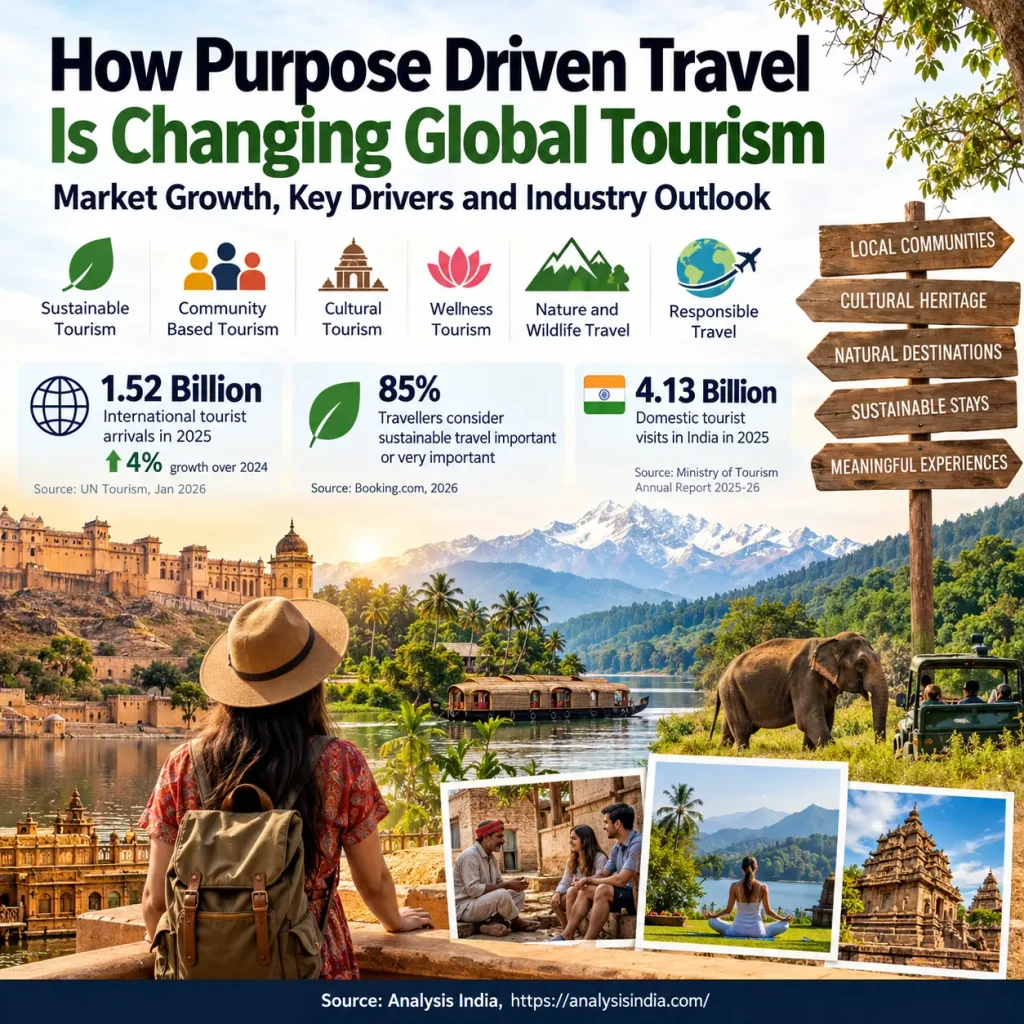
Modern travellers increasingly seek meaningful experiences that connect them with local cultures, communities and environmental initiatives. Our article on how purpose-driven travel is changing global tourism examines the key drivers behind this shift and its implications for tourism businesses.
5. Sustainable Travel Influences Destination Choices
Sustainable travel is becoming part of the decision-making process for some travellers. Customers may prefer public transport, locally owned accommodation, nature-based activities or destinations where visitor numbers are better managed. For others, sustainability is one consideration alongside price, convenience and comfort.
Personalised recommendations can make responsible travel options easier to discover. Booking platforms may identify rail alternatives where available, provide information about environmental certifications or recommend local experiences that reduce unnecessary travel between attractions. Such recommendations are useful only when the information is accurate and specific.
India has opportunities to connect responsible travel with local economic development. Community-led tourism, regional food experiences, heritage walks and nature-based stays can help distribute visitor spending beyond heavily visited attractions. They can also encourage visitors to explore lesser-known destinations when transport and visitor infrastructure are adequate.
Travel businesses should avoid making broad environmental claims without evidence. Useful information may include waste-management practices, energy efficiency, water conservation and local sourcing. Transparent descriptions help travellers make informed choices while allowing businesses to demonstrate genuine improvements.
Sustainability should therefore be treated as a practical part of the travel experience rather than merely a marketing message. Customers need clear information about what a business actually does and how those practices affect their stay.
6. Wellness Tourism Expands Across Indian Destinations
Wellness tourism combines travel with activities intended to support relaxation and wellbeing. It includes yoga retreats, meditation programmes, spa stays, nature-based holidays and traditional wellness experiences. These trips may prioritise a slower pace, suitable meals, quiet surroundings and time away from everyday routines.
India has a distinctive position in this segment because of its yoga, meditation and Ayurveda traditions. Rishikesh, Kerala, Mysuru and selected Himalayan destinations attract visitors with different interests. Their appeal depends on the quality of the experience, the credibility of providers, accessibility and suitable accommodation.
The Global Wellness Institute estimated global wellness tourism expenditure at approximately US$894 billion in 2024. This is a historical estimate rather than a measured figure for 2026, but it demonstrates the economic scale of the wider wellness sector.
For Indian operators, the opportunity is to develop clearly differentiated products. A short yoga retreat, a nature-focused break and a longer wellness stay should have distinct descriptions, inclusions and prices. Customers should understand what a programme offers without being promised unverified medical outcomes.
Personalised travel trends are particularly relevant to wellness tourism because travellers may differ in their preferred activities, schedules, dietary requirements and levels of comfort. A well-designed booking process can help customers select appropriate experiences while enabling providers to deliver more consistent service.
7. Smart Destinations Improve Visitor Convenience
Smart tourism combines digital information with the physical visitor experience. Mobile maps, digital tickets, multilingual guides, transport updates and crowd information can help travellers make better decisions while exploring a destination. When these tools are reliable, visitors can adjust their plans without repeatedly searching across different websites.
The value of smart destination services is especially clear in busy Indian cities and pilgrimage locations. Visitors may need information about transport, parking, walking routes, accessibility, local rules and the time required to reach an attraction. Digital guides can also help visitors find alternatives when a location becomes crowded or weather conditions change.
Destination management organisations can use aggregated visitor information to understand demand patterns and improve service planning. However, systems should clearly communicate when information is estimated or unavailable. Digital recommendations should complement official local information rather than replace essential safety instructions.
For tourism businesses, the opportunity is to connect useful destination information with relevant services. A visitor exploring a heritage district may appreciate nearby food experiences, local transport options or a guide available in a preferred language. Recommendations become more useful when they reflect the visitor’s location, interests and remaining time.
The success of smart tourism depends on practical value. Technology should reduce uncertainty and improve convenience rather than introduce additional complexity.
8. Flexible Accommodation Supports Remote Work and Longer Stays
Remote work allows some professionals to combine work with travel. These travellers may stay longer than conventional holidaymakers and place greater importance on reliable internet, quiet workspaces, laundry facilities, kitchens and convenient local transport.
India can serve different segments of this market, including domestic remote workers, freelancers, entrepreneurs and professionals taking extended trips. Hill destinations, coastal towns and quieter urban neighbourhoods may appeal to these customers when connectivity, accommodation quality and everyday services meet expectations.
Hotels, serviced apartments and homestays can develop work-friendly packages with transparent weekly or monthly rates. However, businesses should not assume that every remote worker wants the same environment. Some need a private desk and stable internet, while others value coworking facilities, community activities or access to outdoor recreation.
The strongest offers combine flexibility with practical details. Accommodation providers should explain internet availability, workspace arrangements, cancellation conditions and included services before booking. This helps travellers compare the total cost of an extended stay and reduces the risk of mismatched expectations.
For operators, flexible accommodation can also create opportunities to attract customers outside traditional holiday periods. The business case depends on local demand, operating costs, seasonality and the ability to deliver the services promised.
9. Personalised Safety and Accessibility Become More Important
Personalisation should make travel more manageable for people with different practical requirements. Families with young children, older travellers, visitors with disabilities and people travelling alone may need different information before making a booking.
Accessible room details, step-free routes, reliable transport guidance and clear cancellation policies can be as important as destination recommendations. International travellers may also need visa information, local regulations and guidance about suitable travel insurance.
Indian tourism providers can improve inclusion by accurately describing their facilities. Stating whether a hotel has a lift, an accessible bathroom or a step-free entrance gives customers useful information. Vague descriptions can create problems when travellers discover that a property does not meet their needs.
Travel companies should also provide a clear way to contact a person when a situation is complex or urgent. Automated recommendations cannot replace appropriate assistance, particularly when customers face unexpected disruptions or accessibility challenges.
The commercial benefit is a more dependable customer experience. Businesses that communicate clearly about facilities, transport, safety and limitations can help travellers make informed decisions and reduce avoidable complaints.
10. Travel Marketing Becomes More Relevant Through Customer Segmentation
Travel marketing is moving towards messages designed for different traveller needs. A family searching for school-holiday accommodation may respond to different information from a couple planning a cultural weekend or a business traveller comparing airport hotels. Relevant communication helps customers evaluate options without being overwhelmed by unrelated promotions.
Google’s India travel research has highlighted the role of digital discovery, online video and travel-related search behaviour. Travel businesses can use these channels to publish destination guides, itinerary examples, useful comparisons and videos that answer specific customer questions.
For example, a pilgrimage guide should prioritise transport, accommodation locations, relevant cultural information and practical planning. An adventure holiday guide may focus on activity requirements, suitable seasons, safety arrangements and travel duration. Using the same promotional message for both groups is unlikely to address their different needs effectively.
Customer segmentation can also help businesses improve existing products. Booking data may reveal which room types, activities or trip durations appeal to particular customer groups. Businesses can use these insights to test packages and improve their offers rather than relying only on broad promotional campaigns.
Personalised marketing must also respect privacy and customer consent. Companies should avoid misleading targeting and give travellers meaningful control over communications. The objective is to make discovery easier and booking decisions more informed, not simply to increase the number of messages sent.
What These Personalised Travel Trends Mean for Indian Tourism Businesses
The commercial opportunity is not identical for every business. Hotels, travel agencies, tour operators, online booking platforms and destination managers need different approaches.
| Business segment | Opportunity | Practical priority |
|---|---|---|
| Hotels and resorts | Improve guest satisfaction and repeat bookings | Record preferences with consent and deliver consistent service |
| Travel agencies | Create relevant itineraries for different customer groups | Offer flexible packages and transparent pricing |
| Online travel platforms | Improve discovery and booking conversion | Use AI responsibly and keep availability accurate |
| Local tour operators | Sell distinctive cultural and nature-based experiences | Build partnerships with local communities |
| Destination managers | Improve visitor distribution and information access | Develop reliable digital and physical infrastructure |
| Wellness providers | Create specialised retreat packages | Communicate services, qualifications and limitations clearly |
Businesses should begin by identifying their most valuable customer groups. They can then test a small number of changes, such as flexible itineraries, better accommodation descriptions or more useful pre-arrival communication. Results should be measured against booking conversion, customer feedback and repeat business.
The strongest strategy is to combine technology with genuine service quality. AI recommendations cannot compensate for poor transport, inaccurate listings, weak customer support or an unsatisfactory on-site experience.
India Tourism Statistics 2026: What the Latest Official Data Reveals
India’s tourism market provides a substantial base for companies developing tailored travel products. The Ministry of Tourism’s India Tourism Statistics 2026 report presents data for 2025 across domestic tourism, foreign tourist visits, international arrivals and tourism receipts. These indicators show the scale of the market while also revealing differences between domestic activity and international travel.
India’s Domestic and Foreign Tourist Visits
The Ministry of Tourism recorded 428.55 crore domestic tourist visits in 2025, compared with 294.53 crore in 2024. The increase was 45.51 percent. Foreign tourist visits increased from 2.08 crore to approximately 2.53 crore over the same period, a rise of 21.63 percent.
| Tourism indicator | 2024 | 2025 | Annual change |
|---|---|---|---|
| Domestic tourist visits | 294.53 crore | 428.55 crore | +45.51% |
| Foreign tourist visits | 2.08 crore | 2.53 crore | +21.63% |
| Foreign tourist arrivals | 99.5 lakh | 91.5 lakh | -8.0% |
| Indian national arrivals | 106.2 lakh | 110.7 lakh | +4.2% |
| International tourist arrivals | 205.7 lakh | 202.2 lakh | -1.7% |
| Foreign exchange earnings from tourism | US$35.0 billion | US$31.7 billion | -9.43% |
Source: Ministry of Tourism, Government of India, India Tourism Statistics 2026. See the official India Tourism Data Dashboard.
These measures should not be combined as though they represent the same population. Domestic and foreign tourist visits are compiled using State and Union Territory tourism statistics. Foreign tourist arrivals count foreign visitors entering India, while international tourist arrivals include the relevant Indian national arrival measure under the official statistical definition.
The domestic tourist visit total for 2025 includes visits associated with the Maha Kumbh Mela. Consequently, the annual growth rate should not be interpreted as equivalent growth in unique individuals or as direct evidence that demand for personalised travel increased by the same percentage.
The data also shows why tourism businesses need to consider both visitor volumes and commercial outcomes. Foreign exchange earnings from tourism declined from US$35.0 billion in 2024 to US$31.7 billion in 2025. Businesses should therefore monitor spending, average booking value, length of stay and customer activity alongside visitor numbers.
Top Five Indian States for Domestic Tourist Visits
The State-level figures demonstrate that tourism activity is concentrated in a limited number of major destinations. Uttar Pradesh led the country in domestic tourist visits during 2025, followed by Tamil Nadu, Andhra Pradesh, Karnataka and West Bengal.
| State | Domestic tourist visits in 2025 | Share of national total |
|---|---|---|
| Uttar Pradesh | 155.74 crore | 36.34% |
| Tamil Nadu | 36.29 crore | 8.47% |
| Andhra Pradesh | 35.39 crore | 8.26% |
| Karnataka | 32.05 crore | 7.48% |
| West Bengal | 29.43 crore | 6.87% |
Source: Ministry of Tourism, India Tourism Statistics 2026, Table 4.1.2, page 83. Official data dashboard.
Together, these five States accounted for approximately 67.4 percent of domestic tourist visits in 2025. The report notes that the Uttar Pradesh figure includes visits associated with the Maha Kumbh Mela. This context is essential when interpreting the unusually large annual total.
These differences create opportunities for regional personalisation. Uttar Pradesh offers pilgrimage and heritage experiences, while Tamil Nadu combines temple architecture, culture and regional cuisine. Karnataka can support city breaks and nature-based journeys, and West Bengal offers cultural, heritage and food experiences. Travel businesses can use these destination characteristics to build packages for specific interests rather than promoting a uniform itinerary to every visitor.
Foreign Tourist Visits Across Indian States
Foreign tourist visits were concentrated in a different combination of States and destinations during 2025. Uttar Pradesh and Maharashtra each recorded approximately 45 lakh foreign tourist visits, followed by West Bengal, Delhi and Gujarat.
| State or territory | Foreign tourist visits in 2025 | Share of national total |
|---|---|---|
| Uttar Pradesh | 45.08 lakh | 17.80% |
| Maharashtra | 45.07 lakh | 17.79% |
| West Bengal | 39.96 lakh | 15.78% |
| Delhi | 24.32 lakh | 9.60% |
| Gujarat | 23.40 lakh | 9.24% |
Source: Ministry of Tourism, India Tourism Statistics 2026, Table 4.1.2. Official data dashboard.
These five destinations accounted for approximately 70.3 percent of foreign tourist visits. Their importance creates opportunities for hotels, guides, experience providers and destination managers to develop services for visitors with different language requirements, cultural interests and lengths of stay.
For example, international visitors to Delhi and Uttar Pradesh may combine heritage attractions with religious destinations, while travellers visiting Maharashtra may be interested in urban experiences, cultural attractions and business travel. The most useful recommendations will depend on the visitor’s itinerary, budget and available time.
Understanding popular destinations helps travellers compare travel options and enables tourism businesses to identify opportunities for tailored packages and local experiences. Discover the most visited tourist places in India to explore destinations that can inspire personalised itineraries for different types of travellers.
Tourism’s Economic Contribution in India
Tourism is important not only because of visitor volumes but also because of its contribution to economic activity and employment. The Ministry of Tourism’s statistical publication reports that tourism accounted for 5.22 percent of India’s GDP in 2023–24. It also estimates that the sector generated approximately 84.63 million jobs, including direct and indirect employment, during that period.
These are historical economic estimates, not measurements of tourism performance in 2026. Nevertheless, they demonstrate the scale of the sector and the potential importance of service improvements across hotels, transport, accommodation and local experiences.
Personalised travel can support business performance when it helps visitors discover relevant activities, select suitable accommodation and make better use of their time. Travel companies should evaluate these services through booking conversion, repeat bookings, average spending per visitor, customer satisfaction and cancellation rates. This makes it possible to distinguish measurable business benefits from technology investment that does not improve the customer experience.
Source: Ministry of Tourism, Government of India, India Tourism Statistics 2026.
Business Implications of Personalised Travel Trends
Personalisation creates opportunities, but it also introduces operational responsibilities. AI systems need accurate information, customer data requires protection, and travel recommendations must match what businesses can actually deliver. Companies should measure whether their investments improve performance rather than assuming that introducing new technology will automatically increase bookings.
Travel platforms should prioritise accurate AI-assisted discovery, practical itinerary building and transparent booking comparisons. Hotels can improve guest communication and provide clearly described services for families, couples, wellness visitors and extended-stay customers. Local operators can package regional experiences so that travellers can understand the duration, cost and inclusions before booking.
Smaller businesses do not necessarily need expensive AI systems at the beginning. A well-organised website, current destination information, responsive customer support and transparent package details can provide a strong foundation for more advanced personalisation. Businesses can introduce additional technology when it addresses a demonstrated customer or operational need.
Tourism boards also have a role in improving the quality of destination information. Reliable details about attractions, transport, visitor rules and seasonal conditions can help travellers plan more effectively. When this information is accessible and accurate, private businesses can build better recommendations around it.
The central commercial opportunity is to match the right experience with the right traveller. Companies that understand customer requirements, communicate honestly and deliver the promised experience can build stronger relationships without relying entirely on discounts or mass-market promotion.
Conclusion: The Future of Personalised Travel in 2026
Personalised travel trends are reshaping tourism through AI-assisted planning, experience-led holidays, customised hotel services, wellness travel, flexible accommodation and more relevant digital marketing. Recent research from Agoda and Airbnb indicates growing interest in AI-supported planning and unique experiences among surveyed Indian travellers, particularly younger consumers.
Official tourism statistics also confirm the scale of India’s domestic tourism market. The country recorded 428.55 crore domestic tourist visits in 2025, although the contribution of the Maha Kumbh Mela means that this increase should be interpreted carefully. State-level differences demonstrate that tourism products need to reflect the characteristics of each destination and the requirements of different visitors.
However, personalisation should not be confused with technology adoption alone. A useful recommendation must be accurate, affordable and relevant to the traveller’s actual needs. Businesses need to combine digital tools with dependable service, transparent communication, responsible data practices and a strong understanding of local destinations.
For India’s tourism industry, the most promising approach is to build flexible products for clearly defined customer groups. Travel companies that help visitors discover suitable experiences, make informed decisions and enjoy dependable journeys will be better positioned to compete as customer expectations continue to evolve.
Frequently Asked Questions
What are the main personalised travel trends in 2026?
The main personalised travel trends include AI-assisted itinerary planning, unique local experiences, customised hotel services, wellness holidays, sustainable travel choices, flexible accommodation and more relevant digital marketing. Businesses are increasingly combining technology with practical services that reflect travellers’ budgets, interests and accessibility requirements.
How is AI changing travel planning in India?
AI helps travellers discover destinations, organise itineraries, compare activities and receive recommendations based on their interests. Agoda’s 2026 Travel Outlook reported that 68 percent of Indian respondents were likely to use AI for their next trip, while 33 percent already used AI for travel planning. These figures reflect the survey respondents, not the entire Indian population.
Why is personalisation important for hotels and travel companies?
Personalisation can make booking and travel more convenient by helping customers find suitable accommodation, activities and services. It can also help companies differentiate their products and communicate more effectively with relevant customer groups. Businesses should measure its value through booking conversion, repeat bookings and customer satisfaction.
What does India’s latest tourism data indicate?
The Ministry of Tourism recorded 428.55 crore domestic tourist visits in India during 2025, an increase of 45.51 percent over 2024. The figure includes visits associated with the Maha Kumbh Mela and counts visits rather than unique travellers. It indicates substantial tourism activity but does not independently measure the size of the personalised travel market.
Which Indian States offer opportunities for personalised travel?
Uttar Pradesh, Tamil Nadu, Andhra Pradesh, Karnataka and West Bengal were the leading States for domestic tourist visits in 2025. Their different cultural, religious, heritage and nature-based attractions create opportunities for tailored itineraries, local experiences and accommodation packages. The most appropriate product depends on the traveller’s interests and budget.
How can small travel businesses adopt personalisation?
Small travel businesses can start by improving destination information, creating packages for specific customer groups, collecting only necessary booking preferences and providing relevant pre-arrival guidance. They can later introduce AI tools or customer relationship management systems when these investments address a demonstrated business need.
What is the difference between personalised travel and customised travel packages?
Personalised travel is a broader approach in which recommendations and services reflect a traveller’s needs. A customised package is a specific product adjusted to the customer’s requirements. Personalisation can take place before booking, during the journey and after the trip through communication, service and relevant recommendations.
Is wellness tourism an important opportunity for India?
Yes. India has established wellness-related destinations and experiences involving yoga, meditation, Ayurveda and nature-based retreats. The Global Wellness Institute estimated global wellness tourism expenditure at approximately US$894 billion in 2024. Indian businesses can serve this market through clearly described programmes, credible providers and suitable accommodation.
How can travel businesses measure the impact of personalisation?
Businesses can monitor booking conversion, repeat bookings, average booking value, cancellation rates, customer satisfaction and the uptake of recommended activities. Comparing results across customer segments and booking channels helps determine whether personalised services create measurable value.