Overview
The comparison between fixed DR vs mobile DR systems highlights how modern digital radiography systems have evolved to meet diverse clinical and operational needs. Both fixed DR systems and mobile DR systems play essential roles within the global medical device market, supporting diagnostic imaging across hospitals, diagnostic centers, and emergency care environments.
Fixed DR systems are permanently installed digital radiography solutions designed for centralized radiology departments and high patient throughput. Mobile DR systems, by contrast, are portable digital radiography systems developed to deliver imaging at the point of care, particularly where patient movement is limited. Understanding the differences between fixed DR and mobile DR systems is critical for healthcare providers planning radiology infrastructure, workflow optimization, and long-term diagnostic equipment investment.
Fixed DR vs Mobile DR Systems: Quick Comparison
Fixed DR systems and mobile DR systems differ primarily in installation, workflow design, and clinical deployment. Fixed DR systems are permanently installed in dedicated radiography rooms and are optimized for continuous, high-throughput imaging with deep integration into hospital PACS and RIS platforms. These systems support standardized positioning, consistent image acquisition, and centralized radiology operations.
Mobile DR systems, on the other hand, are portable imaging units designed for bedside, emergency, and in-ward use, allowing diagnostic imaging to be performed wherever the patient is located. While fixed DR systems emphasize stability, volume, and long-term efficiency, mobile DR systems prioritize flexibility, accessibility, and rapid deployment across multiple care settings. Most hospitals rely on a combination of both system types to balance centralized imaging efficiency with decentralized diagnostic access. Digital radiography systems, including fixed and mobile DR platforms, are regulated as medical imaging equipment under frameworks issued by the U.S. Food and Drug Administration.
| Parameter | Fixed DR Systems | Mobile DR Systems |
|---|---|---|
| Installation | Permanent radiography rooms | Portable bedside or field use |
| Mobility | Stationary | Fully mobile |
| Typical users | Hospitals, imaging centers | ICUs, emergency units, wards |
| Throughput | High-volume imaging | On-demand imaging |
| Workflow | Centralized radiology | Decentralized point-of-care |
| Integration | Deep PACS/RIS integration | Increasing PACS connectivity |
| Space requirement | Dedicated room | Minimal space |
| Capital planning | Long-term infrastructure | Flexible deployment |
Fixed DR vs Mobile DR Systems in Hospital Workflow Planning
When hospitals evaluate fixed DR vs mobile DR systems, workflow planning becomes a primary decision factor. Fixed DR systems are typically integrated into centralized radiology departments where imaging requests are routed through scheduled workflows. These fixed DR imaging systems support standardized protocols, predictable turnaround times, and high daily examination volumes.
Mobile DR systems, by contrast, are incorporated into decentralized clinical workflows. In the comparison of fixed DR vs mobile DR systems, mobile DR solutions enable imaging at the bedside, in emergency rooms, and across inpatient wards without relocating patients. Many hospitals design hybrid workflows where fixed DR systems handle routine imaging while mobile DR systems support urgent and mobility-restricted cases.
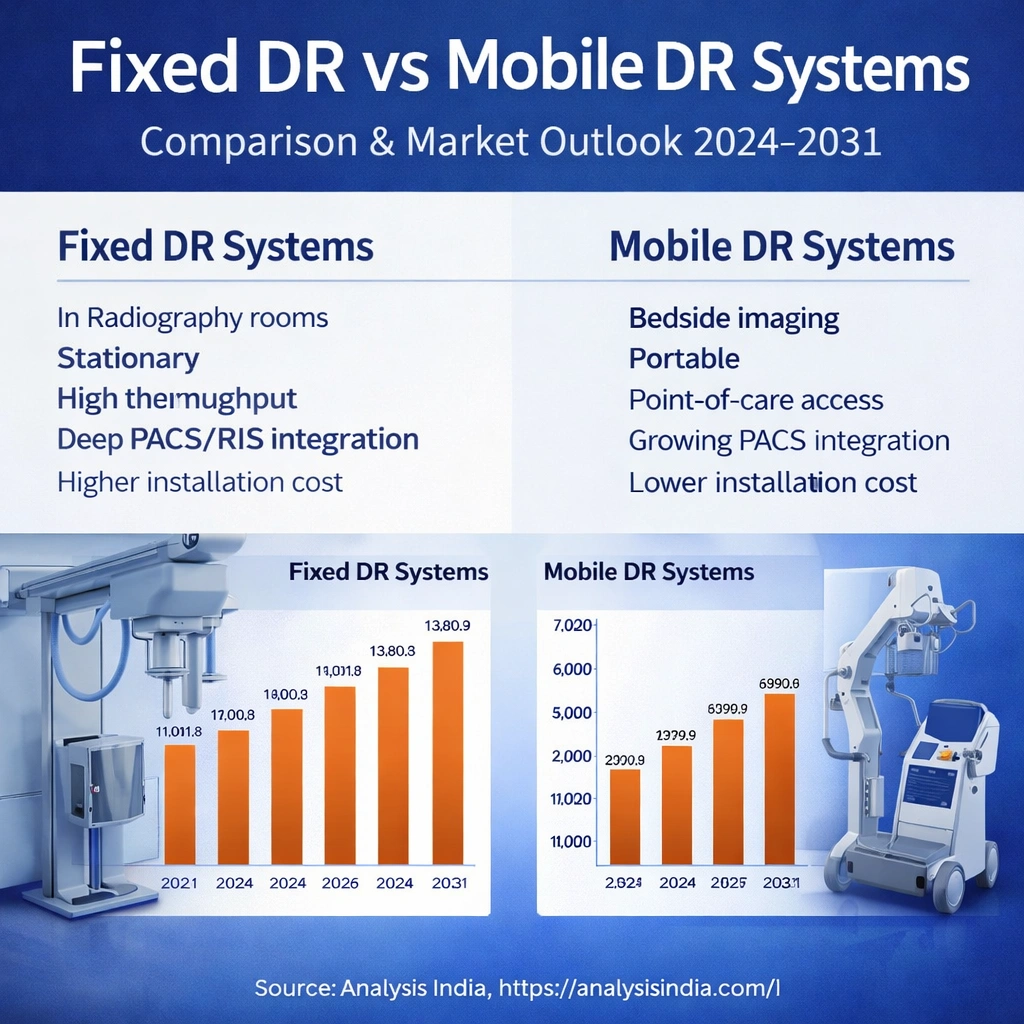
Market Size & Forecast (Million US$)
The market size comparison between fixed and mobile DR systems reflects two distinct growth patterns within the global X-ray system market.
Fixed DR System Market Outlook
The global fixed DR system market was valued at USD 11,001.8 million in 2024 and is projected to reach USD 13,800.3 million by 2031. Market expansion remains steady, supported by hospital infrastructure upgrades, replacement of conventional radiography units, and continued investment in centralized diagnostic imaging departments. Fixed DR systems retain the largest share of total market value due to their role as core radiology infrastructure.
Mobile DR System Market Outlook
The global mobile DR system market was valued at USD 2,390.9 million in 2024 and is expected to reach USD 6,597.6 million by 2031. Although smaller in absolute size, the mobile DR segment demonstrates faster expansion as healthcare providers increasingly adopt bedside imaging solutions to support emergency care, intensive care units, and surgical environments.
Fixed DR vs Mobile DR Systems: Market Growth Dynamics
The market growth dynamics of fixed DR vs mobile DR systems reflect differing adoption drivers. Fixed DR system demand is largely influenced by hospital infrastructure investment, equipment replacement cycles, and expansion of centralized radiology departments. As a result, fixed DR systems show stable, predictable market expansion over time.
Mobile DR system growth is driven by rising inpatient care volumes, emergency imaging demand, and increasing emphasis on point-of-care diagnostics. In the fixed DR vs mobile DR systems comparison, mobile DR solutions benefit from flexibility and expanding clinical applications, contributing to faster segment-level growth even from a smaller market base.
When Fixed DR Systems Are Preferred
Fixed DR systems are typically selected for environments where imaging volume, consistency, and long-term operational efficiency are priorities. Hospitals with dedicated radiology departments rely on fixed DR installations to support routine diagnostic workflows, including chest imaging, orthopedic studies, and trauma assessments.
Key advantages of fixed DR systems include predictable throughput, standardized positioning, and seamless integration with hospital imaging infrastructure. These systems are optimized for continuous use and remain essential for centralized diagnostic imaging services.
However, fixed DR systems require dedicated space, higher initial installation planning, and are less adaptable to changing patient locations within a facility.
When Mobile DR Systems Are Preferred
Mobile DR systems are designed for flexibility and accessibility. They are widely used in intensive care units, emergency departments, operating rooms, and inpatient wards where patient transport is impractical or undesirable.
Mobile DR systems allow imaging to be performed at the bedside, improving clinical workflow efficiency and supporting timely diagnosis. Advances in detector technology and wireless connectivity have enhanced the diagnostic capability of mobile systems, making them suitable for a broader range of clinical applications.
While mobile DR systems offer operational flexibility, they generally support lower continuous throughput compared to fixed installations and require careful battery and equipment management.
Fixed DR vs Mobile DR Systems: Use-Case Driven Selection
The decision between fixed DR vs mobile DR systems is often guided by use-case requirements rather than technology preference alone. Fixed DR systems are selected when hospitals prioritize imaging consistency, throughput, and long-term operational efficiency within radiology departments.
Mobile DR systems are chosen when healthcare providers require rapid diagnostic access in intensive care units, emergency departments, and surgical environments. In many institutions, the fixed DR vs mobile DR systems strategy involves deploying fixed installations for core imaging needs while supplementing them with mobile units to address dynamic patient care scenarios.
Technology and Workflow Differences
Technological development has narrowed the performance gap between fixed and mobile DR systems. Both system types increasingly use flat-panel detectors, advanced image processing software, and digital integration platforms.
Fixed DR systems emphasize automated positioning, ceiling-mounted configurations, and optimized room ergonomics. Mobile DR systems focus on portability, wireless image transfer, and compact design. Integration with PACS and hospital IT systems is now common across both segments, although fixed systems typically offer more deeply embedded workflow automation.
Integration of Fixed DR and Mobile DR Systems in Digital Radiography Networks
Modern hospitals increasingly integrate fixed DR and mobile DR systems within unified digital radiography networks. Both system types connect to PACS, RIS, and electronic medical records, enabling image sharing and centralized reporting regardless of acquisition location.
In the context of fixed DR vs mobile DR systems, integration reduces workflow fragmentation and supports consistent diagnostic standards. Fixed DR systems often anchor these networks, while mobile DR systems extend imaging capabilities to point-of-care settings without compromising data continuity.
Cost and Investment Considerations
From an investment perspective, fixed DR systems involve higher upfront infrastructure costs but provide long-term efficiency for high-volume imaging environments. Mobile DR systems generally require lower initial deployment costs and offer scalable imaging capacity without major facility modification.
Healthcare providers often adopt a hybrid approach, combining fixed DR systems for centralized imaging with mobile DR systems to support inpatient and emergency diagnostics.
Clinical Applications
Fixed DR systems are commonly used for scheduled outpatient imaging, trauma diagnostics, orthopedic imaging, and general radiography. Mobile DR systems are primarily used for bedside chest imaging, emergency diagnostics, post-operative assessments, and imaging in restricted-care environments.
Both system types are essential to modern radiology services, addressing different clinical priorities within healthcare facilities.
Regional Adoption Trends
North America and Europe maintain strong adoption of both fixed and mobile DR systems, supported by established healthcare infrastructure and routine equipment upgrades. Asia Pacific shows increasing adoption driven by hospital expansion, urbanization, and rising diagnostic demand.
Emerging markets often deploy mobile DR systems to improve imaging access while investing selectively in fixed DR installations at tertiary care centers.
Competitive and Procurement Considerations
When comparing fixed and mobile DR systems, procurement teams evaluate detector performance, service support, system reliability, and integration capabilities. Long-term service agreements, training support, and upgrade pathways play a key role in purchasing decisions.
Manufacturers continue to refine both system categories to address evolving clinical workflows and operational requirements.
Strategic Role of Fixed DR vs Mobile DR Systems in Diagnostic Imaging Expansion
As healthcare systems expand diagnostic imaging capacity, the strategic role of fixed DR vs mobile DR systems becomes more prominent. Fixed DR systems provide the structural foundation for radiology departments, supporting long-term imaging services and predictable throughput.
Mobile DR systems complement this foundation by expanding diagnostic reach across wards and emergency environments. In combination, fixed DR and mobile DR systems enable healthcare providers to scale imaging services efficiently while adapting to changing patient care demands.
Conclusion
The comparison between fixed DR and mobile DR systems demonstrates how both technologies address different diagnostic imaging requirements. Fixed DR systems remain the backbone of centralized radiology departments, while mobile DR systems expand imaging access across patient care environments. As healthcare delivery models continue to evolve, the combined use of fixed and mobile DR systems will remain central to modern diagnostic imaging strategies.
Frequently Asked Questions
What is the main difference between fixed and mobile DR systems?
Fixed DR systems are permanently installed radiography solutions used in centralized imaging departments, while mobile DR systems are portable units designed for bedside and emergency imaging.
Do hospitals need both fixed and mobile DR systems?
Most hospitals deploy both system types to balance high-volume centralized imaging with flexible point-of-care diagnostics.
Are mobile DR systems replacing fixed DR systems?
Mobile DR systems complement rather than replace fixed DR systems. Fixed installations remain essential for routine, high-throughput radiology services.