📅 Published: February 8, 2026
🔄 Last Updated: July 23, 2026
Quick Summary
The Global X-ray System Market plays a vital role in modern healthcare by supporting fast and accurate diagnosis across hospitals, diagnostic centers, ambulatory care facilities, and specialty clinics. X-ray systems remain one of the most widely used imaging technologies because they offer reliable results, quick examination times, and cost-effective diagnostic solutions. Growing demand for early disease detection, rising healthcare investments, and the shift toward digital radiography continue to support market growth. At the same time, artificial intelligence, portable X-ray systems, advanced flat-panel detectors, and cloud-based imaging platforms are improving clinical efficiency and patient care. North America continues to lead the global market due to its advanced healthcare infrastructure, while Asia-Pacific is expected to record the fastest growth as countries expand healthcare services and invest in modern diagnostic imaging technologies.
Key Highlights
Technology innovation, regulatory compliance, and long-term service support continue to influence purchasing decisions and shape competition across the Global X-ray System Market.
X-ray systems remain one of the most widely used diagnostic imaging technologies for detecting fractures, respiratory diseases, cardiovascular conditions, cancer, and other medical disorders.
Digital radiography continues to replace conventional X-ray systems, improving image quality, reducing examination time, and enhancing workflow efficiency across healthcare facilities.
Artificial intelligence is reshaping diagnostic imaging by supporting image interpretation, workflow automation, radiation dose optimization, and faster clinical decision-making.
North America accounts for the largest share of the Global X-ray System Market, supported by advanced healthcare infrastructure, high imaging procedure volumes, and continuous technology upgrades.
Asia-Pacific is expected to record the fastest market growth due to expanding healthcare infrastructure, increasing healthcare expenditure, and rising demand for modern diagnostic imaging systems.
Portable and mobile X-ray systems are gaining strong adoption in emergency departments, intensive care units, ambulatory care, and home healthcare because of their flexibility and ease of use.
Healthcare providers are increasing investments in digital imaging infrastructure, including PACS integration, cloud-based imaging platforms, and connected radiology workflows to improve operational efficiency.
Executive Summary
The Global X-ray System Market continues to play a critical role in modern healthcare by enabling fast, accurate, and cost-effective medical imaging across a wide range of clinical applications. X-ray systems remain the first-line diagnostic tool for evaluating fractures, chest diseases, cardiovascular conditions, dental disorders, and several chronic health conditions. Their broad clinical use, combined with continuous technological improvements, has strengthened their position as an essential component of healthcare systems worldwide.
The market is undergoing a significant transformation as healthcare providers replace conventional analog equipment with advanced digital radiography systems. Modern X-ray technologies deliver higher image quality, faster examination times, lower radiation exposure, and improved workflow efficiency. At the same time, artificial intelligence is enhancing image interpretation, automating routine tasks, and supporting faster clinical decision-making. These innovations are helping hospitals and diagnostic centers improve patient care while optimizing operational performance.
Healthcare infrastructure expansion, rising diagnostic imaging demand, and increasing investments in medical technology continue to support long-term market growth. Developed countries are primarily investing in equipment replacement and digital upgrades, while emerging economies are expanding hospital capacity and improving access to diagnostic imaging services. This combination of replacement demand and new installations is creating sustainable growth opportunities across both mature and developing healthcare markets.
Regional market dynamics continue to evolve. North America remains the largest market due to its advanced healthcare infrastructure, high imaging procedure volumes, and strong adoption of innovative technologies. Europe maintains a stable market supported by well-established healthcare systems and continuous modernization of radiology departments. Meanwhile, Asia-Pacific is expected to record the fastest growth as countries increase healthcare spending, expand hospital infrastructure, and accelerate the adoption of digital imaging technologies.
Looking ahead, the Global X-ray System Market is expected to benefit from continued advances in artificial intelligence, cloud-connected imaging platforms, portable diagnostic solutions, and integrated healthcare information systems. As healthcare providers focus on improving diagnostic accuracy, operational efficiency, and patient outcomes, X-ray technology will remain one of the most important pillars of diagnostic imaging and the broader global medical device industry.
Global X-ray System Market Statistics (Industry Snapshot)
| Market Statistics | 2026 Industry Snapshot |
|---|---|
| Industry | Global Diagnostic Imaging Industry |
| Market Scope | Fixed Digital Radiography (DR), Mobile DR, Mobile C-arm, Fixed C-arm, DRF Systems, Mammography Systems |
| Market Size (2024) | USD 18.68 Billion |
| Projected Market Size (2032) | USD 30.84 Billion |
| Forecast Period | 2024–2032 |
| Market Growth | Steady long-term expansion driven by digital transformation, healthcare infrastructure development, and increasing diagnostic imaging demand |
| Largest Regional Market | North America |
| Fastest-Growing Region | Asia-Pacific |
| Largest End User | Hospitals and Diagnostic Imaging Centers |
| Leading Technologies | Digital Radiography (DR), AI-assisted Imaging, Flat-Panel Detectors, Portable X-ray Systems, Cloud-connected Imaging |
| Major Clinical Applications | Orthopedics, Chest Imaging, Oncology, Emergency Medicine, Dental Imaging, Cardiovascular Imaging |
| Key Growth Drivers | Aging population, chronic disease burden, early disease detection, digital healthcare adoption, healthcare infrastructure expansion |
| Emerging Technologies | Artificial Intelligence (AI), Wireless Flat-Panel Detectors, Mobile Imaging, Cloud PACS, Dose Optimization Software |
| Leading Companies | GE HealthCare, Siemens Healthineers, Canon Medical Systems, Philips Healthcare, Fujifilm Healthcare, Shimadzu Corporation |
| Future Outlook | Strong growth supported by AI innovation, digital imaging modernization, portable diagnostic solutions, and expanding healthcare investment worldwide |
Global X-ray System Market Snapshot
| Market Snapshot | Key Insight |
|---|---|
| Industry | Global Diagnostic Imaging Industry |
| Market Scope | X-ray systems used for diagnostic imaging across hospitals, diagnostic centers, ambulatory surgical centers, specialty clinics, and mobile healthcare services. |
| Largest Regional Market | North America, supported by advanced healthcare infrastructure, high imaging procedure volumes, and continuous replacement of legacy imaging systems. |
| Fastest-Growing Region | Asia-Pacific, driven by expanding healthcare infrastructure, rising healthcare expenditure, and increasing adoption of digital radiography systems. |
| Major End Users | Hospitals, diagnostic imaging centers, ambulatory surgical centers, specialty clinics, dental clinics, and mobile healthcare providers. |
| Leading Product Categories | Fixed Digital Radiography (DR), Mobile Digital Radiography, Fixed C-arm, Mobile C-arm, Mammography Systems, DRF Systems. |
| Primary Growth Drivers | Increasing demand for early disease diagnosis, aging population, rising chronic disease burden, digital transformation of healthcare, healthcare infrastructure expansion, and replacement of analog imaging systems. |
| Emerging Technologies | Artificial Intelligence (AI), wireless flat-panel detectors, cloud-connected imaging, portable X-ray systems, advanced image processing software, and workflow automation. |
| Key Challenges | High capital investment, regulatory compliance, radiation safety requirements, shortage of skilled radiology professionals, cybersecurity risks, and rising maintenance costs. |
| Competitive Landscape | Competition is driven by technological innovation, AI integration, detector performance, software capabilities, after-sales service, system reliability, and long-term maintenance agreements. |
| Future Outlook | The market is expected to witness sustainable long-term growth as healthcare providers continue investing in AI-enabled imaging, digital radiography, portable diagnostic solutions, and integrated healthcare information systems to improve diagnostic accuracy and operational efficiency. |
💡 AnalysisIndia Insight
The Global X-ray System Market is shifting beyond traditional imaging equipment toward intelligent diagnostic ecosystems that combine advanced imaging hardware, artificial intelligence, cloud connectivity, and workflow automation. As healthcare providers increasingly prioritize diagnostic accuracy, operational efficiency, and integrated digital healthcare, manufacturers capable of delivering comprehensive imaging solutions rather than standalone X-ray systems are expected to strengthen their long-term competitive position. This transformation is redefining how X-ray technologies are procured, integrated, and utilized across modern healthcare systems.
Global X-ray System Market Latest Developments (Updated: July 2026)
📈 Market Trends
Healthcare providers across developed and emerging markets continue to invest in digital imaging infrastructure to improve diagnostic accuracy and operational efficiency. Replacement of aging analog systems with digital radiography platforms remains a major growth driver, while demand for portable X-ray systems is increasing in emergency care, intensive care units, ambulatory facilities, and community healthcare settings. Growing emphasis on preventive healthcare and early disease diagnosis is also contributing to higher imaging procedure volumes across hospitals and diagnostic centers.
💻 Technology Developments
Artificial intelligence is becoming an integral part of modern X-ray imaging by assisting with image enhancement, workflow prioritization, and clinical decision support. Manufacturers are expanding the use of wireless flat-panel detectors, advanced image processing software, and cloud-connected imaging platforms to improve productivity and reduce reporting time. Portable digital radiography systems continue to evolve with lighter designs, improved battery performance, and seamless integration with Picture Archiving and Communication Systems (PACS), enabling more flexible imaging across diverse healthcare environments.
🏥 Industry Developments
Leading medical imaging companies are increasing investments in research and development to strengthen their digital imaging portfolios and expand AI-enabled diagnostic capabilities. Competition is shifting beyond imaging hardware toward integrated solutions that combine software, workflow automation, cybersecurity, and long-term service support. Healthcare providers are increasingly selecting vendors that offer scalable imaging ecosystems capable of integrating with hospital information systems and electronic health records, supporting long-term digital transformation strategies.
📜 Regulatory & Healthcare Policy Updates
Regulatory agencies continue to strengthen standards for radiation safety, software validation, cybersecurity, and quality management across diagnostic imaging devices. At the same time, governments in several countries are expanding healthcare infrastructure and supporting modernization of public hospitals through investments in advanced medical imaging equipment. These initiatives are expected to accelerate adoption of digital X-ray systems while encouraging manufacturers to develop safer, more efficient, and technologically advanced imaging solutions.
Introduction to the Global X-ray System Market
The Global X-ray System Market has remained a fundamental part of diagnostic imaging for more than a century. Despite rapid advances in medical technology, X-ray systems continue to be the first imaging choice for many clinical conditions because they deliver fast results, are widely available, and offer a cost-effective solution for routine diagnosis. Every day, millions of X-ray examinations are performed across hospitals, diagnostic centers, specialty clinics, emergency departments, and ambulatory care facilities. This consistent clinical demand has made X-ray imaging one of the most widely used diagnostic technologies in modern healthcare.
Over the years, the market has evolved far beyond conventional film-based radiography. Most healthcare providers now rely on digital X-ray systems that produce higher-quality images, shorten examination time, and improve workflow within radiology departments. These advances have also helped reduce radiation exposure while increasing diagnostic accuracy. More recently, artificial intelligence has started supporting radiologists by improving image analysis and streamlining routine reporting, making diagnostic services faster and more efficient.
Growing healthcare investment continues to strengthen the Global X-ray System Market. Developed countries are replacing aging imaging equipment with advanced digital systems, while emerging economies are expanding healthcare infrastructure to improve access to diagnostic services. Rising awareness of preventive healthcare, increasing chronic disease burden, and higher demand for early diagnosis are creating new opportunities for equipment manufacturers and healthcare providers around the world.
Today, the Global X-ray System Market is no longer defined by imaging hardware alone. Modern X-ray solutions combine advanced detector technology, intelligent software, cloud connectivity, and integrated workflow management to improve clinical performance. As healthcare systems continue their digital transformation, the market is expected to remain a key contributor to the broader Global Medical Device Industry while supporting better patient care and more efficient healthcare delivery.
Global X-ray System Market Overview
The Global X-ray System Market remains one of the most important segments of the diagnostic imaging industry. X-ray systems are used every day to support disease diagnosis across hospitals, diagnostic centers, specialty clinics, and emergency care facilities. Their speed, affordability, and clinical reliability have made them an essential part of modern healthcare. Despite the emergence of advanced imaging technologies, X-ray systems continue to be the first choice for many routine and emergency diagnostic procedures.
The market has changed significantly over the past decade. Healthcare providers are steadily replacing conventional film-based equipment with digital radiography systems that deliver clearer images and faster examination times. These systems also improve workflow within radiology departments and help reduce radiation exposure. As a result, hospitals are investing in technologies that improve both patient care and operational efficiency.
The scope of the Global X-ray System Market extends beyond imaging equipment. Modern X-ray solutions now combine advanced detectors, intelligent software, artificial intelligence, and digital image management systems. Integration with hospital information systems allows healthcare professionals to access diagnostic images more quickly and improve collaboration between departments. These improvements are helping healthcare organizations deliver faster and more accurate clinical decisions.
Market growth is supported by two major trends. Developed countries continue to modernize existing imaging infrastructure through equipment replacement programs. Emerging economies are expanding hospital networks and improving access to diagnostic services. Both trends are creating new opportunities for manufacturers, healthcare providers, and technology companies operating in the Global X-ray System Market.
Competition within the industry is also evolving. Healthcare providers now evaluate more than image quality when selecting new systems. They also consider software capabilities, workflow integration, after-sales service, cybersecurity, and long-term operating costs. This shift is encouraging manufacturers to develop complete imaging solutions that combine advanced hardware with intelligent digital technologies.
Global X-ray System Market Size and Forecast (2024–2032)
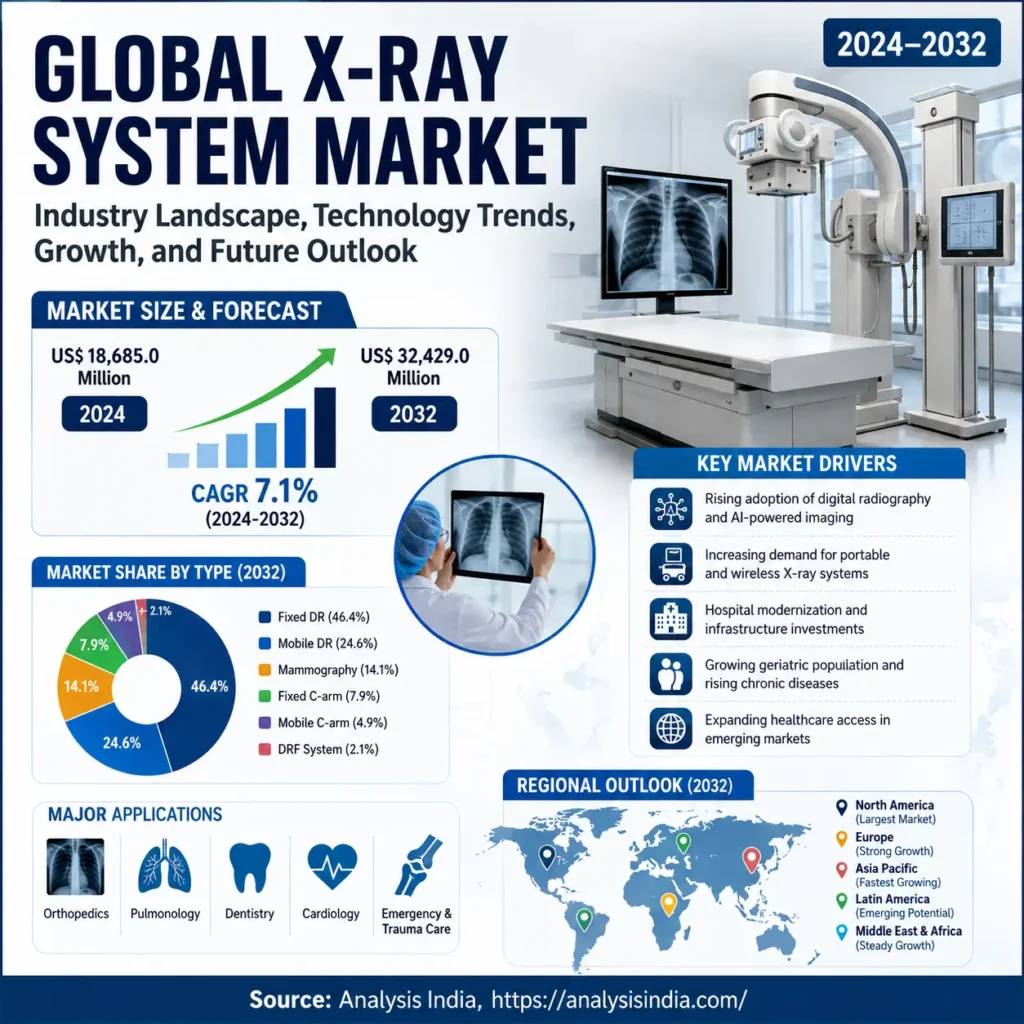
The Global X-ray System Market continues to demonstrate stable and sustainable growth as healthcare providers invest in modern diagnostic imaging technologies. In 2024, the market is valued at USD 18.68 billion. Continuous replacement of legacy analog systems, rising diagnostic imaging demand, and expanding healthcare infrastructure are expected to support long-term market expansion. According to Analysis India, the market is projected to reach USD 30.84 billion by 2032, reflecting healthy growth across both developed and emerging healthcare markets.
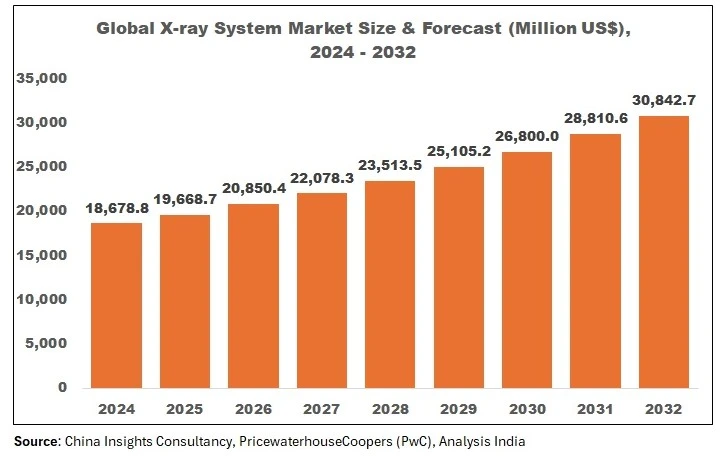
Unlike many medical technology segments that rely heavily on new product adoption, the X-ray system market is supported by a balanced combination of equipment replacement and new installations. Developed countries continue upgrading aging radiology equipment with advanced digital radiography systems, while emerging economies are investing in new hospitals, diagnostic centers, and community healthcare facilities. This creates a consistent demand cycle that supports market stability.
The growing burden of chronic diseases and an aging global population are also contributing to higher imaging procedure volumes. X-ray examinations remain the first diagnostic step for many orthopedic injuries, respiratory diseases, cardiovascular conditions, dental disorders, and cancer screening programs. As healthcare providers focus on early diagnosis and faster clinical decision-making, investment in advanced X-ray technologies continues to increase.
Technology is another important growth driver. Digital radiography, wireless flat-panel detectors, artificial intelligence, and cloud-connected imaging platforms are improving image quality and workflow efficiency while reducing operational costs. These innovations are encouraging healthcare organizations to modernize their imaging infrastructure and replace conventional equipment with intelligent digital systems.
Although North America currently represents the largest regional market, the strongest future growth is expected from Asia-Pacific. Expanding healthcare infrastructure, rising healthcare expenditure, increasing insurance coverage, and government investments in diagnostic services are creating new opportunities for manufacturers across countries such as China, India, and Southeast Asian economies.
💡 AnalysisIndia Insight
The future growth of the Global X-ray System Market will depend on more than increasing imaging demand. The strongest opportunities are expected to come from healthcare modernization programs, digital transformation initiatives, and the replacement of aging imaging infrastructure. Companies that provide scalable digital solutions with strong service support and software integration are likely to benefit most from the next phase of market expansion.
Capital Investment and Procurement Trends
Procurement in the Global X-ray System Market follows structured capital budgeting cycles within hospitals and healthcare systems. Large tertiary hospitals typically operate multi-year replacement strategies for radiology equipment. Procurement decisions are influenced by:
- Budget allocation cycles
- Reimbursement policies
- Patient volume trends
- Service and maintenance agreements
- Total cost of ownership
Private hospital chains and diagnostic networks increasingly negotiate bundled contracts that include installation, service, detector upgrades, and software integration.
Emerging markets demonstrate growing procurement activity driven by hospital construction, public healthcare modernization programs, and international financing initiatives.
Global X-ray System Market Segmentation Overview
The global X-ray system market is segmented by type, end user, and region. These segments define purchasing patterns, technology adoption, and clinical usage across healthcare environments.
By type, the market includes digital radiography systems, C-arm systems, DRF systems, and mammography platforms. End users primarily include hospitals, clinics, and other healthcare facilities. Regionally, market performance varies based on healthcare investment levels, infrastructure development, and access to diagnostic services.
Global X-ray System Market by Type
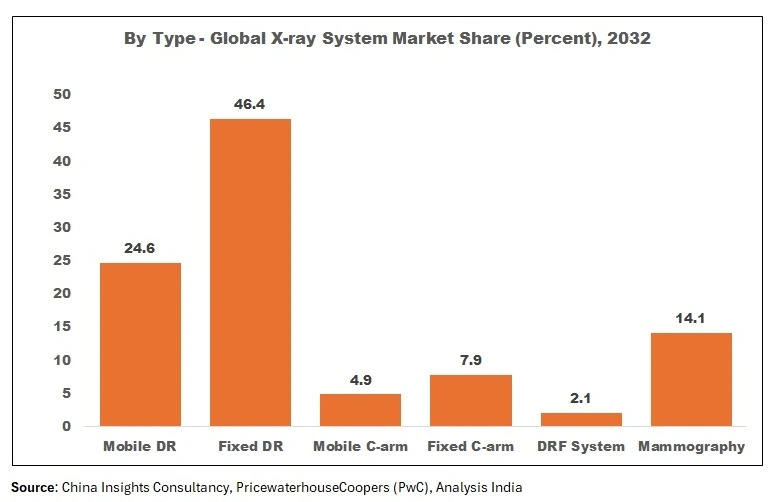
Market share distribution by system type provides insight into the structural composition of the global X-ray system market. Fixed imaging systems continue to dominate revenue contribution, while mobile and specialized platforms support diverse clinical requirements.
In 2032, fixed digital radiography systems account for the largest share of the global X-ray system market, representing 46.4 percent of total revenue. These systems are widely installed in hospital radiology departments due to their suitability for high-volume diagnostic workflows. Learn more in the detailed Fixed DR X-ray System Market analysis.
Mobile DR X-ray systems hold a market share of 24.6 percent, reflecting growing adoption in emergency departments, intensive care units, and bedside imaging applications. Increasing demand for flexible diagnostic solutions continues to support this segment, as covered in the Mobile DR X-ray System Market.
Mammography X-ray systems represent 14.1 percent of the global market, supported by sustained screening programs and diagnostic imaging demand. Detailed insights are available in the Mammography X-ray System Market.
Fixed C-arm systems account for 7.9 percent of the global X-ray system market, driven by their use in surgical imaging, orthopedic procedures, and interventional applications. Segment-specific trends are explored in the Fixed C-arm X-ray System Market.
Mobile C-arm systems, with a market share of 4.9 percent, are increasingly used in operating rooms and ambulatory surgical centers where mobility and space efficiency are essential. Further analysis is provided in the Mobile C-arm X-ray System Market.
DRF systems contribute 2.1 percent of global market revenue, serving specialized diagnostic environments that integrate fluoroscopy and radiography capabilities. Segment-level details can be found in the DRF System Market.
Structural Market Composition Analysis
The Global X-ray System Market demonstrates a balanced structure between high-volume fixed installations and flexible mobile platforms. Fixed digital radiography systems dominate hospital radiology departments, while mobile systems support decentralized care models including emergency departments and intensive care units.
Specialized segments such as mammography and C-arm systems illustrate the diversification of imaging use cases beyond general diagnostics, supporting oncology screening, interventional procedures, and surgical imaging.
Technology Trends in the Global X-ray System Market
X-ray systems remain a foundational component of diagnostic imaging in healthcare, supporting disease detection and clinical decision-making across global healthcare systems. Technology innovation remains a key driver shaping the global X-ray system market. Digital radiography continues to replace conventional imaging methods due to faster image acquisition, improved diagnostic accuracy, and better workflow efficiency. Advancements in flat-panel detectors and image processing software support improved clinical outcomes while enhancing operational performance.
Mobile and adjustable X-ray systems are gaining traction in emergency and critical care environments. Integration with hospital information systems and imaging networks further strengthens the role of X-ray systems within modern diagnostic workflows.
Artificial intelligence integration is gradually being embedded into image enhancement software and workflow prioritization systems. AI-assisted radiology tools are designed to support radiologists by improving image clarity and accelerating reporting turnaround times.
Integration with PACS and hospital information systems further enhances operational efficiency and strengthens the role of X-ray systems within modern diagnostic ecosystems.
Digital Transformation Roadmap in the Global X-ray System Market
The Global X-ray System Market is undergoing a structured digital transformation roadmap that extends beyond basic hardware upgrades. The transition from analog radiography to digital radiography marked the first major shift in imaging modernization. This phase enabled faster image acquisition, electronic storage, and improved workflow integration.
The second phase involved widespread adoption of flat-panel detector technology, which improved image resolution and reduced radiation exposure. Detector performance has become a major competitive differentiator among manufacturers operating within the Global X-ray System Market.
The current phase is defined by AI-enabled optimization and software integration. Artificial intelligence tools are being embedded into imaging workflows to assist radiologists in image prioritization, anomaly detection, and workflow management. Cloud-based storage solutions and remote diagnostics further enhance connectivity and scalability.
Future transformation is expected to focus on predictive maintenance, automated quality assurance systems, and deeper integration with hospital information systems. This roadmap illustrates the evolution of the Global X-ray System Market from hardware-centric solutions toward fully integrated digital imaging ecosystems.
Imaging Workflow Optimization and Digital Ecosystems
Modern X-ray systems are no longer standalone devices. They function as part of integrated digital ecosystems that include:
- Radiology information systems
- PACS networks
- Cloud-based storage
- Remote diagnostics
- Tele-radiology integration
These ecosystem integrations reduce report turnaround time and improve departmental productivity.
Market Lifecycle and Technology Adoption Curve
The Global X-ray System Market is currently in an advanced digital transition phase.
Lifecycle phases include:
- Analog radiography dominance
- Early digital adoption
- Widespread digital transformation
- AI-enabled optimization phase
Developed markets are in phase four, while emerging markets are transitioning between phases two and three.
Pricing Structure and Total Cost of Ownership
Equipment pricing varies based on configuration, detector quality, integration features, and software packages.
Hospitals increasingly evaluate total cost of ownership, including:
- Installation costs
- Maintenance contracts
- Detector replacement
- Software upgrades
- Training requirements
Service contracts play a critical role in long-term purchasing decisions.
Healthcare Economics and Reimbursement Impact on the Global X-ray System Market
The Global X-ray System Market is significantly influenced by healthcare reimbursement structures and imaging economics across major regions. Diagnostic imaging revenue models directly affect hospital investment decisions and procurement strategies. In developed healthcare systems, reimbursement coverage for radiology procedures supports stable imaging volumes, allowing hospitals to justify capital expenditure on digital X-ray systems and technology upgrades.
Public healthcare systems typically allocate imaging budgets through centralized procurement frameworks, which prioritize cost efficiency, regulatory compliance, and long-term service contracts. Private healthcare networks, on the other hand, evaluate imaging investments based on patient throughput, return on investment, and operational efficiency improvements.
Reimbursement policies also influence technology adoption. Markets with structured screening programs and insurance-backed radiology services demonstrate faster adoption of advanced digital radiography systems. Conversely, regions with limited reimbursement coverage may delay upgrades and extend the lifecycle of legacy equipment.
As healthcare systems shift toward value-based care models, the Global X-ray System Market is increasingly shaped by cost optimization strategies. Hospitals seek imaging platforms that improve workflow productivity, reduce repeat scans, and integrate seamlessly into digital health ecosystems. This economic evaluation strengthens demand for modern, integrated X-ray platforms that align with both clinical and financial objectives.
Regulatory and Quality Framework Supporting the Global X-ray System Market
The Global X-ray System Market operates under strict regulatory and quality compliance frameworks across major healthcare economies. In the United States, imaging systems must comply with standards defined by the U.S. Food and Drug Administration. Device clearance requires radiation safety validation, performance testing, and manufacturing quality compliance.
In Europe, CE certification under the regulatory structure of the European Commission ensures device safety, electromagnetic compatibility, and clinical performance standards.
In Asia Pacific, oversight is handled by the National Medical Products Administration in China and the Central Drugs Standard Control Organization in India.
These regulatory frameworks strengthen procurement transparency and support long-term adoption of advanced digital imaging platforms. Regulatory compliance also enhances trust among hospital administrators, radiology departments, and healthcare procurement committees.
Key Growth Drivers Supporting Market Expansion
Several factors continue to support the expansion of the global X-ray system market. Rising demand for diagnostic imaging, driven by aging populations and increasing prevalence of chronic conditions, remains a central growth driver. Expansion of healthcare infrastructure in emerging economies further supports system adoption.
The shift toward outpatient care models and decentralized diagnostic services increases demand for compact and mobile X-ray solutions. In addition, replacement of legacy imaging equipment with digital systems continues to generate steady procurement activity across healthcare facilities.
Imaging Procedure Volume Trends in the Global X-ray System Market
Imaging procedure volume trends play a central role in shaping demand within the Global X-ray System Market. X-ray imaging remains one of the most frequently performed diagnostic procedures worldwide, supporting emergency care, orthopedic evaluation, pulmonary diagnostics, oncology screening, and trauma assessment.
Aging populations across North America, Europe, and parts of Asia Pacific are contributing to sustained increases in imaging utilization. Elderly patients typically require more frequent diagnostic evaluation for chronic diseases such as cardiovascular disorders, respiratory conditions, and degenerative bone diseases. This demographic trend supports long-term structural growth within the Global X-ray System Market.
In addition, increasing accident rates and emergency department utilization further contribute to imaging demand. X-ray systems remain the first-line diagnostic tool in emergency settings due to rapid image acquisition and broad clinical applicability.
Emerging markets are also experiencing rising imaging volumes as healthcare access expands. Government initiatives aimed at strengthening primary healthcare and diagnostic infrastructure are increasing the number of imaging procedures conducted annually. This consistent procedural growth underpins steady equipment replacement cycles and new installations across both developed and developing healthcare systems.
Challenges and Market Limitations
Despite its stable outlook, the global X-ray system market faces certain limitations. High equipment costs and maintenance requirements can influence purchasing decisions, particularly in budget-constrained healthcare settings. Regulatory compliance, installation complexity, and workforce training requirements also impact adoption rates.
In some regions, limited access to advanced imaging infrastructure affects market penetration, creating uneven growth patterns across geographic markets.
Competitive Landscape of the Global X-ray System Market
The competitive landscape of the global X-ray system market includes established multinational manufacturers alongside regional suppliers. Market participants focus on product innovation, portfolio expansion, and service capabilities to strengthen their market position.
Competition is influenced by technology differentiation, after-sales support, and regional distribution networks. Manufacturers continue to invest in digital imaging platforms and workflow integration to address evolving clinical needs.
Leading imaging manufacturers such as:
- GE HealthCare
- Siemens Healthineers
- Canon Medical Systems
- Philips
continue to invest in detector innovation, workflow integration, AI-enabled image processing, and digital ecosystem development.
These companies compete not only on hardware but increasingly on integrated imaging solutions that include software, analytics, remote diagnostics, and service contracts.
Global X-ray System Market Regional Analysis
The Global X-ray System Market exhibits diverse growth patterns across regions, reflecting differences in healthcare infrastructure, economic development, disease burden, regulatory frameworks, and technology adoption. While X-ray imaging remains one of the most widely used diagnostic modalities worldwide, regional demand is influenced by distinct procurement strategies, healthcare investment priorities, and the pace of digital transformation. Developed healthcare markets are primarily investing in replacement of aging imaging systems, workflow automation, and artificial intelligence (AI)-enabled radiology solutions. In contrast, emerging economies are expanding hospital infrastructure, improving diagnostic accessibility, and accelerating the transition from conventional analog imaging to advanced digital radiography platforms.
North America currently represents the largest regional market, supported by mature healthcare systems, high diagnostic imaging volumes, structured reimbursement mechanisms, and continuous investment in advanced medical technologies. Europe remains a technologically sophisticated market where demand is driven by equipment replacement cycles, stringent regulatory standards, and healthcare modernization initiatives across both public and private sectors.
Asia-Pacific is expected to remain the fastest-growing regional market throughout the forecast period. Rapid urbanization, expanding healthcare infrastructure, increasing government healthcare expenditure, rising chronic disease prevalence, and growing awareness of preventive diagnostics are creating substantial opportunities for imaging equipment manufacturers. China and India continue to expand hospital capacity, while Japan maintains stable demand through continuous technology upgrades and replacement procurement.
Latin America and the Middle East & Africa are gradually strengthening their diagnostic imaging capabilities through healthcare reforms, public investment programs, and private sector expansion. Although these regions currently account for a comparatively smaller share of global revenue, ongoing improvements in healthcare accessibility and diagnostic infrastructure are expected to support sustainable long-term market growth.
Across all regions, healthcare providers are increasingly shifting from purchasing standalone X-ray equipment toward investing in integrated imaging ecosystems that combine digital radiography hardware, AI-assisted diagnostic software, cloud-based image management, Picture Archiving and Communication Systems (PACS), cybersecurity, and predictive maintenance solutions. This transition is transforming X-ray systems from conventional imaging devices into intelligent diagnostic platforms capable of supporting faster clinical decision-making and more efficient healthcare delivery.
Global X-ray System Market Regional Comparison (2024–2031)
| Region | Market Characteristics | Primary Growth Driver | Growth Outlook |
|---|---|---|---|
| North America | Largest and most technologically advanced regional market | Equipment replacement, AI integration, workflow optimization | Stable, innovation-driven growth |
| Europe | Mature healthcare infrastructure with strong regulatory standards | Digital modernization, replacement cycles, public healthcare investment | Consistent long-term expansion |
| Asia-Pacific | Fastest-growing regional market | Hospital expansion, healthcare infrastructure development, digital transformation | Highest growth potential |
| Latin America | Emerging diagnostic imaging market | Private healthcare investment and diagnostic center expansion | Moderate but improving growth |
| Middle East & Africa | Developing healthcare ecosystem | Government healthcare modernization and infrastructure investment | Long-term growth opportunity |
Source: Analysis India Research Analysis based on regional healthcare infrastructure, diagnostic imaging adoption trends, and country-level market assessments (2026).
AnalysisIndia Insight
Regional market dynamics are gradually shifting from infrastructure-led expansion toward technology-led modernization. While emerging economies continue to generate demand through hospital construction and healthcare accessibility initiatives, mature markets are increasingly investing in artificial intelligence, enterprise imaging platforms, workflow automation, cybersecurity, and predictive maintenance. This evolution is expected to reshape competitive strategies within the Global X-ray System Market over the next decade, with vendors increasingly competing on integrated digital ecosystems rather than imaging hardware alone.
North America Dominates the Global X-ray System Market with Strong Technology Adoption
North America accounted for the largest share of the global X-ray system market in 2024, with the regional market valued at US$7.25 billion. According to our analysis, the market is projected to reach US$9.96 billion by 2032, reflecting sustained demand for advanced diagnostic imaging technologies across hospitals, diagnostic imaging centers, outpatient facilities, and specialty clinics. Continuous investments in healthcare infrastructure, the rapid replacement of conventional radiography systems with digital X-ray platforms, and the increasing integration of artificial intelligence into medical imaging workflows continue to strengthen the region’s market position throughout the forecast period.
The United States remains the largest contributor to regional revenue, accounting for approximately 84.7% of the North American market in 2032. The country’s leadership is supported by a well-established healthcare ecosystem, widespread adoption of digital radiography, high diagnostic imaging volumes, and ongoing investments by hospitals and healthcare networks in advanced imaging technologies. Growing demand for portable X-ray systems, AI-assisted image interpretation, cloud-based image management solutions, and mobile imaging services is further supporting market expansion. In addition, rising demand for diagnostic imaging among the aging population and patients with chronic diseases continues to drive equipment upgrades across healthcare facilities.
Canada represents the second-largest market within North America and is expected to maintain steady growth throughout the forecast period. Government investments aimed at improving diagnostic capacity, expanding access to medical imaging services, and reducing patient waiting times are encouraging healthcare providers to replace aging imaging equipment with modern digital X-ray systems. Increasing utilization of portable imaging devices in emergency departments, community hospitals, and remote healthcare facilities is also contributing to market growth across the country.
Although comparatively smaller, Mexico is emerging as an important growth market within the region. Ongoing modernization of public and private healthcare infrastructure, increasing investment in diagnostic imaging services, and improving access to advanced medical technologies are supporting demand for digital X-ray equipment. Rising healthcare expenditure, expanding private hospital networks, and greater awareness of early disease diagnosis are expected to create additional opportunities for manufacturers operating in the Mexican market over the coming years.
Across North America, technological innovation remains one of the primary factors shaping market development. Healthcare providers are increasingly adopting digital detector technology, AI-powered workflow optimization, wireless flat-panel detectors, dose reduction software, and cloud-enabled picture archiving and communication systems (PACS) to improve diagnostic accuracy and operational efficiency. Furthermore, the growing emphasis on preventive healthcare, early disease detection, and value-based care is expected to sustain long-term demand for next-generation X-ray imaging solutions throughout the forecast period.
Europe Maintains a Strong Position in the Global X-ray System Market Through Healthcare Modernization
Europe represented the second-largest regional market in 2024, with the market valued at US$3.68 billion, and is projected to reach US$4.90 billion by 2032. The region continues to benefit from well-established healthcare systems, widespread adoption of digital diagnostic imaging technologies, and sustained investments in hospital modernization. Growing demand for early disease detection, an aging population, and the replacement of conventional radiography equipment with advanced digital X-ray systems are expected to support steady market growth throughout the forecast period. In addition, increasing adoption of artificial intelligence (AI)-enabled imaging solutions, wireless detector technology, and integrated imaging workflows is helping healthcare providers improve diagnostic accuracy and operational efficiency.
Germany remains the largest X-ray system market in Europe, reaching US$1.63 billion by 2032. The country’s strong position is supported by its advanced healthcare infrastructure, high diagnostic imaging volumes, and continuous investment in medical technology. German hospitals and diagnostic centers are increasingly deploying AI-assisted imaging software, digital radiography systems, and low-dose imaging technologies to enhance patient care and workflow efficiency. Ongoing research and innovation by leading medical imaging manufacturers further strengthen Germany’s leadership within the regional market.
The United Kingdom and France continue to represent significant contributors to regional revenue, with market sizes of US$1.22 billion and US$1.09 billion, respectively, by 2032. Government initiatives to improve diagnostic capacity, reduce waiting times, and expand access to advanced imaging services are encouraging healthcare providers to upgrade imaging infrastructure. Increasing utilization of portable X-ray systems in emergency care, intensive care units, and community healthcare settings is also supporting market expansion across both countries.
Italy, Spain, Switzerland, and Russia are expected to witness stable growth during the forecast period as healthcare providers continue investing in digital imaging technologies and modernization of diagnostic facilities. Rising demand for minimally invasive diagnostic procedures, preventive healthcare programs, and improved access to advanced radiology services is further contributing to market development across these countries. As healthcare systems continue to prioritize efficiency, image quality, and patient safety, Europe is expected to maintain its position as one of the world’s leading markets for advanced X-ray systems through 2032.
Asia Pacific Emerges as the Fastest-Growing Region in the Global X-ray System Market
Asia Pacific is projected to register the fastest growth in the global X-ray system market during the forecast period, with the regional market increasing from US$3.92 billion in 2024 to approximately US$8.14 billion by 2032. Rapid expansion of healthcare infrastructure, rising healthcare expenditure, increasing awareness of early disease diagnosis, and growing demand for advanced diagnostic imaging are expected to drive market growth across the region. Government initiatives aimed at strengthening public healthcare systems, coupled with the expansion of private hospitals and diagnostic imaging centers, are accelerating the adoption of digital radiography, portable X-ray systems, and AI-enabled imaging technologies.
China remains the largest market within Asia Pacific and is expected to reach US$6.00 billion by 2032. Continuous investments in hospital infrastructure, increasing adoption of digital healthcare technologies, and rising demand for high-quality diagnostic imaging services continue to support market expansion. The country is also witnessing significant deployment of AI-powered imaging solutions, wireless digital radiography systems, and mobile X-ray equipment to improve diagnostic efficiency and expand access to medical imaging services across urban and rural healthcare facilities.
India is anticipated to be one of the fastest-growing country markets in the region, with the market projected to increase to US$1.80 billion by 2032. Increasing government investment in healthcare infrastructure, expansion of multispecialty hospitals, growth in diagnostic laboratory networks, and rising adoption of digital healthcare technologies are creating favorable conditions for market growth. Growing demand for affordable digital X-ray systems, portable imaging solutions, and point-of-care diagnostics is further supporting the modernization of radiology services across the country.
Japan continues to maintain a significant share of the regional market, supported by its advanced healthcare system, aging population, and strong adoption of high-performance diagnostic imaging technologies. The country is expected to reach US$1.64 billion by 2032, driven by ongoing replacement of legacy imaging equipment, increasing use of low-dose digital radiography systems, and continuous technological innovation. Meanwhile, South Korea and Australia are also expected to contribute steadily to regional growth through investments in healthcare digitalization, expansion of diagnostic imaging services, and increasing demand for AI-assisted radiology solutions.
The Asia Pacific region is expected to remain the primary engine of future market expansion, supported by favorable government policies, rising healthcare investments, expanding patient populations, and continuous technological advancements. As healthcare providers continue to modernize imaging infrastructure and improve access to diagnostic services, the region is anticipated to play an increasingly important role in shaping the future of the global X-ray system market.
African Region Experiences Rapid Growth in the Global X-ray System Market as Healthcare Infrastructure Expands
The African region is expected to witness significant growth in the global X-ray system market, with the regional market increasing from US$1.59 billion in 2024 to approximately US$3.76 billion by 2032. Rising investments in healthcare infrastructure, expanding access to diagnostic imaging services, and growing government initiatives to strengthen healthcare systems are supporting market development across the region. Increasing prevalence of infectious diseases, chronic conditions, and trauma-related injuries is driving demand for reliable and affordable diagnostic imaging solutions. At the same time, international healthcare partnerships and investments from public and private organizations are accelerating the modernization of radiology departments in several African countries.
Many healthcare providers across the region are replacing conventional analog imaging equipment with digital X-ray systems to improve diagnostic accuracy, reduce examination time, and enhance workflow efficiency. The growing adoption of portable and mobile X-ray systems is particularly important for rural healthcare centers, emergency response services, and remote communities where access to advanced diagnostic facilities remains limited. These technologies enable faster diagnosis while improving healthcare accessibility in underserved areas.
The expansion of hospitals, diagnostic imaging centers, and primary healthcare facilities is creating new opportunities for manufacturers of digital radiography equipment and imaging software. Governments are increasingly prioritizing investments in medical equipment procurement, healthcare workforce development, and digital health initiatives to improve patient outcomes and strengthen national healthcare capacity. In addition, the growing integration of cloud-based image management systems and teleradiology services is helping healthcare providers address shortages of specialized radiologists while expanding access to diagnostic expertise across geographically dispersed regions.
Although the African X-ray system market currently represents a smaller share of global revenue compared with North America, Europe, and Asia Pacific, it is expected to remain one of the fastest-growing regional markets through 2032. Continued improvements in healthcare infrastructure, increasing diagnostic awareness, expanding healthcare coverage, and rising investments in modern medical technologies are expected to create substantial long-term growth opportunities for X-ray system manufacturers and healthcare providers operating across the region.
Middle East Advances the Global X-ray System Market Through Healthcare Transformation and Digital Imaging Adoption
The Middle East is expected to experience steady growth in the global X-ray system market, with the regional market expanding from US$1.12 billion in 2024 to approximately US$1.97 billion by 2032. Increasing healthcare expenditure, government-led healthcare transformation programs, and continuous investments in advanced medical infrastructure are driving demand for modern diagnostic imaging technologies across the region. The growing burden of chronic diseases, expanding hospital networks, and increasing emphasis on early disease detection are encouraging healthcare providers to upgrade conventional radiography equipment with advanced digital X-ray systems.
Saudi Arabia remains the largest market in the Middle East and is projected to reach US$656.9 million by 2032. Ongoing healthcare reforms, significant public investment in hospital expansion, and the adoption of advanced medical technologies continue to strengthen the country’s position within the regional market. Healthcare providers are increasingly deploying digital radiography systems, AI-assisted imaging solutions, and portable X-ray equipment to improve diagnostic efficiency, patient care, and clinical workflow. The country’s long-term healthcare modernization initiatives are expected to support sustained demand for advanced imaging systems throughout the forecast period.
The United Arab Emirates (UAE) is also expected to contribute significantly to regional growth, with the market projected to reach US$376.3 million by 2032. Rising investments in smart hospitals, medical tourism, and digital healthcare infrastructure are accelerating the adoption of next-generation diagnostic imaging technologies. Hospitals and diagnostic centers across the UAE continue to invest in high-performance digital X-ray systems, wireless detectors, and integrated imaging platforms to enhance clinical productivity and improve patient outcomes.
Turkey is emerging as another important market within the region and is expected to reach US$475.0 million by 2032. Expanding healthcare infrastructure, increasing private healthcare investments, and rising demand for diagnostic imaging services are supporting market growth. The modernization of hospitals and diagnostic centers, combined with greater adoption of digital radiography and mobile imaging systems, is expected to create additional opportunities for industry participants over the coming years.
Across the Middle East, the increasing focus on healthcare digitalization, expansion of specialty hospitals, and growing demand for high-quality diagnostic services are expected to sustain long-term market growth. Continued investments in advanced imaging technologies, coupled with government initiatives to improve healthcare accessibility and strengthen medical infrastructure, are anticipated to support the region’s expanding role in the global X-ray system market through 2032.
Emerging Markets Contribute to Long-Term Growth in the Global X-ray System Market
Emerging markets outside the major geographic regions continue to play an increasingly important role in the global X-ray system market. This segment is projected to grow from US$1.12 billion in 2024 to approximately US$2.10 billion by 2032, reflecting steady demand for diagnostic imaging technologies across developing healthcare systems. Although these markets currently account for a relatively smaller share of global revenue, ongoing improvements in healthcare infrastructure, rising healthcare expenditure, and expanding access to diagnostic services are expected to create attractive growth opportunities during the forecast period.
Healthcare providers across these emerging economies are increasingly investing in digital X-ray systems, portable imaging devices, and wireless detector technologies to improve diagnostic capabilities and enhance patient care. The replacement of aging analog radiography equipment with modern digital solutions is accelerating as hospitals and diagnostic centers seek to improve image quality, reduce examination times, and optimize clinical workflows. Growing awareness of preventive healthcare and early disease diagnosis is also contributing to increased utilization of diagnostic imaging services.
Government healthcare modernization initiatives, expanding public health programs, and greater participation from private healthcare providers are encouraging investments in advanced medical equipment. In addition, the increasing adoption of telemedicine, cloud-based image management systems, and AI-supported diagnostic solutions is helping healthcare facilities improve operational efficiency while expanding access to quality diagnostic services in underserved areas.
As healthcare infrastructure continues to develop and demand for advanced diagnostic imaging rises, these emerging markets are expected to make an increasingly meaningful contribution to global industry growth. Their gradual transition toward digital healthcare technologies, combined with sustained investments in hospitals, diagnostic centers, and primary healthcare facilities, is anticipated to create new opportunities for X-ray system manufacturers and strengthen the long-term expansion of the global X-ray system market through 2032.
Global X-ray System Market: Regional Market Forecast (2024–2032)
| Region | 2024 (US$ Million) | 2032 (US$ Million) | Absolute Growth (US$ Million) | Growth Outlook |
|---|---|---|---|---|
| North America | 7,247.4 | 9,962.2 | 2,714.8 | Strong and technology-driven growth |
| Europe | 3,679.7 | 4,904.0 | 1,224.3 | Stable growth supported by healthcare modernization |
| Asia Pacific | 3,922.5 | 8,142.5 | 4,219.9 | Fastest-growing regional market |
| African Region | 1,587.7 | 3,762.8 | 2,175.1 | Rapid expansion driven by healthcare infrastructure development |
| Middle East | 1,120.7 | 1,973.9 | 853.2 | Steady growth supported by healthcare investments |
| Emerging Markets (Others) | 1,120.7 | 2,097.3 | 976.6 | Growing opportunities across developing healthcare markets |
Source: Analysis India Research Estimates, 2026
Global X-ray System Market: Regional Market Outlook
North America remained the largest regional market in 2024, supported by advanced healthcare infrastructure, high adoption of digital radiography systems, and continuous technological innovation. The region is expected to maintain its leadership through 2032, although its global market share is anticipated to gradually decline as emerging economies experience faster growth.
Asia Pacific is projected to register the highest absolute growth during the forecast period, adding more than US$4.2 billion in market value between 2024 and 2032. Rapid healthcare infrastructure expansion, increasing healthcare expenditure, growing diagnostic imaging demand, and strong investments in digital healthcare across China, India, South Korea, and other emerging economies continue to strengthen the region’s growth outlook.
Europe is expected to maintain steady expansion, supported by ongoing modernization of healthcare facilities, replacement of legacy imaging equipment, and increasing adoption of AI-enabled diagnostic imaging technologies. Meanwhile, the African Region and the Middle East are anticipated to record healthy growth as governments continue investing in hospital infrastructure, diagnostic imaging capacity, and healthcare digitalization. Emerging markets outside the major regions are also expected to contribute steadily to global industry expansion by improving access to advanced medical imaging technologies and strengthening healthcare delivery systems.
Global X-ray System Market: Country Analysis
The global X-ray system market exhibits distinct growth patterns across countries, reflecting differences in healthcare infrastructure, government healthcare expenditure, diagnostic imaging adoption, demographic trends, and technological advancement. While developed economies continue to account for a significant share of global revenue due to their mature healthcare systems and widespread deployment of advanced imaging technologies, emerging markets are becoming increasingly important contributors as investments in healthcare infrastructure and digital transformation continue to accelerate. Rising demand for early disease diagnosis, expansion of hospital networks, and growing adoption of digital radiography and portable imaging systems are creating new growth opportunities across both established and developing healthcare markets.
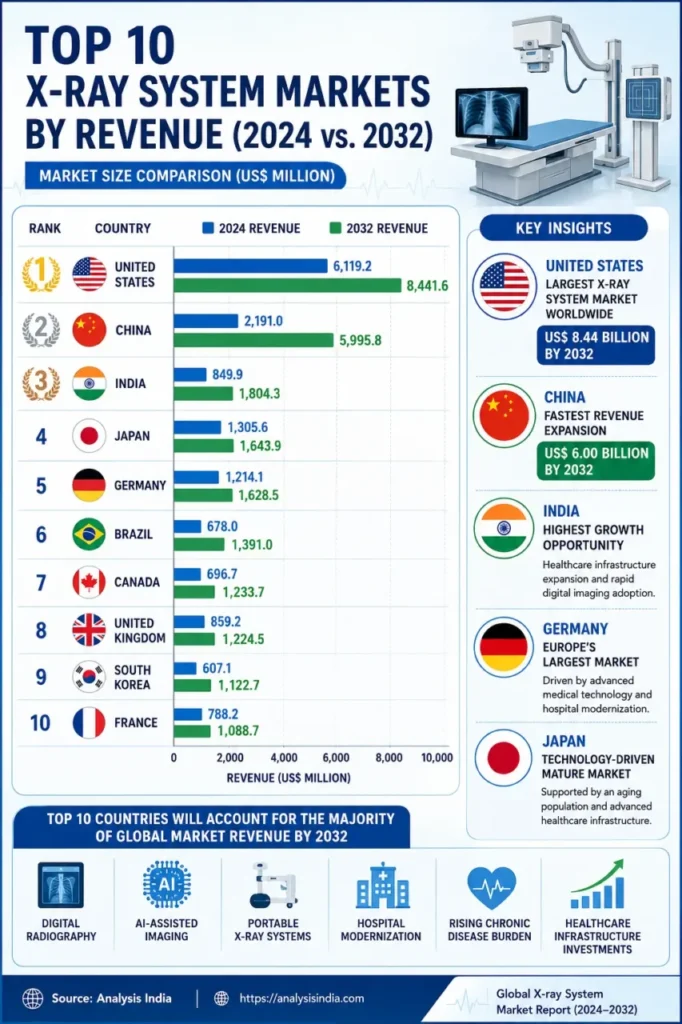
Country-level market performance is also influenced by factors such as population size, disease burden, regulatory support, reimbursement policies, and the pace of healthcare modernization. Markets including the United States, China, Germany, Japan, and the United Kingdom continue to benefit from advanced diagnostic capabilities and continuous replacement of legacy imaging equipment. At the same time, countries such as India, Brazil, and South Korea are experiencing rapid market expansion as healthcare accessibility improves and investments in modern medical technologies increase. Together, these markets are expected to shape the future development of the global X-ray system industry through 2032.
United States Leads the Global X-ray System Market Through Advanced Healthcare Infrastructure
The United States remained the world’s largest X-ray system market in 2024, with the market valued at US$6.12 billion, and is projected to reach US$8.44 billion by 2032. Accounting for more than one-quarter of global market revenue, the country continues to maintain its leadership through extensive healthcare infrastructure, high diagnostic imaging volumes, and rapid adoption of advanced medical imaging technologies. Continuous investments by hospitals, outpatient imaging centers, and integrated healthcare networks in digital radiography, mobile X-ray systems, and AI-enabled imaging platforms are expected to sustain market growth throughout the forecast period.
The country’s mature healthcare ecosystem supports widespread utilization of diagnostic imaging across emergency medicine, orthopedics, oncology, cardiology, pulmonology, and routine preventive healthcare. Increasing demand for early disease diagnosis, combined with the growing prevalence of chronic diseases and an expanding elderly population, continues to drive the replacement of conventional radiography systems with next-generation digital X-ray technologies. Healthcare providers are also investing in wireless flat-panel detectors, low-dose imaging systems, cloud-based image management platforms, and AI-assisted clinical decision support tools to improve workflow efficiency and diagnostic accuracy.
Innovation remains a defining characteristic of the United States market. Continuous research and development by leading medical imaging manufacturers, together with increasing integration of artificial intelligence into radiology workflows, is supporting improvements in image quality, examination speed, and operational productivity. The growing adoption of portable X-ray systems in emergency departments, intensive care units, ambulatory care centers, and home healthcare settings is further expanding the application of diagnostic imaging beyond traditional hospital environments.
Looking ahead, the United States is expected to remain the largest contributor to global market revenue through 2032. Continued healthcare digitalization, sustained investments in advanced diagnostic technologies, increasing emphasis on value-based healthcare delivery, and ongoing modernization of imaging infrastructure are expected to reinforce the country’s leadership while creating opportunities for further technological innovation across the X-ray system market.
China Drives the Fastest Expansion in the Global X-ray System Market
China represents the second-largest country market and is projected to grow from US$2.19 billion in 2024 to approximately US$6.00 billion by 2032, making it one of the fastest-growing contributors to the global X-ray system market. The country’s remarkable expansion is supported by large-scale healthcare infrastructure development, increasing public and private healthcare investments, and continuous modernization of hospitals and diagnostic imaging facilities. Rising demand for early disease diagnosis, combined with a large patient population and expanding access to healthcare services, continues to accelerate the adoption of advanced X-ray technologies across the country.
Government initiatives to strengthen healthcare delivery and improve access to quality medical services have encouraged significant investments in diagnostic imaging equipment across tertiary hospitals, community healthcare centers, and regional medical facilities. The rapid replacement of analog radiography with digital X-ray systems, increasing deployment of AI-assisted imaging software, and growing use of portable radiography equipment are improving diagnostic efficiency while expanding imaging capacity throughout the healthcare system.
China is also emerging as a major center for medical technology innovation and manufacturing. Domestic manufacturers continue to expand production capabilities while investing in research and development to improve imaging performance, workflow automation, and affordability. At the same time, healthcare providers are increasingly adopting cloud-based imaging platforms, integrated radiology information systems, and intelligent image analysis solutions to enhance clinical productivity and patient care.
With continued government support, expanding healthcare infrastructure, increasing healthcare expenditure, and rapid technological adoption, China is expected to remain one of the primary engines of growth in the global X-ray system market through 2032. The country’s combination of large-scale healthcare demand, technological advancement, and ongoing investment in diagnostic imaging is expected to create substantial long-term opportunities for industry participants.
India Emerges as One of the Fastest-Growing X-ray System Markets Through Healthcare Expansion
India is expected to witness one of the highest growth rates in the global X-ray system market, with the market projected to increase from US$849.9 million in 2024 to approximately US$1.80 billion by 2032. Rapid expansion of healthcare infrastructure, rising government expenditure on public health, increasing investments by private hospital chains, and growing awareness of early disease diagnosis are driving strong demand for advanced diagnostic imaging systems across the country. As healthcare services continue to expand beyond metropolitan areas into Tier II and Tier III cities, demand for cost-effective and high-performance digital X-ray systems is expected to accelerate significantly.
The country’s large population, increasing prevalence of chronic diseases, rising incidence of orthopedic injuries, and growing burden of respiratory disorders continue to generate substantial demand for diagnostic imaging services. Hospitals, diagnostic centers, and primary healthcare facilities are increasingly replacing conventional analog radiography equipment with digital radiography systems that provide faster image acquisition, improved diagnostic accuracy, lower radiation exposure, and streamlined clinical workflows. Portable X-ray systems are also gaining popularity in emergency medicine, intensive care units, and rural healthcare facilities where access to fixed imaging infrastructure remains limited.
Government initiatives aimed at strengthening healthcare delivery, improving diagnostic accessibility, and expanding healthcare infrastructure continue to support long-term market growth. Increasing investments in medical colleges, district hospitals, and community health centers are creating additional opportunities for X-ray system manufacturers. Furthermore, the integration of artificial intelligence into diagnostic imaging workflows, cloud-based image management platforms, and teleradiology services is helping healthcare providers improve efficiency while addressing shortages of radiology specialists.
Looking ahead, India is expected to remain one of the most attractive growth markets within the global X-ray system industry. Continued healthcare modernization, expanding insurance coverage, rising healthcare expenditure, and increasing adoption of advanced diagnostic technologies are anticipated to strengthen the country’s position as a key contributor to future global market expansion.
Germany Leads the European X-ray System Market Through Technological Innovation
Germany continues to hold the largest share of the European X-ray system market, with the market expected to grow from US$1.21 billion in 2024 to approximately US$1.63 billion by 2032. The country’s leadership is supported by a highly developed healthcare system, advanced diagnostic imaging infrastructure, and continuous investments in medical technology innovation. Strong demand from hospitals, university medical centers, and specialized diagnostic imaging facilities continues to sustain the adoption of next-generation X-ray systems throughout the country.
Healthcare providers in Germany are actively investing in digital radiography platforms, wireless flat-panel detector technology, AI-assisted image analysis, and low-dose imaging solutions to improve diagnostic precision while enhancing operational efficiency. Continuous replacement of aging radiography equipment and increasing emphasis on integrated digital imaging workflows are further supporting market expansion. The country’s well-established reimbursement framework and high standards for healthcare quality also encourage healthcare institutions to adopt advanced diagnostic technologies.
Germany’s strong medical technology ecosystem further strengthens its market position. The presence of globally recognized medical device manufacturers, research institutions, and innovation centers continues to support the development of advanced imaging technologies. Ongoing research in artificial intelligence, image processing, and workflow automation is expected to further improve diagnostic performance while reducing reporting times for radiologists.
As healthcare providers continue prioritizing digital transformation and advanced imaging capabilities, Germany is expected to maintain its leadership within the European X-ray system market. Continued technological innovation, stable healthcare investments, and strong demand for high-quality diagnostic imaging services are anticipated to support steady market growth through 2032.
Japan Maintains Stable Growth Through Advanced Medical Imaging Adoption
Japan remains one of the world’s leading markets for diagnostic imaging technologies and is projected to grow from US$1.31 billion in 2024 to approximately US$1.64 billion by 2032. The country’s advanced healthcare infrastructure, rapidly aging population, and strong emphasis on preventive healthcare continue to support consistent demand for high-performance X-ray systems. Healthcare providers are increasingly investing in digital radiography equipment, low-dose imaging technologies, and AI-enabled diagnostic solutions to improve clinical outcomes while maintaining high standards of patient care.
The increasing prevalence of age-related diseases, including cardiovascular disorders, orthopedic conditions, and cancer, continues to drive demand for diagnostic imaging across hospitals and specialized healthcare facilities. Healthcare institutions are also replacing older imaging equipment with modern digital systems that deliver superior image quality, improved workflow efficiency, and enhanced patient safety. The growing adoption of portable X-ray systems in emergency care, intensive care units, and home healthcare services is further expanding the application of diagnostic imaging throughout the healthcare system.
Japan continues to play an important role in medical technology innovation, supported by strong investments in research and development and close collaboration between healthcare providers, research organizations, and medical device manufacturers. Advances in artificial intelligence, automation, and digital healthcare integration are expected to further enhance diagnostic accuracy and improve radiology workflows over the coming years.
Although Japan’s market growth is expected to be more moderate than that of emerging economies, the country will continue to represent one of the largest and most technologically advanced X-ray system markets worldwide. Ongoing investments in healthcare modernization, imaging innovation, and precision diagnostics are expected to sustain long-term demand through the forecast period.
Canada Strengthens Its X-ray System Market Through Healthcare Modernization
Canada is projected to expand its X-ray system market from US$696.7 million in 2024 to approximately US$1.23 billion by 2032, reflecting steady growth driven by continued investments in healthcare infrastructure and diagnostic imaging services. The country’s publicly funded healthcare system continues to prioritize improvements in medical imaging capacity to reduce diagnostic waiting times, enhance patient outcomes, and support early disease detection. Increasing demand for digital radiography, portable X-ray systems, and AI-assisted imaging solutions is encouraging hospitals and diagnostic centers to modernize existing imaging infrastructure.
Canada’s aging population and the growing prevalence of chronic diseases, including cardiovascular disorders, cancer, and musculoskeletal conditions, continue to increase the need for advanced diagnostic imaging. Healthcare providers are replacing conventional analog radiography equipment with digital imaging systems that provide faster image acquisition, improved image quality, and lower radiation exposure. Portable imaging systems are also being increasingly deployed in emergency departments, rural healthcare facilities, and long-term care centers to improve access to diagnostic services across geographically dispersed communities.
The country’s healthcare sector is also embracing digital transformation through the integration of cloud-based image management platforms, electronic medical records, and artificial intelligence applications that assist radiologists in improving diagnostic accuracy and workflow efficiency. Government funding programs supporting hospital modernization and medical technology adoption are expected to further accelerate investments in advanced imaging equipment throughout the forecast period.
Looking ahead, Canada’s X-ray system market is expected to benefit from sustained healthcare expenditure, continuous infrastructure upgrades, and growing emphasis on early diagnosis and preventive healthcare. These factors are likely to support stable long-term market growth while reinforcing Canada’s position as one of North America’s most important diagnostic imaging markets.
United Kingdom Expands Diagnostic Imaging Capacity to Meet Rising Healthcare Demand
The United Kingdom is expected to grow from US$859.2 million in 2024 to approximately US$1.22 billion by 2032, supported by increasing investments in healthcare modernization and diagnostic imaging services. Rising demand for early disease detection, expanding imaging requirements across multiple medical specialties, and ongoing efforts to reduce diagnostic waiting lists are driving the adoption of advanced X-ray systems across NHS hospitals and private healthcare facilities.
Healthcare providers throughout the country are increasingly investing in digital radiography systems, wireless detector technology, portable imaging equipment, and AI-enabled diagnostic software to improve clinical efficiency and patient care. Modern imaging technologies are helping hospitals increase examination capacity, reduce reporting times, and enhance diagnostic accuracy while supporting more efficient management of growing patient volumes. The continued replacement of aging imaging infrastructure is also contributing to market expansion.
Government initiatives focused on strengthening diagnostic services have encouraged substantial investments in community diagnostic centers, hospital upgrades, and digital healthcare infrastructure. These initiatives aim to improve healthcare accessibility, accelerate diagnosis, and enhance overall healthcare system performance. Integration of cloud-based image sharing platforms and advanced radiology information systems is further supporting collaboration among healthcare professionals and improving workflow efficiency.
The United Kingdom is expected to maintain steady market growth through 2032 as healthcare providers continue investing in advanced diagnostic technologies. Increasing adoption of AI-assisted radiology, expanding healthcare infrastructure, and continued modernization of imaging facilities are anticipated to create long-term opportunities for X-ray system manufacturers.
Brazil Becomes a Key Growth Market in Latin America
Brazil is projected to increase from US$678.0 million in 2024 to approximately US$1.39 billion by 2032, making it one of the fastest-growing X-ray system markets in Latin America. Growing healthcare expenditure, expansion of private healthcare networks, and increasing investment in diagnostic imaging infrastructure are supporting widespread adoption of advanced X-ray technologies. Rising awareness of early disease diagnosis and improving access to healthcare services are further strengthening demand across both public and private healthcare sectors.
The modernization of hospitals and diagnostic imaging centers continues to accelerate the replacement of conventional radiography equipment with digital X-ray systems that offer higher image quality, improved workflow efficiency, and lower radiation exposure. Portable X-ray systems are also gaining wider acceptance in emergency care, rural healthcare settings, and mobile diagnostic services where flexible imaging solutions are required.
Brazil’s increasing burden of chronic diseases, orthopedic disorders, and trauma-related injuries continues to drive demand for diagnostic imaging services. Government initiatives aimed at improving healthcare accessibility, together with investments from private healthcare providers, are creating favorable conditions for continued market expansion. At the same time, the adoption of artificial intelligence, cloud-based imaging solutions, and digital healthcare technologies is improving operational efficiency within radiology departments.
Over the forecast period, Brazil is expected to remain one of the most dynamic healthcare markets in the region. Continued infrastructure development, increasing healthcare investments, and broader adoption of advanced diagnostic technologies are anticipated to support sustained growth in the country’s X-ray system market.
South Korea Accelerates Medical Imaging Innovation Through Digital Healthcare
South Korea is expected to expand its X-ray system market from US$607.1 million in 2024 to approximately US$1.12 billion by 2032, supported by rapid technological innovation and one of Asia’s most digitally advanced healthcare systems. The country’s strong focus on healthcare digitalization, smart hospitals, and precision medicine continues to drive investments in advanced diagnostic imaging technologies. Hospitals and medical centers are increasingly adopting AI-enabled X-ray systems, wireless digital radiography, and integrated imaging platforms to improve clinical efficiency and diagnostic accuracy.
Growing demand for early disease detection, combined with an aging population and increasing prevalence of chronic diseases, continues to support the expansion of diagnostic imaging services. Healthcare providers are investing in next-generation imaging equipment that delivers faster examinations, improved image quality, and reduced radiation exposure while integrating seamlessly with hospital information systems and electronic medical records.
South Korea also serves as an important center for medical technology research and innovation, with continued collaboration between healthcare institutions, universities, and technology companies driving advancements in artificial intelligence and digital imaging. The country’s supportive regulatory environment and strong investments in healthcare innovation continue to encourage the commercialization of advanced medical imaging solutions.
Looking forward, South Korea is expected to remain one of the most technologically advanced X-ray system markets in the Asia-Pacific region. Continued investments in healthcare infrastructure, digital transformation, and intelligent imaging technologies are anticipated to sustain robust market growth while reinforcing the country’s role in shaping the future of diagnostic imaging.
France Strengthens Diagnostic Imaging Capabilities Through Healthcare Modernization
France is projected to expand its X-ray system market from US$788.2 million in 2024 to approximately US$1.09 billion by 2032, supported by continuous investments in healthcare modernization, expanding diagnostic imaging capacity, and increasing adoption of advanced medical technologies. The country’s well-established healthcare system, combined with strong government support for improving access to medical services, continues to drive demand for high-performance X-ray systems across hospitals, specialty clinics, and diagnostic imaging centers.
Healthcare providers are increasingly replacing conventional radiography equipment with digital X-ray systems that offer superior image quality, faster examination times, and lower radiation exposure. Growing utilization of digital radiography, portable imaging equipment, and AI-assisted diagnostic software is helping improve workflow efficiency while supporting faster and more accurate clinical decision-making. These technological advancements are particularly important for managing the rising incidence of cancer, cardiovascular diseases, respiratory disorders, and musculoskeletal conditions that require routine diagnostic imaging.
France is also strengthening its digital healthcare ecosystem through greater integration of cloud-based imaging platforms, electronic health records, and advanced radiology information systems. These initiatives enable more efficient image sharing, improve collaboration among healthcare professionals, and enhance continuity of patient care. Continued investments in hospital modernization and diagnostic infrastructure are expected to further accelerate the adoption of intelligent imaging solutions over the forecast period.
Looking ahead, France is expected to remain one of Europe’s most important X-ray system markets. Stable healthcare expenditure, ongoing technological innovation, and increasing demand for early disease diagnosis are anticipated to support sustainable market growth while strengthening the country’s contribution to the global X-ray system industry through 2032.
Global X-ray System Market: Country Market Comparison (2024–2032)
| Country | Market Size 2024 (US$ Million) | Market Size 2032 (US$ Million) | Growth Outlook |
|---|---|---|---|
| United States | 6,119.2 | 8,441.6 | Largest and mature market driven by continuous technological innovation and healthcare investment |
| China | 2,191.0 | 5,995.8 | Fastest expanding major market supported by healthcare modernization and infrastructure development |
| India | 849.9 | 1,804.3 | High-growth market driven by expanding healthcare access and digital transformation |
| Japan | 1,305.6 | 1,643.9 | Mature market supported by advanced healthcare infrastructure and an aging population |
| Germany | 1,214.1 | 1,628.5 | Europe’s leading market with strong focus on medical technology innovation |
| Brazil | 678.0 | 1,391.0 | Rapidly growing Latin American market supported by healthcare infrastructure expansion |
| Canada | 696.7 | 1,233.7 | Stable growth driven by modernization of publicly funded healthcare facilities |
| United Kingdom | 859.2 | 1,224.5 | Continued investments in diagnostic capacity and digital healthcare transformation |
| South Korea | 607.1 | 1,122.7 | Innovation-driven market with rapid adoption of AI-enabled imaging technologies |
| France | 788.2 | 1,088.7 | Steady growth supported by healthcare modernization and advanced diagnostic imaging |
Global X-ray System Market: Country Outlook
Country-level analysis indicates that the global X-ray system market will continue to be shaped by a combination of mature healthcare economies and rapidly developing emerging markets over the forecast period. The United States is expected to maintain its leadership position due to its advanced healthcare infrastructure, continuous investments in diagnostic imaging technologies, and strong focus on innovation. China is anticipated to remain the fastest-growing major market as healthcare modernization, domestic medical device manufacturing, and expanding hospital infrastructure continue to accelerate demand for digital X-ray systems.
Among emerging economies, India and Brazil are expected to generate significant growth opportunities as governments and private healthcare providers increase investments in healthcare infrastructure and improve access to diagnostic services. In Europe, Germany, the United Kingdom, and France will continue benefiting from hospital modernization programs, widespread digital transformation, and adoption of artificial intelligence in radiology. Meanwhile, Japan, Canada, and South Korea are expected to sustain stable market expansion through continuous technological innovation, replacement of legacy imaging systems, and increasing integration of intelligent diagnostic imaging solutions.
Overall, these ten countries are projected to account for the majority of global market revenue through 2032, reflecting their strategic importance in driving technological innovation, healthcare investment, and long-term growth across the global X-ray system market.
Emerging Market Expansion and Infrastructure Catch-Up
Emerging markets represent a significant long-term expansion opportunity within the Global X-ray System Market. Many developing healthcare systems are currently undergoing infrastructure modernization programs aimed at improving diagnostic access and hospital capacity.
Government-backed hospital construction initiatives, public-private healthcare partnerships, and international development financing are accelerating the installation of digital imaging systems. Countries across Southeast Asia, Latin America, the Middle East, and parts of Africa are investing in foundational diagnostic equipment to strengthen primary and secondary care capabilities.
The transition from analog to digital systems is particularly pronounced in emerging economies. As digital radiography becomes more cost-accessible, healthcare providers are prioritizing upgrades to improve workflow efficiency and diagnostic accuracy.
Infrastructure catch-up also includes training initiatives to expand radiology workforce capacity and enhance system utilization. These modernization efforts contribute to gradual convergence between developed and emerging markets within the Global X-ray System Market.
Over the next decade, infrastructure development and healthcare access expansion are expected to remain central growth pillars supporting global market stability.
Conclusion
The Global X-ray System Market is expected to remain one of the most important segments of the global diagnostic imaging industry as healthcare providers continue investing in advanced imaging technologies that improve diagnostic accuracy, operational efficiency, and patient outcomes. Market expansion is being supported by rising demand for early disease detection, an aging global population, increasing prevalence of chronic diseases, and continuous modernization of healthcare infrastructure across both developed and emerging economies. At the same time, the transition from conventional analog radiography to digital imaging platforms is creating long-term opportunities for equipment manufacturers, software providers, and healthcare organizations worldwide.
Technology innovation is becoming the primary factor shaping future competition in the Global X-ray System Market. Artificial intelligence-assisted image interpretation, wireless flat-panel detectors, cloud-connected imaging platforms, workflow automation, and integrated radiology information systems are transforming X-ray systems from standalone imaging devices into intelligent diagnostic ecosystems. Healthcare providers are increasingly evaluating complete imaging solutions that combine advanced hardware, software integration, cybersecurity, predictive maintenance, and long-term service capabilities rather than focusing solely on equipment performance. This shift is expected to redefine procurement strategies and strengthen demand for scalable digital imaging platforms over the coming years.
Regional growth dynamics also continue to evolve. North America is expected to maintain its leadership through continuous technology upgrades, equipment replacement programs, and widespread adoption of AI-enabled imaging solutions. Europe will continue benefiting from healthcare modernization and regulatory compliance, while Asia-Pacific is projected to remain the fastest-growing regional market as governments expand healthcare infrastructure, improve diagnostic accessibility, and accelerate digital transformation. Emerging markets across Latin America, the Middle East, Africa, and other developing regions are also expected to generate substantial long-term opportunities through investments in hospitals, diagnostic imaging centers, and public healthcare systems.
Looking ahead, the future of the Global X-ray System Market will extend far beyond traditional diagnostic imaging. Advances in artificial intelligence, cloud computing, enterprise imaging, remote diagnostics, and connected healthcare ecosystems are expected to improve clinical decision-making while enhancing workflow efficiency across healthcare organizations. Companies that continue investing in innovation, software integration, digital transformation, and customer support are likely to strengthen their competitive position as healthcare providers increasingly prioritize intelligent, interoperable, and value-driven imaging solutions. With steady replacement demand, expanding healthcare investment, and continuous technological progress, the Global X-ray System Market is well positioned for sustainable long-term growth through 2032 and will remain a critical pillar of the broader global medical device and diagnostic imaging industry.
Frequently Asked Questions (FAQ)
What is the Global X-ray System Market?
The Global X-ray System Market includes digital radiography (DR), mobile X-ray systems, C-arm systems, digital radiography and fluoroscopy (DRF) systems, and mammography X-ray systems used across hospitals, diagnostic imaging centers, ambulatory surgical centers, specialty clinics, and other healthcare facilities. The market encompasses imaging hardware, software, artificial intelligence integration, and connected digital imaging solutions.
How large is the Global X-ray System Market?
According to Analysis India, the Global X-ray System Market was valued at USD 18.68 billion in 2024 and is projected to reach USD 30.84 billion by 2032. Market growth is supported by rising diagnostic imaging demand, healthcare infrastructure expansion, increasing digital radiography adoption, and continuous technological innovation.
What are the major factors driving the Global X-ray System Market?
Key growth drivers include increasing demand for early disease diagnosis, the rising prevalence of chronic diseases, an aging global population, healthcare infrastructure modernization, replacement of analog imaging systems with digital radiography, artificial intelligence integration, and expanding investments in diagnostic imaging technologies worldwide.
Which region dominates the Global X-ray System Market?
North America currently holds the largest share of the Global X-ray System Market because of its advanced healthcare infrastructure, high imaging procedure volumes, widespread adoption of digital radiography, and continuous investment in AI-enabled diagnostic imaging technologies.
Which region is expected to experience the fastest market growth?
Asia-Pacific is expected to register the fastest growth during the forecast period due to expanding healthcare infrastructure, increasing healthcare expenditure, government healthcare modernization initiatives, growing awareness of preventive healthcare, and rising adoption of digital X-ray technologies across China, India, and other emerging economies.
How is artificial intelligence transforming the Global X-ray System Market?
Artificial intelligence is improving diagnostic imaging by enhancing image interpretation, automating workflow prioritization, optimizing radiation dose, accelerating report generation, and supporting faster clinical decision-making. AI-powered imaging platforms are becoming an increasingly important component of modern digital radiography systems.
Which product segment accounts for the largest market share?
Fixed Digital Radiography (DR) systems account for the largest share of the Global X-ray System Market because they are widely used in hospitals and diagnostic imaging centers for high-volume routine examinations. Their superior image quality, workflow efficiency, and digital integration continue to support strong market demand.
Who are the leading companies operating in the Global X-ray System Market?
Major companies include GE HealthCare, Siemens Healthineers, Canon Medical Systems, Philips Healthcare, Fujifilm Healthcare, and Shimadzu Corporation. These companies compete through product innovation, AI-enabled imaging technologies, digital workflow integration, cloud connectivity, detector technology, and long-term service capabilities.
What challenges could affect market growth?
The Global X-ray System Market faces challenges including high capital investment requirements, regulatory compliance, radiation safety standards, cybersecurity concerns, shortage of skilled radiology professionals, maintenance costs, and the complexity of integrating imaging systems with hospital information technology infrastructure.
What is the future outlook for the Global X-ray System Market?
The market is expected to witness sustainable long-term growth through 2032, supported by digital healthcare transformation, artificial intelligence integration, portable imaging technologies, cloud-connected diagnostic platforms, healthcare infrastructure expansion, and increasing investments in early disease detection worldwide. Future competition is expected to focus on intelligent imaging ecosystems that combine hardware, software, workflow automation, and connected healthcare solutions.