📅 Published: April 20, 2026
🔄 Last Updated: April 20, 2026
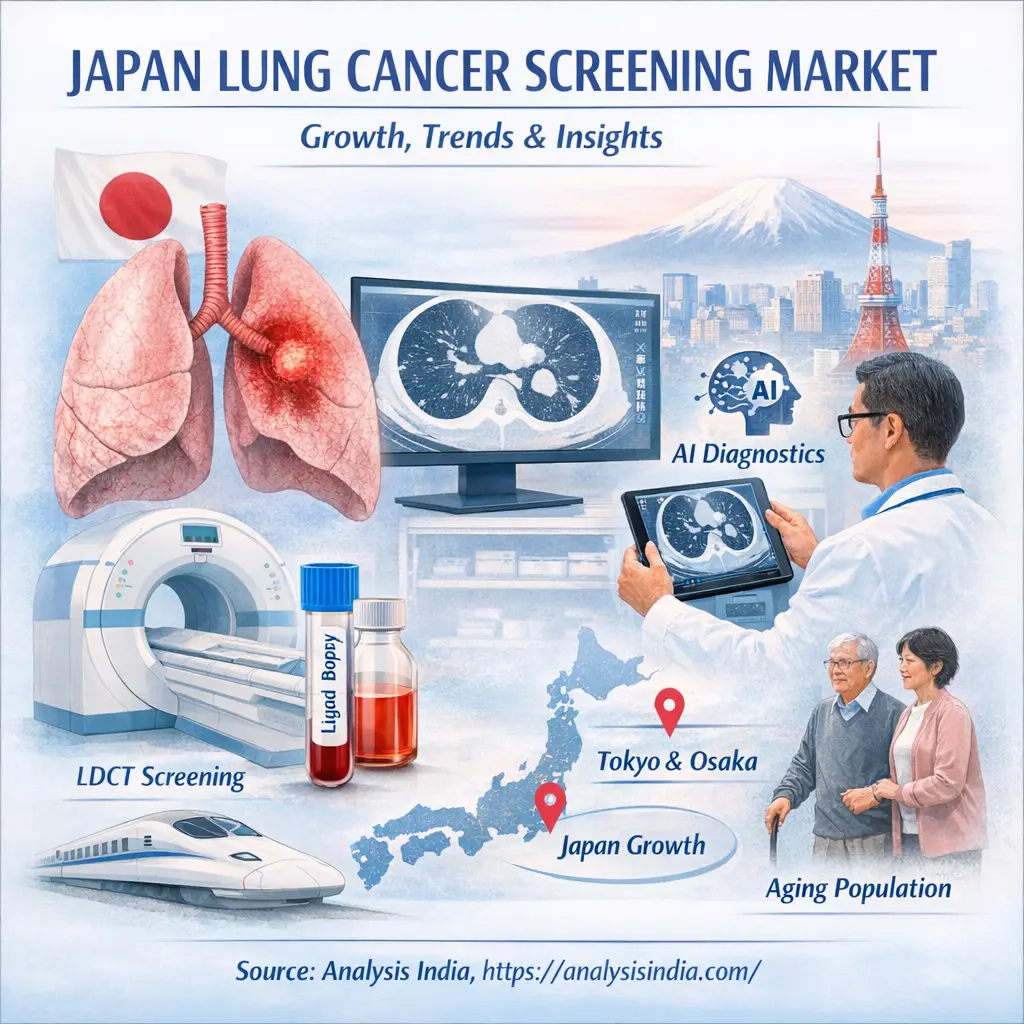
Japan Lung Cancer Screening Market Overview
The Japan lung cancer screening market is evolving as a highly structured and technology-driven segment within the oncology diagnostics ecosystem. Japan’s healthcare model places strong emphasis on preventive care, making lung cancer screening an integral part of national health strategies. With lung cancer being one of the most prevalent cancers in the country, early detection has become essential for improving survival outcomes.
Unlike many global markets, the Japan lung cancer screening market is supported by a well-organized healthcare system that enables large-scale screening implementation. This has resulted in consistent adoption of diagnostic technologies and steady expansion of screening programs across urban and semi-urban regions.
The market’s growth is closely aligned with global developments in the lung cancer screening market growth, where early diagnosis and technological innovation are transforming cancer care.
Japan Lung Cancer Screening Market Size and Forecast
Market Growth Analysis 2024 to 2033
The Japan lung cancer screening market demonstrates a stable and predictable growth trajectory over the forecast period. In 2024, the market stands at approximately 1,893 million US dollars, reflecting strong baseline demand for screening services.
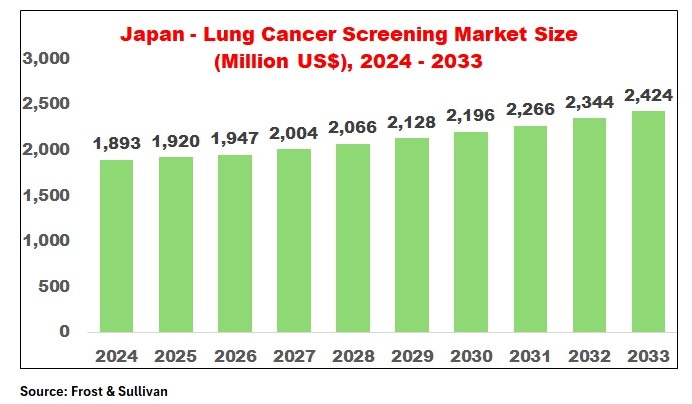
The market continues to expand gradually, reaching around 1,920 million US dollars in 2025 and 1,947 million US dollars in 2026. This steady growth indicates consistent participation in screening programs and sustained investment in diagnostic infrastructure.
Mid-Term Growth Trends
By 2027, the Japan lung cancer screening market crosses the 2,000 million US dollar mark, reaching approximately 2,004 million US dollars. This milestone reflects the increasing penetration of screening technologies and broader adoption across healthcare facilities.
The upward trend continues through 2028 and 2029, with market values rising to approximately 2,066 million US dollars and 2,128 million US dollars respectively. This period highlights strong momentum driven by policy support and technological advancements.
Long-Term Market Outlook
The growth trajectory remains strong beyond 2030, with the market reaching approximately 2,196 million US dollars in 2030 and 2,266 million US dollars in 2031. By 2032, the Japan lung cancer screening market is projected to reach around 2,344 million US dollars, ultimately expanding to approximately 2,424 million US dollars by 2033.
This long-term expansion reflects the increasing role of screening in healthcare systems and aligns with broader insights from the cancer screening market growth trends insights.
Key Factors Driving Japan Lung Cancer Screening Market
Aging Population and Risk Demographics
One of the most significant drivers of the Japan lung cancer screening market is the country’s aging population. Japan has one of the highest proportions of elderly individuals globally, which increases the demand for regular screening services. Older populations are more susceptible to lung cancer, making early detection critical.
Strong Preventive Healthcare Culture
Japan’s healthcare system emphasizes preventive care, which plays a crucial role in supporting the lung cancer screening market. Government-backed screening programs and public awareness initiatives encourage individuals to undergo routine check-ups, particularly those in high-risk categories.
Technological Leadership in Diagnostics
The Japan lung cancer screening market benefits from the country’s leadership in medical technology. Advanced imaging systems, including low-dose CT scans, are widely used to detect lung abnormalities at an early stage. These technologies improve diagnostic accuracy and enable timely treatment.
Expansion of Non-Invasive Screening Methods
The growing adoption of non-invasive diagnostic techniques is another key driver. Innovations in blood-based screening methods are gaining attention, aligning with trends observed in the global liquid biopsy cancer screening market.
Role of Technology in Japan Lung Cancer Screening Market
Advanced Imaging Systems
Imaging technologies remain the backbone of the Japan lung cancer screening market. Low-dose CT scans are widely used due to their ability to detect early-stage lung cancer with high precision. These systems are continuously being improved to reduce radiation exposure while maintaining image quality.
Artificial Intelligence Integration
Artificial intelligence is transforming the screening process by enhancing image analysis and improving diagnostic accuracy. AI-powered tools assist radiologists in identifying abnormalities more efficiently, reducing the risk of missed diagnoses.
Biomarker and Molecular Diagnostics
The use of biomarkers and molecular diagnostics is gaining traction in the Japan lung cancer screening market. These approaches enable more precise detection of cancer at an early stage and are being actively researched to improve screening outcomes.
These advancements are closely aligned with developments in the global gastric cancer screening market, where precision diagnostics are becoming increasingly important.
External Authority Perspective on Screening Importance
The importance of lung cancer screening is reinforced by global healthcare organizations. According to World Health Organization, early detection through structured screening programs significantly improves survival rates and reduces mortality. The organization emphasizes that countries like Japan, with strong screening frameworks, are better equipped to manage cancer burden.
Additionally, the National Cancer Center Japan highlights the role of advanced diagnostic technologies and nationwide screening initiatives in improving early detection outcomes. These insights underline the strategic importance of continued investment in the Japan lung cancer screening market.
Market Structure and Healthcare Ecosystem
Role of Hospitals and Diagnostic Centers
Hospitals and diagnostic centers form the backbone of the Japan lung cancer screening market. These institutions are equipped with advanced technologies and skilled professionals, enabling efficient screening and diagnosis.
Expansion of Specialized Screening Facilities
Specialized screening centers are becoming increasingly common, offering targeted services for early cancer detection. These facilities improve accessibility and support the overall growth of the market.
Innovation and Research Landscape
Japan’s strong research ecosystem is contributing to continuous innovation in lung cancer screening. Collaboration between research institutions and healthcare providers is driving the development of new diagnostic tools.
Challenges in Japan Lung Cancer Screening Market
Cost and Resource Allocation
While Japan has a strong healthcare system, managing the cost of advanced screening technologies remains a challenge. Ensuring cost-effective screening programs is essential for long-term sustainability.
Risk of Overdiagnosis
Overdiagnosis and false positives can lead to unnecessary procedures and increased healthcare costs. Improving diagnostic accuracy is crucial to address this issue.
Maintaining Screening Participation
Encouraging consistent participation in screening programs requires ongoing awareness efforts. Public engagement plays a key role in ensuring the success of the Japan lung cancer screening market.
Future Outlook of Japan Lung Cancer Screening Market
Increasing Adoption of AI and Data Analytics
The integration of artificial intelligence and data analytics is expected to enhance screening efficiency and accuracy. These technologies will enable more personalized screening approaches.
Growth of Non-Invasive Diagnostics
Non-invasive methods such as liquid biopsy are expected to gain wider adoption, providing convenient and effective screening options.
Expansion of Screening Programs
Government initiatives and healthcare investments will continue to expand screening programs, supporting long-term market growth.
Strategic Position in Global Market
The Japan lung cancer screening market plays a vital role in the global oncology diagnostics landscape. Its advanced technologies and structured screening programs make it a model for other countries.
The market also complements regional developments such as the United States lung cancer screening market, where similar trends in early detection and innovation are observed.
Conclusion
The Japan lung cancer screening market is experiencing steady growth driven by demographic trends, technological advancements, and strong healthcare infrastructure. With market size projected to reach approximately 2,424 million US dollars by 2033, the market presents significant opportunities for expansion.
The focus on early detection, combined with continuous innovation in diagnostic technologies, is shaping the future of the market. Despite challenges, the overall outlook remains positive, positioning Japan as a leader in lung cancer screening.
Frequently Asked Questions
What is the Japan lung cancer screening market?
The Japan lung cancer screening market refers to the healthcare segment focused on early detection of lung cancer using technologies like low-dose CT scans and advanced diagnostics.
Why is the Japan lung cancer screening market growing?
The market is growing due to an aging population, strong preventive healthcare policies, and increasing awareness about early cancer detection in Japan.
What is the market size of the Japan lung cancer screening market?
The Japan lung cancer screening market is valued at around 1,893 million US dollars in 2024 and is expected to reach approximately 2,424 million US dollars by 2033.
What technologies are used in lung cancer screening in Japan?
Key technologies include low-dose CT scans, AI-based imaging tools, and emerging liquid biopsy methods for early detection.
Who should undergo lung cancer screening in Japan?
Lung cancer screening is recommended for high-risk individuals, especially older adults and people with a history of smoking.
What challenges does the Japan lung cancer screening market face?
The market faces challenges such as high screening costs, risk of overdiagnosis, and maintaining participation in screening programs.
What is the future of the Japan lung cancer screening market?
The future looks strong with increasing adoption of advanced technologies, expansion of screening programs, and growing focus on preventive healthcare.