📅 Published: April 21, 2026
🔄 Last Updated: April 21, 2026
South East Asia Lung Cancer Screening Market Overview
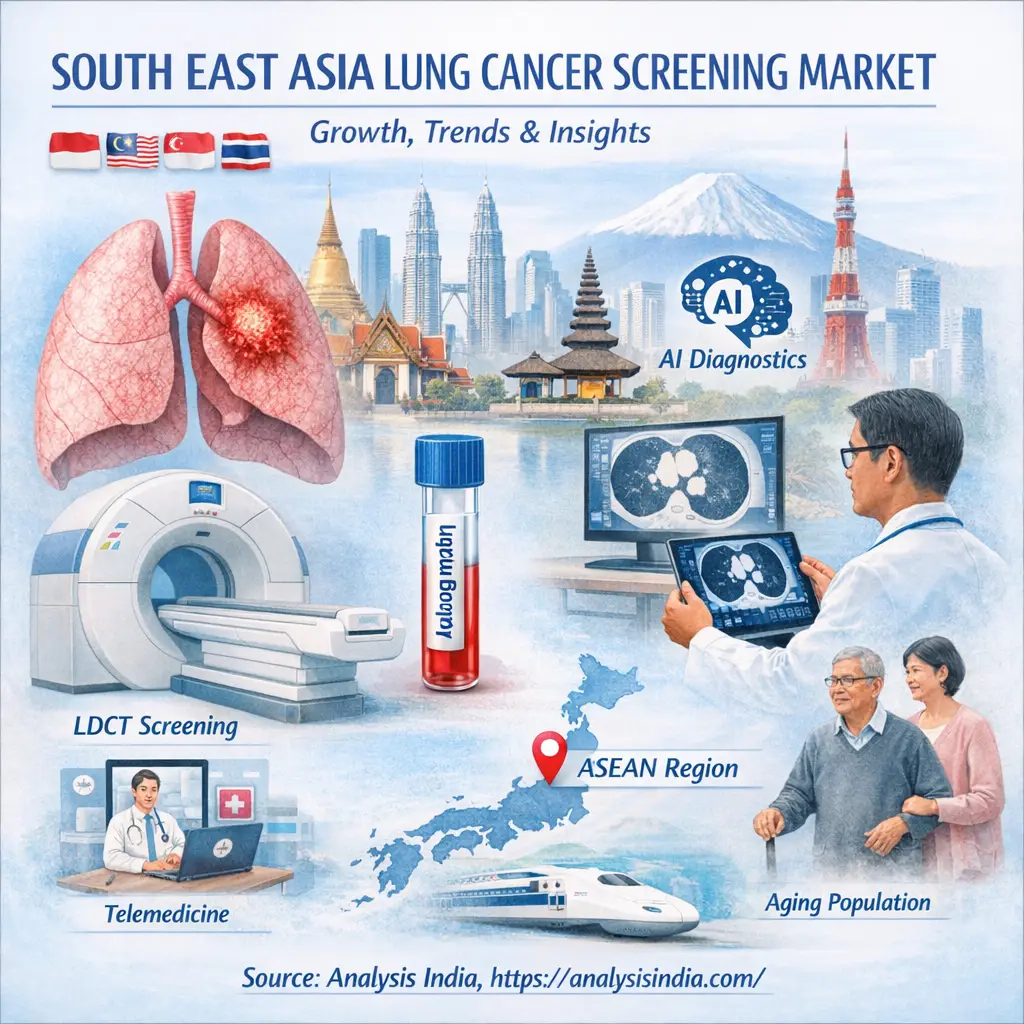
The South East Asia lung cancer screening market is emerging as one of the fastest-growing segments within the global oncology diagnostics landscape. The region is witnessing a significant rise in lung cancer incidence due to increasing urbanization, environmental pollution, and lifestyle-related risk factors. As a result, healthcare systems across South East Asia are gradually shifting toward early detection and preventive care strategies.
Unlike more mature markets, the South East Asia lung cancer screening market is still in a developing phase, characterized by varying levels of healthcare infrastructure across countries such as Singapore, Thailand, Indonesia, Malaysia, and Vietnam. However, the growing focus on improving healthcare accessibility and expanding diagnostic capabilities is creating strong momentum for market growth.
This regional expansion aligns closely with global developments highlighted in the lung cancer screening market growth, where early detection technologies are becoming central to reducing cancer mortality.
South East Asia Lung Cancer Screening Market Size and Forecast
Market Growth Analysis 2024 to 2033
The South East Asia lung cancer screening market is projected to grow at a steady pace, supported by increasing awareness and gradual adoption of screening technologies. In 2024, the market is valued at approximately 577 million US dollars, reflecting the early stage of development in many countries within the region.
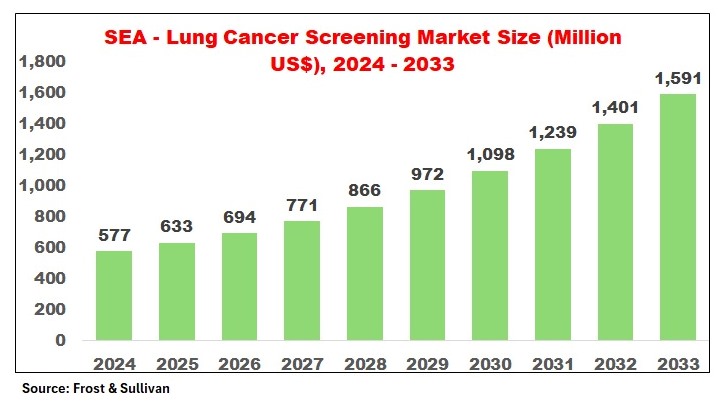
The market shows consistent growth, reaching around 633 million US dollars in 2025 and approximately 694 million US dollars in 2026. This increase highlights the growing adoption of screening services and the expansion of healthcare infrastructure.
Mid-Term Growth Trends
By 2027, the South East Asia lung cancer screening market reaches approximately 771 million US dollars, indicating strong momentum as more healthcare providers adopt advanced diagnostic technologies. The upward trend continues through 2028, with the market estimated at around 866 million US dollars.
In 2029, the market expands further to approximately 972 million US dollars, reflecting increasing awareness and government initiatives aimed at promoting early cancer detection.
Long-Term Market Outlook
The growth trajectory accelerates beyond 2030, with the South East Asia lung cancer screening market reaching approximately 1,098 million US dollars in 2030 and 1,239 million US dollars in 2031. By 2032, the market is projected to reach around 1,401 million US dollars, ultimately expanding to approximately 1,591 million US dollars by 2033.
This steady expansion demonstrates the region’s growing commitment to preventive healthcare and aligns with broader insights from the cancer screening market growth trends insights.
Key Growth Drivers
Rising Lung Cancer Incidence
One of the primary drivers of the South East Asia lung cancer screening market is the increasing prevalence of lung cancer across the region. Factors such as smoking, air pollution, and occupational exposure are contributing to the rising number of cases.
Improving Healthcare Infrastructure
Healthcare systems in South East Asia are undergoing rapid transformation, with governments investing heavily in infrastructure development. The establishment of new hospitals, diagnostic centers, and screening facilities is improving access to early detection services.
Growing Awareness About Early Detection
Public health campaigns and awareness initiatives are encouraging individuals to undergo regular screening, particularly those in high-risk groups. This growing awareness is playing a crucial role in driving the adoption of screening services.
Adoption of Advanced Diagnostic Technologies
The introduction of advanced imaging technologies and non-invasive diagnostic methods is transforming the South East Asia lung cancer screening market. Innovations in blood-based screening are gaining attention, aligning with developments in the global liquid biopsy cancer screening market.
Role of Technology in South East Asia Lung Cancer Screening Market
Expansion of Imaging Technologies
Imaging technologies, particularly low-dose CT scans, are becoming more widely available across the region. These systems enable early detection of lung abnormalities and improve diagnostic accuracy.
Integration of Artificial Intelligence
Artificial intelligence is gradually being adopted in the South East Asia lung cancer screening market. AI-powered tools are helping healthcare providers analyze imaging data more efficiently and reduce diagnostic errors.
Emergence of Biomarker-Based Screening
Biomarker-based diagnostics are gaining traction as researchers explore new methods for early cancer detection. These advancements are closely linked to trends in the global gastric cancer screening market.
Importance of Lung Cancer Screening
The importance of expanding lung cancer screening in developing regions is emphasized by global health organizations. According to World Health Organization, early detection through structured screening programs is essential for reducing cancer mortality, particularly in regions with rising disease burden.
In addition, the International Agency for Research on Cancer highlights the growing impact of environmental and lifestyle factors on lung cancer incidence in South East Asia. These insights reinforce the need for continued investment in the South East Asia lung cancer screening market to improve early diagnosis and healthcare outcomes.
Market Structure and Regional Dynamics
Variation Across Countries
The South East Asia lung cancer screening market is highly diverse, with significant variations in healthcare infrastructure and screening adoption across countries. Developed nations such as Singapore have advanced screening programs, while emerging economies are still building their diagnostic capabilities.
Role of Private and Public Healthcare
Both public and private healthcare providers play a crucial role in expanding screening services. Private hospitals and diagnostic centers are often at the forefront of adopting advanced technologies, while government initiatives focus on improving accessibility.
Increasing Investment in Healthcare
Rising healthcare expenditure across the region is supporting the growth of the South East Asia lung cancer screening market. Governments and private investors are allocating resources to improve diagnostic infrastructure and expand screening programs.
Challenges in South East Asia Lung Cancer Screening Market
Limited Accessibility in Rural Areas
One of the major challenges is the lack of access to screening facilities in rural and remote areas. Addressing this issue requires the expansion of mobile screening units and telemedicine solutions.
Cost Constraints
The high cost of advanced diagnostic technologies can limit adoption, particularly in low-income populations. Ensuring affordability is essential for widespread screening adoption.
Lack of Standardized Screening Guidelines
Variations in healthcare policies and screening guidelines across countries can create challenges for market growth. Standardization is needed to improve consistency and effectiveness.
Future Outlook of South East Asia Lung Cancer Screening Market
Expansion of Screening Programs
The expansion of national screening programs is expected to drive market growth. Governments are increasingly recognizing the importance of early detection and investing in screening initiatives.
Growth of Non-Invasive Diagnostics
Non-invasive methods such as liquid biopsy are expected to gain popularity, offering convenient and effective screening options.
Increasing Role of Digital Health
Digital health technologies, including telemedicine and remote diagnostics, are expected to improve access to screening services and support market expansion.
Strategic Position in Global Market
The South East Asia lung cancer screening market is becoming an important contributor to the global oncology diagnostics ecosystem. Its rapid growth complements developments in other regions, including the United States lung cancer screening market and the Japan lung cancer screening market.
Together, these markets are driving global advancements in early cancer detection and shaping the future of the screening industry.
Conclusion
The South East Asia lung cancer screening market is on a strong growth trajectory, driven by increasing awareness, improving healthcare infrastructure, and technological advancements. With market size projected to grow from 577 million US dollars in 2024 to approximately 1,591 million US dollars by 2033, the region offers significant opportunities for expansion.
The focus on early detection, combined with continuous innovation and investment, is transforming the market. Despite challenges such as accessibility and cost, the overall outlook remains positive.
As South East Asia continues to strengthen its healthcare systems, the lung cancer screening market will play a crucial role in improving patient outcomes and advancing the field of oncology diagnostics.
Frequently Asked Questions
What is the South East Asia lung cancer screening market?
The South East Asia lung cancer screening market refers to the regional healthcare sector focused on early detection of lung cancer using technologies like CT scans and advanced diagnostics.
Why is the South East Asia lung cancer screening market growing?
The market is growing due to rising lung cancer cases, improving healthcare infrastructure, and increasing awareness about early detection across the region.
What is the market size of the South East Asia lung cancer screening market?
The South East Asia lung cancer screening market is valued at around 577 million US dollars in 2024 and is expected to reach approximately 1,591 million US dollars by 2033.
What technologies are used in lung cancer screening in South East Asia?
Key technologies include low-dose CT scans, AI-based imaging tools, and emerging liquid biopsy methods for early detection.
What challenges does the South East Asia lung cancer screening market face?
The market faces challenges such as limited access in rural areas, high costs of advanced screening technologies, and lack of standardized screening programs.
What is the future of the South East Asia lung cancer screening market?
The future looks strong with expanding screening programs, growing healthcare investments, and increasing adoption of advanced diagnostic technologies.