📅 Published: February 21, 2026
🔄 Last Updated: July 28, 2026
Quick Summary
The Fixed C-arm Market is becoming an essential segment of the global medical imaging industry as hospitals continue investing in advanced surgical imaging technologies to improve precision, efficiency, and patient outcomes. Fixed C-arm systems provide continuous real-time fluoroscopic imaging for complex procedures performed in hybrid operating rooms, catheterisation laboratories, and specialised surgical suites. Their ability to support minimally invasive interventions has made them indispensable across cardiovascular, neurovascular, vascular, and orthopaedic specialties.
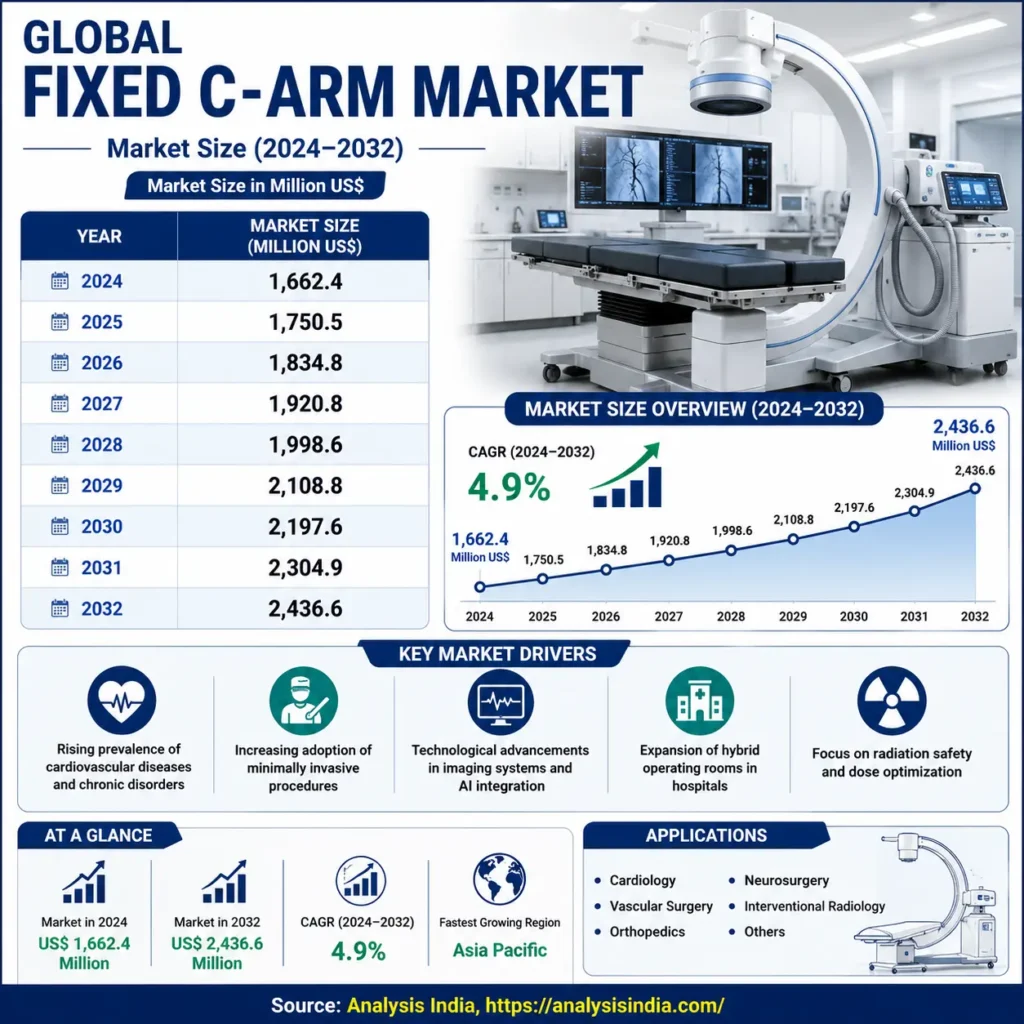
According to Analysis India research, the Fixed C-arm Market was valued at US$1,662.4 million in 2024 and is projected to reach US$2,436.6 million by 2032. Market expansion is supported by rising procedure volumes, hospital modernisation programmes, growing adoption of hybrid operating rooms, advancements in flat panel detector technology, and increasing integration of artificial intelligence into surgical imaging workflows. As healthcare providers focus on precision-guided interventions and digital transformation, the Fixed C-arm Market is expected to remain a strategic investment area throughout the forecast period.
Key Highlights
| Particular | Details |
|---|---|
| Market Size (2024) | US$1,662.4 Million |
| Forecast Market Size (2032) | US$2,436.6 Million |
| Base Year | 2024 |
| Forecast Period | 2025–2032 |
| Product Category | Fixed Fluoroscopic Imaging Systems |
| Primary Applications | Cardiology, Vascular Surgery, Orthopaedics, Neurosurgery |
| Major End Users | Hospitals, Hybrid Operating Rooms, Catheterisation Laboratories |
| Key Growth Drivers | Hybrid operating room expansion, minimally invasive surgery, AI-enabled imaging, hospital infrastructure modernisation |
| Technology Trends | Flat panel detectors, 3D imaging, AI-assisted image enhancement, digital workflow integration |
| Leading Opportunity | Expansion of advanced surgical imaging infrastructure in emerging healthcare markets |
Executive Summary
The Fixed C-arm Market represents one of the most important segments within the global surgical imaging ecosystem. Fixed C-arm systems are permanently installed fluoroscopic imaging platforms designed to provide high-resolution, real-time visualisation during minimally invasive procedures. These systems have become a standard component of hybrid operating rooms and catheterisation laboratories, where clinicians require continuous imaging guidance to perform complex cardiovascular, vascular, orthopaedic, and neurological interventions with greater precision.
Healthcare providers worldwide are increasingly prioritising investments in advanced imaging infrastructure as surgical procedures become more technology driven. The transition from conventional open surgeries to minimally invasive techniques has significantly increased demand for high-performance imaging systems capable of delivering consistent image quality while reducing radiation exposure and improving procedural efficiency. This transformation is encouraging hospitals to replace ageing imaging equipment with modern Fixed C-arm platforms equipped with flat panel detectors, intelligent image processing software, and integrated workflow management solutions.
Artificial intelligence is also reshaping the Fixed C-arm Market by enhancing image quality, reducing imaging noise, supporting automated positioning, and improving radiation dose optimisation. Combined with advances in three-dimensional visualisation, digital connectivity, and hospital information system integration, these innovations are strengthening the clinical value of Fixed C-arm systems across multiple specialties.
Emerging economies are creating additional growth opportunities as governments and private healthcare providers expand tertiary care hospitals, establish new cardiac centres, and develop hybrid operating rooms to meet increasing patient demand. At the same time, developed healthcare markets continue upgrading existing imaging infrastructure to improve clinical outcomes, operational efficiency, and long-term return on investment.
Looking ahead, the Fixed C-arm Market is expected to experience steady growth through 2032 as technological innovation, increasing surgical volumes, ageing populations, and expanding healthcare infrastructure continue supporting demand for advanced fluoroscopic imaging systems.
Global Fixed C-arm Market Statistics
| Market Indicator | Value |
|---|---|
| Market Size (2024) | US$1,662.4 Million |
| Forecast Market Size (2032) | US$2,436.6 Million |
| Base Year | 2024 |
| Forecast Period | 2025–2032 |
| Market Scope | Global |
| Product Type | Fixed C-arm Imaging Systems |
| Technology | Digital Fluoroscopy, Flat Panel Detector Systems |
| Primary End Users | Hospitals, Specialty Surgical Centres, Cardiac Centres |
| Core Applications | Cardiology, Orthopaedics, Neurosurgery, Vascular Surgery |
| Growth Outlook | Stable long-term expansion supported by advanced surgical imaging adoption |
Global Medical Device Market Snapshot
| Category | Market Snapshot |
|---|---|
| Parent Industry | Global Medical Device Market |
| Industry Segment | Diagnostic Imaging |
| Sub-segment | Surgical Imaging Systems |
| Related Markets | Global X-ray System Market, Mobile C-arm Market, Fixed DR System Market, Mobile DR System Market, DRF System Market |
| Technology Focus | Digital Imaging, Artificial Intelligence, Flat Panel Detector Technology |
| Primary Demand Drivers | Hospital modernisation, minimally invasive procedures, ageing population, digital healthcare transformation |
| Major Buyers | Hospitals, Multi-speciality Medical Centres, Academic Healthcare Institutions, Specialty Surgical Facilities |
AnalysisIndia Insight
The Fixed C-arm Market is evolving from a conventional fluoroscopic imaging segment into a technology-driven surgical imaging ecosystem. Healthcare providers are no longer evaluating imaging systems solely on image quality. Procurement decisions increasingly consider workflow automation, artificial intelligence capabilities, interoperability with hospital information systems, radiation dose optimisation, and long-term operational efficiency.
Analysis India believes the next phase of market growth will be driven by hospitals expanding hybrid operating rooms rather than simply replacing existing imaging equipment. As minimally invasive procedures continue increasing across cardiology, orthopaedics, vascular surgery, and neurosurgery, healthcare organisations are expected to prioritise integrated imaging platforms capable of supporting multiple specialties within a single procedural environment. Manufacturers that combine advanced imaging performance with intelligent software, predictive maintenance, and seamless digital connectivity are likely to strengthen their competitive position throughout the forecast period.
Introduction
The Fixed C-arm Market has become an integral part of the global medical imaging industry by enabling physicians to perform highly complex diagnostic and therapeutic procedures with greater accuracy and confidence. Fixed C-arm systems are permanently installed fluoroscopic imaging platforms designed to deliver continuous, high-resolution, real-time visualisation during image-guided interventions. Their advanced imaging capabilities support clinicians throughout procedures that demand exceptional precision, making these systems indispensable in hybrid operating rooms, catheterisation laboratories, and specialised surgical suites.
Growing demand for minimally invasive procedures has significantly transformed the role of advanced surgical imaging. Modern healthcare providers increasingly prefer image-guided interventions because they generally reduce surgical trauma, shorten hospital stays, improve recovery times, and enhance overall patient outcomes. As procedure volumes continue increasing across cardiovascular disease management, orthopaedic reconstruction, neurovascular interventions, and vascular surgery, hospitals are expanding investments in advanced fluoroscopic imaging technologies to improve procedural efficiency while maintaining high standards of clinical care.
Technological innovation is another important factor shaping the Fixed C-arm Market. Manufacturers continue introducing systems equipped with high-performance flat panel detectors, artificial intelligence-assisted image enhancement, three-dimensional visualisation, automated positioning, and radiation dose management technologies. These innovations improve image clarity while supporting faster clinical decision-making and more efficient surgical workflows. Digital integration with Picture Archiving and Communication Systems (PACS), Hospital Information Systems (HIS), Radiology Information Systems (RIS), and electronic medical records further strengthens the value of Fixed C-arm platforms within modern healthcare environments.
From a regional perspective, North America continues to maintain a significant share of the Fixed C-arm Market, supported by advanced healthcare infrastructure, early technology adoption, and high volumes of cardiovascular and orthopaedic procedures. Europe remains an important contributor through continuous investment in specialised surgical facilities and medical technology innovation. Meanwhile, Asia Pacific is emerging as one of the fastest-growing regional markets due to expanding healthcare infrastructure, increasing government healthcare expenditure, growing private hospital investment, and rising demand for advanced surgical imaging technologies across developing economies.
The Fixed C-arm Market also represents an important component of the broader diagnostic imaging ecosystem. Continuous innovation across digital radiography, mobile imaging, fluoroscopy, and artificial intelligence is creating stronger integration between imaging technologies and modern healthcare delivery models. These developments are encouraging hospitals to adopt comprehensive imaging strategies that improve patient care while supporting operational efficiency and long-term clinical sustainability.
This report provides a comprehensive analysis of the Fixed C-arm Market, including market size, growth drivers, technology developments, emerging opportunities, competitive landscape, regional trends, and future outlook through 2032. The insights are designed to support industry professionals, business decision makers, investors, healthcare executives, researchers, and general readers seeking reliable, data-driven intelligence on one of the fastest-evolving segments of the global medical imaging industry.
What is the Fixed C-arm Market?
The Fixed C-arm Market refers to the global industry involved in the research, development, manufacturing, distribution, installation, maintenance, and technological advancement of permanently installed fluoroscopic imaging systems used for image-guided diagnostic and therapeutic procedures. These systems are designed to provide continuous real-time X-ray imaging during minimally invasive interventions, enabling clinicians to visualise internal anatomical structures, blood vessels, medical devices, and surgical instruments with exceptional precision.
Unlike portable fluoroscopy equipment, fixed C-arm systems are permanently integrated into hybrid operating rooms, catheterisation laboratories, vascular intervention suites, and specialised surgical departments. Their stable installation supports advanced imaging capabilities such as high-resolution fluoroscopy, digital subtraction angiography, three-dimensional rotational imaging, and intelligent image processing. These features have made Fixed C-arm systems an essential component of modern interventional healthcare, particularly in hospitals performing high volumes of complex cardiovascular, neurovascular, orthopaedic, and vascular procedures.
The Fixed C-arm Market continues to evolve alongside advances in digital healthcare infrastructure. Modern platforms increasingly incorporate artificial intelligence, automated positioning, flat panel detector technology, cloud-enabled image management, and interoperability with hospital information systems. These developments are transforming Fixed C-arm systems from standalone imaging equipment into integrated surgical imaging solutions that improve procedural efficiency, reduce radiation exposure, and enhance clinical decision-making.
As healthcare providers worldwide expand hybrid operating rooms and invest in minimally invasive treatment capabilities, the Fixed C-arm Market is expected to remain one of the most strategically important segments within the global medical imaging industry.
How Fixed C-arm Systems Work
Fixed C-arm systems generate continuous X-ray images by combining an X-ray tube and a digital flat panel detector on opposite ends of a C-shaped gantry. During a procedure, the X-ray beam passes through the patient’s body and is captured by the detector, which instantly converts the transmitted radiation into high-resolution digital images. These images are processed using advanced imaging software and displayed on multiple high-definition monitors, allowing surgeons and interventional specialists to monitor anatomical structures in real time throughout the procedure.
Unlike conventional radiography systems that capture static images, Fixed C-arm systems provide continuous fluoroscopic imaging, enabling clinicians to observe the movement of guidewires, catheters, implants, stents, and other medical devices during treatment. This real-time visualisation significantly improves procedural accuracy while reducing the need for repeated imaging.
Modern systems further enhance workflow through several advanced capabilities, including:
- High-resolution flat panel detector technology
- Three-dimensional rotational angiography
- Digital subtraction angiography for vascular imaging
- Artificial intelligence-assisted image enhancement
- Automatic exposure control and radiation dose optimisation
- Robotic positioning and workflow automation
- Integration with Picture Archiving and Communication Systems (PACS)
- Connectivity with Hospital Information Systems (HIS) and Electronic Medical Records (EMR)
These innovations allow healthcare professionals to perform increasingly complex procedures while improving patient safety, reducing procedure time, and supporting better clinical outcomes.
Fixed C-arm Market Overview
The Fixed C-arm Market has experienced steady expansion over the past decade as healthcare systems increasingly prioritise advanced imaging infrastructure to support precision-guided surgical procedures. Rising prevalence of cardiovascular diseases, musculoskeletal disorders, neurological conditions, and complex vascular diseases has significantly increased demand for high-quality intraoperative imaging solutions. Hospitals are responding by upgrading surgical facilities with permanently installed fluoroscopic systems capable of supporting multiple clinical specialties within hybrid operating environments.
According to Analysis India research, the Fixed C-arm Market was valued at US$1,662.4 million in 2024 and is projected to reach US$2,436.6 million by 2032. This sustained growth reflects continued investment in healthcare infrastructure, technological innovation, and the increasing adoption of minimally invasive treatment techniques across both developed and emerging healthcare markets.
One of the defining characteristics of the current Fixed C-arm Market is the transition from image intensifier technology to advanced flat panel detector systems. Flat panel detectors provide superior image quality, wider anatomical coverage, improved spatial resolution, and lower radiation exposure compared with older imaging technologies. As hospitals replace ageing fluoroscopy equipment, manufacturers are focusing on intelligent imaging platforms that combine hardware innovation with software-driven workflow optimisation.
Artificial intelligence is becoming another major differentiator within the Fixed C-arm Market. AI-powered algorithms can automatically enhance image quality, reduce noise, optimise radiation dose, and assist clinicians during image-guided procedures. These capabilities improve workflow efficiency while supporting more accurate diagnosis and intervention planning.
Growing investment in digital healthcare is also strengthening market expansion. Hospitals increasingly require imaging platforms capable of seamless integration with electronic health records, radiology information systems, and enterprise imaging networks. This shift towards connected healthcare ecosystems is encouraging healthcare providers to invest in imaging systems that deliver long-term operational value rather than focusing solely on hardware performance.
Although North America and Europe continue to represent mature markets with extensive installed imaging infrastructure, Asia Pacific, Latin America, and the Middle East are emerging as attractive growth regions. Rising healthcare expenditure, expanding private hospital networks, increasing government investment in tertiary healthcare, and greater access to advanced medical technologies are supporting long-term demand across these regions.
Fixed C-arm Technology Landscape
Technology innovation remains one of the strongest competitive forces shaping the Fixed C-arm Market. Manufacturers are continuously developing imaging platforms that combine advanced hardware with intelligent software to improve image quality, workflow efficiency, radiation safety, and procedural accuracy. These technological advancements are enabling healthcare providers to perform increasingly complex interventions while supporting higher clinical productivity.
Flat Panel Detector Technology
Flat panel detector technology has become the industry standard for modern Fixed C-arm systems. Compared with traditional image intensifiers, flat panel detectors provide sharper image resolution, improved contrast, larger imaging fields, and more consistent image quality throughout lengthy procedures. These advantages contribute to more accurate clinical decision-making and better procedural outcomes.
Three-Dimensional Imaging
Three-dimensional rotational imaging has significantly expanded the capabilities of Fixed C-arm systems. Surgeons can visualise anatomical structures from multiple angles, improving treatment planning and device placement during cardiovascular, neurovascular, and orthopaedic interventions. This technology reduces procedural uncertainty while increasing confidence during complex surgical procedures.
Artificial Intelligence Integration
Artificial intelligence is rapidly transforming the Fixed C-arm Market by supporting intelligent image processing and workflow automation. AI algorithms can reduce imaging noise, enhance anatomical detail, automate exposure settings, optimise detector positioning, and improve radiation dose management. As machine learning capabilities continue advancing, AI-enabled imaging is expected to become a standard feature across premium Fixed C-arm platforms.
Digital Workflow Integration
Modern hospitals increasingly require integrated imaging ecosystems rather than standalone imaging devices. Current Fixed C-arm systems support seamless communication with PACS, RIS, HIS, and electronic medical record platforms, allowing clinicians to access patient information, previous imaging studies, and procedural data without interrupting workflow. This digital connectivity improves collaboration between radiologists, surgeons, cardiologists, and other healthcare professionals.
Radiation Dose Optimisation
Radiation safety remains a major focus of product development within the Fixed C-arm Market. Manufacturers continue introducing intelligent dose management technologies that automatically adjust imaging parameters according to patient characteristics and procedural requirements. These innovations help minimise radiation exposure for both patients and clinical staff while maintaining high diagnostic image quality.
Workflow Automation
Automation technologies are becoming increasingly important within modern hybrid operating rooms. Features such as programmable positioning, automated imaging protocols, touch-screen interfaces, voice control, and remote system management simplify complex procedures and reduce manual workload for healthcare professionals. These capabilities contribute to shorter procedure times, greater operational efficiency, and improved patient throughput.
The ongoing convergence of artificial intelligence, digital connectivity, automation, and advanced detector technology is expected to redefine the future of the Fixed C-arm Market, enabling healthcare providers to deliver safer, faster, and more precise image-guided interventions across a wide range of clinical applications.
Key Growth Drivers of the Fixed C-arm Market
The Fixed C-arm Market is experiencing sustained growth as healthcare providers increasingly adopt advanced imaging technologies that improve surgical precision, operational efficiency, and patient outcomes. Demand is no longer driven solely by equipment replacement. Hospitals are making strategic investments in integrated imaging platforms that support multiple clinical specialties while meeting the growing demand for minimally invasive procedures. Continuous innovation in digital imaging, artificial intelligence, and hybrid operating room infrastructure is further strengthening long-term market expansion.
Rising Adoption of Hybrid Operating Rooms
One of the strongest growth drivers for the Fixed C-arm Market is the rapid expansion of hybrid operating rooms across advanced healthcare systems. Hybrid operating rooms combine traditional surgical capabilities with high-performance imaging technologies, enabling surgeons to perform complex procedures within a single integrated environment.
Modern cardiovascular, vascular, and neurological procedures increasingly require continuous real-time imaging throughout treatment. Fixed C-arm systems provide the image quality, stability, and workflow integration necessary to support these demanding clinical environments. As hospitals continue expanding hybrid operating room capacity, demand for permanently installed fluoroscopic imaging systems is expected to increase steadily throughout the forecast period.
Unlike conventional operating theatres, hybrid operating rooms allow multidisciplinary teams to perform diagnosis, intervention, and surgery without transferring patients between departments. This improves procedural efficiency, reduces treatment delays, and enhances patient safety, making Fixed C-arm systems a strategic long-term investment.
Growing Preference for Minimally Invasive Procedures
The global shift towards minimally invasive treatment techniques continues to accelerate the Fixed C-arm Market. Compared with traditional open surgery, minimally invasive procedures generally involve smaller incisions, reduced blood loss, shorter hospital stays, lower infection risk, and faster patient recovery.
These procedures depend heavily on continuous image guidance. Fixed C-arm systems provide surgeons with high-resolution fluoroscopic images that enable accurate placement of catheters, guidewires, stents, implants, and other medical devices throughout complex interventions.
Increasing clinical acceptance of minimally invasive procedures across cardiology, orthopaedics, vascular surgery, pain management, and neurosurgery is creating sustained demand for advanced fluoroscopic imaging technologies worldwide.
Increasing Burden of Cardiovascular Diseases
Cardiovascular diseases remain one of the leading causes of hospital admissions worldwide. The growing number of coronary artery disease cases, structural heart disorders, peripheral vascular diseases, and congenital cardiac abnormalities is significantly increasing the demand for image-guided interventions.
Cardiac catheterisation laboratories rely extensively on Fixed C-arm systems during coronary angiography, angioplasty, transcatheter valve replacement, electrophysiology procedures, and other complex cardiovascular interventions.
As ageing populations continue expanding across both developed and emerging economies, hospitals are investing in advanced cardiovascular imaging infrastructure to improve procedural capacity and clinical outcomes. This trend remains one of the most important contributors to long-term growth within the Fixed C-arm Market.
Continuous Technological Innovation
Rapid technological advancement continues to reshape the Fixed C-arm Market by improving image quality, workflow efficiency, and clinical productivity.
Modern systems incorporate high-resolution flat panel detectors, advanced digital image processing, artificial intelligence-assisted image enhancement, automated positioning, three-dimensional rotational imaging, and intelligent radiation dose optimisation. These innovations enable clinicians to visualise anatomical structures with greater clarity while reducing procedural complexity.
Manufacturers are also developing software-driven imaging platforms capable of predictive maintenance, cloud connectivity, remote diagnostics, and workflow automation. These capabilities extend beyond hardware performance and provide hospitals with long-term operational value.
Healthcare providers increasingly prefer imaging systems that remain technologically relevant for many years, encouraging investment in premium Fixed C-arm platforms equipped with scalable software upgrades and digital integration capabilities.
Hospital Modernisation and Healthcare Infrastructure Investment
Healthcare infrastructure expansion is another major factor supporting the Fixed C-arm Market. Governments and private healthcare organisations continue investing in new hospitals, specialised cardiac centres, tertiary care facilities, and advanced surgical departments.
Many healthcare providers are simultaneously replacing ageing fluoroscopic imaging systems that no longer meet modern clinical requirements. Older image intensifier technology is gradually being replaced by advanced flat panel detector systems offering superior image quality, lower radiation exposure, and improved workflow efficiency.
Hospital modernisation programmes are particularly significant across Asia Pacific, the Middle East, and Latin America, where rapid healthcare development is creating substantial opportunities for imaging equipment manufacturers.
Integration of Artificial Intelligence into Surgical Imaging
Artificial intelligence has become a key differentiator within the Fixed C-arm Market. AI is transforming surgical imaging from a passive visualisation tool into an intelligent clinical decision-support platform.
Modern AI algorithms automatically optimise image quality, suppress imaging noise, improve anatomical visualisation, enhance device tracking, and support radiation dose management. These capabilities reduce manual adjustments during procedures while enabling clinicians to focus more effectively on patient care.
Future developments are expected to include automated anatomical recognition, real-time procedural guidance, predictive workflow optimisation, and intelligent clinical analytics. These innovations will further strengthen the value proposition of Fixed C-arm systems across multiple medical specialties.
Expanding Orthopaedic and Neurovascular Procedures
The number of orthopaedic trauma surgeries, spinal procedures, joint reconstructions, and neurovascular interventions continues to increase globally due to ageing populations, rising sports injuries, and higher incidence of degenerative musculoskeletal disorders.
These procedures require highly accurate intraoperative imaging to guide implant placement and monitor surgical progress. Fixed C-arm systems provide consistent image quality throughout lengthy and technically demanding interventions, making them an essential component of advanced surgical departments.
Growing procedural complexity is encouraging hospitals to invest in high-performance imaging platforms capable of supporting multiple specialties while maintaining clinical precision.
Increasing Digital Healthcare Adoption
The ongoing digital transformation of healthcare is strengthening the long-term outlook for the Fixed C-arm Market. Hospitals increasingly require imaging systems that integrate seamlessly with enterprise imaging platforms, electronic medical records, radiology information systems, and hospital information systems.
Digital connectivity enables clinicians to access patient history, previous imaging studies, and procedural documentation in real time, improving collaboration across multidisciplinary teams. Connected imaging ecosystems also support remote diagnostics, workflow analytics, predictive maintenance, and long-term data management.
As hospitals continue adopting enterprise-wide digital healthcare strategies, demand for interoperable Fixed C-arm systems is expected to grow steadily through 2032.
Fixed C-arm Market Challenges
Despite strong long-term growth prospects, the Fixed C-arm Market faces several challenges that may influence adoption rates across different healthcare systems. While technological innovation continues to improve imaging performance and workflow efficiency, hospitals must carefully balance capital investment, operational costs, regulatory requirements, and workforce readiness when deploying advanced fluoroscopic imaging systems. Addressing these challenges will be essential for manufacturers and healthcare providers seeking sustainable market expansion.
High Capital Investment Requirements
One of the most significant barriers to growth in the Fixed C-arm Market is the substantial capital investment required for purchasing and installing advanced imaging systems. Unlike portable imaging equipment, Fixed C-arm platforms require permanent installation within specially designed procedural environments such as hybrid operating rooms and catheterisation laboratories.
In addition to equipment acquisition, hospitals must invest in structural modifications, radiation shielding, power infrastructure, digital networking, and specialised installation services. These additional costs can be considerable, particularly for small hospitals and healthcare facilities operating under limited capital budgets. As a result, purchasing decisions often involve long planning cycles and extensive financial evaluation.
Ongoing Maintenance and Lifecycle Costs
The long-term ownership cost of Fixed C-arm systems extends beyond the initial purchase. Healthcare providers must also consider preventive maintenance, software updates, detector calibration, hardware servicing, replacement components, cybersecurity protection, and technical support throughout the equipment lifecycle.
As imaging technology becomes increasingly software driven, maintaining system performance requires continuous updates to operating platforms and workflow applications. Hospitals are therefore placing greater emphasis on total cost of ownership rather than equipment price alone when evaluating investment decisions.
Manufacturers that offer comprehensive service programmes, remote diagnostics, predictive maintenance, and flexible upgrade pathways are expected to improve customer retention while reducing operational disruptions.
Shortage of Skilled Clinical Professionals
Advanced fluoroscopic imaging systems require experienced clinicians, radiographers, biomedical engineers, and technical support teams capable of operating sophisticated imaging platforms safely and efficiently. However, many healthcare systems continue to experience shortages of highly trained professionals with expertise in image-guided interventions.
The rapid introduction of artificial intelligence, three-dimensional imaging, and automated workflow technologies has increased the need for ongoing education and clinical training. Hospitals must invest in workforce development to ensure healthcare professionals fully utilise the advanced capabilities available within modern Fixed C-arm systems.
Regulatory and Compliance Requirements
Medical imaging equipment is subject to rigorous regulatory approval processes and strict quality standards across global healthcare markets. Manufacturers must demonstrate product safety, clinical effectiveness, radiation protection, cybersecurity, software reliability, and quality management before commercial deployment.
Changes in regulatory requirements, evolving cybersecurity expectations, and increasing documentation standards may lengthen product development timelines and increase compliance costs. Companies operating internationally must also navigate different regulatory frameworks across multiple countries, adding complexity to global market expansion.
Procurement Delays in Public Healthcare Systems
In many countries, public hospitals remain important purchasers within the Fixed C-arm Market. Procurement processes in government-funded healthcare systems often involve multiple approval stages, competitive tender procedures, budget allocation cycles, and regulatory reviews before purchasing decisions are finalised.
These extended procurement timelines can delay equipment replacement programmes and postpone infrastructure modernisation projects. Manufacturers therefore require strong long-term engagement strategies and local distribution networks to successfully compete within public healthcare markets.
Fixed C-arm Market Opportunities
Although the industry faces several operational challenges, the long-term outlook for the Fixed C-arm Market remains highly positive. Technological innovation, healthcare infrastructure expansion, demographic changes, and increasing demand for precision-guided interventions continue to create significant opportunities for manufacturers, healthcare providers, investors, and technology developers.
Expansion of Healthcare Infrastructure in Emerging Markets
Emerging economies represent one of the largest untapped opportunities for the Fixed C-arm Market. Governments across Asia Pacific, Latin America, the Middle East, and parts of Africa are investing heavily in tertiary hospitals, specialised surgical centres, cardiac institutes, and advanced diagnostic facilities.
As healthcare infrastructure improves, hospitals are increasingly adopting sophisticated imaging technologies that support complex surgical procedures. Rising healthcare expenditure, expanding medical insurance coverage, and increasing private investment are expected to accelerate demand for permanently installed fluoroscopic imaging systems over the coming years.
Increasing Adoption of Hybrid Operating Rooms
Hospitals are moving beyond conventional operating theatres by developing integrated procedural environments capable of supporting multiple clinical specialties. Hybrid operating rooms enable surgeons, cardiologists, vascular specialists, and interventional radiologists to perform complex procedures using advanced real-time imaging within a single location.
This trend creates sustained opportunities for manufacturers developing high-performance Fixed C-arm systems with enhanced imaging capabilities, workflow automation, and digital connectivity. As hybrid operating room adoption expands globally, demand for integrated imaging platforms is expected to increase accordingly.
Artificial Intelligence and Smart Imaging Platforms
Artificial intelligence represents one of the most transformative opportunities within the Fixed C-arm Market. Future imaging systems are expected to incorporate increasingly intelligent software capable of assisting clinicians throughout every stage of an intervention.
Potential developments include automated anatomical recognition, intelligent image optimisation, predictive equipment maintenance, clinical decision support, radiation dose analytics, workflow optimisation, and procedure-specific imaging protocols. These capabilities can improve clinical efficiency while enhancing patient safety and operational productivity.
Manufacturers investing in AI-enabled imaging platforms are likely to strengthen their competitive position as hospitals continue prioritising digital transformation.
Growth of Specialised Surgical Centres
The expansion of specialty hospitals and dedicated surgical centres is creating additional opportunities for the Fixed C-arm Market. Facilities focusing on cardiovascular care, orthopaedics, neurosurgery, oncology, and vascular interventions increasingly require advanced fluoroscopic imaging to deliver specialised treatment.
Compared with general hospitals, these centres often perform high volumes of complex procedures that justify investment in premium imaging technologies. Growing demand for specialised healthcare services is therefore expected to support long-term market growth.
Sustainable and Energy-Efficient Imaging Solutions
Healthcare organisations are placing greater emphasis on environmental sustainability and operational efficiency. Manufacturers have an opportunity to develop Fixed C-arm systems that consume less energy, require fewer replacement components, reduce electronic waste, and support longer operational lifecycles.
Sustainable product design, recyclable materials, intelligent power management, and remote service capabilities can reduce operating costs while supporting hospitals in achieving broader environmental objectives. These innovations may become increasingly important purchasing criteria over the next decade.
Emerging Trends in the Fixed C-arm Market
The Fixed C-arm Market is evolving rapidly as digital technologies reshape the way hospitals deliver image-guided care. Beyond hardware improvements, current market trends focus on intelligent software, integrated clinical workflows, enhanced patient safety, and data-driven healthcare delivery. These developments are redefining competitive differentiation across the global medical imaging industry.
AI-Driven Image Enhancement
Artificial intelligence is increasingly being used to improve image quality while reducing noise and radiation exposure. Advanced algorithms automatically optimise imaging parameters, enhance anatomical detail, and support clinicians during complex procedures. As AI capabilities mature, image enhancement is expected to become a standard feature across premium Fixed C-arm systems.
Wider Adoption of Flat Panel Detector Technology
Flat panel detector technology continues to replace traditional image intensifier systems due to its superior spatial resolution, wider imaging field, faster image acquisition, and lower maintenance requirements. This transition is improving diagnostic confidence while enabling more accurate image-guided interventions across multiple specialties.
Growth of Multi-disciplinary Procedural Suites
Hospitals are increasingly designing procedural environments capable of supporting cardiology, vascular surgery, orthopaedics, neurosurgery, and interventional radiology within shared facilities. This multidisciplinary approach improves equipment utilisation, operational efficiency, and patient throughput while maximising return on infrastructure investment.
Greater Digital Connectivity
Healthcare providers now expect imaging platforms to communicate seamlessly with Picture Archiving and Communication Systems, Radiology Information Systems, Hospital Information Systems, and electronic medical records. Enhanced interoperability supports faster access to clinical information, improves multidisciplinary collaboration, and enables more efficient workflow management throughout the patient care pathway.
Focus on Radiation Safety
Radiation protection continues to remain a major priority across the Fixed C-arm Market. Manufacturers are introducing advanced dose management technologies that automatically optimise imaging parameters according to clinical requirements while maintaining high diagnostic image quality. These innovations help improve patient safety and protect healthcare professionals who perform image-guided procedures on a daily basis.
Regional Analysis of the Fixed C-arm Market
The Fixed C-arm Market demonstrates varying growth patterns across different regions due to differences in healthcare infrastructure, technology adoption, disease prevalence, regulatory environments, healthcare spending, and hospital modernisation programmes. Mature healthcare markets continue investing in advanced imaging technologies to improve procedural precision and operational efficiency, while emerging economies are expanding healthcare infrastructure to meet rising demand for specialised surgical services.
Hospitals worldwide are increasingly recognising the value of permanently installed fluoroscopic imaging systems in supporting minimally invasive procedures, hybrid operating rooms, and multidisciplinary surgical environments. As healthcare systems continue shifting towards precision-guided interventions, regional investment in Fixed C-arm technologies is expected to remain strong throughout the forecast period.
North America
North America continues to hold a leading position in the Fixed C-arm Market, supported by advanced healthcare infrastructure, high healthcare expenditure, early technology adoption, and widespread availability of specialised surgical facilities. The region has a well-established network of hospitals, cardiovascular centres, neurosurgical institutes, and orthopaedic hospitals that routinely perform complex image-guided procedures requiring high-performance fluoroscopic imaging.
The United States represents the largest contributor within the regional market due to continuous investment in hybrid operating rooms, digital hospital transformation, and replacement of ageing imaging infrastructure. Hospitals are increasingly adopting premium Fixed C-arm systems equipped with flat panel detectors, artificial intelligence-assisted imaging, three-dimensional visualisation, and workflow automation to improve procedural precision while enhancing patient safety.
Canada also contributes to regional growth through ongoing healthcare infrastructure investment and gradual expansion of advanced diagnostic and interventional services. Continued emphasis on minimally invasive treatment techniques, together with strong reimbursement systems and favourable technology adoption, is expected to support long-term market stability across North America.
Key Regional Growth Factors
- Extensive hybrid operating room infrastructure
- High volume of cardiovascular and vascular interventions
- Early adoption of artificial intelligence in medical imaging
- Strong investment in hospital technology upgrades
- Well-developed reimbursement framework
Europe
Europe represents another significant market for Fixed C-arm systems, driven by modern healthcare infrastructure, growing demand for minimally invasive procedures, and continuous investment in advanced medical technologies. Countries including Germany, France, the United Kingdom, Italy, and Spain continue upgrading hospital imaging capabilities to improve surgical precision and patient outcomes.
The region benefits from a large ageing population, increasing prevalence of cardiovascular disease, and expanding demand for orthopaedic and neurological procedures. Healthcare providers are replacing older fluoroscopic systems with digital platforms that deliver improved image quality, lower radiation exposure, and better workflow integration.
European manufacturers also play an important role in technological innovation by introducing imaging systems featuring intelligent software, enhanced detector performance, and advanced clinical applications. Continuous research and collaboration between healthcare institutions and technology developers contribute to steady market expansion.
Key Regional Growth Factors
- Strong medical technology ecosystem
- Modern public healthcare infrastructure
- High adoption of minimally invasive surgery
- Growing replacement demand for legacy imaging equipment
- Focus on radiation safety and digital healthcare
Asia Pacific
Asia Pacific is expected to record the fastest growth within the Fixed C-arm Market during the forecast period. Rapid healthcare infrastructure development, increasing healthcare expenditure, rising private hospital investment, and expanding access to advanced medical technologies are creating substantial growth opportunities across the region.
China, India, Japan, South Korea, and Australia are investing heavily in hospital modernisation and specialised surgical facilities. Large population bases, increasing incidence of cardiovascular disease, growing demand for orthopaedic procedures, and improved healthcare accessibility are encouraging hospitals to adopt advanced fluoroscopic imaging systems.
Private healthcare providers are also expanding rapidly, particularly in metropolitan areas where demand for premium healthcare services continues to rise. At the same time, governments are strengthening tertiary healthcare infrastructure to improve access to advanced surgical treatment across broader population groups.
As awareness of minimally invasive procedures continues increasing, hospitals throughout Asia Pacific are expected to accelerate adoption of hybrid operating rooms and integrated imaging technologies, creating significant long-term opportunities for equipment manufacturers.
Key Regional Growth Factors
- Rapid hospital infrastructure expansion
- Rising healthcare expenditure
- Increasing private healthcare investment
- Growing demand for specialised surgical procedures
- Expansion of hybrid operating rooms
Latin America
The Fixed C-arm Market in Latin America is experiencing gradual expansion as healthcare providers invest in improved diagnostic and surgical capabilities. Brazil and Mexico remain the largest contributors within the region due to their relatively advanced healthcare systems and expanding network of tertiary hospitals.
Growing urbanisation, increasing healthcare awareness, and rising incidence of chronic diseases are encouraging hospitals to strengthen imaging infrastructure. Although budget limitations remain a challenge in some countries, ongoing public and private sector investment is supporting gradual adoption of modern fluoroscopic imaging technologies.
Medical tourism is also contributing to demand in selected markets by encouraging hospitals to upgrade imaging facilities and expand specialised treatment capabilities.
Key Regional Growth Factors
- Expansion of tertiary healthcare facilities
- Growing burden of chronic diseases
- Rising private healthcare investment
- Increasing adoption of specialised surgical services
- Medical tourism development
Middle East and Africa
The Middle East and Africa represent an emerging opportunity within the Fixed C-arm Market, supported by healthcare infrastructure development and increasing government investment in advanced medical technologies.
Countries within the Gulf Cooperation Council continue expanding specialised hospitals, cardiovascular centres, and oncology facilities as part of broader healthcare transformation initiatives. These investments are increasing demand for sophisticated imaging systems capable of supporting complex surgical procedures.
In many African countries, adoption remains at an earlier stage due to infrastructure limitations and budget constraints. However, international healthcare partnerships, expanding private hospital networks, and gradual improvements in healthcare accessibility are expected to create long-term growth opportunities across the region.
Manufacturers that establish strong regional partnerships, local technical support, and clinical education programmes are likely to strengthen their market presence as healthcare systems continue modernising.
Key Regional Growth Factors
- Government-led healthcare modernisation
- Growth of specialised hospitals
- Increasing investment in advanced medical technologies
- Expansion of private healthcare services
- Long-term infrastructure development
Competitive Landscape
The Fixed C-arm Market is characterised by intense competition among global medical imaging companies focused on technological innovation, product differentiation, clinical performance, and long-term customer support. Competition extends beyond hardware specifications, with manufacturers increasingly investing in artificial intelligence, workflow automation, software integration, cybersecurity, remote diagnostics, and lifecycle service offerings to create greater value for healthcare providers.
Leading companies are strengthening their competitive position through continuous research and development, strategic partnerships, product launches, and expansion into emerging healthcare markets. Investments in flat panel detector technology, advanced image processing, three-dimensional visualisation, and radiation dose optimisation remain central to product development strategies.
Hospitals increasingly evaluate vendors based on the total value delivered throughout the equipment lifecycle rather than the initial purchase price. As a result, manufacturers offering comprehensive installation services, technical training, predictive maintenance, software upgrades, and responsive after-sales support are well positioned to maintain long-term customer relationships.
The competitive environment is also evolving through greater emphasis on digital healthcare integration. Vendors are developing imaging platforms that communicate seamlessly with Picture Archiving and Communication Systems, Radiology Information Systems, Hospital Information Systems, and enterprise imaging networks. This interoperability supports efficient clinical workflows while enabling healthcare organisations to maximise the return on imaging infrastructure investments.
In the coming years, competition within the Fixed C-arm Market is expected to focus increasingly on artificial intelligence, cloud-enabled service capabilities, sustainability, energy-efficient system design, and intelligent workflow optimisation. Companies that successfully combine advanced imaging performance with scalable digital solutions are likely to strengthen their leadership position in an increasingly technology-driven healthcare environment.
Leading Companies in the Fixed C-arm Market
- GE HealthCare
- Siemens Healthineers
- Philips Healthcare
- Canon Medical Systems
- Shimadzu Corporation
- Ziehm Imaging
- Fujifilm Healthcare
- Hologic
- Carestream Health
- Samsung Healthcare
Latest Developments in the Fixed C-arm Market (Updated: July 2026)
The Fixed C-arm Market continues to evolve through technological innovation, strategic collaborations, and increasing investment in intelligent surgical imaging solutions. Manufacturers are focusing on improving image quality, reducing radiation exposure, integrating artificial intelligence, and expanding digital connectivity to meet the changing needs of hospitals and specialised surgical centres.
Artificial intelligence integration is accelerating. Leading medical imaging companies are incorporating AI-powered image enhancement, automated positioning, workflow optimisation, and radiation dose management into next-generation Fixed C-arm systems. These capabilities help clinicians perform complex procedures with greater precision while improving operational efficiency.
Hybrid operating room expansion remains a strategic priority. Hospitals across North America, Europe, and Asia Pacific continue investing in hybrid operating rooms to support cardiovascular, neurovascular, and orthopaedic procedures. This trend is driving demand for permanently installed fluoroscopic imaging systems with advanced digital capabilities.
Flat panel detector technology continues to replace legacy systems. Healthcare providers are upgrading older image intensifier platforms to modern flat panel detector systems that deliver higher image resolution, wider imaging coverage, faster image acquisition, and improved radiation efficiency.
Digital healthcare integration is becoming standard. Modern Fixed C-arm platforms increasingly support seamless connectivity with Picture Archiving and Communication Systems, Hospital Information Systems, Radiology Information Systems, and electronic medical records, allowing hospitals to improve workflow efficiency and multidisciplinary collaboration.
Greater emphasis on radiation safety. Manufacturers continue introducing intelligent dose optimisation technologies that automatically adjust imaging parameters according to patient anatomy and procedural requirements. These innovations help reduce radiation exposure while maintaining excellent diagnostic image quality.
Expansion into emerging healthcare markets. Global manufacturers are strengthening their presence in Asia Pacific, the Middle East, Latin America, and selected African countries by expanding distribution networks, establishing service centres, and supporting clinical training programmes as demand for advanced imaging infrastructure grows.
Future Outlook
The long-term outlook for the Fixed C-arm Market remains highly positive as healthcare providers continue investing in technologies that support precision-guided, minimally invasive interventions. Increasing procedural complexity, ageing populations, rising chronic disease prevalence, and continuous hospital modernisation are expected to sustain market growth through 2032.
Artificial intelligence will play an increasingly important role in the next generation of Fixed C-arm systems. Future platforms are expected to deliver real-time image optimisation, intelligent anatomical recognition, predictive workflow recommendations, automated quality assurance, and enhanced clinical decision support. These capabilities will enable clinicians to perform procedures more efficiently while improving diagnostic confidence and patient safety.
Hybrid operating rooms are also expected to become more common across tertiary hospitals and specialised surgical centres. As multidisciplinary treatment approaches continue expanding, healthcare providers will require integrated imaging systems capable of supporting multiple clinical specialties within a single procedural environment.
Emerging economies are likely to contribute a larger share of future market growth as governments and private healthcare organisations continue investing in advanced healthcare infrastructure. Increasing access to specialised surgical services, improved reimbursement mechanisms, and greater availability of modern imaging technologies will create new opportunities for manufacturers worldwide.
Sustainability will become another important consideration for hospitals when selecting imaging equipment. Energy-efficient system design, remote service capabilities, predictive maintenance, longer equipment lifecycles, and recyclable components are expected to influence purchasing decisions over the coming years.
Overall, the Fixed C-arm Market is well positioned for steady expansion, supported by continuous technological innovation, growing demand for image-guided interventions, and the global transition towards smarter, more connected healthcare systems.
Further Reading & Trusted Industry Resources
Readers interested in understanding the broader medical imaging landscape can also explore our related market research articles. The Global Medical Device Market provides a comprehensive overview of the healthcare technology industry, including diagnostic imaging, surgical equipment, patient monitoring, and emerging medical innovations. For a deeper understanding of radiology technologies, our Global X-ray System Market analysis examines industry trends, digital radiography adoption, technological advancements, and competitive developments across diagnostic imaging. You can also explore our Global Mammography X-ray System Market report for insights into breast imaging technologies, screening programmes, artificial intelligence integration, and market opportunities. Additional reports on the Mobile C-arm Market, Fixed DR System Market, Mobile DR System Market and other medical device market analyses published by Analysis India provide valuable insights into related imaging technologies, helping readers better understand the evolving diagnostic imaging ecosystem and identify emerging growth opportunities across the global healthcare industry.
To gain a broader understanding of the regulatory environment, technological developments, and industry trends influencing the Fixed C-arm Market, readers can also refer to trusted external resources. Useful references include the World Health Organization (WHO) for global healthcare policies and medical technology initiatives, the U.S. Food and Drug Administration (FDA) for medical device regulations and product approvals, the International Atomic Energy Agency (IAEA) for radiation safety guidance and imaging standards, the Radiological Society of North America (RSNA) for advances in diagnostic imaging and interventional radiology, and the European Society of Radiology (ESR) for clinical imaging guidelines and research. These organisations publish authoritative information on medical imaging technologies, patient safety, regulatory frameworks, and innovation trends that complement the market insights presented in this report
What is the Fixed C-arm Market?
The Fixed C-arm Market includes permanently installed fluoroscopic imaging systems used in hospitals and specialised surgical facilities to provide real-time imaging during minimally invasive diagnostic and therapeutic procedures.
What was the global Fixed C-arm Market size in 2024?
According to Analysis India research, the market was valued at US$1,662.4 million in 2024.
What is the projected market size by 2032?
The global Fixed C-arm Market is projected to reach approximately US$2,436.6 million by 2032, supported by increasing adoption of advanced surgical imaging technologies.
Which factors are driving market growth?
Major growth drivers include expanding hybrid operating rooms, increasing minimally invasive procedures, rising cardiovascular disease burden, artificial intelligence integration, hospital modernisation, and improvements in digital imaging technology.
Which region leads the Fixed C-arm Market?
North America currently leads the market due to advanced healthcare infrastructure, early adoption of innovative imaging technologies, and high volumes of image-guided surgical procedures.
Which region is expected to grow the fastest?
Asia Pacific is expected to register the fastest growth during the forecast period due to expanding healthcare infrastructure, rising healthcare expenditure, and increasing investments in advanced medical technologies.
What are the major applications of Fixed C-arm systems?
Major applications include cardiology, vascular surgery, orthopaedics, neurosurgery, interventional radiology, and image-guided surgical procedures performed in hybrid operating rooms.
How is artificial intelligence influencing the market?
Artificial intelligence improves image quality, supports radiation dose optimisation, automates workflow, enhances clinical decision-making, and increases procedural efficiency.
Who are the leading companies in the market?
Major companies include GE HealthCare, Siemens Healthineers, Philips Healthcare, Canon Medical Systems, Shimadzu Corporation, Ziehm Imaging, Fujifilm Healthcare, Hologic, Carestream Health, and Samsung Healthcare.
What opportunities are expected over the next decade?
Key opportunities include expansion of healthcare infrastructure in emerging economies, wider adoption of hybrid operating rooms, AI-enabled imaging platforms, digital workflow integration, and sustainable medical imaging technologies.
Conclusion
The Fixed C-arm Market is expected to maintain steady growth through 2032 as hospitals continue investing in advanced imaging technologies that support precision-guided interventions and improved patient outcomes. The increasing preference for minimally invasive procedures, expansion of hybrid operating rooms, and continuous advances in artificial intelligence, flat panel detector technology, and digital healthcare integration are transforming the role of Fixed C-arm systems in modern clinical practice.
Developed markets will continue upgrading imaging infrastructure to enhance efficiency and clinical performance, while emerging economies are creating new opportunities through healthcare infrastructure expansion and increased access to specialised surgical services. At the same time, manufacturers are strengthening competition through innovation in intelligent imaging software, workflow automation, radiation safety, and connected healthcare solutions.
As healthcare systems increasingly prioritise precision, efficiency, and interoperability, the Fixed C-arm Market is expected to remain a vital component of the global medical imaging industry. Organisations that embrace technological innovation, sustainable product development, and integrated digital healthcare strategies will be well positioned to benefit from the evolving demands of hospitals and healthcare providers worldwide.