📅 Published: April 27, 2026
🔄 Last Updated: April 28, 2026
Introduction: United States Colorectal Cancer Screening Market Overview
The United States colorectal cancer screening market is witnessing consistent expansion driven by rising disease burden, increasing awareness programs, and advancements in diagnostic technologies. According to the American Cancer Society, colorectal cancer remains one of the leading causes of cancer-related deaths in the United States, reinforcing the need for widespread screening adoption. Healthcare systems, government initiatives, and private sector innovations are collectively shaping the growth trajectory of this market.
Colorectal cancer screening plays a critical role in early detection and prevention. Screening methods such as colonoscopy, fecal immunochemical tests, stool DNA tests, and emerging molecular diagnostics are widely adopted across the United States. The increasing adoption of minimally invasive and non-invasive screening methods is transforming patient compliance rates and overall healthcare outcomes.
The market also benefits from strong reimbursement policies and continuous investment in healthcare infrastructure. These factors are further strengthening the position of the United States as a leading region in the global cancer screening ecosystem.
For a broader perspective, the Cancer Screening Market Growth Trends Insights provides a comprehensive understanding of how colorectal screening fits within the overall cancer diagnostics landscape.
Market Size and Forecast Analysis (2024–2033)
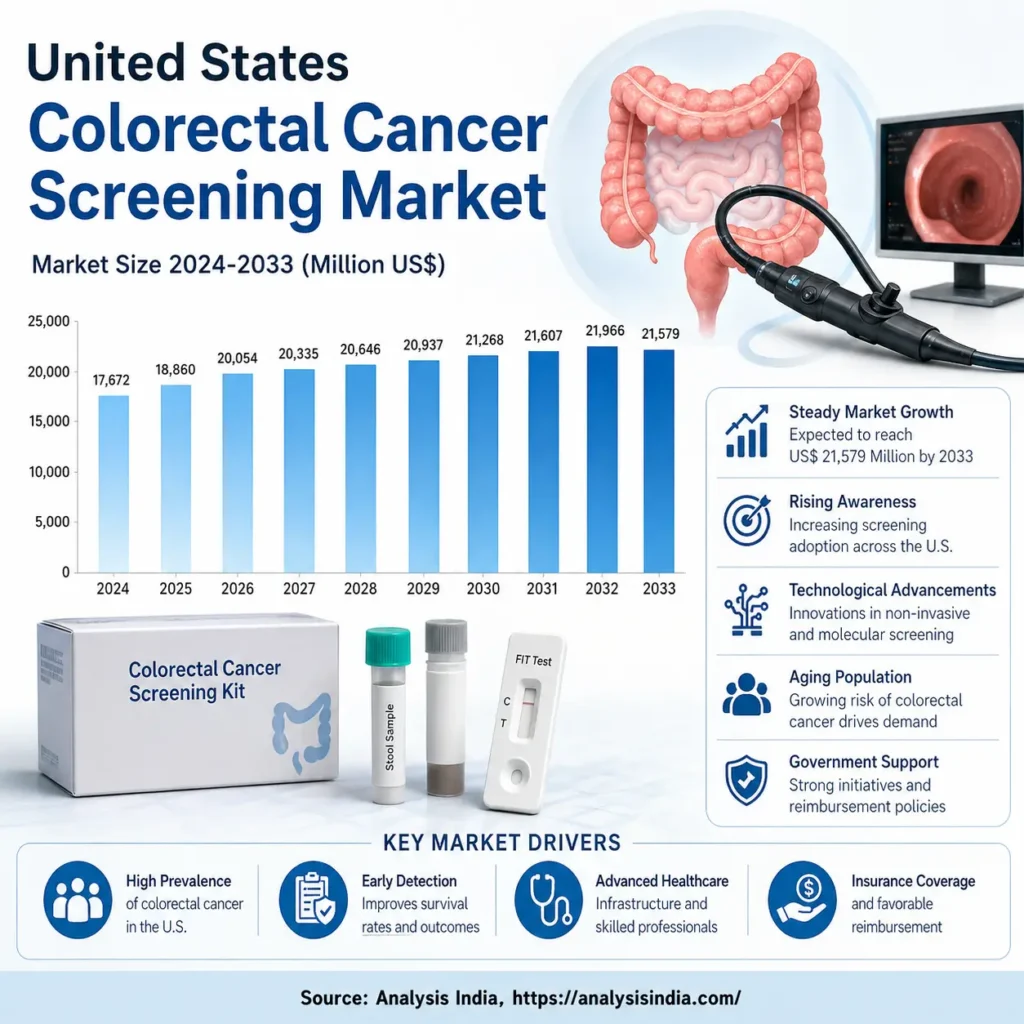
The United States colorectal cancer screening market is expected to show steady growth over the forecast period. The provided data highlights a progressive increase in market value, indicating sustained demand and technological advancement.
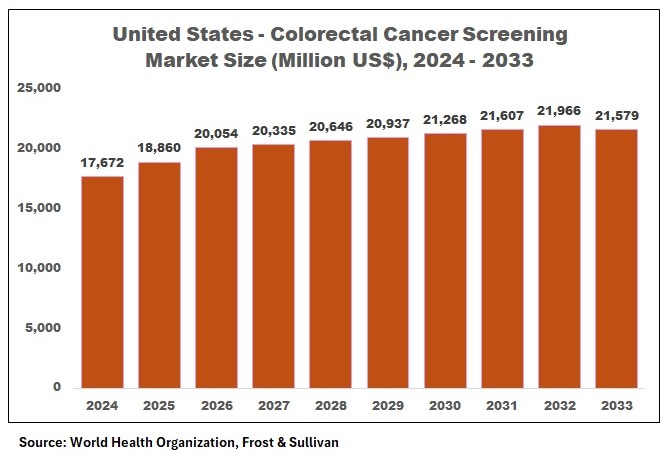
The data indicates a stable upward trend with slight fluctuations toward the end of the forecast period. This reflects market maturity combined with technological shifts and evolving screening preferences.
The growth trajectory suggests that the United States will continue to dominate colorectal cancer screening innovations, supported by clinical research and healthcare investments.
For more country-specific insights, refer to the United States Cancer Screening Market 2033 which offers a broader national-level analysis.
Key Growth Drivers of the United States Colorectal Cancer Screening Market
The expansion of the United States colorectal cancer screening market is supported by multiple structural and technological factors.
One of the primary drivers is the rising prevalence of colorectal cancer. Lifestyle changes, aging population, and dietary patterns have contributed significantly to increasing incidence rates. This has created an urgent need for early detection strategies, pushing the adoption of screening programs across the country.
Another major factor is increasing awareness. Public health campaigns led by government agencies and organizations have improved screening participation rates. Initiatives focusing on early diagnosis and preventive healthcare are encouraging individuals to undergo regular screening.
Technological advancements are also transforming the market. The development of non-invasive tests such as stool DNA testing and liquid biopsy techniques has improved patient comfort and accessibility. These innovations are reducing dependency on traditional invasive procedures like colonoscopy.
Healthcare infrastructure in the United States further strengthens market growth. Advanced diagnostic centers, skilled healthcare professionals, and integration of digital health technologies are improving screening efficiency and accuracy.
Technological Advancements in Colorectal Cancer Screening
Technology plays a critical role in shaping the future of the United States colorectal cancer screening market. Over the years, there has been a shift from traditional screening methods to more advanced and patient-friendly technologies.
Colonoscopy remains the gold standard for colorectal cancer detection. However, newer methods such as fecal immunochemical tests (FIT) and stool DNA tests are gaining popularity due to their non-invasive nature. These tests are particularly beneficial for individuals reluctant to undergo invasive procedures.
Molecular diagnostics is another rapidly evolving segment. Advanced screening tools that analyze genetic mutations and biomarkers are improving detection accuracy. This aligns with trends observed in the United States Lung Cancer Molecular Screening Market, where molecular approaches are redefining cancer diagnostics.
Artificial intelligence is also being integrated into screening processes. AI-powered tools help in detecting polyps during colonoscopy and analyzing imaging data, thereby enhancing diagnostic precision.
Market Segmentation Analysis
The United States colorectal cancer screening market can be segmented based on screening type, end-user, and technology.
Based on screening type, the market includes colonoscopy, stool-based tests, CT colonography, and flexible sigmoidoscopy. Among these, colonoscopy dominates due to its high accuracy and ability to remove polyps during the procedure.
Stool-based tests are gaining traction due to ease of use and affordability. These tests are particularly popular in large-scale screening programs and home-based diagnostics.
From an end-user perspective, hospitals and diagnostic laboratories account for the largest share. However, home healthcare and telehealth-based screening solutions are emerging as significant contributors.
Role of Government and Healthcare Policies
Government initiatives play a vital role in driving the United States colorectal cancer screening market. Policies aimed at improving early detection and reducing cancer mortality rates have significantly influenced market growth.
Screening guidelines recommend regular testing for individuals above a certain age or those with risk factors. Insurance coverage and reimbursement policies further encourage individuals to undergo screening without financial burden.
Public health organizations are actively promoting awareness campaigns. These campaigns focus on educating the population about the importance of early detection and preventive care.
The integration of screening programs into primary healthcare systems has also improved accessibility. This ensures that screening services reach a broader population, including underserved communities.
Competitive Landscape and Key Market Players
The United States colorectal cancer screening market is highly competitive with the presence of major healthcare companies, diagnostic firms, and biotechnology innovators.
Companies are focusing on research and development to introduce advanced screening solutions. Strategic collaborations, mergers, and acquisitions are common as organizations aim to strengthen their market position.
Innovation remains a key competitive factor. Firms investing in molecular diagnostics, AI-based screening tools, and non-invasive technologies are gaining a competitive edge.
The competitive dynamics are similar to trends observed in the United States Liquid Biopsy Cancer Screening Market, where innovation is a major growth driver.
Challenges in the Market
Despite strong growth potential, the United States colorectal cancer screening market faces certain challenges.
One of the major challenges is patient reluctance toward invasive procedures like colonoscopy. Although non-invasive alternatives exist, awareness and adoption still need improvement.
Cost is another concern. Advanced screening technologies can be expensive, limiting accessibility for certain population groups.
There are also disparities in healthcare access across different regions. Rural and underserved areas may face challenges in accessing advanced screening facilities.
Regulatory hurdles and approval processes can slow down the introduction of new technologies. However, continuous innovation and policy support are expected to mitigate these challenges over time.
Emerging Trends in the United States Colorectal Cancer Screening Market
Several emerging trends are shaping the future of the United States colorectal cancer screening market.
One of the key trends is the shift toward non-invasive screening methods. Patients increasingly prefer tests that are convenient, painless, and can be performed at home.
Another trend is the integration of digital health technologies. Telehealth platforms and remote monitoring tools are enabling better patient engagement and follow-up care.
Personalized medicine is also gaining traction. Screening strategies tailored to individual risk profiles are improving outcomes and optimizing resource utilization.
These trends align with broader developments discussed in the Colorectal Cancer Screening Market Growth, highlighting the global evolution of screening technologies.
Regional Insights within the United States
The United States colorectal cancer screening market shows variation across different regions. Urban areas with advanced healthcare infrastructure have higher screening rates compared to rural regions.
States with strong public health programs and awareness campaigns demonstrate better screening adoption. Socioeconomic factors, healthcare accessibility, and education levels also influence regional market dynamics.
Efforts are being made to bridge these gaps through mobile screening units, telehealth services, and community outreach programs.
Future Outlook and Opportunities
The future of the United States colorectal cancer screening market looks promising with continuous advancements in technology and increasing awareness.
Opportunities exist in the development of cost-effective and non-invasive screening solutions. Companies focusing on innovation and accessibility are likely to gain significant market share.
Integration of AI and big data analytics will further enhance diagnostic accuracy and efficiency. These technologies will enable early detection and personalized treatment approaches.
The market is also expected to benefit from ongoing research and clinical trials. New screening methods and biomarkers are likely to emerge, improving overall healthcare outcomes.
Conclusion
The United States colorectal cancer screening market is on a steady growth path driven by rising disease prevalence, technological advancements, and supportive healthcare policies. The market demonstrates strong potential for innovation and expansion, making it a critical segment within the broader cancer screening industry.
As awareness continues to grow and new technologies emerge, colorectal cancer screening will play an increasingly important role in preventive healthcare. Stakeholders across the healthcare ecosystem must focus on improving accessibility, affordability, and patient compliance to maximize the impact of screening programs.
For deeper insights into related markets, explore United States Lung Cancer Screening Market 2033 and other cluster analyses that complement this segment.
Frequently Asked Questions (FAQ)
What is the United States colorectal cancer screening market size in 2033?
The United States colorectal cancer screening market is projected to reach approximately USD 21,579 million by 2033. The market shows steady growth due to increasing screening adoption, technological advancements, and rising awareness of early cancer detection across the country.
What factors are driving the United States colorectal cancer screening market growth?
The growth of the United States colorectal cancer screening market is driven by rising colorectal cancer cases, strong government screening initiatives, improved reimbursement policies, and increasing adoption of non-invasive diagnostic technologies. Growing awareness among the population is also significantly boosting screening participation.
Which screening methods are commonly used in the United States colorectal cancer screening market?
Common screening methods in the United States colorectal cancer screening market include colonoscopy, fecal immunochemical tests, stool DNA tests, CT colonography, and flexible sigmoidoscopy. Among these, colonoscopy remains the most widely used due to its high accuracy and ability to detect and remove polyps.
Why is colorectal cancer screening important in the United States?
Colorectal cancer screening is important because it helps detect cancer at an early stage when treatment is more effective. Early detection through screening reduces mortality rates and improves survival outcomes. It also allows the removal of precancerous polyps before they develop into cancer.
What are the latest trends in the United States colorectal cancer screening market?
Key trends in the United States colorectal cancer screening market include the shift toward non-invasive screening methods, adoption of molecular diagnostics, integration of artificial intelligence in diagnostics, and growth of home-based testing solutions. These trends are improving accessibility and patient compliance.
How does government support impact the colorectal cancer screening market in the United States?
Government support plays a crucial role by promoting screening programs, funding awareness campaigns, and providing insurance coverage. Policies from healthcare agencies help increase accessibility and encourage early diagnosis, which drives overall market growth.
Who are the key end-users in the United States colorectal cancer screening market?
The primary end-users include hospitals, diagnostic laboratories, specialty clinics, and home healthcare providers. Hospitals and diagnostic centers hold the largest share due to advanced infrastructure and availability of skilled professionals.
What challenges affect the United States colorectal cancer screening market?
Challenges include patient reluctance toward invasive procedures, high costs of advanced screening technologies, and disparities in healthcare access across regions. However, increasing adoption of non-invasive tests is expected to address some of these issues.
How is technology transforming the United States colorectal cancer screening market?
Technology is transforming the market through the introduction of AI-powered diagnostics, molecular screening techniques, and liquid biopsy solutions. These innovations are improving detection accuracy, reducing procedure discomfort, and enabling early diagnosis.
What is the future outlook of the United States colorectal cancer screening market?
The future outlook of the United States colorectal cancer screening market remains positive, with continuous advancements in screening technologies, growing awareness, and strong healthcare infrastructure. The market is expected to witness sustained demand and innovation through 2033.