📅 Published: April 26, 2026
🔄 Last Updated: April 26, 2026
Introduction to Colorectal Cancer Screening Market
The colorectal cancer screening market is becoming one of the most important segments within global oncology diagnostics. As healthcare systems move toward preventive care, early detection technologies are gaining traction, positioning the colorectal cancer screening market as a key pillar in reducing cancer-related mortality. Colorectal cancer continues to rank among the leading causes of cancer deaths worldwide, making screening programs essential for both developed and emerging economies.
Colorectal cancer develops slowly over time, often beginning as benign polyps that can transform into malignant tumors if left undetected. This long progression window makes screening highly effective in preventing disease advancement. Governments, healthcare providers, and diagnostic companies are increasingly prioritizing screening initiatives to detect cancer at an early stage.
The growth trajectory of the colorectal cancer screening market is closely aligned with broader developments in oncology diagnostics. As discussed in the cancer screening market growth trends insights, the shift toward preventive healthcare is reshaping the entire cancer screening ecosystem.
At the same time, global health organizations such as the World Health Organization emphasize the importance of early detection in reducing cancer mortality rates. This has led to a surge in screening awareness campaigns and policy frameworks aimed at increasing participation rates.
Understanding Colorectal Cancer and the Need for Screening
What is Colorectal Cancer
Colorectal cancer refers to cancer that originates in the colon or rectum, parts of the digestive system responsible for processing waste. It often develops from adenomatous polyps, which are abnormal growths in the lining of the colon.
The disease is particularly dangerous because it may not present symptoms in its early stages. By the time symptoms such as rectal bleeding, abdominal pain, or unexplained weight loss appear, the cancer may have already progressed.
Importance of Early Detection
Early detection is the most effective strategy for reducing colorectal cancer mortality. Screening allows healthcare providers to identify precancerous lesions and remove them before they become malignant.
Studies from organizations like the Centers for Disease Control and Prevention highlight that regular screening significantly lowers both incidence and mortality rates. This reinforces the importance of expanding access to screening services globally.
Risk Factors Driving Screening Demand
Several factors contribute to the increasing demand in the colorectal cancer screening market. These include aging populations, sedentary lifestyles, dietary habits, and genetic predisposition.
The rise in processed food consumption and obesity rates is particularly concerning. These lifestyle changes are contributing to a higher incidence of colorectal cancer, especially in younger populations.
Market Dynamics of Colorectal Cancer Screening Market
Key Growth Drivers
The colorectal cancer screening market is driven by a combination of demographic, technological, and policy-related factors.
One of the most significant drivers is the aging global population. As life expectancy increases, the number of individuals at risk for colorectal cancer also rises. This creates a sustained demand for screening services.
Technological innovation is another critical factor. Advances in diagnostic tools are making screening more accurate and accessible. Non-invasive methods such as stool-based tests and blood-based biomarkers are gaining popularity due to their convenience.
Government initiatives are also playing a crucial role. National screening programs and awareness campaigns are encouraging individuals to undergo regular screening. These initiatives are particularly effective in developed regions.
Market Restraints and Challenges
Despite strong growth, the colorectal cancer screening market faces several challenges. One of the primary barriers is low screening compliance. Many individuals avoid screening due to fear, lack of awareness, or cultural stigma.
Cost is another significant issue. Advanced screening technologies can be expensive, limiting access in low-income regions. This creates disparities in screening rates and outcomes.
Infrastructure limitations and a shortage of trained healthcare professionals also hinder market growth. Addressing these challenges requires coordinated efforts from governments and industry stakeholders.
Technological Advancements in Colorectal Cancer Screening
Evolution of Screening Technologies
The colorectal cancer screening market has undergone significant transformation over the years. Traditional methods such as colonoscopy remain the gold standard, but newer technologies are expanding the screening landscape.
Colonoscopy allows direct visualization of the colon and enables the removal of polyps during the procedure. However, it is invasive and requires preparation, which can deter patients.
Rise of Non-Invasive Screening Methods
Non-invasive screening methods are gaining traction due to their ease of use and patient compliance. These include fecal immunochemical tests, stool DNA tests, and blood-based biomarkers.
Innovations in molecular diagnostics are enabling the detection of cancer-specific genetic material. This aligns with advancements in the global liquid biopsy cancer screening market, where minimally invasive techniques are revolutionizing cancer detection.
Role of Artificial Intelligence
Artificial intelligence is playing a transformative role in the colorectal cancer screening market. AI-powered tools are enhancing the accuracy of diagnostic procedures by improving polyp detection rates.
Machine learning algorithms analyze large datasets to identify patterns that may indicate early-stage cancer. This not only improves diagnostic accuracy but also reduces the risk of human error.
Research published by the National Cancer Institute highlights the potential of AI in improving screening outcomes and reducing healthcare costs.
Segmentation Analysis of Colorectal Cancer Screening Market
By Test Type
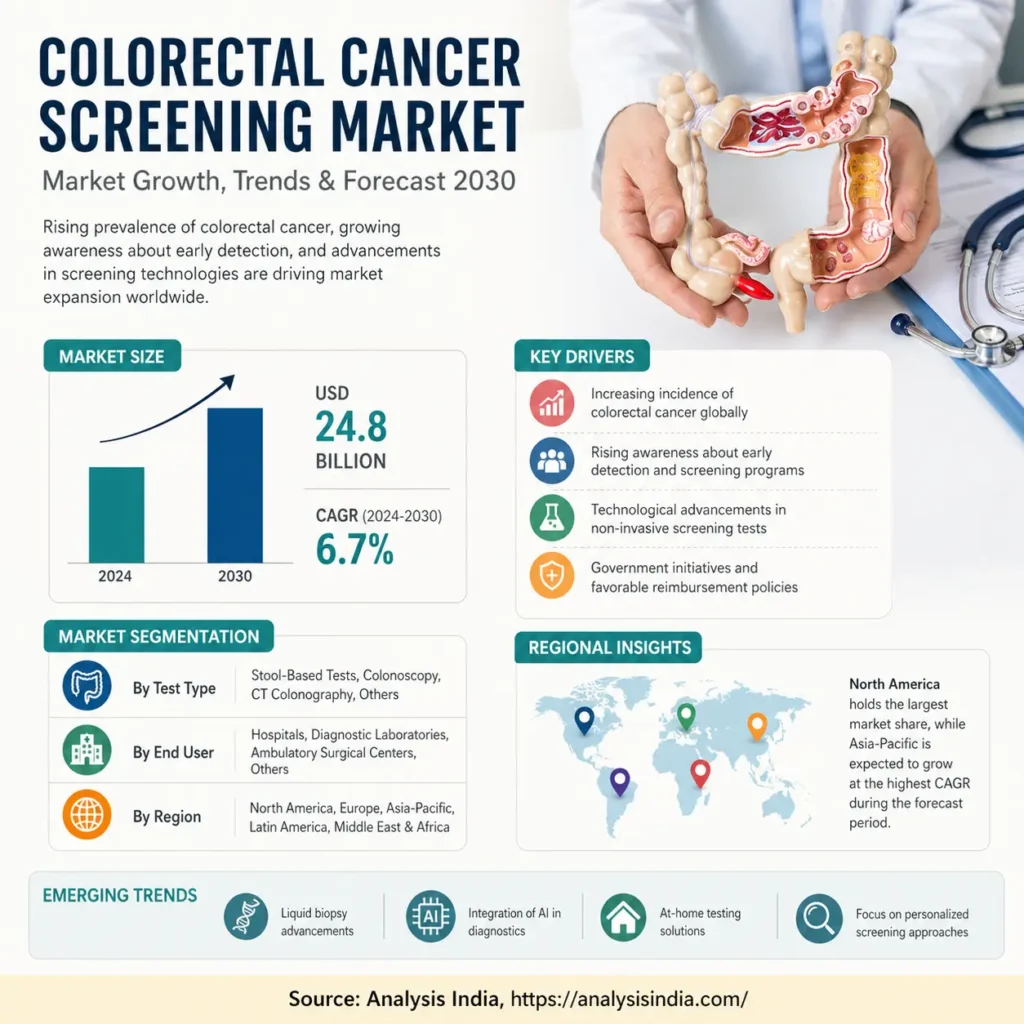
The colorectal cancer screening market is segmented into colonoscopy, fecal occult blood tests, fecal immunochemical tests, stool DNA tests, and blood-based tests.
Colonoscopy dominates the market due to its high accuracy and ability to detect and remove precancerous polyps. However, non-invasive tests are gaining popularity due to their convenience.
By End User
End users include hospitals, diagnostic laboratories, and home care settings. Hospitals and diagnostic centers account for a significant share due to the availability of advanced equipment.
Home-based screening is emerging as a rapidly growing segment. The convenience of at-home testing is encouraging more individuals to participate in screening programs.
By Region
The market is segmented into North America, Europe, Asia Pacific, and other regions. Each region presents unique growth opportunities and challenges.
Regional Insights and Future Cluster Strategy
The colorectal cancer screening market exhibits diverse growth patterns across regions.
North America leads the market due to advanced healthcare infrastructure and strong government initiatives. Europe follows closely with well-established screening programs.
Asia Pacific is emerging as a high-growth region. Countries such as China and Japan are investing heavily in healthcare infrastructure and screening programs.
Future cluster articles will focus on:
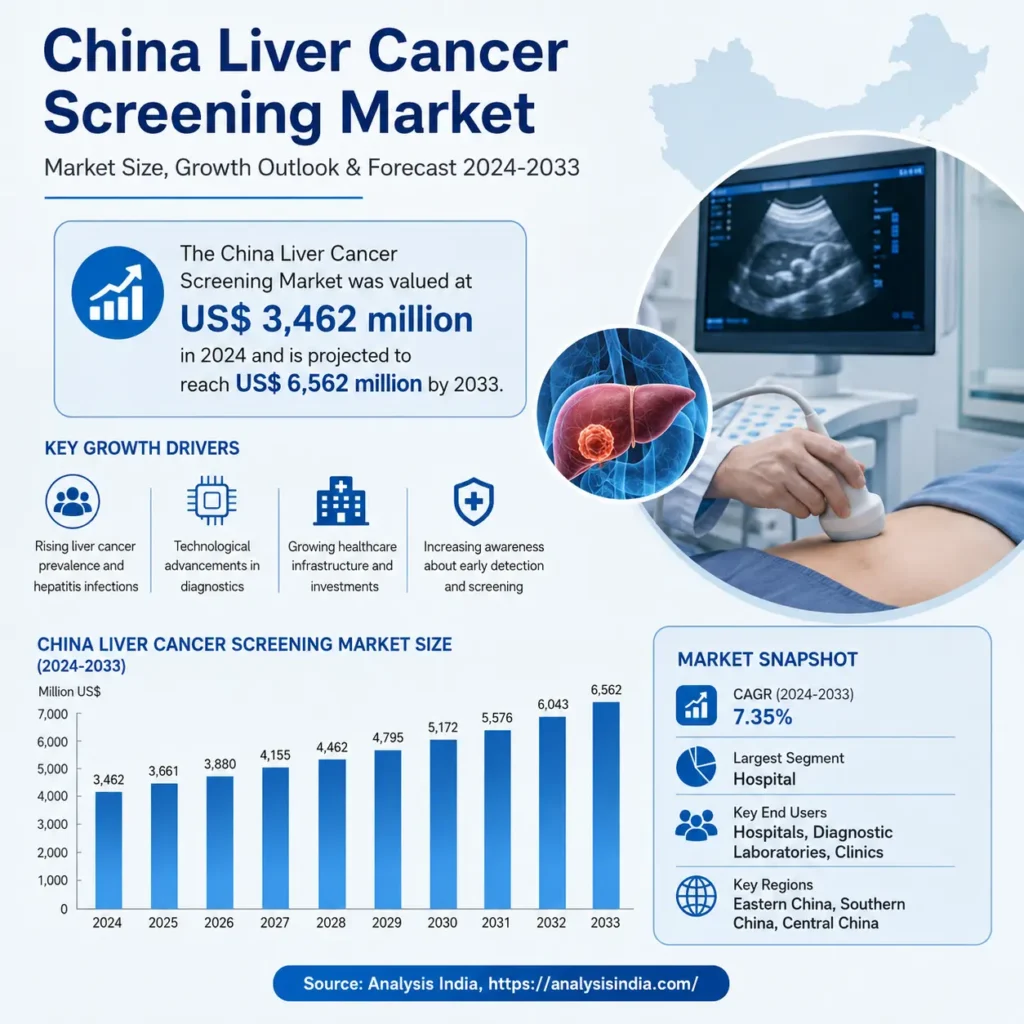
China colorectal cancer screening market
United States colorectal cancer screening market
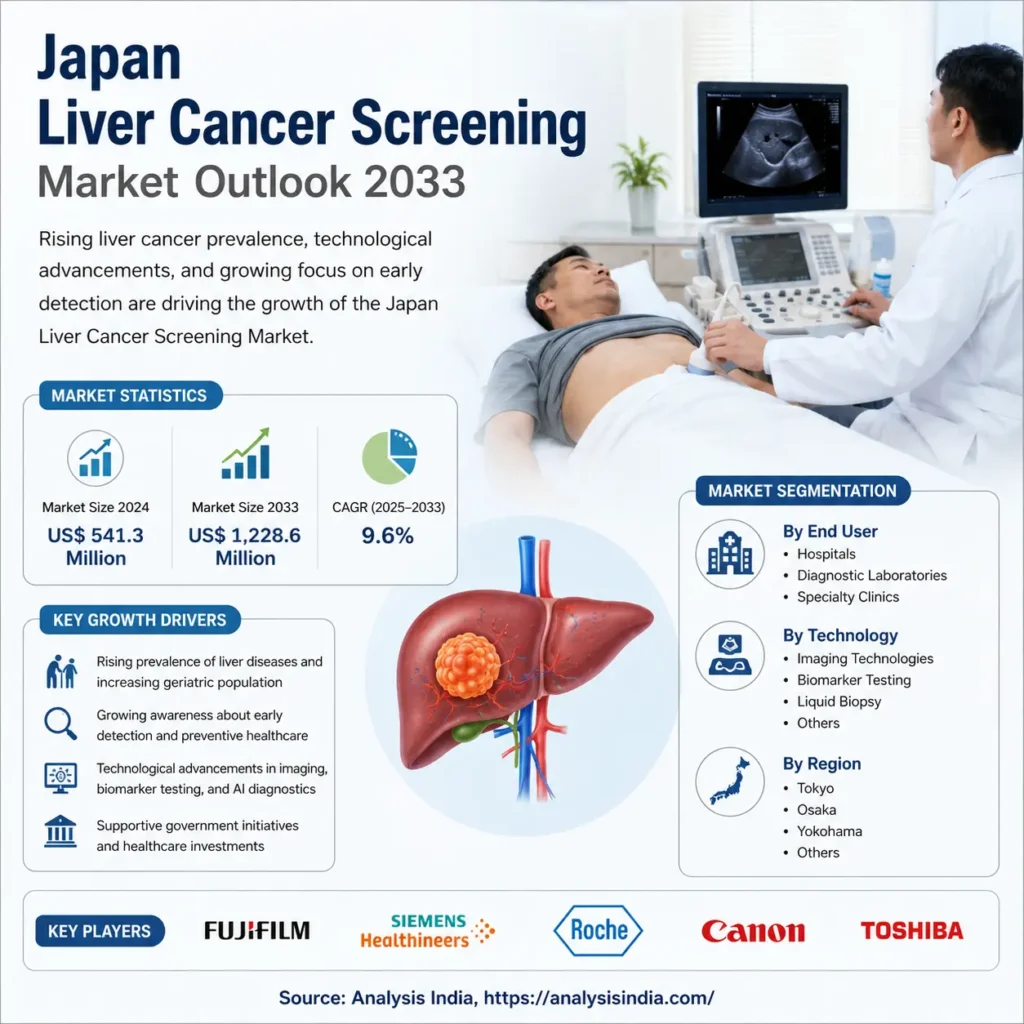
Japan colorectal cancer screening market
South East Asia colorectal cancer screening market
Competitive Landscape in Colorectal Cancer Screening Market
The colorectal cancer screening market is highly competitive, with several global players investing in research and development.
Companies are focusing on innovation, strategic partnerships, and mergers to strengthen their market position. Regulatory approvals and reimbursement policies play a crucial role in determining market success.
Collaborations with research institutions and healthcare providers are enabling the development of advanced screening technologies.
Integration with Broader Cancer Screening Ecosystem
The colorectal cancer screening market is closely linked with other oncology screening markets.
Advancements in imaging and diagnostics discussed in the lung cancer screening market growth are influencing colorectal screening technologies.
Similarly, molecular diagnostics innovations highlighted in the lung cancer molecular screening market growth are contributing to the evolution of precision screening.
This interconnected ecosystem is driving innovation and creating new opportunities for collaboration.
Emerging Trends in Colorectal Cancer Screening Market
Shift Toward Preventive Healthcare
Preventive healthcare is becoming a global priority. Screening programs are being integrated into routine healthcare services to detect diseases early.
Personalized Screening Approaches
Risk-based screening strategies are enabling more targeted detection. These approaches consider genetic, lifestyle, and environmental factors.
Digital Transformation
Digital technologies are enhancing screening efficiency and accessibility. Telemedicine and data analytics are playing a crucial role in expanding screening services.
Investment Opportunities in Colorectal Cancer Screening Market
The colorectal cancer screening market offers significant investment opportunities. Increasing demand for early detection solutions is attracting investments from both public and private sectors.
Startups are driving innovation by developing novel screening technologies. Emerging markets present attractive opportunities due to their large population base and improving healthcare infrastructure.
Reports from the World Bank indicate that healthcare investments in emerging economies are expected to grow significantly, supporting market expansion.
Future Outlook of Colorectal Cancer Screening Market
The future of the colorectal cancer screening market looks promising. Technological advancements, increasing awareness, and supportive government policies will continue to drive growth.
The integration of artificial intelligence and molecular diagnostics will further enhance screening capabilities. These innovations will enable earlier detection and improve patient outcomes.
Conclusion
The colorectal cancer screening market is a vital component of the global healthcare ecosystem. Its growth is driven by increasing incidence rates, technological advancements, and a growing emphasis on preventive care.
By leveraging innovation and addressing existing challenges, the colorectal cancer screening market can significantly reduce the global burden of cancer. Strategic internal linking with related markets and upcoming cluster articles will further strengthen SEO performance and establish topical authority.
FAQ – Colorectal Cancer Screening Market
What is the colorectal cancer screening market?
The colorectal cancer screening market includes diagnostic tests and technologies used to detect colorectal cancer early. It covers colonoscopy, stool-based tests, and blood-based screening methods. The market is growing due to rising cancer cases and increasing focus on preventive healthcare.
Why is the colorectal cancer screening market growing?
The colorectal cancer screening market is expanding due to increasing awareness, aging populations, and government screening programs. Advances in non-invasive technologies and rising healthcare investments are also driving demand for early detection solutions globally.
What are the common screening methods for colorectal cancer?
Common methods in the colorectal cancer screening market include colonoscopy, fecal immunochemical tests, stool DNA tests, and blood-based biomarkers. Colonoscopy is the most accurate, while non-invasive tests are widely adopted for convenience and accessibility.
Why is early screening important for colorectal cancer?
Early screening helps detect colorectal cancer at an initial stage, improving survival rates and reducing treatment costs. Health organizations like the World Health Organization emphasize that early detection significantly lowers cancer mortality.
Which region leads the colorectal cancer screening market?
North America leads the colorectal cancer screening market due to advanced healthcare systems and strong screening programs. Europe follows, while Asia Pacific is emerging rapidly due to increasing healthcare investments and awareness.
What trends are shaping the colorectal cancer screening market?
Key trends include the shift toward non-invasive tests, adoption of AI in diagnostics, and personalized screening approaches. Home-based testing and digital health technologies are also transforming the colorectal cancer screening market.
What challenges affect the colorectal cancer screening market?
The colorectal cancer screening market faces challenges such as low screening participation, high costs of advanced tests, and limited access in developing regions. Lack of awareness and fear of procedures also impact adoption rates.
What is the future of the colorectal cancer screening market?
The colorectal cancer screening market is expected to grow steadily due to technological advancements and rising preventive healthcare focus. Innovations like liquid biopsy and AI diagnostics will further enhance early detection and market expansion.