📅 Published: April 15, 2026
🔄 Last Updated: April 15, 2026
Introduction
The Japan Gastric Cancer Screening Market is witnessing steady growth driven by increasing awareness, advanced screening technologies, and strong government-backed healthcare programs. Japan has one of the highest incidences of gastric cancer globally, which has made early detection and screening a national priority. This has created a well-established and evolving market ecosystem focused on prevention, diagnosis, and early-stage intervention.
In recent years, the market has expanded due to the integration of advanced diagnostic methods such as endoscopy, imaging technologies, and emerging liquid biopsy techniques. The healthcare infrastructure in Japan supports routine screening programs, making it one of the most mature markets globally.
As part of a broader ecosystem, this market connects closely with the global gastric cancer screening landscape, which you can explore in detail here:
👉 https://analysisindia.com/global-gastric-cancer-screening-market/
Additionally, advancements in non-invasive diagnostics are shaping the future of screening. Learn more about related innovations here:
👉 https://analysisindia.com/global-liquid-biopsy-cancer-screening-market/
Japan Gastric Cancer Screening Market Size and Forecast 2033
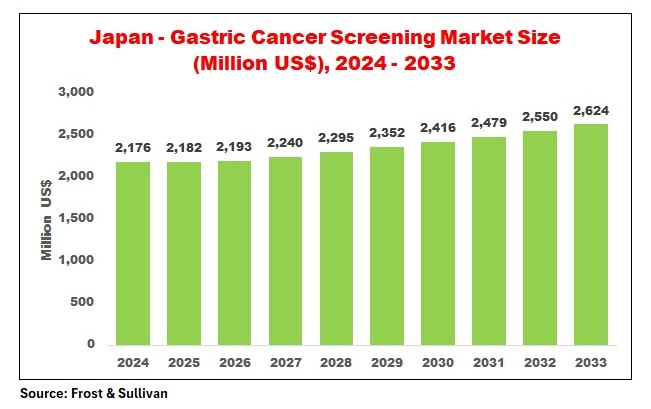
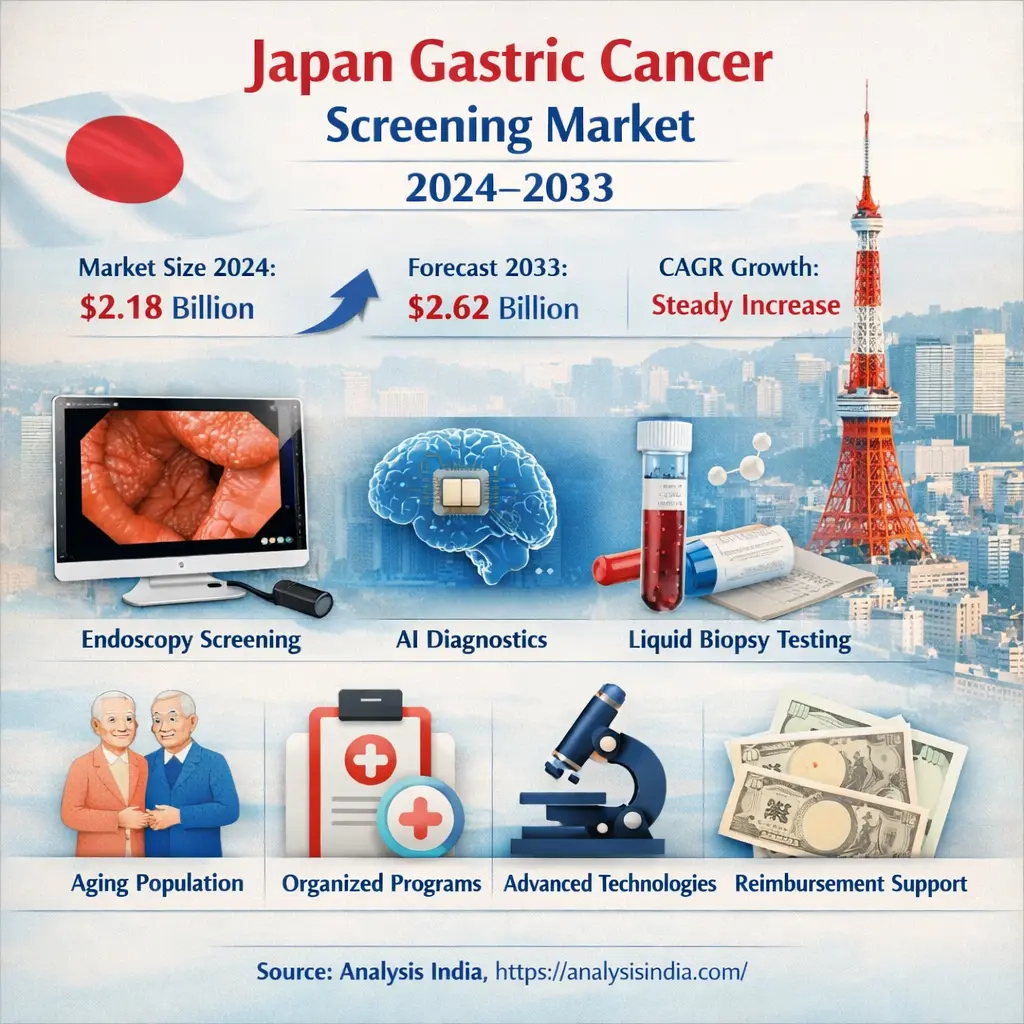
The Japan Gastric Cancer Screening Market is projected to grow steadily between 2024 and 2033. According to industry data, the market is expected to expand from US$ 2,176 million in 2024 to US$ 2,624 million by 2033.
This steady growth reflects the increasing demand for early detection, continuous technological advancements, and strong policy support.
Japan Gastric Cancer Screening Market – Growth Drivers
Rising Prevalence of Gastric Cancer
Japan has historically reported high rates of gastric cancer due to dietary patterns, aging population, and genetic predisposition. This has led to a strong emphasis on nationwide screening programs. Government initiatives promote early detection through routine screenings, especially for individuals aged 40 and above. This consistent demand is a major driver for the Japan Gastric Cancer Screening Market.
The Japan Gastric Cancer Screening Market is also influenced by global cancer screening advancements and clinical research initiatives. According to the World Health Organization (WHO), early detection through organized screening programs plays a critical role in reducing gastric cancer mortality and improving survival rates. Japan’s structured screening approach aligns with global best practices, focusing on early diagnosis and preventive healthcare strategies. For a deeper understanding of global cancer burden and screening importance, refer to the World Health Organization’s cancer insight .
Strong Government Screening Programs
Japan’s healthcare system actively supports cancer screening through public health campaigns and insurance coverage. Regular screening using endoscopy and imaging techniques is widely available and encouraged.
These structured programs ensure high participation rates, which directly supports market expansion.
Technological Advancements in Screening
Technological innovation plays a key role in the growth of the Japan Gastric Cancer Screening Market. Some notable advancements include:
- High-definition endoscopy
- AI-assisted diagnostic tools
- Non-invasive screening techniques
- Biomarker-based detection methods
These technologies improve detection accuracy and reduce patient discomfort, increasing adoption rates.
Aging Population
Japan has one of the oldest populations globally. Since gastric cancer risk increases with age, the aging demographic significantly contributes to market demand.
The need for continuous monitoring and preventive screening among elderly populations is expected to sustain long-term growth.
Market Trends in Japan Gastric Cancer Screening Market
Shift Toward Minimally Invasive Screening
There is a growing shift toward non-invasive and minimally invasive screening methods. Patients prefer less discomfort and faster procedures, which has encouraged innovation in liquid biopsy and imaging technologies.
To understand how these technologies are evolving globally, refer to:
https://analysisindia.com/cancer-screening-market-growth-trends-insights/
Integration of Artificial Intelligence
Artificial intelligence is being increasingly integrated into screening procedures. AI helps in:
- Identifying abnormalities in endoscopic images
- Enhancing diagnostic accuracy
- Reducing human error
Hospitals and diagnostic centers are adopting AI tools to improve efficiency and outcomes.
Expansion of Private Diagnostic Centers
While public healthcare dominates screening programs, private diagnostic centers are expanding rapidly. These centers offer advanced technologies and personalized services, contributing to market growth.
Focus on Preventive Healthcare
Japan’s healthcare strategy emphasizes prevention rather than treatment. This shift encourages routine screenings, boosting the Japan Gastric Cancer Screening Market.
Market Segmentation: Japan Gastric Cancer Screening Market
By Screening Method
The market is segmented based on screening technologies:
- Endoscopy
- Imaging (X-ray, CT scan)
- Blood-based biomarkers
- Liquid biopsy
Endoscopy remains the dominant method due to its accuracy and widespread availability.
By End User
- Hospitals
- Diagnostic laboratories
- Specialty clinics
Hospitals hold the largest share due to advanced infrastructure and skilled professionals.
Competitive Landscape
The Japan Gastric Cancer Screening Market is highly competitive, with both domestic and global players focusing on innovation and partnerships.
Key strategies include:
- Development of advanced diagnostic tools
- Collaborations with healthcare institutions
- Expansion of screening programs
- Investment in AI and digital health
Companies are focusing on improving diagnostic accuracy while reducing costs and patient discomfort.
Regional Insights: Japan in Global Context
Japan plays a crucial role in the global gastric cancer screening ecosystem due to its advanced healthcare system and high screening rates.
Compared to other regions:
- Japan has higher screening adoption
- Strong government support
- Advanced diagnostic infrastructure
For comparison, explore other regional markets:
These comparisons highlight Japan’s leadership in screening implementation and innovation.
Challenges
High Cost of Advanced Screening
Advanced diagnostic technologies can be expensive, limiting accessibility for some patients. Although insurance coverage helps, cost remains a concern.
Workforce Limitations
There is a growing need for skilled professionals to operate advanced screening technologies. Training and workforce development are essential for sustained growth.
Patient Awareness Gaps
Despite strong programs, some population segments still lack awareness about the importance of regular screening.
Opportunities
Growth of Liquid Biopsy
Liquid biopsy is emerging as a promising non-invasive screening method. It offers:
- Early detection
- Reduced discomfort
- Faster results
This technology is expected to significantly impact the Japan Gastric Cancer Screening Market.
Digital Health Integration
Digital platforms and telemedicine are enhancing access to screening services. Remote consultations and digital diagnostics are becoming more common.
Expansion in Rural Areas
Efforts to expand screening programs in rural regions present significant growth opportunities.
Future Outlook: Japan Gastric Cancer Screening Market 2033
The future of the Japan Gastric Cancer Screening Market looks promising, with steady growth driven by innovation and policy support.
Key expectations include:
- Increased adoption of AI-based diagnostics
- Growth in non-invasive screening methods
- Expansion of personalized medicine
- Strong integration of digital health technologies
The market is expected to maintain consistent growth, reaching US$ 2,624 million by 2033.
Strategic Insights for Stakeholders
For Healthcare Providers
- Invest in advanced diagnostic technologies
- Enhance patient awareness programs
- Focus on early detection strategies
For Investors
- Target emerging technologies like liquid biopsy
- Explore partnerships with diagnostic centers
- Focus on long-term growth opportunities
For Policymakers
- Strengthen screening programs
- Improve accessibility in rural areas
- Support innovation through funding
Conclusion
The Japan Gastric Cancer Screening Market is a mature yet evolving market characterized by strong government support, advanced healthcare infrastructure, and continuous technological innovation.
With steady growth projected through 2033, the market offers significant opportunities for stakeholders across the healthcare ecosystem. The focus on early detection, preventive healthcare, and technological advancements will continue to drive expansion.
For a broader perspective on global trends and innovations, explore:
- Global market overview: https://analysisindia.com/global-gastric-cancer-screening-market/
- Liquid biopsy insights: https://analysisindia.com/global-liquid-biopsy-cancer-screening-market/
- Cancer screening trends: https://analysisindia.com/cancer-screening-market-growth-trends-insights/
The Japan Gastric Cancer Screening Market will remain a key contributor to global cancer screening advancements, setting benchmarks for early detection and healthcare innovation.
Frequently Asked Questions
What is the Japan Gastric Cancer Screening Market?
The Japan Gastric Cancer Screening Market refers to the industry focused on detecting stomach cancer early through screening methods like endoscopy, imaging, and blood-based tests.
What is the market size of Japan Gastric Cancer Screening Market in 2033?
The Japan Gastric Cancer Screening Market is projected to reach around US$ 2,624 million by 2033.
What are the key drivers of the Japan Gastric Cancer Screening Market?
Key drivers include high gastric cancer prevalence, strong government screening programs, advanced technologies, and an aging population.
Which screening method is most used in Japan?
Endoscopy is the most widely used method in the Japan Gastric Cancer Screening Market due to its high accuracy and early detection capability.
How is technology impacting the Japan Gastric Cancer Screening Market?
Technologies like AI-based diagnostics and liquid biopsy are improving detection accuracy and making screening less invasive.
Why is Japan a leading market in gastric cancer screening?
Japan leads due to high awareness, government support, advanced healthcare infrastructure, and routine screening programs.
What are the future trends in the Japan Gastric Cancer Screening Market?
Future trends include growth in non-invasive screening, AI integration, and expansion of digital healthcare solutions.