📅 Published: April 16, 2026
🔄 Last Updated: April 16, 2026
Introduction: South East Asia Gastric Cancer Screening Market Overview
The South East Asia Gastric Cancer Screening Market is steadily gaining momentum as healthcare systems across the region evolve toward early detection and preventive care. Countries such as Indonesia, Thailand, Vietnam, Malaysia, and the Philippines are witnessing a gradual increase in gastric cancer cases, which has pushed both public and private healthcare sectors to strengthen screening capabilities. The region is transitioning from reactive treatment approaches to proactive diagnostic strategies, creating a favorable environment for the expansion of screening services.
The growing burden of gastric cancer, combined with improving healthcare awareness, is encouraging individuals to undergo routine screening procedures. Governments are also taking active steps to improve access to diagnostic services, especially in urban and semi-urban areas. This shift is positioning the South East Asia Gastric Cancer Screening Market as a key emerging segment within the broader oncology diagnostics landscape. For a broader global understanding, you can explore the global gastric Cancer analysis .
The importance of early cancer detection is widely recognized at the global level. According to the World Health Organization, early diagnosis through organized screening programs plays a crucial role in reducing mortality rates and improving survival outcomes. The South East Asia Gastric Cancer Screening Market is aligning with these global priorities by strengthening its screening infrastructure and promoting preventive healthcare.
South East Asia Gastric Cancer Screening Market Size and Forecast 2033
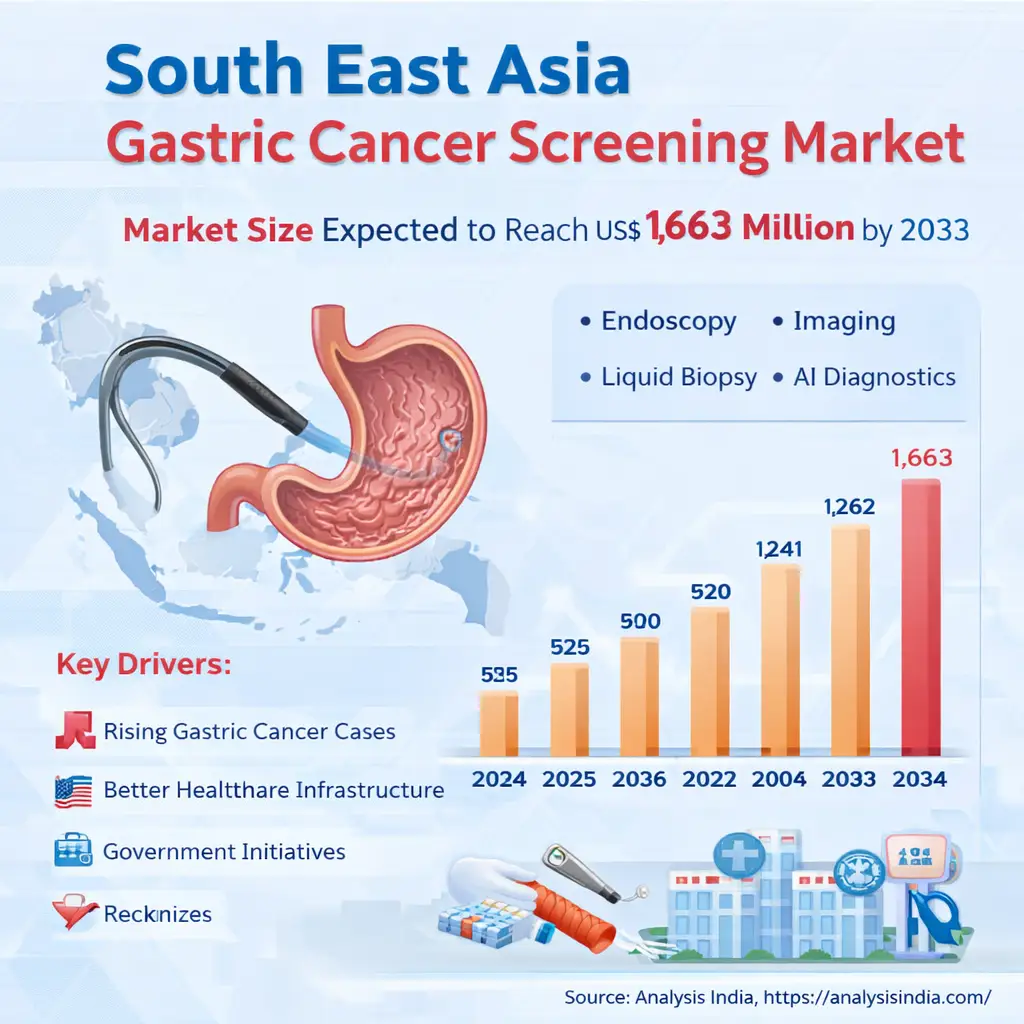
The South East Asia Gastric Cancer Screening Market is projected to experience strong and consistent growth over the forecast period. The market size is expected to rise from US$ 525 million in 2024 to US$ 1,663 million by 2033, reflecting the region’s increasing commitment to early cancer detection and improved healthcare access.
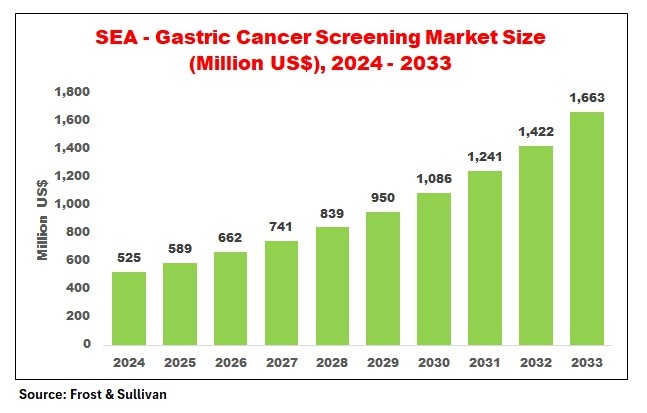
This upward trend is not sudden but represents a gradual and structured expansion supported by policy initiatives, technological adoption, and rising patient awareness. As healthcare systems mature and diagnostic infrastructure expands, more individuals are gaining access to screening services. This steady increase in market size highlights the growing importance of preventive healthcare in the region and reflects a shift in healthcare priorities toward long-term disease management and early intervention.
Growth Drivers in South East Asia Gastric Cancer Screening Market
One of the primary drivers of the South East Asia Gastric Cancer Screening Market is the increasing incidence of gastric cancer across the region. Changing dietary habits, including higher consumption of processed and preserved foods, along with rising tobacco and alcohol use, have contributed to the growing number of cases. Additionally, urbanization and lifestyle changes are influencing disease patterns, making early detection more critical than ever.
Another major factor supporting market growth is the continuous improvement in healthcare infrastructure. Governments across South East Asia are investing in hospitals, diagnostic centers, and medical technologies to improve overall healthcare delivery. These investments are not only increasing the availability of screening services but also enhancing the quality and accuracy of diagnosis. As healthcare systems become more robust, screening programs are becoming more accessible to a larger population base.
Government-led awareness campaigns are also playing a significant role in driving the market. Public health initiatives are educating people about the importance of early detection and encouraging regular health check-ups. These programs are gradually changing public perception, making screening a routine part of healthcare rather than an optional procedure.
Technological advancements further accelerate the growth of the South East Asia Gastric Cancer Screening Market. Modern screening techniques, including high-definition endoscopy and AI-assisted diagnostics, are improving detection rates and reducing diagnostic errors. Emerging innovations such as liquid biopsy are also gaining attention as they offer less invasive and more convenient screening options. For deeper insights into this technology, visit: https://analysisindia.com/global-liquid-biopsy-cancer-screening-market/
Market Trends in South East Asia Gastric Cancer Screening Market
A significant trend shaping the South East Asia Gastric Cancer Screening Market is the growing emphasis on preventive healthcare. Healthcare providers are increasingly focusing on early diagnosis rather than late-stage treatment, which not only improves patient outcomes but also reduces long-term healthcare costs. This shift is encouraging more individuals to participate in regular screening programs.
The rapid expansion of private healthcare facilities is another notable trend. Private hospitals and diagnostic centers are introducing advanced screening technologies and offering faster, more personalized services. These facilities are often equipped with the latest diagnostic tools, which enhances patient confidence and increases the adoption of screening services.
Digital transformation is also influencing the market. The integration of artificial intelligence and digital health platforms is improving diagnostic efficiency and accessibility. AI tools are being used to analyze medical images and detect abnormalities with greater precision, while telemedicine platforms are enabling remote consultations and expanding access to screening services in underserved areas.
There is also a noticeable shift toward non-invasive screening methods. Patients are increasingly seeking alternatives that are less uncomfortable and more convenient. This trend is driving the adoption of blood-based tests and other innovative diagnostic approaches. For a broader perspective on cancer screening trends, refer to: https://analysisindia.com/cancer-screening-market-growth-trends-insights/
Market Segmentation Insights
The South East Asia Gastric Cancer Screening Market can be understood through its segmentation by screening methods and end users. In terms of screening methods, endoscopy remains the most widely used technique due to its high accuracy and ability to detect early-stage abnormalities. Imaging technologies and biomarker-based tests are also gaining traction, particularly in urban healthcare settings where advanced infrastructure is available.
From an end-user perspective, hospitals continue to dominate the market due to their comprehensive diagnostic capabilities and access to skilled professionals. However, diagnostic laboratories and specialty clinics are gradually expanding their role, especially in urban and semi-urban regions. These facilities are contributing to the decentralization of healthcare services, making screening more accessible to a broader population.
Competitive Landscape
The competitive environment of the South East Asia Gastric Cancer Screening Market is evolving as both regional and international players seek to establish a strong presence. Companies are focusing on innovation, partnerships, and expansion strategies to capture market share. Collaborations with hospitals and healthcare providers are becoming increasingly common, allowing companies to integrate their technologies into existing healthcare systems.
Investment in research and development is another key strategy, as companies aim to improve diagnostic accuracy and develop cost-effective solutions. Affordability is a critical factor in this region, and companies that can offer high-quality yet affordable screening solutions are likely to gain a competitive advantage.
Regional Comparison and Positioning
When compared to more developed markets such as Japan and the United States, the South East Asia Gastric Cancer Screening Market is still in a growth phase. However, this also means that the region offers significant untapped potential. While screening rates are currently lower than in developed countries, the pace of growth is much faster due to increasing investments and rising awareness.
For comparative insights, you can explore other regional markets:
United States: https://analysisindia.com/united-states-gastric-cancer-screening-market/
China: https://analysisindia.com/china-gastric-cancer-screening-market-2033/
Japan: https://analysisindia.com/japan-gastric-cancer-screening-market-forecast/
These comparisons highlight the unique growth trajectory of South East Asia and its increasing importance in the global market.
Challenges in South East Asia Gastric Cancer Screening Market
Despite its growth potential, the South East Asia Gastric Cancer Screening Market faces several challenges. One of the major issues is the lack of awareness in rural areas, where access to healthcare information and services is limited. Many individuals in these regions are unaware of the importance of early detection, which leads to delayed diagnosis.
Cost is another significant barrier. Advanced screening technologies can be expensive, making them less accessible to low-income populations. Although governments are working to improve affordability, there is still a need for more cost-effective solutions.
The shortage of skilled healthcare professionals also poses a challenge. Advanced screening procedures require specialized training, and there is a growing need for skilled personnel to operate diagnostic equipment and interpret results accurately.
Opportunities in South East Asia Gastric Cancer Screening Market
The South East Asia Gastric Cancer Screening Market offers numerous opportunities for growth and innovation. The expansion of national screening programs is expected to significantly increase market penetration. Governments are increasingly recognizing the importance of early detection and are allocating resources to improve screening infrastructure.
Medical tourism is another promising opportunity. Countries such as Thailand and Malaysia are attracting international patients due to their advanced healthcare facilities and competitive pricing. This trend is expected to further boost the demand for screening services.
Technological innovation continues to create new possibilities for market expansion. The adoption of AI, digital health platforms, and non-invasive screening methods is expected to transform the market and improve accessibility.
Future Outlook: South East Asia Gastric Cancer Screening Market 2033
The future of the South East Asia Gastric Cancer Screening Market appears highly promising, with strong growth expected through 2033. The market is projected to reach US$ 1,663 million, driven by continuous improvements in healthcare infrastructure, increasing awareness, and ongoing technological advancements.
As the region continues to invest in healthcare and adopt innovative diagnostic solutions, screening services are expected to become more accessible and efficient. The focus on early detection and preventive care will remain a key driver of market growth, ensuring sustained expansion over the coming years.
Conclusion
The South East Asia Gastric Cancer Screening Market is evolving into a dynamic and high-growth segment within the global healthcare industry. With rising awareness, improving infrastructure, and increasing adoption of advanced technologies, the market is well-positioned for long-term growth.
The region’s transition toward preventive healthcare and early detection is creating new opportunities for stakeholders across the value chain. As governments, healthcare providers, and technology companies continue to collaborate, the market is expected to play a crucial role in improving cancer outcomes and shaping the future of healthcare in South East Asia.
For a complete global perspective, explore:
https://analysisindia.com/global-gastric-cancer-screening-market/
https://analysisindia.com/global-liquid-biopsy-cancer-screening-market/
https://analysisindia.com/cancer-screening-market-growth-trends-insights/
Frequently Asked Questions
What is the South East Asia Gastric Cancer Screening Market?
The South East Asia Gastric Cancer Screening Market focuses on early detection of stomach cancer using screening methods like endoscopy, imaging, and blood-based tests.
What is the market size by 2033?
The South East Asia Gastric Cancer Screening Market is expected to reach around US$ 1,663 million by 2033.
What is driving market growth in South East Asia?
Growth is driven by rising gastric cancer cases, improving healthcare infrastructure, increasing awareness, and adoption of advanced screening technologies.
Which screening method is commonly used?
Endoscopy is the most widely used method due to its accuracy in detecting early-stage gastric cancer.
How is technology impacting the market?
Technologies like AI diagnostics and liquid biopsy are improving early detection and making screening more accessible.
Why is this market growing rapidly?
The market is growing due to expanding healthcare access, government initiatives, and a shift toward preventive healthcare.
What is the future outlook of the market?
The South East Asia Gastric Cancer Screening Market is expected to grow steadily with increasing focus on early detection and advanced diagnostic solutions.